


The Marxist Theory of the State: An Introduction

By Summer Pappachen


Republished from Liberation School.


Our understanding of the state lies at the heart of our struggle to create a new society and fundamentally eliminate the oppression, exploitation, war, and environmental destruction characteristic of capitalism. In a socialist state, people collectively manage society, including what we produce, how much we produce, and the conditions of our work, to meet the needs of the people and the planet. Under capitalism, the state is organized to maintain the capitalist system and the dictatorship of a tiny group of capitalists over the rest of us through the use (or threat) of violent force and a range of institutions that present capitalism as “common sense.” The primary function of the capitalist state is to protect itself, which means it manages contradictions within the capitalist class and between their class and the working class.

This article serves as an introduction to the state, an essential matter for all justice-minded people to understand, as it determines our objectives, strategies, and tactics. It begins by debunking the ideology of the capitalist state as an impartial mediator to resolve antagonisms between and among classes by explaining the Marxist theory of the state and its role in maintaining–and overthrowing–exploitation and oppression.

The U.S. state has always been “deep” in that it is a highly centralized and predominantly unelected organization with an expansive set of institutions that has facilitated the rule of capital in the face of a variety of changes and through centuries of turmoil. The foundational elements of the state are repressive, such as the police and prison system, while others are ideological in that they reproduce capitalist consciousness and social relations, such as the news media. Because not all capitalist states function in the same manner, we examine the different forms states can take as well as the foundational differences between capitalist and socialist states.

Creating a socialist state is necessary to realize our collective desire for an end to all forms of oppression and exploitation. The socialist state works to eliminate racist police oppression and mass incarceration, to protect the health of our planet against capitalist and imperialist pollution, and to create a society in which differences in all kinds of identities do not mean differences in power. We can’t defend, let alone advance, the world we need without state power, a power that not only represses the former exploiters and oppressors but also produces a new kind of society and consciousness—a state that protects the interests of the many over those of the few. Ultimately, for communists, the goal of the socialist state is to render itself obsolete, which is only possible after the elimination of class society.


Debunking the capitalist myth of the state

The state extends beyond what we think of as the “government” of a country and includes all of the structures the capitalist class uses to maintain its control. In the U.S., the capitalist class holds state power, whereas the working class holds state power in China and Cuba. To have “state power” does not mean that the ruling class, whether capitalist or working class, can meet its own needs perfectly or without limitation. Put simply, the state is the instrument through which class interests are pursued.

At its core, the capitalist state includes apparatuses like the police, the courts, the prisons, and the military, forces necessary for enforcing the will of a tiny clique of capitalists over the masses of workers. The capitalist state also includes administrative offices, social services, school systems, media, mainstream political parties, cultural institutions, and more [1]. If this view of the state seems broad, it is because Marxists do not define the state as capitalists do.

The U.S. capitalist class popularizes a particular view of the state, especially the democratic state, as “a neutral arena of debate” [2]. In this so-called neutral arena, the government arbitrates between the conflicting interests of society through a set of “fair” laws, and it enforces those laws evenly and rationally. According to this view, any violation of the law or injustice in society is simply a mistake to be corrected through the state’s existing avenues through, for example, presidential elections or the Supreme Court. This view is ultimately a fairytale, one that “lulls the ordinary person to sleep,” in the words of the leader of the world’s first socialist state, Vladimir Lenin. It lulls us to sleep “by obscuring the important and basic fact, namely, the split of society into irreconcilably antagonistic classes” [3].

Marxists recognize that our lives are shaped by one basic fact: society is divided into two classes with irreconcilable interests. The capitalist state is organized to protect the interests of the capitalist: the accumulation of ever-greater profits by increasing the exploitation of workers and preventing our class from uniting and fighting for a new system. The working class’s primary interest is reducing our exploitation and eliminating all forms of oppression and bigotry so we—alongside our families and communities—can flourish. The state is not a timeless or abstract entity governing a given territory. The state emerges at a certain point in human history: it arises alongside the division of societies into classes, between the rulers and the ruled, the owners and the workers, the slavers and the enslaved. The state develops from within a society, as Friedrich Engels wrote, when it “is cleft into irreconcilable antagonisms which it is powerless to exorcise.” The state emerged to mitigate such antagonisms, or “to moderate the conflict and keep it within the bounds of ‘order’” [4]. The capitalist ideology of the state guards these bounds of order to ensure it is the only available avenue for change.

The U.S. state’s history and present debunk the capitalist mythology of the state as a neutral arbiter, revealing that it is actually made up of organs, or institutions, designed to maintain the domination of capitalists. The U.S. state was established by slave-owning and merchant capitalist founders, later developed by industrial and monopoly capitalists [5]. The ruling class is not a homogeneous entity and the state manages the competing interests of different capitalists to protect capitalism and the existence of the state itself.

Currently, the U.S. capitalist class uses the democratic-republic state as its “organ” or form of governance. Instead of a path beyond capitalism, the democratic-republic form of the state offers the “best possible political shell for capitalism,” allowing the state to feign innocence while ensuring that “no change of persons, institutions, or parties in the bourgeois-democratic republic can shake it” [6]. Lenin provides a lasting Marxist definition of the state:

“According to Marx, the state is an organ of class rule, an organ for the oppression of one class by another; it is the creation of “order,” which legalizes and perpetuates this oppression by moderating the conflict between classes” [7].

No matter its class character, the state is a tool of a class. For Marxists, the key distinction between types of states is their class character. For capitalist theorists, types of states are distinguished by their level of democracy versus authoritarianism, while ignoring the class character of both. They therefore cannot recognize the existence of capitalist authoritarianism within capitalist democracies, nor recognize working class democracy within so-called authoritarian socialist states. The U.S provides a clear example that debunks the myth of the state as a neutral arbiter and demonstrates the authoritarianism of capitalist-democratic states. It demonstrates that the state is made up of institutions designed to maintain the rule of capitalists.

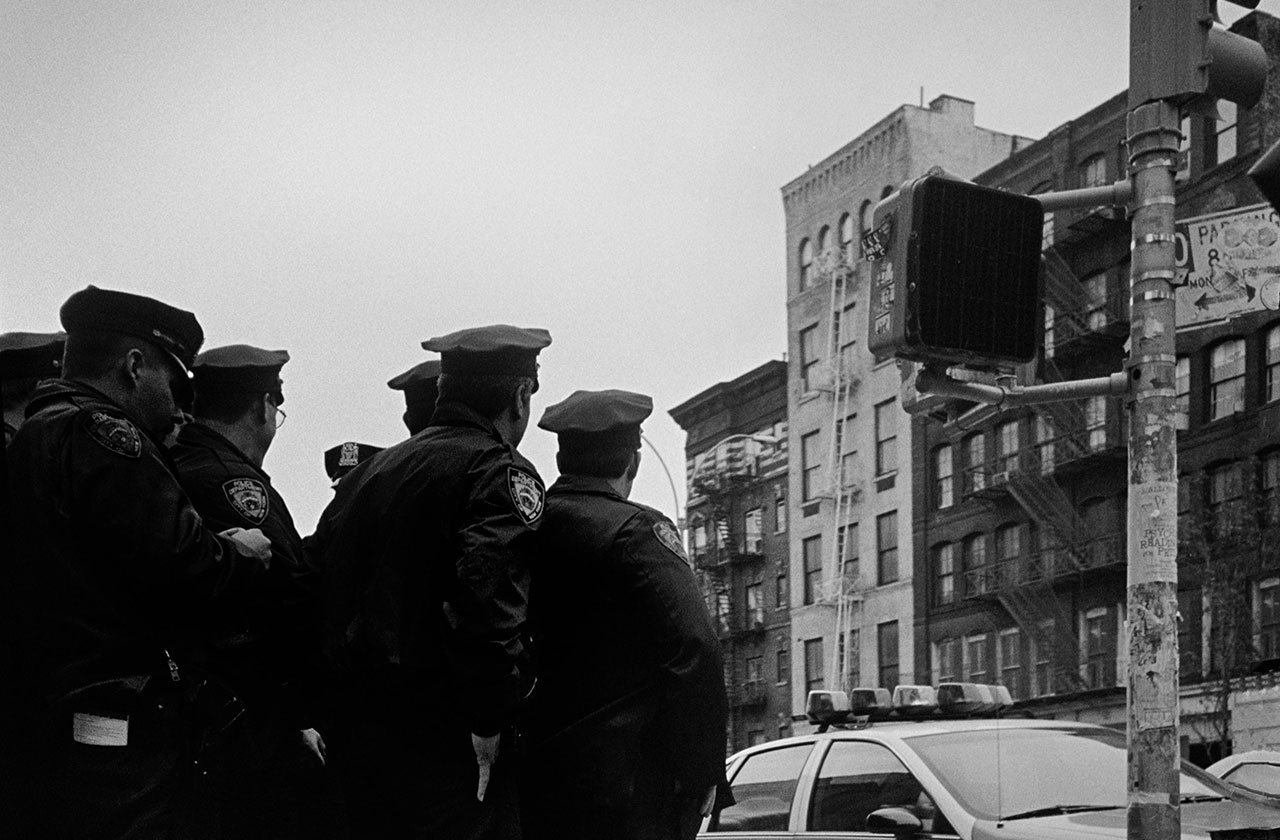
Order is reserved for the wealthy since all working people live in a constant state of precarity, uncertainty, and insecurity to varying degrees. Chaos determines the life of the working person in the United States. For instance, the poor are terrified of the police and despise them for their abuses of power. The police murder over 1,000 people every year and most occur in non-violent situations like traffic stops or mental health crises. Racial oppression is part of the lived experience of the working class. As Stuart Hall put it, in many countries, “Race is the modality in which class is lived” [8]. In the U.S., Black people are not only more likely to be killed by the police but are also more likely to be unarmed and peaceful while being killed [9]. Instead of delivering justice when innocent Black people are killed, the courts often work with the police to legitimize the injustice done. The U.S. state only charges 2% of officers who commit murders with any sort of crime, and the courts convict officers in less than 1% of cases [10].

While the state’s prison system fails to take murderous police off our streets, it is efficient at jailing harmless working people. Despite having only 4.4% of the world’s population, the U.S. holds 22% of the world’s prisoners. Over 70% of those prisoners are either non-violent or have not yet been convicted of a crime [11]. And 38% of U.S. prisoners are Black, despite Black people only making up 12% of the population [12]. The social cost of the capitalist system’s violent state apparatuses is immeasurable: families are broken up; children are left without parents; generations become trapped in cycles of trauma, crime, and poverty. This is merely one example of how the capitalist class uses the state to legalize and perpetuate the oppression of working people in the U.S. Far from embodying the fairy tale of a “neutral arbiter” and enforcer of fair laws, the U.S. state is used by the capitalist class to hold down the working class, of which Black people are a crucial part.


Repressive and productive state organs

Marx, Lenin, and other revolutionaries often use the word “organ” to describe the state and its constituent elements. This bodily metaphor is helpful. The organs in our bodies are made up of cells, tissues, and arteries which work together to fulfill particular functions (e.g., the heart pumps blood, the lungs absorb oxygen, etc.). Each organ depends on and helps the other organs to achieve their objective—the body’s survival and reproduction. The pipes and chambers of the heart are made to pump blood, and the airways and sacs of the lungs are made to absorb oxygen in order to reproduce the body. Just like a bodily organ, the state is made up of various elements, or apparatuses, as well. State apparatuses are guided by the objective of the survival and reproduction of the ruling class and its system of domination and exploitation.

Marxists understand the State as primarily a repressive apparatus that uses the force of the courts, police, prisons, and military to ensure the domination of one class over others. The repressive state apparatus contains the violent institutions that work to maintain ruling class power. All in all, the repressive state apparatus functions by direct threat, coercion, and force.

The class in power does not only exercise its control by armed force and physical coercion. In addition to ruling the “material force of society,” as Marx and Engels wrote in 1845-1846, they also rule “the means of mental production,” such that they “rule also as thinkers, as producers of ideas” [13]. Because the capitalist class owns the material forces of society, which include those that produce and distribute knowledge, they wield immense control over the overall consciousness of capitalist society, so “generally speaking, the ideas of those who lack the means of mental production are subject” to capitalist ideology [14]. Marx and Engels do not mean that the oppressed are not intellectuals. A few paragraphs later, they write that “in ordinary life every shopkeeper” possesses intellectual capacities that “our historians have not yet won” [15].

Since the time of Marx and Engels’ writing on ideology, many capitalist states, particularly in their more developed forms, have generated and utilized more sophisticated and subtler means of maintaining the dominance of their ideology over society. Louis Althusser built on Marx and Engels’ work on ideology and class struggle by detailing many of their contemporary forms. These “Ideological State Apparatuses include all those elements that reproduce the dominance of the ruling-class ideology, like the school system, the media, mainstream parties, cultural organizations, think-tanks, and so on [16]. The same class that owns the means of production—the factories and banks, telecommunications networks and pharmaceutical corporations—also owns the newspapers, television stations, and movie studios. Globally, six parent companies control 90% of everything we listen to, watch, and read [17].


Schooling illustrates the vulnerability of capitalist rule

A key purpose of ideological state apparatuses is to make the prevailing order of things appear natural and timeless, to justify capitalism as the final stage of human history, and to normalize exploitation and oppression. In the U.S. and other capitalist states, the educational ideological apparatus is a central one in that it produces future workers with the necessary skills, knowledge, habits, and attitudes to fulfill their place in the overall social system. The school system “takes children from every class at infant-school age, and then for years, the years in which the child is most ‘vulnerable’… it drums into them, whether it uses new or old methods, a certain amount of ‘know-how’ wrapped in the ruling ideology” [18]. What this means is that the skills schools teach children—from arithmetic and literature to engineering and computer coding—are just as important as the “the ‘rules’ of good behaviour” and “morality, civic and professional conscience, and ultimately the rules of the order established by class domination” that they teach [19].

In their study of the relationship between schooling and capitalism in the U.S. in the mid-20th century, Samuel Bowles and Herbert Gintis found that schools reproduce capitalist relations not by the deliberate intentions of individual teachers or administrators, but by how “the relationships of authority and control between administrators and teachers, teachers and students, students and students, and students and their work replicate the hierarchical division of labor which dominates the workplace. The rule orientation of the high school reflects the close supervision of low-level workers; the internalization of norms and freedom from continual supervision in elite colleges reflect the social relationships of upper-level white-collar work. Most state universities and community colleges, which fall in between, conform to the behavioral requisites of low-level technical, service, and supervisory personnel” [20].

Many U.S public and charter schools, especially those in working-class and oppressed neighborhoods, require students to enter school through metal detectors, use video surveillance in hallways and classrooms, and subject students to regular searches of their bodies and property. This is captured by the concept of the “school-to-prison pipeline” or even the “school-as-prison” given the criminalization of everything from talking loudly in class to minor pranks and the overwhelming presence of cops in schools [21].

The educational apparatus highlights two things. First, as the example of highly securitized and policed schools indicates, there is no hard, fast, or permanent line dividing repressive from ideological apparatuses. Second, the primary distinction between the ideological arms of the state and its repressive core is that the latter are permanent and secure whereas the former are more vulnerable and, therefore, more receptive to change in the face of class struggle.

Bowles and Gintis’ correspondence theory highlighted above is perhaps less important than their repeated affirmation that people’s intervention in education and society contributes to revolution. The book’s argument is against those who believe education is sufficient for revolutionary change and their theoretical, historical, and empirical analysis leads them to the finding “that the creation of an equal and liberating school system requires a revolutionary transformation of economic life” [22]. They conclude their study with strategies for socialist education and teachers and, importantly, frame the overarching aim of socialist education under capitalism as “the creation of working-class consciousness” to contribute to building a socialist revolution.

SUPPORT OUR WORK BY MAKING A DONATION TODAY!

Highlighting the fragility of ideological state apparatuses, Bowles and Gintis argue class-consciousness isn’t “making people aware of their oppression” because “most people are all too well aware of the fact of their oppression” [23]. The idea that if we study and focus on school, get into a good university, and “buckle down” will make our lives better lacks any material basis. Schools aren’t mechanically indoctrinating students into capitalist ideology or meritocracy. Students are thinking critically, increasingly open to the solutions required to eliminate oppression, and are even organizing against policing in schools on their own [24].


Democracy: The best possible organ for capitalism

The “organ” as a metaphor underscores the role of state apparatuses in maintaining stability for the ruling class. Organs are interdependent living and evolving entities that, together, each play a part in maintaining the body’s homeostasis, which means preserving stability in the face of changing external circumstances. It’s the same with the state, as the state’s goal is to maintain stability for the ruling class by adjusting to conflicts both within and between classes.

As Marx and Engels first put it in The Communist Manifesto, “the executive of the modern state is but a committee for managing the common affairs of the whole bourgeoisie” [25]. Among the tasks of the bourgeois state is to manage conflicts within the capitalist class. This happens, for example, when there is a conflict between the interests of an individual capitalist and the capitalist system as a whole. If it were up to individual capitalists, they would destroy their source of surplus-value (workers) and the environment, which would be detrimental to the survival of capitalism. This is why the state also manages conflicts within the ruling class itself, stepping in to hold individual capitalists or firms “in check” in the interests of capital overall as an economic and political system..

The capitalist state also intervenes when it is faced with the threat of revolt. Legislation regulating the working day, for example, was meant to hold back “the passion of capital for a limitless draining of labour-power” and was motivated by “the working-class movement that daily grew more threatening” [26]. This is one reason why Marx, Engels, and Lenin argued that governance via bourgeois democracy was the most effective way to ensure capital’s rule. Far from inhibiting capitalism, the democratic republic is the most effective political form for capitalism insofar as power is exercised through complex mechanisms and several avenues for popular “participation” and “input.” The more secure the power of the ruling class is, the less it needs to rely on brute force.

This doesn’t mean that democracy is irrelevant to our revolutionary project. In fact, it is quite the opposite: historically, socialist struggles have always emerged from demands for basic democratic rights. Winning those rights helps us experience our power to change society. Socialist movements in the anti-colonial world and within the U.S. have often been waged in the name of a fake “democracy,” which reserves the rights it espouses for the rich. The distinguishing factor is the class character of democracy: there is the democracy of the capitalist class and the democracy of the working class, which is socialism. Revolutionaries are interested in democracy of, for, and by the working class.


From perfecting, to seizing, to smashing the capitalist state

In The Communist Manifesto, written in 1847-1848, Marx and Engels address the topic of the state in the communist project, but in an abstract sense. As historical-materialists, their conception of the state and its role in revolution evolved along with the class struggle. In particular, the defeats of the 1848 revolutions and the 1871 Paris Commune compelled them to refine their approach to the state.

The Paris Commune was the world’s first proletarian government which lasted for 72 days in 1871. Decades of war, discontent, and radicalization led to the working-class takeover of Paris. The Parisian workers elected a council from the various wards of the city and organized public services for all its two million city residents. Their first decree was to arm the masses to defend their new proto-state. They erected a “fuller democracy” than had ever existed before and instated deeply progressive, feminist, worker-centered decrees [27]. But before the Commune could develop into a state, they were overthrown by an alliance of the bourgeoisie and the aristocracy, whose armies killed tens of thousands of workers.

In the wake of this unspeakable tragedy, the martyrs of the Commune left behind a crucial lesson: after overthrowing the capitalist state, a new worker’s state must be developed, and it must be defended fiercely from the former ruling class. The next year, Marx and Engels wrote a new preface to The Communist Manifesto explicitly drawing out the lesson: “One thing especially was proved by the Commune: that the working class cannot simply lay hold of the ready-made State machinery, and wield it for its own purposes” [28.] Lenin adds that “it is still necessary to suppress the bourgeoisie and crush their resistance,” and the Commune’s failure to do this was “one of the reasons for its defeat” [29]. These lessons were pivotal in the later successes of the Bolshevik Revolution, as well as the subsequent revolutions of the colonized peoples.

Today, some people interested in alternatives to capitalism hope we can build socialism through the legislative and electoral arena, avoiding a large-scale social revolution altogether [30]. We can and should pass legislation to curb campaign financing, increase taxes on the rich, and grant universal healthcare, all of which would be welcome improvements to the majority of our class. Yet such piecemeal reforms cannot produce the wholesale social transformation we need; the capitalists will attack progressive reforms at every opportunity and our class doesn’t have the state to enforce such legislation. The capitalist class, like every ruling class, will not allow their replacement by another class through their own state. We saw, for instance, how the Democratic Party manipulated elections to keep Bernie Sanders out of the presidential race. Any transformation of the capitalist state via reforms will also be impermanent because the people’s hard-fought gains can always be stolen by undemocratic bodies like the Supreme Court. For instance, the abortion rights we won in the 1970s were stolen from us in 2022 by the Supreme Court. To root deep and permanent transformations, we need to set up a workers-state, and we need to defend it.

The “committee for managing the common affairs of the whole bourgeoisie” cannot handle the tasks required to develop a new society for working and oppressed peoples. Just as the same bodily organ cannot perform two completely different tasks—the heart cannot be made to breathe, and the lungs cannot be made to beat—neither can the same state perform two completely different functions. The function of the socialist state in the U.S. will be to meet the needs of its people and the planet, and the function of the capitalist state is to meet the profit-seeking needs of the capitalists. Thus, the capitalist state cannot be transformed simply through seizure—it must be destroyed and replaced by a new workers’ state.


The socialist state and its withering away

The socialist state differs from the capitalist state in two crucial ways. First, it is the state of the majority and not of the minority, and second, it is a transitory apparatus unlike the capitalist state that, because it maintains class contradictions, foresees no end. To the first point, the capitalist state protects the material interests of a tiny fraction of society and holds down the vast masses of the people from revolting against them. The capitalist state must ensure that hundreds of millions of people endure their poverty and precarity without stopping production. Even though workers are the producers of all the value, we do not realize the fruits of our contributions. The capitalists do not produce any value, and so their status in society is structurally illegitimate. To maintain this lopsided situation, the capitalist state had to develop violent and ideological state apparatuses. The socialist state’s apparatuses will be drastically less violent, since they will need to repress only a tiny minority, while directing most of their energy to meeting the needs of the people.

To the second point of difference: the capitalist state claims to be at its final stage of history. By contrast, the final aim of the socialist state is to render itself irrelevant. It serves only as the transitory apparatuses that will deliver humanity to classless society. While the capitalist state has no plan for improving itself, or for solving the contradictions that envelop it, the socialist state is built with the self-awareness that it is not at the highest stage of humanity.

The transition from a workers-state to a classless society is important, given that class antagonisms and special oppressions do not disappear overnight. Remnants of the old order lay in wait for the opportune moment to rise up and counter-revolt, and they are often aided by imperialists abroad. The state must persist until “the resistance of the capitalists has been completely crushed, when the capitalists have disappeared, when there are no classes” [31]. Without exploitation and oppression, the state is no longer necessary. This transitional period will depend on the existing material conditions and can’t be determined in advance: “By what stages, by means of what practical measures humanity will proceed to this supreme aim we do not and cannot know,” Lenin wrote [32].

The main principle is that the socialist state would transform social relations, grow the productive forces of society, eliminate material scarcity, and then itself “wither away into the higher phase of communism” [33].  No socialist state, historical or present-day, has been able to move past the state.


Conclusion: Our role in the “belly of the beast”

The Soviet Union lived and died as a state, and Cuba and China have been states for 60 and 70 years. Because socialist revolutions occurred not in the imperialist or advanced capitalist countries but in the colonial, semi-colonial, and less industrially-developed ones, the process of building up the productive forces required for socialism was and is protracted. Further, given that the Bolsheviks faced imperialist interventions by 14 countries almost immediately, they had to strengthen their state. Throughout its existence, the USSR had to “defend its revolution from overthrow in a world still dominated by imperialist monopoly capitalism” [34]. Cuba has been under the most extreme trade embargo in existence at the hands of the U.S. since its birth and has withstood numerous counterrevolutionary attempts. The embargo is meant to suffocate and isolate the people of Cuba, and to incite a counterrevolution. Still, the people of Cuba support their government because of its tireless efforts to meet their needs under difficult circumstances which are outside of its control. The U.S.’s newest target for which it is preparing for military confrontation is China with the goal of overthrowing the Communist Party; to defend the gains of the Chinese Revolution, China must fortify their revolution through the state [35].

Despite immense pressure from the U.S. capitalist class, socialist states have been able to win immense victories. China, for instance, eradicated extreme poverty in what was “likely the greatest anti-poverty program achievement in the history of the human race” [36]. Cuba recently redefined the family through the passage of its new Families Code, written democratically and passed by popular referendum. The Code expands the rights of the most oppressed: women, children, LGBTQ people, and the elderly. For these socialist states to flourish, and to eventually wither away, imperialism must first be defeated.

Imperialism is blocking the development of socialist states and projects everywhere. As organizers in the U.S., it is our special duty to make socialist revolution in our country so that we may not only free ourselves, but also free our siblings around the world from the scourge of U.S. imperialism.  Once society is organized “on the basis of free and equal association of the producers,” we “will put the whole state machinery where it will then belong–into the museum of antiquities, next to the spinning wheel and the bronze ax” [37]. This is the communist horizon, in which the people through their state organs fulfill our dreams of organizing society in our own name.


References

[1] Louis Althusser, “Ideology and Ideological State Apparatuses: Notes Towards an Investigation,” inLenin and Philosophy and Other Essays, trans. B. Brewster (New York: Monthly Review Press, 1970/2001), 95-97. Availablehere.
[2] Martin Carnoy,The State and Political Theory(Princeton University Press, 1984), 10.
[3] V.I. Lenin “The State and Revolution: The Marxist Theory of the State and the Tasks of the Proletarian Revolution” inLenin Collected Works (Vol. 25): June-September 1917, 385-487 (Moscow: Progress Publishers, 1918/1964), 394. Also availablehere.
[4] Frederick Engels,The Origin of the Family, Private Property and the State(New York: International Publishers, 1884/1972), 229. Also availablehere.
[5] For an analysis of the U.S. state, see Eugene Puryear, “The U.S. State and the U.S. Revolution,”Liberation School,10 July 2022. Availablehere.
[6] Lenin, “The State and Revolution,” 398.
[7] Ibid., 392; For more context on why Lenin took up this study, see Brian Becker, “How the Ideas of ‘The State and Revolution’ Changed History,” inRevolution Manifesto: Understanding Marx and Lenin’s Theory of Revolution,ed. Ben Becker (San Francisco: Liberation Media, 2015), 8-9.
[8] Chas Critcher, Tony Jefferson, John Clarke, Brian Roberts,Policing theCrisis: Mugging, theState andLaw andOrder(London: Macmillan, 1978), 394.
[9] Mapping Police Violence, “2021 Police Violence Report” Availablehere.
[10] Ibid.
[11] Roy Walmsey, “World Prison Population List,” 12th ed.,Prison Policy Initiative, 2018. Availablehere; Wendy Sawyer and Peter Wagner, “Mass Incarceration: The Whole Pie 2022,”Prison Policy Initiative, 14 March 2023. Availablehere.
[12] Sawyer and Wagner, “Mass Incarceration.”
[13] Karl Marx and Frederick Engels,The German Ideology: Part One, ed. C.J. Arthur (New York: International Publishers, 1932/1970), 64; For more on Marx and ideology, see Derek Ford, “What is Ideology? A Marxist Introduction to the Marxist Theory of Ideology,”Liberation School, 07 September 202.1.
[14] Marx and Frederick Engels,The German Ideology,64, emphasis added.
[15] Ibid., 65.
[16] Althusser, “Ideology and Ideological State Apparatuses,” 96.
[17] Nickie Louise, “These 6 Corporations Control 90% of the Media Outlets in America. The Illusion of Choice and Objectivity,”TechStartups, 18 September 2020. Availablehere.
[18] Althusser, “Ideology and Ideological State Apparatuses,” 104.
[19] Ibid., 89.
[20] Samuel Bowles and Herbert Gintis, Schooling in Capitalist America: Educational Reform and the Contradictions of Economic Life(New York: Basic Books: 1976), 12.
[21] See, for example, William Ayers, “The Criminalization of Youth: Politicians Promote Lock-Em-Up Mentality,”Rethinking Schools12, no. 2 (1997/1998). Availablehere.
[22] Bowles and Gintis,Schooling in Capitalist America, 265.
[23] Ibid., 285.
[24] Tracey Onyenacho, “Black and Brown Students Are Organizing to Remove Police From Their Schools,”ColorLines, 21 July 2020. Availablehere.
[25] Karl Marx and Friedrich Engels,The Communist Manifesto, trans. S. Moore (New York: Penguin Books, 1888/1967), 221.
[26] Karl Marx,Capital: A Critique of Political Economy (Vol. 1): The Process of Capitalist Production, trans. S. Moore and E. Aveling (New York: International Publishers, 1867/1967), 229. Availablehere.
[27] For more on the Paris Commune, see: Richard Becker, “Vive La Commune! The Paris Commune 150 Years Later,”Liberation School,March 18, 2021. Availablehere.
[28] Marx and Engels,The Communist Manifesto, 194.
[29] Lenin, “The State and Revolution,” 424.
[30] For a definition of socialist revolution, see Nino Brown, “What Does it Take to Make a Socialist Revolution?”Liberation School, 29 September 2022. Availablehere.
[31] Lenin, “The State and Revolution,” 467.
[32] Ibid., 477.
[33] Richard Becker, “The Soviet Union: Why the Workers’ State Could Not Wither Away,” inRevolution Manifesto: Understanding Marx and Lenin’s Theory of Revolution,ed. Ben Becker (San Francisco: Liberation Media, 2015), 58.
[34] Ibid.
[35] Global Times, “Global Times interview: Brian Becker on socialism and the U.S. campaign against China,”Liberation News, 05 July 2022. Availablehere.
[36] Ibid.
[37] Engels,The Origin of the Family, Private Property and the State, 232.
Immigrant Residents Move to Stop Coney Island Casino Bid

By Amir Khafagy


Republished from Documented NY.


Inside a small taco stand located in the heart of the Coney Island amusement district, a small but vocal group of community members gathered over a platter of tacos al pastor, to discuss how a proposed casino would affect their lives. 

“They will push us out and push local business out,” Jenny Hernandez, 30, said at the event. She has lived in Coney Island since she immigrated with her family from Mexico when she was a child. To her, a casino would destroy everything that she loves about her neighborhood. 

 “I love Coney Island and what I love the most about it is the diversity of nationalities that is here. I want it to stay that way and I want my kids to see all the nationalities.”

As the City wrestles with the possibility of opening the first-ever legally operated full-service casino within the five boroughs, two of the proposed sites are in the heart of working-class neighborhoods with large populations of immigrants. In Flushing, Steve Cohen, the billionaire owner of the Mets, is courting residents with “visioning” sessions that promise community members vast economic opportunities. Some residents in Queens have organized to oppose the project fearing that a casino would do more harm than good. 

Likewise in Coney Island, the developers and their supporters argue that the casino will be an economic boom for the community and will rejuvenate the iconic but aging boardwalk. However, a growing number of community members are pushing back, arguing that a casino would usher in a wave of gentrification that also destroys Coney Islands’ unique character. 

Over the past few years Coney Island’s skyline, once dominated by roller coasters, the Wonder Wheel, and the Parachute Jump tower, has seen the addition of several luxury high-rise apartment towers. Fearing a casino would only accelerate the pace of redevelopment, Hernandez decided to work with the United Front Against Displacement, an organization fighting public housing privation on Coney Island, to try to stop the casino effort.   

“We have seen all these high rises coming up in the community and that means gentrification is coming, but after I heard about the casino I said we have to do something about it,” she said. 

Hernandez is not alone in her opposition to the casino. In April, Coney Island’s Community Board 13 voted 23-8 against the casino project, citing concerns about a rise in crime and increased traffic congestion. Although community board ratings are only advisory and don’t have the power to kill the casino proposal, it is a bellwether of the community’s lack of enthusiasm for the project. 

Angela Kravtchenko, a Ukrainian-born community activist, and member of Community Board 13 voted against the project because she believes the casino is more trouble than it’s worth. 

“A casino won’t bring anything meaningful to our community, it only brings problems,” she said. “Do we want economic development? Sure we do, but there are so many other ways to achieve it.”

Councilmember Ari Kagan, whose district includes Coney Island, is opposed to the casino plan as well. 

“CM Kagan strongly and publicly opposes this project in Coney Island,” said Jeannine Cherichetti, his chief of staff.

According to Cherichetti, the Councilmember believes that the project would endanger public safety by increasing crime, increasing congestion, and causing mental health and gambling problems. 

Fears of an increase in gambling addiction and crime are not entirely unfounded. Although the connection between casinos and a rise in street crime is heavily debated, a 2006 study in The Review of Economics and Statistics found that over time casinos increased all crimes except murder. The study also found that casinos increased gambling addiction. 


Developers bet big on citywide support

Despite the local opposition, the consortium of developers, which includes real estate giant Thor Equities, Saratoga Casino Holdings, the Chickasaw Nation, and Legends Hospitality, has made a great effort to build local support for the massive project that has been dubbed ‘The Coney.” They have portrayed the $3 billion project as a potential economic engine for all of South Brooklyn that could generate 2,500 jobs with wages of up to $30 an hour.

The developers have also hired political consulting firm Red Horse Strategies to help with public relations. Red Horse has deep ties to Mayor Adams, with one of the firm’s partners, Katie Moore, served as his Campaign Manager as well as the Executive Director of his transition team.  

Thor Equities directed all questions to former Councilmember Robert Cornegy Jr., who represented Bedford-Stuyvesant and Crown Heights for 8 years. He was hired as a consultant by the developer in February.  

SUPPORT OUR WORK BY MAKING A DONATION TODAY!

Since being hired by the developers, Cornegy has led a team knocking on more than 16,300 doors and meeting people on the street to gather support for the project. Cornegy claims that he has collected 4,000 signatures in support of the casino. When asked if he is leveraging his past experience as a public servant for the benefit of private developers, Cornegy framed his support for the casino in altruistic terms. 

“My presence on this project is born out of my desire to continue doing the type of work I did when I was on the council as the chair of the small business and housing and buildings committees,” he said. “As a city, and more specifically in South Brooklyn, we must commit to an economic development agenda that is focused on creating large amounts of jobs and opportunities for all communities.”

Additionally, Cornegy insisted that the project would create thousands of good-paying union jobs, would deliver millions of dollars worth of infrastructure, and improve public safety. He also stressed that the project would be built with private funds and not displace a single unit of housing. Regarding the community board’s opposition to the project, Cornegy dismissed it. 

“Those efforts in talking to people directly are more significant than a preliminary non-binding vote by a divided community board who admitted they were making a decision on the project before the application was even finished,” he said. “They have charged that we would be paying our employees too much for them to qualify for public housing subsidies. We see it differently. We see the careers created by this project as a pathway to the middle class for people living in an area that is already experiencing high unemployment.”


Bureaucratic hurdles  

However, before the project can move forward it has to overcome several major hurdles. Currently, there are 11 casino proposals vying for just three coveted downstate casino licenses that the state has authorized. A convoluted web of governing bodies is overseeing the process and they will ultimately decide which proposal will be awarded a license. Ultimately, the New York State Gaming Commission will have the final say on whether a casino license will be issued, but before it even gets to that stage, the application first has to come under the review of the New York Gaming Facility Location Board which reports directly to Governor Hochul. 

The Board has the power to establish the licensing fees as well as the power to investigate every proposal. It will then select three candidates that will go before the gaming commission for final approval. Yet after a proposal is formally submitted to the board, the proposal has to first be approved by a Community Advisory Committee (CAC). 

In New York City, the CAC would be set up in each district in which a casino is proposed to be built and would be made up of six members representing the governor, the mayor, the borough president, the local state senator, the local state assembly member, and the local council member. Coney Island’s CAC vote is scheduled for October. CAC’s are required to hold public hearings and would need at least four votes to approve the project.

If that’s not complicated enough, one other major hurdle is the fact New York City zoning laws currently do not allow for casinos. Even if a project is awarded a license, there’s no guarantee that it would be approved through the city’s nearly year-long Uniform Land Use Review Procedure (ULURP). 

According to Charles Kretchmer Lutvak, Mayor Adams’s Deputy Press Secretary, the mayor has not expressed a preference for any particular casino project. Regarding the potential obstacle the City’s current zoning laws pose for a potential casino, Lutvak pointed toward the mayor’s City of Yes for Economic Opportunity zoning proposal which would modify the city’s zoning law, making it easier for a project like a casino to be built. 

The current proposal to build a casino on Coney Island is not the first time developers had attempted to “revitalize” the boardwalk. In the late 1970s, developers eager to emulate Atlantic City, pushed for casino gambling on Coney Island. Anticipating a financial windfall, land speculation caused boardwalk real estate properties to rise from $3 to $100 per square foot.

Despite the backing of then-Mayor Ed Koch, the efforts were partly killed by Donald Trump who wanted to protect his gambling enterprises in Atlantic City. 

Now, to Jenny Hernandez, the current proposal feels like déjà vu. As a lifelong resident of Coney Island, she wants to see a future where the community takes the lead in shaping where they live. 

“Why do people who don’t live in Coney Island have a say on what happens in Coney Island?”

“The Storm” (A Poem)

By Noah Streng

Footsteps on the hot, cracked pavement

Tires on the road, fighting enslavement

The organizers trek into the field

Their spirits hopeful, their souls healed

Listening to the throes of workers’ woes

From wartime tales, hopelessness arose

The organizers turn despair into dignity

Moving workers to action, their words electricity

The power they sought was within them all along

Together united, they could be strong

Endless, bountiful, radical love as deep as the boundless sea

Who could have known what they could be?

Ocean waves crash upon the ports of power

Awaiting their demise, bosses sit in their tower

With each passing second, the waves start to rumble

Stone by stone, the frail walls crumble

Awash with forgotten, unrecognized pain

The crackling of thunder, the pounding of rain

The organizers march on, their strength astounding

Their footsteps drum pavement, pattering and pounding

A chorus of giants, the tower shatters

Bosses weep as their power scatters

Galloping waves fill every crack, every crevice

Those who were legless are running the fastest

Freedom!

The tower is gone

What stands in its place, an open field, a new dawn

Ripe soil, pregnant with possibility

Dreams of the forgotten are now reality

Birds sing, flowers bloom

The voiceless are the chorus, their hopes boom

Freedom.

The organizers part, their journey completed

The swift storm delivering what was needed

What began in haste is now at an end

Who could have known what would happen to them?

Their quest to transform has left them changed

Their bond unbreakable, their love unrestrained

Tires sear the open road once more

The pavement awaits, the oceans roar

Their kinship eternal, their battle won

With strength in numbers, anything can be done

Revealed in community lies the beauty of humanity

Unbridled by fear, they are stronger than gravity

The old world is gone, the new world is born

What once seemed impossible, made real by the storm

Our future awaits, our destiny inevitable

Together we stand, our power incredible

Through love,

Through tears,

Through laughter,

Through pain,

United, we are the pouring rain

The organizers turn despair into dignity

Moving themselves to action, they love unconditionally

The power they hold as bountiful as the sea

Who could have known what they could be?

Sketching a Theory of Fossil Imperialism

By Bernardo Jurema and Elias Koenig

This is a summary of the paper ‘State Power and Capital in the Climate Crisis: A Theory of Fossil Imperialism,’ presented by the authors during the “Confronting Climate Coloniality” - Paper Session at the American Association of Geographers (AAG) annual meeting on March 26th, 2023. It is also an overview of some of the main ideas that we hope to further develop this year. While the research behind the conference paper was carried out at Research Institute for Sustainability - Helmholtz Centre Potsdam (RIFS), the opinions and viewpoints expressed herein are our own and do not represent the standpoints of RIFS as a whole. This piece was originally published on the RIFS Potsdam website.


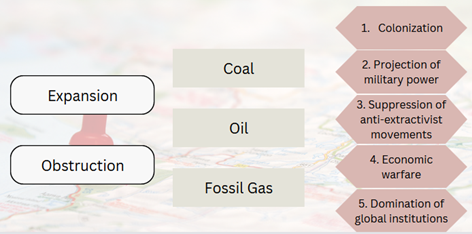
In recent years, both activists and researchers have started to invoke the term fossil imperialism to highlight the ways in which imperialist politics are tied up with the logic of fossil capitalism. Under fossil capitalism, ceaseless accumulation of capital necessitates continued expansion of an energy base of coal, oil, and natural gas. Imperial states play a key role in the process, which has in turn enabled a remarkable concentration of imperial power and continues to do so in today’s world order. Understanding fossil imperialism, therefore, is necessary for devising effective strategies of resistance to a planet-wrecking capitalist status quo.

Our model of fossil imperialism attempts to sketch the general workings of this relationship between imperial states and fossil capital in its historical development over the past two centuries and in its different varieties. It is principally based on the two general modes of expansion and obstruction. On the one hand, the expansion and protection of new fossil fuel resources and infrastructure are crucial to keeping the engine rooms of fossil capital well-supplied. On the other hand, the obstruction or destruction of the infrastructure of rivaling capital factions and states in order to maintain control over pricing and distribution has been equally integral to the history of fossil imperialism. In this way, the workings of fossil imperialism reflect the more general nature of capitalism as a mode of production and destruction.

It is important to take into account the specific characteristics of the three dominant sources of fossil energy (coal, oil, gas) when analyzing concrete cases. While all three energy sources still hold a significant share of the global fossil economy, each also corresponds to a distinct historical phase in the development of fossil imperialism. Coal powered the rise of the British Empire, the switch to oil marked the ascent of American hegemony in the 20th century, and fossil gas is increasingly at the core of the United States’ attempt to continue projecting its supremacy well into the 21st century. While there is growing concern over new forms of "green imperialism", especially in relation to the extraction and distribution of the raw materials supposedly required to decarbonize the economies of the North, current fossil-fueled conflicts such as the Russian war in Ukraine or the Saudi war in Yemen show that the age of fossil imperialism is - unfortunately - far from over.

There are at least five ways in which imperial states facilitate the interests of fossil capital: through colonization, the projection of military power, the suppression of anti-extractivist movements, economic warfare, and the domination of global institutions. This scheme makes plain the crucial role of fossil fuels, functioning variously as a driver, as an enhancer or as an outcome of imperial states' actions. It disentangles the ways in which contemporary politics are significantly influenced by fossil fuels, which have played a defining role in shaping the structure of capitalist corporations, settler-imperial states, and earth-transforming technoscience. These arrangements have had profound consequences for ecological destruction and the implementation of ecological management strategies.

Colonization is a form of direct political domination and subjugation of one people by another. It was perhaps most evident during the “golden” age of coal, the fossil fuel that powered the rise of the British Empire — from Australia to India, from South Africa to Borneo. Because coal extraction requires a large amount of disciplined labor, arguably, it also necessitates more comprehensive forms of social and political control than oil and gas extraction. At the same time, the British — in many cases — obstructed the rapid expansion of foreign coal industries to protect their own domestic industry.  Even in the case of oil and gas, many of the major private companies like BP and Shell still operate in markets shaped by colonial legacies.

support our work by making a donation today!

“Projection of military power” refers to different kinds of military interventions short of full-on colonization. Historically, states often deployed their own forces to protect fossil infrastructure abroad — a practice that continues today in various ways. Projection of military power also takes place through proxy armies, funded through a closed circuit of oil money and weapons contracts, as in the case of the Gulf monarchies. The 20th anniversary of the invasion of Iraq reminds us how current the role of military power remains. Twenty years after the regime-change military intervention, the United States still has 2500 troops stationed in the country. And, as has recently been revealed, BP and Shell, which had been barred from the country for decades, have extracted tens of billions of dollars in Iraqi oil post-invasion.

The pursuit of regional economic dominance on the part of fossil imperial states requires the suppression of anti-extractivist movements and other grassroots movements opposed to the social order. Interventionary military assistance was justified from the 1990s onwards on the basis of immigration enforcement, anti-narcotics control, and fighting against general criminality. For example, the role of the War on Drugs in continuing counterinsurgent practices against civilian population that were carried out until the late 1980s within a Cold War framework. However, according to Russell Crandall, professor at Davidson College in North Carolina and former Pentagon and National Security Council official under George W. Bush, the significant role in shaping outcomes is not primarily played by the U.S. military advisors, but rather by the "imperial diplomats" – the civilian officials within the U.S. foreign policy structure.

In his study of economic sanctions, Cornell historian Nicholas Mulder has demonstrated that modern-day sanctions developed out of mechanisms for energy control, blacklisting, import and export rationing, property seizures and asset freezes, trade prohibitions, and preclusive purchasing, as well as financial blockade — simply put, economic warfare. He shows that effectively isolating a whole nation from the intricate networks that support global trade requires the ability to gather information and generate knowledge. This involves mapping the intricate web of physical goods and resources that connect the specific country to the rest of the globe. Key factors in this process include having legal authority and access to more precise data and statistics. What makes it possible to impose this unilateral sanctions regime on the rest of the world is the domination of the global (financial and political) institutions that regulate the trade and distribution of fossil fuels. Both 19th-century British and 20th-century US-American dominance stemmed from their respective global leadership in corporate, regulatory, technological, and financial frameworks, which in turn was tightly linked to the pound sterling and later the US dollar being the chief reserve and trade currencies of their time.

In the age of American hegemony, the United Nations and other multilateral organizations — in particular, the Bretton Woods system (the International Monetary Fund and World Bank) — have become key means to maintain its armed primacy and fossil-based economic dominance. Significantly, the US-led bloc thwarted attempts by the newly decolonized countries in the postwar period to build a fairer world order by torpedoing the Third World agenda, the United Nations Conference on Trade and Development, the Non-Aligned Movement and the New International Economic Order.


Conclusion

It is impossible to understand imperialism without understanding the role of fossil fuels in its historical emergence and development. A climate movement that does not actively take into account the mechanisms of fossil imperialism risks being co-opted into imperialist false solutions to the climate crisis. Likewise, anti-imperial movements that fail to break definitively with the logic of fossil capitalism historically fall victim to various social and ecological contradictions. A case in point are the Pink Tide governments of the first decade of the 21st century. As University of Toronto political scientist Donald Kingsbury put it, when "faced with a choice between extraction and the local movements that made their governments possible,” these regimes “sided with extraction." A better understanding of the topic can therefore contribute to more effective climate justice activism, more strategic clarity and tactical innovation, and serve as a basis for more international solidarity.

Justice Kagan’s Dissent and the Call to Abolish the Supreme Court

By Jim Dugan


Justice Elena Kagan (joined by Sonia Sotomayor and Ketanji Jackson) wrote an important dissenting opinion in Biden v. Nebraska—the recent Supreme Court case concerning student debt relief. It wasn’t important because it voiced the progressive minority view of a ruling which further enforced the state policy of a country whose identity is rooted in settler colonialism, capitalist inequality, and enslavement-turned-apartheid-turned-mass-incarceration.  These dissenting opinions have been consistent through time—sometimes they are left in the dustbins; sometimes they are invoked in subsequent opinions of more popularly progressive times to overturn (in liberal fashion) historically horrific policy.  Those are important.  But this isn’t what makes Kagan’s dissent unique.  What Kagan has done, perhaps without full intention, is acknowledge in a published opinion that the Supreme Court may not live up to its ideal as a neutral arbiter—and may, in contrast, be a fundamentally undemocratic institution that sits on the side of elite power. Possibly in those aforementioned dustbins, this has been said before—but never in our era with such a high-profile case. 

Justice John Roberts drafted the majority opinion, joined by Clarence Thomas, Samuel Alito, Neil Gorsuch, Brett Kavanaugh, and Amy Coney Barrett.  Six despot elites (Roberts—Harvard Law; Thomas—Yale Law; Alito—Yale Law; Gorsuch—Harvard Law; Kavanaugh—Yale Law; Barret—Notre Dame Law) were able to strike down a policy favored by Congress and the Executive Branch which alleviated some of the financial woes of nearly 40 million people.  Justice Kagan no doubt recognized the irony of a political body which routinely gives flowers to the idea of American Democracy despite being itself the functioning antithesis.  As the dissent reads, even though the Court “is, by design, as detached as possible from the body politic,” it decided as final verdict “that some 40 million Americans will not receive the benefits the plan provides, because (so says the Court) that assistance is too ‘significan[t].’” Justice Kagan noted the Supreme Court was selecting itself as “the arbiter—indeed, the maker—of national policy” and in doing so has become "a danger to a democratic order." 

It is undisputable that there is no democratic restraint on the Court (in fact, twice now a president who faced impeachment proceedings [first Nixon, then Trump] has appointed at least three individuals)—to call it a body of autocrats is not unreasonable. As Keeanga-Yamahtta Taylor wrote in her New Yorker piece, The Case for Ending the Supreme Court as We Know It, the Court is “the branch of government that is least accountable to the American public” and “has tended, for most of its history, toward a fundamental conservatism, siding with tradition over more expansive visions of human rights.”  In that article, Taylor summarized a history of biased and contradictory opinions that shifted with the tides of political power and pressure—and affirmed that “calling into question the fundamentally undemocratic nature of the court” was a necessary act should we wish “to secure our rights and liberties in the United States.”  Calls to abolish the Supreme Court were not common when Taylor raised the possibility in 2020.  And yet, less than three years later, the same concerns which justified that consideration have now been voiced from within the chambers of the Supreme Court itself.  And while Kagan isn’t likely to soon join the masses in calling for the abolition of the Court, what her dissent stands for worried Justice Roberts enough for him to end his majority opinion by calling out the “disturbing feature” of questioning “the proper role of the judiciary.” Causing misperception, Roberts claimed, “would be harmful to this institution and our country.”

PLEASE SUPPORT OUR WORK BY DONATING TODAY!

But what Roberts calls misperception is anything but.  It is seeing through the ideological construction of the Supreme Court as a removed and objective overseer, and—with candor—recognizing it for what it is:  a political body that has the ability to curtail any progressive, egalitarian-oriented thrust for the benefit of its own Class.  What the Court’s right-wing majority doesn’t want is the Public seeing the Supreme Court as an appendage to Capital and the U.S. State; and as an obstacle in our struggle for a more equitable, peaceful, and climate-stable world. They call this conclusion a misperception, and while we don’t need Kagan to tell us that we are right to think otherwise, it is striking that she did.

Aside from voiding the possibility of immediate and much needed financial relief, the most concerning thing about Biden v. Nebraska is how it continues to lay the groundwork for the Court’s ability to usurp any significant action that may be introduced to alleviate suffering as we inevitably enter new eras of economic (and environmental) crisis. The Court has now, for a third time in recent terms, invoked the ‘major questions’ doctrine to prevent forms of structural relief/industry regulation (see alsoWest Virginia v. EPA [preventing regulation of carbon emissions related to climate change]; Alabama Assn. of Realtors v. DHH [invalidating the CDC’s eviction moratorium]). What this chain of decisions indicates is that even the hard work of mobilizing to pressure politicians to act won’t be enough to secure grassroots victories. While this may be daunting to admit, it is not surprising nor is our situation unique in history. For instance, as Karl Marx wrote in his 1871 text, The Civil War in France, the Paris Commune also identified the need for judicial functionaries to be “divested” of their “sham independence” and called for judges—like other public servants—“to be elective, responsible, and revocable.” This may be a path forward to gain democratic control over the judiciary in our own extreme times.  But to be in a position to design a judicial system that works as a vehicle for our side of the struggle, we must first abolish the one that currently exists.  In sum, it all begins with the notion that Keeanga-Yamahtta Taylor left us with in 2020: “It is long overdue to end the Court’s undemocratic role in U.S. society”—Now we can quote Kagan to prove it.

Pavlovian Socialism: How Metrics of Empire Can Ruin the Left

By Juan Gonzalez Valdivieso


It has been roughly a year since Ketanji Brown Jackson was sworn in to replace Stephen Breyer and become the 116th Justice of the US Supreme Court. The appointment has been hailed by liberal figureheads far and wide since then. President Joe Biden called the nomination an act of “[preserving] freedom and liberty here in the United States of America.” Senate Majority Leader Chuck Schumer celebrated the appointment as a “greater moment for America as we rise to a more perfect union.” In reality, the affair speaks to a vital yet often ignored aspect of sociopolitical oppression in the United States: metrics of empire. 

In the United States, like in any imperialist force, the powers-that-be employ many different tactics to preserve their rule. These tactics include Pentagon involvement in Hollywood filmmaking, the deliberate whitewashing of grade-school education, and the skewing of news coverage to manufacture consent for pro-elite policies. Metrics of empire fall under this same category, as they refer to a carefully curated incentive structure by which accomplishments and developments in American society are measured and rewarded. 

The structure itself can be further broken down into three subcategories: Government, Private and Public. The Government subcategory consists of exactly what its name suggests: governmental forms of legitimation and recognition. American society has been made to believe that prominent government positions carry an inherent degree of legitimacy and sophistication, such that they should be admired and revered simply for existing, rather than routinely interrogated as hotbeds of imperialist empowerment and corruption. Such positions — due to their aforementioned societal rank — thus become rewards in and of themselves, serving as markers of achievement that deserve public reverence and praise regardless of their occupants’ work or character. Jackson’s Supreme Court nomination exemplifies this perfectly.

As a black woman working within the American legal system, Jackson experienced no shortage of hardships and systemic obstacles in her professional journey. Considering demographic data alone, it is clear that Jackson was in largely uncharted territory, as just under 5% of first-year law students are black women while they make up just over 3% of associates and less than 1% of partners. In the end, however, what was her reward for surpassing these systemic hurdles and beating overwhelming odds? A seat on the Supreme Court, a grossly antiquated, inherently undemocratic, and historically oppressive institution that most often operates at the behest of capital and bends to the will of America’s most reactionary impulses.

The Private category consists of entities such as private universities and privately owned publications:

  1.  Universities (ex: The University of Chicago): The school is considered one of the 10 best in the country and has historically boasted competitive rankings across a broad range of subject areas and specializations. Yet, it was the so-called “Chicago Boys” — a group of economics graduates — who cultivated and ultimately spearheaded the implementation of neoliberal economic policy abroad, namely in Augusto Pinochet’s Chile. This cohort of Chicago alumni collaborated with the United States government to advance business interests by using Augusto Pinochet’s Chile as a testing ground for the economic models and policies they hoped to pursue domestically. 

  2.  Publications (ex: The New York Times): Despite being heralded as the gold standard for journalism nationwide, the investor-owned New York Times routinely employs biased coverage and partisan language when discussing matters relevant to American foreign policy -- including Israel’s ethnic cleansing of the Palestinians and the Iraq War — whitewashing such atrocities to manufacture consent for the imperial project.  

The Public category consists of entities such as nonprofit organizations and public-facing awards:

  1.  Nonprofits (ex: Doctors Without Borders): Though it is ranked 26th among America’s Top 100 Charities according to Forbes magazine, this organization is a hotbed of white saviorism and intraorganizational racism that perpetuates US hegemony abroad through the lens of healthcare and medical treatment. 

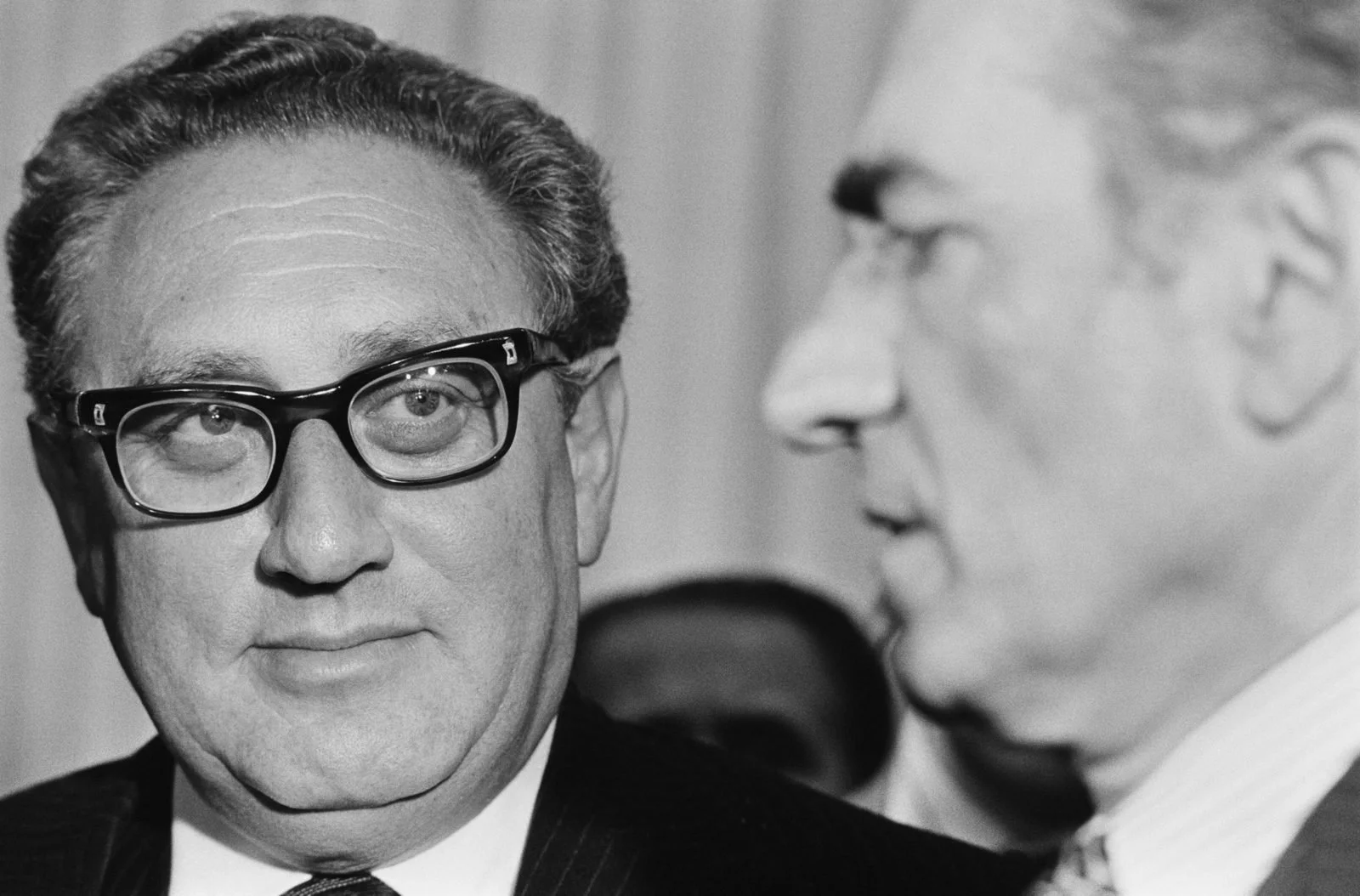
  2.  Awards (ex: The Nobel Prize): The prize is widely considered to be the most prestigious recognition of achievement in the world. Yet, the awardees of the Peace Prize have included the likes of Henry Kissinger and Barack Obama. 

This state of affairs spells a particularly grim prognosis for the socialist movement across the United States. Metrics of empire have the very real potential to serve as direct inhibitors to tangible progress in the fundamentally socialist areas of social justice, economic transformation, and material improvement. As such, a sort of Pavlovian socialism can develop, one in which it is only through the awarding of such imperial accolades and symbols of legitimation that our work is perceived as successful, casting out all other achievements in the process.

Please Support OUR WORK BY DONATING TODAY!

At best, this dynamic can create a qualitative hierarchy in which the work recognized by metrics of empire is considered superior. At worst, the dynamic can become a hegemonic enclosure fundamentally opposed to the radical dimensions of socialist praxis, eventually creating a scenario in which the metrics themselves become the sought-after achievements rather than the empirical progress made by the work that warranted the metrics’ awarding in the first place. 

We’ve seen this play out already with organizations across the country, one such organization being the Sunrise Movement. While its founding principles contained more radical conceptions of action and changemaking — including sit-ins at government offices, Wide Awake demonstrations, and recognition by prominent leftist figures such as Noam Chomsky — Sunrise’s more recent activism has left much to be desired. Since the beginning of this decade, it has largely shifted away from direct action-based initiatives to focus on electoral endorsements and armchair advocacy. Most notably, these shifts have resulted in a severe lack of climate victories on the legislative front as well as serious organizational neglect of representation and empowerment of marginalized voices in the movement, particularly those of color.

The shift can be largely understood as a pragmatic change resulting from an outstanding reliance on big-money donations as well as ties to government officials and politicians. Through accepting and actively engaging with metrics of empire in this context, namely of the governmental and private varieties, the Sunrise Movement and organizations like it have provided a glimpse of what such a dynamic could mean for the socialist movement when applied to actual revolutionary praxis in the future.

This is not to suggest that socialist praxis should be entirely devoid of notable awards or recognitions. After all, acknowledgements of outstanding achievement can be an incredibly valuable way of qualifying motivated, focused, and effective work. These “metrics of the proletariat,” however, must have a carefully curated relationship to the doers of the work and to the empirical effects of it. The metrics themselves must never come to occupy the place of the work’s initial objective: substantive and revolutionary change. 

As such, “metrics of the proletariat” are a thing of the socialist future, an element of our aspirational imaginary that can come to occupy the dynamics of our work down the line, but not that of the present day. So long as systemic injustices and widespread oppression reign supreme — further emboldened by the unrelenting fervor of imperial capitalism — these metrics will inevitably reward advantaged and privileged socialists and, more pressingly, will run the risk of becoming metrics of empire in and of themselves.  

Thus, as the socialist movement carries on with its vital work of national and global changemaking, it cannot neglect the very real hurdle that metrics of empire can come to represent. Only by preemptively abolishing the air of legitimacy these metrics now hold — and looking toward a future in which new metrics of success and achievement that honor socialist ideals and avoid imperial capitalist corruption will be established — can the movement avoid existing structures of incentive and recognition that seek to counteract its aims at every turn.


Juan Gonzalez Valdivieso is a Colombian Marxist. In his writing, he seeks to interrogate the nuances of socialist thought and praxis.

The Political Tragedy of Capitalist Rule

By Harry Magdoff and Paul M. Sweezy


Republished from Monthly Review.


Toward the end of his life, Engels wrote: “It is a peculiarity of the bourgeoisie, distinguishing it from all other ruling classes, that there is a turning point in its development after which every increase in its means of power, that is in the first place every increase in its capital, only tends to make it more and more incapable of ruling politically.” Whatever may have been the validity of this statement a hundred years ago (Engels died in 1895), there can be no doubt that it applies with uncanny accuracy to the world of the late twentieth century.

Society is made up of parts that work together, sometimes more and sometimes less successfully, to produce its livelihood and reproduce itself. The master insight of Marxism is that during that period of human history that has been recorded (some four millennia) the decisive parts have been classes, one dominant and exploitative, the other dominated and productive. For most of this period both parts have been necessary: the brains above, the brawn below. They have also been in continuous conflict over the division of their joint product. The vision of Marxism has been that with increases in human knowledge and growth in the productivity of human labor, the necessity for this split tends to disappear. Brains and brawn tend to come together in the far more numerous productive class. From being a struggle over the division of a joint product, the conflict between the classes becomes increasingly concerned about what will be produced and for what ends. Making these decisions is surely what Engels had in mind when he spoke of “ruling politically.”

Successful political rule in a class society is far from being guaranteed. It involves on the part of the ruling class not only effective protection for its own power but also an understanding of the design of the system as a whole and action to see that the essential parts are maintained in working order and able to perform their respective functions. If a ruling class acquires a monopoly of power and used it exclusively for its own advantage, the result will be certain disaster. The historical record is replete with such tragedies. What is required for successful political rule, therefore, is either wisdom and self-restraint or counter-pressure from a non-ruling but powerful class or alliance of classes. Whatever may have been true of earlier times, it is pretty clear that no modern capitalist ruling class has ever been blessed with wisdom or self-restraint, from which it follows that such successes as may have been achieved in the way of political rule are the result of effective counter-pressure from other classes.

PLEASE SUPPORT OUR WORK BY DONATING TODAY!

Many examples, we believe, could be cited in support of this conclusion. One of the best and probably the most famous is the story as told by Marx in Volume 1 of Capital of how bourgeois governments in England, protesting and screaming all the way, finally came during a centuries-long struggle to accept the necessity of a comprehensive regime of labor legislation (prohibition of child labor, conditions of work, length of the working day, etc.). Similar stories could be, indeed have been, told about most of the other developed capitalist countries, including the United States. As for the underdeveloped capitalist countries of the world, most of them, sadly, have little or nothing in the way of successful political rule to boast of.

What has all of this, you may ask, to do with our opening quotation from Engels? His contention, you will recall, was that there is a point in the development of capitalist power after which its capacity for political rule declines. Our contention is that history has proved him absolutely right.

The last two decades have seen an unprecedented increase in the amount and power of capital on a global scale. Common sense tells us that capital has never been in a better position to rule politically, i.e., to do the things that need to be done for society to function reasonably effectively and with a minimum of destructive conflict and disturbance. In reality, of course, nothing of this kind has happened. Instead, capital has used its power exclusively in its own interest, and in doing so has set the world on the road to the disaster history should have taught us to expect.

What should we learn from this experience? First and foremost, that as the second millennium and the twentieth century draw to a close, capital has totally lost its capacity for political rule. Now more than ever what is needed is organized, militant struggle to check and reverse capital’s onslaught on the earning power and living standards of the world’s working and oppressed classes and on the natural environment that is the indispensable foundation for civilized life on an already endangered planet. And the final lesson surely is that success in this struggle must eventually lead to the definitive overthrow of the rule of capital.

The Rosenbergs: Traitors or Heroes?

By Stephen Millies


Republished from Struggle La Lucha.


In his funeral eulogy for Ethel and Julius Rosenberg, W.E.B. Du Bois declared, “They died because they would not lie.” The Rosenbergs were burned to death in the electric chair by the U.S. government on Juneteenth 1953.

Du Bois, the legendary Black scholar, also arranged the adoption of the Rosenbergs’ two young children, Michael and Robert. The Jewish orphans were adopted by Anne Meeropol and Abel Meeropol. Abel wrote “Strange Fruit,” a song about lynching that Billie Holiday made famous. 

The Rosenbergs were blamed for the Soviet Union being able to develop an atomic bomb. Their frame-up and execution for espionage during the Korean War was the peak of the anti-communist witch hunt in the United States. 

The ruling class was in a frenzy because of the Chinese Revolution. The Soviet Union’s ability to defend itself against the Pentagon’s nukes made the banksters even more mad.

The FBI and corporate media insisted the Soviets “stole the secret” of the atom bomb. The real secret was revealed when the U.S. dropped an atom bomb on Hiroshima, Japan, on Aug. 6, 1945. By incinerating 100,000 people, including 30,000 Korean slave laborers, the Pentagon showed it was possible to develop nuclear weapons.

Showing it was what made it knowable. Some of the scientists involved in the Manhattan Project — the code name for the U.S. atom bomb project — gave the Soviets five years to match the U.S. effort. 

The rub wouldn’t be in the theoretical work. U.S. scientists knew the Soviet Union had capable physicists.

Among them was Lev Landau, who would win the Nobel Prize in Physics in 1962. Even before the Bolshevik Revolution, the Russian chemist Dmitri Mendeleev had devised the periodic table of the elements.

U.S. scientists thought the Soviets would have difficulty in making extremely pure chemicals and seals to lock in corrosive gases. Because of socialist economic planning, the Soviet Union was able to concentrate its efforts and explode a nuclear device on Aug. 29, 1949. It took four years, not five, to produce.

Decades of lies

FBI Director J. Edgar Hoover immediately set out to nab the “communist spies” that smuggled secrets. How else could those “stupid people” in the Soviet Union have produced nuclear weapons? 

U.S. schoolchildren were taught their country was the land of great inventors like Thomas Edison. Newspapers told their readers that only the U.S. could have built the bomb.

Thirty years later, President Ronald Reagan said there wasn’t a Russian word for freedom. (There is. It’s svoboda.) 

So U.S. capitalists were astonished when the Soviet Union sent the first artificial satellite into space on Nov. 7, 1957 — the 40th anniversary of the Bolshevik Revolution.

Claims that the Sputnik satellite was the result of spying fell flat. The Pentagon wasn’t able to launch its own satellite until months later, on Jan. 31, 1958.

It would have been much more difficult to execute the Rosenbergs after Sputnik. It shattered the bigoted conception that 150 different nationalities in the Soviet Union couldn’t do science.

Today another big lie is being told. The People’s Republic of China is being blamed for the COVID-19 pandemic.

With no evidence, the media and even comedians like Jon Stewart are claiming the coronavirus “leaked” from a Wuhan laboratory. This is a blood libel similar to blaming Jewish people for plagues in medieval Europe or the racist myth that immigrants bring diseases to the U.S.

Building a frame-up

The FBI framed the Rosenbergs and a co-defendant, Morton Sobell, by connecting dots and forging evidence. At the end of World War II, the Communist Party in the United States had around 75,000 members, according to the University of Washington’s “Mapping Social Movements” project, including thousands of Black members. They fought racism and built unions.  

Over 10,000 party members were members of the U.S. armed forces. Some party members had government jobs, including the electrical engineer Julius Rosenberg, who was employed at Fort Monmouth army base in New Jersey.

The Manhattan Project had 130,000 employees. U.S. army counterintelligence agents constantly spied on them. 

Even J. Robert Oppenheimer, considered to be the father of the atomic bomb, was a suspect. The army hesitated appointing Oppenheimer to lead the Manhattan Project’s Los Alamos laboratory because of his left-wing associations before the war.

Yet with thousands of U.S. Army and FBI agents prowling around, nobody claimed to have found any spy rings until after the Soviets exploded their bomb.

Julius Rosenberg was fired from his civilian job with the U.S. Army Corps of Engineers in January 1945 as a suspected communist. (He actually resigned his membership in 1942.) But Julius wasn’t arrested until July 1950.

At the time there were still around 40,000 Communist Party members. Hundreds of thousands of people had worked with the CP or the Young Communist League.

That was a big talent pool for Hoover and his FBI agents to construct a frame-up by matching people with left-wing backgrounds. They found out that Julius Rosenberg’s brother-in-law David Greenglass, an ex-YCL member, had worked as a machinist at Los Alamos. 

Presto! The “Rosenberg spy ring” was invented.

Under threat of the death penalty, David Greenglass told prosecutors whatever they wanted. His lying testimony sent his sister Ethel Rosenberg to the electric chair. It took five jolts of electricity to kill her.

Show trial

The Rosenbergs and Morton Sobell were convicted in a show trial. Although at the time a quarter of New York City’s population was Jewish, not a single Jewish juror was chosen.

One of the federal prosecutors was Roy Cohn, who had illegal “ex parte” conversations with presiding Judge Irving Kaufman in which Cohn urged the death penalty. After serving as Senator Joe McCarthy’s sidekick, Cohn became a lawyer and mentor for Donald Trump.

The evidence was flimsy. David Greenglass produced three crude sketches. One looked like a pie chart. A baby carriage couldn’t have been made from them, much less an atomic bomb.

Greenglass said his spy contact was Harry Gold, a chemist and pathological liar who admitted that he “lied for a period of 16 years.” Gold also claimed to be a courier for Klaus Fuchs, a scientist at Los Alamos.

Fuchs confessed he was a spy to a Scotland Yard detective and was jailed in Britain. Fuchs identified Gold as his contact from a picture.  

Fuchs’ statement and identification of Gold is questionable. Fuchs never confronted Gold in a U.S. court and thus couldn’t be cross-examined. It’s striking that the convictions of Greenglass, Gold and Fuchs would have been impossible without their confessions.

The FBI even suspected future Nobel Prize winner Richard Feynman, who had been Fuchs’ roommate at Los Alamos. FBI agents changed their mind only because Feynman was completely non-political.

PLEASE SUPPORT OUR WORK BY DONATING TODAY!

Morton Sobell was indicted because he was a schoolmate of Julius Rosenberg at New York’s City College and a former YCL member. The only witness against Sobell was Max Elitcher, who claimed vaguely to have seen Sobell visit Julius Rosenberg while carrying a container that could have had film in it. 

He then said he had no idea what was in the container, yet Sobell was sentenced to 30 years in prison.  He served 17, including five years at Alcatraz.

The prosecution stressed that Sobell and his family went to Mexico after David Greenglass was arrested. If Sobell was such a master spy, wouldn’t the Soviets have tried to help him escape?

Instead Mexican secret police kidnapped Sobell and turned him over to FBI agents at the border.

A key piece of evidence was forged. A hotel card from the Albuquerque Hilton was introduced to prove Harry Gold was in town to meet David Greenglass on June 3, 1945.

Miriam and Walter Schneir were authors of “Invitation to an Inquest,” a detailed exposé of the Rosnberg-Sobell case. They looked at copies of the card. It had different date stamps on the front and back despite Gold having checked in and out on the same day. 

When the Schneirs sought to examine the original card, the FBI told them that the evidence was destroyed, even though J. Edgar Hoover called the Rosenberg case “the crime of the century.”

Smearing the dead

Millions of people around the world rallied around the Rosenbergs. They saw parallels between their frame-up and the anti-Jewish persecution of French army officer Alfred Dreyfus decades before.

The American Jewish Committee, which represents the small section of the Jewish Community that’s capitalist, didn’t think so. Writing in the AJC’s Commentary magazine, historian Lucy Dawidowicz endorsed the Rosenbergs’ execution. 

Today when Jewish youth join marches supporting Palestinian liberation, Commentary magazine supports bombing and starving Gaza.

The publication of “Invitation to an Inquest” in 1965 sparked new interest in the Rosenberg and Sobell cases. The U.S. deep state counterattacked, particularly after the overthrow of the Soviet Union.

The FBI and CIA say they have proof that the Rosenbergs and Sobell were guilty. They point to the “Venona Project,” which consists of allegedly deciphered messages between Soviet agents in the U.S. and their Moscow headquarters. The documents claim to show that the Rosenbergs, Sobell and dozens of other people in the U.S. were Soviet agents.

Why should anybody believe U.S. spy agencies? These are the folks that told the world that Iraq had weapons of mass destruction.

Even if the Venona papers are genuine, the rub is matching code names with individuals.  One of the alleged code names for Julius Rosenberg was “liberal.” Does that sound like a name for an accused communist super-spy? 

The code name linked to Morton Sobell described him as having a wooden leg, which he didn’t have. There was no code name for Ethel Rosenberg.

The Venona Project smeared a series of liberals who couldn’t defend themselves since they were dead. That was the case of the economist Harry Dexter White, who worked in the U.S. Treasury Department.

The deep state and the ultra-right use the Venona papers to support Joe McCarthy’s phony charge that President Franklin Roosevelt’s administration was filled with communists.

The documents have also been used to rehabilitate Elizabeth Bentley’s tarnished reputation. The professional liar gave dishonest testimony against the Rosenbergs, defendants in other trials and before a series of congressional witch-hunting committees.

Typical of the so-called “red spy queen” was her claim to have given the secret date of the Normandy landings to the Soviets. Actually, Gen. Dwight Eisenhower informed the Soviets of when D-Day would occur. He did so because he wanted them to launch an offensive and prevent German troops from being withdrawn from the Eastern Front.

Never forget the Rosenbergs

“I consider your crime worse than murder,” declared Judge Kaufman when he sentenced the Rosenbergs to the electric chair  

Worse than the killers of the 14-year-old Emmett Till? The two racists who tortured the Black youth to death got off scot-free. 

Gen. Douglas MacArthur wanted to drop dozens of atom bombs on Korea and China. Judge Kaufman blamed the Rosenbergs for the U.S. not being able to do so.

Former Secretary of State Dean Rusk wrote in his memoirs that the Pentagon’s Joint Chiefs wanted President John F. Kennedy to approve a plan to launch nuclear first strikes against the socialist countries.

The whistleblower Daniel Ellsberg revealed that the Pentagon plan would have killed 600 million people. 

What if the Rosenbergs and Morton Sobell had helped the Soviets build an atom bomb? It was only because the Soviet Union — and later the People’s Republic of China and the Democratic People’s Republic of Korea — were able to develop a deterrent to the Pentagon’s arsenal of atomic and hydrogen bombs that a nuclear holocaust was averted. 

But the Rosenbergs and Sobell didn’t have the ability to penetrate the Manhattan Project. The FBI wanted them to finger dozens of liberals to back up Joe McCarthy’s fantastic claim of “20 years of treason” under the Roosevelt and Truman administrations. 

The courage of Ethel Rosenberg, Julius Rosenberg and Morton Sobell prevented this nightmare.

Ethel Rosenberg was electrocuted for supposedly typing reports. She was arrested almost a month after Julius Rosenberg was jailed to put pressure on him to lie.

David Greenglass later admitted he lied about Ethel Rosenberg’s typing. Justice demands that Ethel Rosenberg be given a presidential pardon.

When Morton Sobell was 91 years old, he was badgered by New York Times reporter Sam Harris into saying he and Julius Rosenberg offered information to the Soviets. It was from their jobs as electrical engineers, not from the Manhattan Project.

Twenty-seven million Soviet people died defeating Hitler. Yet during World War II both Britain and the United States refused to share new anti-aircraft weapons and radar with the Soviets.

If Morton Sobell and Julius Rosenberg did indeed help the Soviets, it wasn’t espionage to help a gallant ally. It was whistleblowing, like Daniel Ellsberg did when he released the Pentagon Papers or the truth-telling by Chelsea Manning about U.S. war crimes in Iraq and Afghanistan.

The best way to honor the Rosenbergs is to fight even harder to free Mumia Abu-Jamal, Leonard Peltier, Ruchell Cinque Magee, Sundiata Acoli, Mutulu Shakur and dozens of other political prisoners.

One way to do so is to donate to the Rosenberg Fund for Children, which helps the children of political prisoners, at RFC.org.

Red Scared: Revising History at the Victims of Communism Museum

By Billie Anania


Republished from The Baffler.


“THERE IS NO WAY he is a victim of communism,” my partner quips, pointing to a photo of the late Pope John Paul II. We are near the end of our visit to the new Victims of Communism Museum, standing in an elevator-size lobby with photographs of “victims” screen-printed all over the walls. Among the many victims and honorees: Chinese artist Ai Weiwei, the Dalai Lama, Romanian writer Herta Müller, Hong Kong activist Joshua Wong, and Hungarian neofascist Viktor Orbán.

These public figures are the latest faces of a long campaign to flip the historical script. Ai Weiwei, among the highest-selling artists in the world, has earned his keep resolutely opposing the Chinese Communist Party. Meanwhile, Orbán’s vocal denunciations of Soviet occupation helped launch a political career filled with what critics call “pure Nazi speech.” Despite the cognitive dissonance of this display—Müller’s father served in the Waffen-SS, for god’s sake—the strategy allows the decades-old Victims of Communism Memorial Foundation to position all anti-communists as renegade freedom fighters regardless of their fascist associations, thus rebranding its Holocaust revisionism anew. What better destination for their new museum than Washington, D.C., just one mile away from the U.S. Holocaust Memorial Museum?

Originally founded during the Clinton era by a unanimous act of Congress, the Victims of Communism Foundation is a relic of Cold War-era propaganda. Its central belief that communism has claimed “more than 100 million” victims was lifted from The Black Book of Communism, a controversial piece of Western agitprop that has since been delegitimized by its own contributors. The book, as well as the foundation, peddle the spurious notion that a “double genocide” took place in the twentieth century: one by fascists and another by so-called “Judeo-Bolshevik Communists.”

According to the Victims of Communism team, all Nazis killed by Soviets are victims of communism, as are all deaths resulting from Covid-19. Inside the museum, Mao Zedong figures as a “mass murderer,” but Adolf Hitler is nowhere to be found. Vladimir Lenin and Joseph Stalin, too, are portrayed as running authoritarian, anti-democratic regimes, yet British colonialism and American imperialism garner nary a mention. Hardly anywhere in the foundation’s documents, or in the museum, are Nazis, fascists, royals, colonizers, or capitalists portrayed as aggressors. In fact, World War II isn’t even included in the museum’s timeline.

Is now a good time to mention that the Victims of Communism Foundation’s original co-chairman, Yaroslav Stetsko, once led the Organization of Ukrainian Nationalists to ally with Nazi Germany alongside Stepan Bandera, who is now a national hero of Ukraine? Not only does the foundation count Nazi sympathizers among its scant few donors, but many other immortalized “victims” were involved in the deportation and extermination of Jews, Poles, Roma, Serbs, Belarusians, and Ukrainians on behalf of Nazi puppet regimes across Europe. I went into the museum expecting to see the usual suspects among the victims—from Holocaust perpetrators Ante Pavelić and Roman Shukhevych to the kulaks and Cuban plantation owners—but was surprised to find the vaunted list has gotten a facelift. Perhaps they hope to attract a new generation of culture warriors, or just far-right trolls with Turning Point USA aspirations.

After more than an hour wandering around the building, I was left deeply unsure what, in their view, even constitutes a “victim” of communism, let alone a “communist.” No one will walk out of this institution knowing much more than some fudged numbers and fashy buzzwords. This kind of hyperbolic revisionism meets roadside tourist trap is capitalist projection at its finest, an alternative history built by dark money and reinforced by disinformation. Nonetheless, considering how much the art world masks its own regressive politics, an unabashed right-wing exhibition of this magnitude is a genuine treat for sickos like me.

Part fascist propaganda, part Epcot ride, the Victims of Communism “museum” is actually just three claustrophobic rooms of dystopian imagery and haunted house sounds, all designed to shock and appall. Tickers run at the bottom of screens endlessly tallying “victims,” while jump-cut documentary footage rushes between shots of Cuba, China, Poland, and Hungary. Along the floors and walls, the words WAR, REVOLUTION, and TERROR pop out against deep shades of black and crimson. LIES, one placard announces near an illuminated image of Eastern European Christians holding crosses. RELIGIOUS OPPRESSION, reads another, juxtaposed with stock imagery of barbed wire.

I can only describe the videos in this place as Ken Burns documentaries from hell. The first begins once visitors trigger a foot plate, enhancing the venue’s dungeon-esque quality. Then a series of jagged screens light up, interspersing photographs of Lenin, Trotsky, and Tsar Nicholas with an ominous, staccato orchestral score. Rather than address the complex historical conditions leading up to the October Revolution, our humble narrator goes straight for the gold: “Reformers hoped for a democratic solution—the Bolsheviks had another idea.”

It was hard for me not to burst out laughing at this appeal to Menshevik supremacy, but I held my cool, lest I offend the solitary front desk worker—who was, I should add, the only other person in the building. Afterward, I noticed a small glass display that held a first edition of The Communist Manifesto, as well as a Russian newspaper from the day after the Bolsheviks took power. “Marx and Engels’ manifesto gave birth to the world’s most violent regimes,” the nearby text intones. Lenin, too, is accused of single-handedly building the gulags and killing “hundreds of thousands” of Russians, leaving a “blood-soaked legacy” upon his death a few years later. Based on this room alone, one might surmise that communism is an individualistic, tyrannical ideology oriented around exploitation.

Of course, they would be wrong, but no matter to our humble curators; the museum never sets out to define communism in any capacity. In their selective version of history, once upon a time, Marx and Engels wrote an evil little pamphlet, and then—skipping right over the Paris Commune—we find ourselves in 1917 at the start of the Russian Revolution. We then jump, curiously, from Stalin consolidating power in the 1930s to the Cold War and beyond. These glaring gaps in history feel intentional in the displays devoted to starvation and imprisonment, in which Soviet gulags take precedence, but Nazi concentration camps are nowhere to be found.

A related video juxtaposes the gulags with prisons in Vietnam, China, Korea, and Cuba. Paintings and sketches made by detainees are interwoven with quotes from Nobel laureate Aleksandr Solzhenitsyn (a favorite of Steve Bannon and Jordan Peterson). Hearing the words of prisoners and experiencing their art, I was somewhat moved by the concept of creative resilience in confinement, particularly given the brilliant work produced by incarcerated artists here in the States. But it’s hard not to see this as artwashing Nazi war crimes, or what Ljiljana Radonić calls “comparative trivialization.”

By downplaying the Holocaust, the museum can seamlessly move to the Holodomor and Great Leap Forward, two periods of enforced economic reform that they portray as intentional massacres. And with little wall space remaining, they do a speed-run through Vietnam, China, North Korea, and Cambodia, sloppily tying together Juche, the state ideology of North Korea, with the Khmer Rouge. This rhetorical trick, which is hard not to perceive as racist, allows them to gloss over the nuances inherent to these distinct regions while avoiding what happened in Cambodia before Pol Pot took power. (As Anthony Bourdain once said, if you visit Cambodia, you will “never stop wanting to beat Henry Kissinger to death with your bare hands.”) In a final video, the narrator also claims that Czech protesters from 1968 desired, above all, “democracy and free markets,” rather than the loosening of Soviet control over creative and political forms of expression. As it ended, my gaze fell on a nearby wall photograph showing an East German guard fleeing to West Berlin, which is credited to the CIA.

Toward the exit, an interactive choose-your-own-adventure game allows visitors to reflect on all this “information” as a Cuban, Korean, or German individual. Two paths can be chosen on the screens provided: in the first, you comply with a newly appointed communist government, while the other takes you on the dissident path. No matter which path I chose, however, my protagonist ended up compromised—either by facing persecution or bringing shame on my legacy. The framing is utterly nihilistic, a downward spiral resulting in entrapment no matter the response. In many ways, it resembles how people describe getting arrested in the United States.

PLEASE SUPPORT OUR WORK BY DONATING TODAY!

Before going any further, I should clarify a few things. I don’t doubt the existence of persecution and suffering in communist countries. I’m well aware of the mortal consequences of agrarian reforms in China and Russia, as well as the problems of absolute power. But the Victims of Communism Museum is not the place to find valid critique; it’s a wasteland of thinly veiled bigotry. Their fast-and-loose analysis feeds into a far-right strategy to whitewash imperial, feudal, and fascist histories, developed at a time when Western countries welcomed former Nazis into top-brass positions. Moreover, selectively lifting stats from long-debunked sources only further promotes disinformation; for an example, look no further than the “horrors of socialism” resolution recently passed in the House, which parrots the “100 million victims” statistic.

Undercutting all of this, of course, is the role that Western powers have played in constraining—violently and otherwise—Soviet and Third-World autonomy. Not a single revolution of the twentieth century went without its fair share of trade sanctions, assassination attempts, and disinformation campaigns. Rather than focusing on building a new society, revolutionary movements have always been forced on the defensive—and even still, freedom of art flourished in the well-funded Soviet film industry, and Vietnam successfully ousted its occupiers. Should we really be taking what Holocaust revisionists claim about China, Cuba, and elsewhere today at face value?

Conflating communism with fascism—while conveniently eliding the horrors carried out by its own fascist honorees—is old hat for this foundation, and the museum treads well-worn territory. Curiously, many of the foremost “victims” are men, and few are Black. I almost have to admire their attempts to tiptoe around slavery and identity politics, if it weren’t for the number of Black radicals persecuted by and within capitalist countries—from the outright assassinations of Amílcar Cabral and Patrice Lumumba to the persecution of intellectuals like Assata Shakur and Paul Robeson. Of course, even the nightmare fantasies concocted here include a tinge of casual racism, and it’s remarkable they even thought to acknowledge communist revolutions in Africa (albeit in small text near the exit).

As this all makes clear, the museum is not really for anyone who disagrees with conservative doctrine, or even for centrists playing both sides; it’s for far-right ideologues who already champion the views espoused here and would like their children to do the same. As with most roadside attractions, every reactionary impulse is thrown to the wall to see what sticks. While Covid-19 is simultaneously a hoax and communist plot, you can still find the Victims of Communism-branded hand sanitizer in its gift shop, along with supposedly real fragments of the Berlin Wall, anti-Che Guevara shirts, bracelets made by a Ukrainian jeweler, and—oh my—a Nora D. Clinton book on the perils of quarantining. Communists are simultaneously to blame for Covid-19, as well as for lockdowns, but please do remember to wash your hands!

By now you’ve likely seen the videos of the expansive encampment across from the museum in D.C.’s McPherson Square. Social media posts hardly convey the scale; there are countless tents across multiple city blocks keeping the city’s unhoused population warm through the winter months. “When you step outside the building you conveniently enter the real-time updating Victims of Capitalism Museum,” one astute reviewer noted. While D.C. officials recently cleared the premises—an action endorsed by the entire Washington Post editorial board—I doubt they recognize the irony here.

This is the world the Victims of Communism Foundation seeks to preserve, and the one they also tend to blame on their liberal opponents—who are also, supposedly, all communists. Coincidentally, the museum is located in the United Mine Workers of America Building where, as Mike Davis has written, union leader John L. Lewis notoriously banned communists and imposed top-down leadership to limit local autonomy. Much like Lewis, the museum’s goal is to obfuscate, yet for anyone with a working smartphone, much of it can easily be written off. At the same time, Eastern European countries like Hungary, Lithuania, and Latvia have all passed laws criminalizing opposition to the “double genocide” claims, so maybe the propaganda really is working.

For now, the Victims of Communism Museum continues its mission uninterrupted—or at least from 9:00 a.m. to 3:00 p.m., five days a week—all while its foundation still receives donations from fascist sympathizers across Eastern Europe and the Balkans. As recently as 2021, they installed a controversial memorial in Ottawa entirely with private funding. Rather than name victims on the memorial, the foundation instead listed the monument’s moneyed donors. Perhaps letting people Google victim names might get them into trouble again. At the very least, Canadian media remains skeptical.

“Terror is an absolute necessity during times of revolution,” a quote from Soviet officer Felix Dzerzhinsky reads on one wall back in the museum. True enough, but terror for whom? For the profiteers of state terror at home and abroad? Or enslavers of the prison-industrial complex who sit on museum boards? I fail to see what Mao or Stalin could do beyond the grave to significantly impact my life, but I can see how white nationalism threatens my agency. I can see that by flipping the script, fascists quickly transform into freedom fighters, and thus the severity of slavery and extrajudicial killing in capitalist countries become mere matters of opinion. Such sore winners will never be happy until every last speck of land is open for extraction—and even then, it still won’t be enough.

But, hey, don’t just take my word for it! Listen to the voices of their workers—or, if you will, the Victims of the Victims of Communism Foundation. One woman who worked there for a few months notes that “sexist and conservative management” contributed to a “toxic work environment.” Another employee claims that anyone who is not a “staunch conservative” will be “extremely uncomfortable” with management’s daily discussions and that employees are not allowed to “openly voice concerns.” While none of this sounds surprising for a U.S. nonprofit, it does speak volumes about an institution that claims to be on the right side of authoritarianism—turns out they’re just on the right.

What the Titan Submersible Says About Capitalist Culture

By Saheim Patrick


It is ironic that the name of the doomed sub that captivated the minds of Americans this past week, contains the suffix: -gate, a morpheme that has become de facto synonymous with conspiracy theories. The irony stems from the fact that conspiracy theories, or at least the ones that attach -gate to their title, are a direct product of the type of distracting, unified discourse characteristic of our current, US society that has allowed the topic of the OceanGate submersible to thrive.

The story, largely irrelevant for reasons which will be divulged, goes like this: five men aboard a twenty-two foot carbon-fiber and titanium craft, named the Titan, planning to tour the ruins of the famed Titanic shipwreck. At an hour and forty-five minutes into their expedition, contact was lost with their surface ship: the Polar Prince. In the days following, the story and question of whether they were alive or not, left the public reeling, and the media magnates sensationalizing. It is important, for the sake of critiquing the discourse surrounding it, to note that the men aboard paid 250,000 USD each for this trip. This particular detail has stoked a fire in the discussions of the event, namely on Twitter, and has promoted a false dichotomy, a false binary, in talking about the sub. The sides that you can take are presented as: finding the likely deaths of these men a tragic event, or ridiculing and showing apathy towards their deaths. It is not uncommon for a simplification of this sort to happen in modern discourse.

The dominant medium of communication in the US is social media. It is easy to believe it to be the Internet as a whole, but the difference between a technology and a medium must be noted (not only for this clarification, but for our understanding of modern discourse as a whole). Neil Postman’s 1985 treatise on dominant mediums of communication throughout history and television as a medium, Amusing Ourselves to Death: Public Discourse in the Age of Show Business, tackles specifically this difference.

We might say that a technology is to a medium as the brain is to the mind. Like the brain, a technology is a physical apparatus. Like the mind, a medium is a use to which a physical apparatus is put. A technology becomes a medium as it employs a particular symbolic code, as it finds its place in a particular social setting, as it insinuates itself into economic and political contexts. A technology, in other words, is merely a machine. A medium is the social and intellectual environment a machine creates.

In other words, a technology is a machine, and a medium is the use of that machine. It then becomes clear that while the Internet is a dominant technology today, the dominant medium, its dominant use, is social media. And with this in mind, it becomes abundantly clear as to why discourse today is the way it is.

There is a constant, pervasive threat of irrelevance anytime one posts on social media, and I am sure that anyone who has spent more than a few days on any given platform can attest to the rapid speed at which one buzzing topic moves to the next. As a result, arguments, ideas, and discussions are spewed out quick and without any nuance. Actual engagement with the ideas being talked out cannot be risked. In the time it takes you to study, read a book, or to genuinely think about the subject you are so fervent about, there is a new point of mass interest, and you are left speaking into a void which no longer cares to hear what you have to say.

Please support our work by donating today!

It is then not surprising to me that discourse on Twitter has taken such an extreme split; such a sharp turning away from the simple and foundational idea that multiple things can be true about a given thing at once. It is possible to believe that the deaths of the billionaires aboard the Titan are sad. Objectively, I think if any one of us were in that situation, ignoring of course the circumstances that got them in the situation in the first place, we would be primally and utterly terrified. That is a chilling thought. However, it is also possible to believe, at the same time, that the reaction this has caused in us is utterly terrifying. What is there to happen when people believe that they have to passionately defend billionaires’ sanctity of life? What does this mean for revolution in America?

I will put it this way: we are slaves on a plantation. Our plantation’s master has gone away on a boating trip with neighboring plantation masters. On this trip, an accident happens which leads to our master, and his master friends, dying. If you asked me, a slave, to put myself in the master’s shoes, and to divorce myself from the fact that I as a slave do not even have the resources to take a boating trip, I would surely say that would be a scary moment for me and I may feel your idea of empathy. However, my master has died, his plantation still exists, a new master will come soon to rule that plantation, and I am still a slave. Therefore, that idea of empathy that you have has its limits on me. As well, if there were a group of slaves on the plantation so intensely tore up about master’s death and scolding other slaves for not being as tore up, it would lead me to fear that when the time to fight for our liberation comes, these fellow slaves will not be able to be counted on. It brings into question whether someone is truly for the people; for if you are not staunchly for the people, you are against them.

The even more frightening factor here is that people so loudly championing empathy for the billionaires are not even aware that they are serving capitalist interests. They cannot tell that — by the way that the meticulous, scientific system of capitalism works — anytime you defend billionaires, you are defending capitalism. It is no coincidence that this story was pushed as hard as it was. Within three days of the submersible going missing, a documentary on it has already been filmed, produced, edited, and sent to air. Ask yourself, and I mean seriously ask yourself: why do we not hear the stories of the people who are ruthlessly exploited by billionaires as much as we do this? In that answer is also the answer as to why you will not hear the same people championing empathy for these billionaires, also championing empathy for their victims, whom are countless and suffering daily.

Aside from the political thought that this story may inspire, it is a synecdoche of a larger culture of irrelevant news and information that has been in place for centuries in US. What so many people fail to recognize about this story, and its parts, is that it simply does not matter.

What bearing does this have on your day-to-day life? I am not asking this to say that any story or information that is not directly related to you cannot have value, but I am saying that a lot of the information sensationalized by US media has no actual value, and for a reason.

It is the job of the capitalist system to keep the people subordinated and unconscious. If the system succeeds in doing this, people will blindly practice, uphold, and promote the interests and values of capitalism. For if the masses of people took even the most simple view of capitalism, it would become abundantly clear how unjust it is. A handful of people control and own not only the means of production, but the production, while those who work on these means of production and produce have no stake in where they work and often can’t even access what they produce. It is clear from even this base-level understanding of capitalism that it is a system built on exploitation. By extension, to keep people subordinated, unconscious, and unaware of this, they must remain uninformed; or, better yet, consumed with useless information. As Kwame Ture once put it, “the capitalist system makes the people think they’re thinking, when in fact they are not thinking.” Therefore, when the people waste our time discussing a situation which has no true effect on our lives, convinced that value can be traded for entertainment — and then, at that, discuss without a tinge of nuance, critical thinking, or rhetoric — the capitalist rejoices! This is because all while doing this, the people truly believe we are contributing to an important cultural discourse. Sure, the culture is having discourse, but what is it doing for the culture?

This irrelevant news disguised in a cloak of being relevant is not new. As Henry David Thoreau incisively remarked in 1849:

We are in great haste to construct a magnetic telegraph from Maine to Texas; but Maine and Texas, it may be, have nothing important to communicate .... We are eager to tunnel under the Atlantic and bring the old world some weeks nearer to the new; but perchance the first news that will leak through into the broad flapping American ear will be that Princess Adelaide has the whooping cough.

My point is this: if you can tell me five facts about the Titan submersible, or any other nationally syndicated story, but not five about the community directly around you, you are not an informed person, you are a distracted one. And this battle of focusing and reshifting toward real issues and real change is one we must be constantly waging, because capitalism is constantly waging against that.