Politics & Government

How Black Student Civic Agency Impacted the 2020 Elections

By Asha Layne

The years of Trumpism have been marked by relentless assaults on facts and evidence based science leaving an indelible memory on the minds of all Americans. In the final months of his presidency, Trump’s futile efforts along with other Republicans, to cancel out the votes of many Americans, specifically Black voters, in many Democratic states was representative of voter disenfranchisement. True to form, one of his most outrageously alarming act of voting misinformation, was when the former president encouraged his supporters to commit voter fraud, by suggesting that voters should send in a mail-in ballot and to vote in person. When that failed, Trump and his allies quickly began targeting voting ballots with largely Black voter populations in a desperate attempt to discredit Joe Biden’s presidential win. Recently, former Trump lawyer and staunch ally, Mr. Rudy Giuliani was handed a defamation lawsuit by Dominion Voting Systems accusing him of spreading false claims about the company’s handling of the November 2020 elections. In keeping up with the barrage of viral misinformation and right wing voting conspiracies, we must not overlook the civic agency of young Black student voters that prevented Trump from retaining power despite his unprecedented attempts to disenfranchise Black voters.

In November, Black voters showed up to the polls in record numbers in response to the former President’s appalling, yet unsurprising attempts of racial division and voting suppression, the COVID pandemic, and a nationwide call for racial justice after the death of George Floyd and Breonna Taylor. According to exit poll data, Black voters overwhelmingly voted Democratic and with a surge in turnout among young people of all races. Research conducted by Tufts University, Center for Information and Research on Civic Learning and Engagement (CIRCLE), reported that Black youths played a critical role in the 2020 election especially in key swing and voter suppression states like Georgia where 90% of young Black youth voted for Joe Biden. In the same report, data also showed that young Black women strongly supported the President-elect Joe Biden by voting slightly higher at 90% compared to 84% for young Black men. This data reflects the significance of Black students who fall under two categories: the Black vote and student vote.

Black student civic agency is nothing new, it has a deep rich history that affirms the tradition Historically Black Colleges and Universities (HBCUs) play in politics. Historically, HBCUs became known as sites for political activism during a time when White supremacist ideologies prevented Black students from entering White college institutions and mainstream society. These educational institutions would also serve as sites for political activism and agency as tools of empowerment. HBCUs held and still today, possess the unique advantage in increasing political activity among young Black people. Civic engagement and HBCUs have played a critical role in American democracy and democratic politics.

HBCU representation in politics can be traced back to the Civil Rights Movement of the twentieth century at which this political process produced prominent leaders of that time who lead Black students in political agency activities like sit-ins, boycotts, and voter registration drives that would help shape the legacy of HBCUs for generations to come. What this 2020 election have shown the country is that HBCUs are not only leading institutions of higher educations but the producers of political stalwarts for the Democratic Party such as Spelman alum Stacey Abrams, Morehouse College alum Raphael Warnock, and Howard alum and Vice President of the United States, Kamala Harris.

The November elections confuted the misconceptions that Black students and Blacks do not vote. The truth is, young Black voter agency propelled the now President, Joe Biden to the White House and Democratic Georgia Senators Jon Osoff and Ralphael Warnock to the Senate affirming the significance of young Black voters. More than ever young Black students at HBCU campuses have become more civically engaged as a result of Trumpism, racial injustice, the pandemic, and desperate need for change. Despite the United States’ long history of voter suppression of people of color, the recent events during the tenure of former President Donald J. Trump will not only empower young voters to critically think but to continue the fight against injustices.

The Secular Prosperity Gospel of the Texas Energy Crisis

By Peter Fousek

The situation currently facing millions of people across the South Central United States is surreal. Caught in an unexpected onslaught of vehemently wintery weather, many have found themselves without power, and as a result without heat, while temperatures continue to plummet. Even more shocking than these circumstances themselves is the fact that a significant number of the power outages were caused not by the storm, but were instead implemented by utility managers in response to fluctuating natural gas prices. In Texas, when power was restored, it was accompanied by exorbitant surge pricing. This situation represents the latest in a long and devastating history of the free market failing to protect working class people from the effects of disaster while at the same time allowing those with financial means to turn a profit off of catastrophic circumstance. Both of those outcomes are necessary products of our socioeconomic system, the suffering of the many demanded to ensure the satisfaction of the few.

The basic premise of market fundamentalism, as a system of belief, is that greed is good. The official, normative morality of market-based society exists to rationalize that singularly hypocritical notion. In the same way that Joel Osteen and his fellow grifters preach that their ill-begotten wealth is a reward for their righteousness, that official morality strives to justify excessive affluence.  It works to convince us that both the billionaire and the homeless person have somehow earned their lot in life; that they deserve their respective state of decadence or deprivation. If not for a moral system that considers gluttony a virtue, the two could not coexist. How could we endure a social structure in which the wealthiest 1% of our nation hoards 30.4% ($34.2 trillion) of all private wealth ($10,426,829 per person, on average) while the bottom 50% collectively have only 1.9% ($2.1 trillion, or $12,805 per person)? How could we sleep at night knowing that nearly 1 in 4 households have experienced food insecurity this year, that 40 million face potential eviction, that unemployment and poverty rates have skyrocketed, all while the wealth of U.S. billionaires has increased more than 40% ($1.1 trillion) since March? In short, how could we manage to utterly debase the very essence of human life while viewing wealth itself as sacred, with the power to sanctify its possessors? Examples of opulence juxtaposed against a backdrop of despair are all too common in the United States today, and provide copious evidence of the tragically influential power possessed by the secular prosperity gospel.

Two articles published in the past week illustrate the consequences inflicted by that corrupt morality. On the 11th, CNBC contributor Sam Dogen wrote a piece entitled “Millionaire who bought a home at 26 regrets paying off his mortgage early”. This article recounts, with a shocking lack of self-awareness, the author’s experience of life as a young freelance consultant with a multi-million-dollar net worth, six-figure passive income, and fully paid-off home. Most strikingly out of touch in this humble brag of an editorial is the author’s assertion that, in retrospect, he deeply regrets not only having paid off his mortgage, but also his subsequent trip to Yosemite and Angkor Wat with his wife. His regret has absolutely nothing to do with the fact that he spent his “hard-earned” wealth on self-serving pursuits instead of using it to assist the countless people suffering around the world—people, for instance, with entirely curable diseases that will nonetheless kill them since they cannot afford treatment. No, our friend Mr. Dogen is unwilling to engage in such humanitarian remorse, incapable of repenting for actions that he does not perceive as wrong. Rather, he regrets only the fact that his spending was not self-serving enough!

The author laments the fact that, by securing the freedom of home ownership, he lost the motivation to continue improving his finances as aggressively as before. He started working 20-hour weeks rather than 60, thereby “loosing out on $20,000 of monthly income”. That he considers it a loss to spend time with his wife while they can still enjoy their youth; that the experience of culture and natural beauty is, to him, something wasteful and burdensome, is emblematic of the secular prosperity gospel’s most insidious effects. In the author’s psychology we witness the conceptual commodification of human life itself. In his view, people, not the least of them himself, are no more than instruments of production. By his logic, that is good which compels the individual to a greater degree of productivity. In producing more, the individual benefits by elevating her moral standing, understood to correlate directly with her productive output. Her moral standing is elevated because her increased productive output is seen as beneficial to society, in a conceptual framework where social good is defined as capital accumulation. Moreover, the capitalist market system provides a quantitative measure of the individual’s productivity (and thus, of her moral worth). That metric, of course, is the dollar.

In this manner, injustice and inequity find excuse and validation. Fear of the suffering that accompanies poverty under a capitalist mode of production provides an important social “good” in the same way that fear of eternal hellfire did in eras past: it coerces the individual to embrace their role within an unjust social order, that they might tread its exploitative waters and keep their head above its deadly waves. However, capitalism and divine right are fundamentally different ideologies; the former evolved to hold a far more tangible grasp over its subjects than the latter ever did. The power of the “divinely endowed” ruling order stemmed from its subjects’ belief in the official morality and the otherworldly consequences thereof, and so the subjects had to be cajoled into that belief to imbue the ruling order with authority. Under the rule of capital, material conditions force the individual to subscribe to the official morality under threat of homelessness and starvation, whether they believe in its righteousness or not. Viewed as nothing more than a productive commodity, the individual must produce for the sake of the “social good”. If she does so with sufficient vigor and skill, her moral righteousness will be rewarded with wealth and correspondingly with freedom. Conversely, if she lacks the freedom to enjoy even the basic necessities of life, her failure to produce enough is at fault.

This leads us to the second illustrative headline: “Record cold brings a windfall for small U.S. natural gas producers”. This article, published on the 14th, describes how natural gas prices “have surged more than 4,000% in two days,” a trend which has provided suppliers “$600,000 to $700,000 a day” in revenue, “up from just a few thousand dollars a day normally”. The author, Rachel Adams-Heard, describes this surge as a positive, a well-deserved return on investment for the industrious businesspeople who, having taken the risk of acquiring an asset, secured both legal and moral right to reap its gains. She makes no mention of the appalling extortion required to make those profits possible. But we understand that the firms in question make their money, whether $5,000 or $500,000 per day, by providing a commodity (natural gas) to their customers in exchange for a fee. The most significant of these customers are the utility companies, who pay for the privilege to make use of that commodity and internalize its cost into the price at which they sell their utility (electricity, heat) to customers of their own. Due to the extraordinary weather currently gripping the nation, the initial commodity and corresponding utilities have become crucial to the health and safety of those second-degree customers, who are presented with the cruel choice between paying exorbitant rates or being left to face the cold. But that choice is only available to those with both the means to pay the surge prices, and homes in areas where service has not been cut. Many do not even have those scant prerequisites: millions are without power, thousands are sleeping in their cars, others have died from exposure.

All this because the market, despite the near-perfect efficiency alleged by its staunch supporters, is unable to allocate for and address this unexpected disaster. Rather, the market is unwilling to allocate appropriately, since doing so would require the natural gas suppliers to take a loss. This is clearly the case in Texas: utility companies cut massive swaths of customers off from the grid expressly to avoid paying the inflated gas prices driven up by demand in response to the storm. Under normal circumstances, the fees that these firms charge their customers are capped to limit the degree of their exploitation—electricity is a public utility, after all.  Given those price caps and the increased cost of gas, the utility firms would have had to pay more for the gas required to run their powerplants than they would be able to make up by charging their customers for power usage. In response to this dilemma, the Electric Reliability Council of Texas (ERCOT, a nonprofit tasked by the Public Utility Commission with managing “90% of the state’s electric load”) issued an emergency order allowing electricity suppliers to charge consumers enough to internalize their elevated costs, price cap be damned, forcing the public to bear the entire burden imposed by increased market demand. This is blatant extortion: the people are made to pay obscene amounts for a public utility under threat of the bitter cold. It is only via this shakedown, this racket, this criminal abuse, that those diligent oilmen celebrated by Ms. Adams-Heard are able to make their sudden gains.

The examples illustrated in these articles are just a few recent symptoms of a longstanding, institutional, ideologically mediated system of injustice. We have seen countless others over the past year. The U.S. has left its pandemic response in the hands of the market, a practice which has resulted in the wealthiest nation in the world facing the highest death count of any country. The Lancet Commission reports that about 40% of those U.S. COVID deaths could have been avoided, if not for the right-wing conspiratorial politicization of the virus and the implementation of policies foregrounding the protection of the economy (read: stock market) at the direct expense of public health. The rich have become astronomically richer thanks to trillion-dollar tax-cuts and deadly re-openings, the former funded by the liquidation of social welfare programs and the latter funded by the liquidation of working-class lives. Already limited social safety nets have been cut despite the unprecedented difficulties now facing us, for the benefit of those who possess more than they could ever dream of spending, their fortunes built over years of exploitation.

This social order, which pursues the ends of a small minority at the expense of the working majority, could not possibly maintain its existence through force alone. It requires the power of official morality, of the secular prosperity gospel which preaches that wealth, as productivity incarnate, is the manifestation of social value. That logic, which implicitly declares that the poor are worthy of their disenfranchisement and destitution, is responsible for the terrible repercussions that we now see. Such despicable “morality,” and the consequences that follow, are inevitable in a system that considers the individual not as a person, but as a totality of needs. Under such a system, the other is not a fellow member of the community to be treated with compassion, not a neighbor to be loved, but rather a commodity, a tool to be used in the satisfaction of one’s own selfish desire. As long as human life is treated as an object to be bought and sold, the principle of the “sacredness of human life” remains a hypocritical lie, intended only to trick the oppressed into consenting to their subjugation.

The Tragedy of the American Carceral System

By Aneesh Gogineni

On January 31st, 1865, abolitionists countrywide celebrated as the 13th amendment narrowly passed in the 39th Congress of the United States. Taught in American schooling systems through a very whitewashed, watered-downed version of history, most Americans view the 13th as the ultimate blow to slavery set us on track to the illusion in which we live now, where conditions seem equal for all on the surface level. Similarly, many Americans believe that legal segregation stopped after the Civil Rights act. However, both of these conclusions indirectly forwarded to the population by American schooling are far from the truth.

The 13th amendment provided a loophole to maintain and mask the subjugation deemed necessary by capitalism to exploit labor and prevent class solidarity by removing any perception of a problem with capitalism but rather shifting it to criminals. Section 1 of the text of the 13th amendment reads, “Neither slavery nor involuntary servitude, except as a punishment for crime whereof the party shall have been duly convicted, shall exist within the United States, or any place subject to their jurisdiction.” The text rules slavery and involuntary servitude illegal in all instances EXCEPT that of punishment for convicted criminals. In this new era of Reconstruction, white capitalists needed a new method of legal subjugation of black people to distract white workers and continue implicit racial biases. And thus, the Prison Industrial Complex was born.

Since its inception, the Prison Industrial Complex has not served to protect our communities but rather has served to protect property and subjugate minority populations. Through the Jim Crow era, the prison industrial complex did what it does best — incarcerate large populations of black people. However, heading into the 1970s and 80’s as policies were becoming more progressive, prison populations globally and domestically were dropping. Crime rates and the need for law enforcement/imprisonment were very low. Incomes arguably the worst president of the 20th century — Ronald Reagan. As Reagan introduced trickle-down economics and the drug war, prisons were built in California although the crime rates were dropping. As Reagan criminalized marijuana, crack cocaine, and all drug “abuse”, he was able to drastically alter our incarceration rates. Through methods like supporting the Contras, a far-right drug organization stopping socialist change in Nicaragua through having them SELL DRUGS TO BLACK COMMUNITIES IN LA. This is one example of the true impact of the War on Drugs. It justified Reagan and the CIA intervening throughout Latin America, exploiting the resources and labor of workers in the Global South, and then incarcerating millions of black people in the US. Through laws like the 3 strikes law, America was able to justify its mass incarceration of predominantly black people and low-income workers throughout the US.

The 13th amendment has allowed slavery and Jim Crow to manifest themselves within the prison industrial complex. Prisoners work for hours a day with almost no pay. They live in horrible conditions and have no true education or rehabilitation. They have no true chance of re-entering society with a second chance. Reminiscent of Jim Crow, released felons cannot vote, don’t have access to the same housing benefits, job benefits, unemployment, etc. This essentially screws them over and incentivizes them to commit more crimes. Therefore, the US has the highest reincarceration rate in the world, nearing 50%. This has become an industry (thus the label “Prison Industrial Complex” as a critique of the system). With private prison corporations like CoreCivic (formerly the CCA) teaming up with the Drug Enforcement Administration to imprison black people, these corporations have capital incentive to imprison people. This results in tragedies like judges being paid to sentence black teens to longer sentences so that the corporations can make money. The problem extends farther than just carcerality, but also within our capitalist systems that lead to inevitable exploitation of workers subjugated in these conditions. This system justifies these carceral systems within the US.

This rotten system has evolved and maintained its dominance through “acts of purity.” By enacting superficial police and prison reform like body cameras, this reform has justified and legitimized the system without attacking the true roots of the system. Thus, we must aim for more radical means to infiltrate/abolish the system than simple reform. Abolitionist justice involves more than attacking carceral systems head-on, but rather dealing with the root cause of this very problem. Through wealth redistribution, education, and programs like AdvancePeace or CureViolence, Abolitionists must engage in these radical means as a method to reach ultimate abolition of these systems. Social programs and services must also happen simultaneously as abolition as a means of empowering the workers of the world to reach the ultimate end goal of communism/socialism.

Notes

For more information and in-depth analysis on issues of carcerality, these two books are wonderful sources.

The New Jim Crow: Mass Incarceration in the Age of ColorBlindness— by Michelle Alexander.

https://static1.squarespace.com/static/5e0185311e0373308494e5b6/t/5e0833e3afc7590ba079bbb4/1577595881870/the_new_jim_crow.pdf

Are Prisons Obsolete — by Angela Davis

https://theanarchistlibrary.org/library/angela-y-davis-are-prisons-obsolete.pdf

Miguel Cardona: More of the Same Neoliberal Education?

Picture © Devin Leith-Yessian

By Brandon Edwards-Schuth and Brad J. Porfilio

A collective sigh of relief and hope has been commonplace on Facebook from fellow educators and P-20 school leaders recently who have, rightly so, been disgusted with the Trump administration and then education secretary, Betsy DeVos. It has been a tumultuous four years filled with white supremacy, a neglected pandemic which the wealthy got richer from, multiple supreme court nominations of conservative judges who will impact generations to come, and so much else. On top of that, DeVos dedicated her tenure to “advance God’s Kingdom” through school reforms in favor of school choice vouchers for “greater Kingdom gain,” largely doing more to destroy public education with an intensifying of neoliberalism, i.e. privatize everything because ‘the free market’ is better than the state at providing social entitlements, such as education, to its citizens.

While a new administration and education secretary (especially someone that’s actually a teacher) is far better than Trump and DeVos, it’s actually a really low bar that’s been set. In doing so, we fear that many are too easy to welcome in Cardona without really considering his educational policies and who is involved, which we feel is largely a continuation of the neoliberal capitalist status quo in the U.S educational system that predates (though continued through) DeVos. To really understand the very likely trajectory of a future Cardona tenure as Secretary of Education under President Biden, we have to briefly go back and see the historical context building up to today.

The Obama Administration under the leadership of the 9th and 10th Secretary of  Education, Arnie Duncan (2009-2016) and John B. King (2016-2017), changed the direction of educational policy formation in the United States, as the Obama Administration “for the first time pressured states in a sustained way to undertake systemic change in their education systems and held them accountable for the academic performance of their students” (1). To the dismay of some teachers, parents, school administrators, and scholars, the Obama Administration’s agenda for education was designed to promote the corporate ascendancy over the United States educational system, instead of providing the vision and resources necessary to eliminate social inequalities and institutional forms of oppression, such as racism, ableism, classism, and cis-heteronormativity, which are truly responsible for educational disparities in the United States. For instance, in securing Arnie Duncan for the position of Secretary of Education, Obama secured a corporate cheerleader who supported market-based educational policies during his over seven-year tenure as CEO of Chicago Public Schools, such as increasing standardized testing, opening for-profit charter schools, and eliminating an elected school board in favor of Chicago Board of Education, which consisted of Chicago’s wealthy and powerful. One of the Obama Administration’s quintessential mandates that ceded corporate control over the US education system was Race to the Top (RTTP) a $4.35 billion dollar “competitive incentive program” launched in June of  2009. With many U.S. states grappling from a lack of resources for schools from the so-called “Great Recession,” 46 state governments applied for needed resources in exchange for supporting corporate-driven educational mandates, “including charter schools, college and career-ready standards and evaluations of teachers using student test scores.” Numerous CEOs and philanthropists used RTTP to increase revenue, to gain notoriety for allegedly providing additional opportunities for the most vulnerable students, and to control teaching and learning within K-12 educational institutions. For instance, The Eli and Edythe Broad Foundation became involved in educating leaders to support the charter school industry across the county, the Walton Foundation spent millions of dollars to expand charter schools; and Pearson incorporated created textbooks, test-prep materials and high-stakes tests to reap an economic windfall for arbitrating whether teachers and school officials are effectively educating children.

The Obama Administration also increased the likelihood that specific states would receive support under RTTP if they adopted a “common set of K-12 standards,” which were internationally benchmarked and that prepared students for colleges and careers. The Common Core State Standards (CCSS) became situated within the high-stakes testing climate, as specific assessments that were linked to CCSS became the chief barometer of whether teachers, schools, and districts were effectively educating children. CCSS in a test-polluted educational context had a debilitating impact on schools. They were responsible for teachers and leaders losing jobs, narrowing the curriculum to merely content on examinations, and educators losing the autonomy to create learning experiences designed to spark students’ creativity and intellectual curiosity. During Obama’s last year in office, John B. King Jr., did little to squelch market-driven educational approach to improving teaching and learning in the U.S. educational system. Instead, he just followed the same neoliberal path when he was New York State’s education commissioner from 2011-2014, King continued to support testing and accountability policies as a panacea for improving education as well as dismissing parents, students, schools and community organizers who believed opting-out of taking high-stakes test was vital to supporting their children’s intellectual and social development and to support teachers’ professional judgement to evaluate student learning and development. Near the end of Obama’s end in the Whitehouse, King attempted to appease those who criticized Obama’s top-down, corporate agenda for education by offering states grants to offer students “a well-rounded education and to provide additional social support to support mental care for students.” In the end, however, market-driven educational policy formations based on the ideals of accountability, competition, profit-motive and rugged individualism came to dominate how schools function in the United States.

Under the Trump Administration, Education Secretary, Betsy DeVos, had rolled back the federal government from playing a dominant role in the US educational system. However, she utilized an already strong corporate-base within educational agencies at the state and local levels to strongly pushed her libertarian “school choice” agenda through hundreds of millions of financial aid to various charter schools (including organizations aimed at opening new ones) and unaccredited for-profit schools, while at the same time attempting to cut $17.6 million in federal funding for the Special Olympics. DeVos has also capitalized on the COVID-19 pandemic to hasten the privatization of public education; even ending her tenure with giving more than a million dollars to a soccer club with no prior educational experience to startup a charter school. DeVos’s tenure was largely dominated by diverting enormous quantities of financial aid away from public schools and into private hands, which although not new, was done with such explicit intensity and excess that it was seen as repulsive.

This brings us to today, where Joe Biden’s candidate for Education Secretary, Miguel Cardona, is set to be heard by the Senate Health, Education, Labor and Pensions Committee on February 3rd, 2021. Son of parents who moved from Puerto Rico and whose father, Cardona Sr., was a police officer, Cardona is a former teacher, the youngest principal in the state’s history, and assistant superintendent for teaching and learning (2015-2019), and commissioner of education since 2019 in Meriden, Connecticut. While his teaching experience gives important merit, Cardona’s positions on educational policies have been largely a mystery to those in Washington D.C., though that is part of why he was chosen.

Historian of education and educational policy analyst, Diane Ravitch, in a Democracy Now! interview suggested that he was chosen by the Biden Administration for particularly “being non-controversial,” a particularly strategic move. Unlike Biden’s runner up choice, Leslie Fenwick, who has been a vocal opponent of charter schools and more, Cardona is seen as a non-controversial, safe pick who also hasn’t been clear on being for or against charter schools. This puts Cardona in a space where he can more fluidly appeal to most people across the political spectrum, so long as he does not support initiatives that challenge the hegemony of corporate practices, policies, and  social imaginary over the United States’ educational system. We see this when, during his educational administrative positions in Connecticut, Cardona “renewed every charter that was due and has not approved any additional schools for the legislature to consider opening.”  Furthermore, as an educator and Assistant Superintendent for Teaching and Learning, Cardona supported educational initiatives afforded minoritized learners additional access to educational opportunities, such as the ability to attend advanced-level courses, to attend “full-day kindergarten and offer more vulnerable children access to high-quality preschool,” without challenging the common-state standards and standardized tests, let alone unjust social formations, including racism and poverty, which are inhibiting the educational performance of BIPOC and other minoritized learners. It’s not hard to imagine the Biden Administration guide by Cordona’s leadership might not further the DeVos agenda, but at the same time probably won’t reverse course on the privatization of public education.

Cardona also gave a recent interview on Connecticut Public Radio’s Where We Live Podcast where he was open about some of his stances on education policies. Cardona’s comments make it clear he believes providing access to education is the chief lever for improving the quality of life of minoritized groups in U.S. society. For instance, he feels providing students additional opportunities to attend college and provide them “other career pathways'' will allow students to attain the “American Dream.” Clearly, Cordona is correct providing additional access to educational opportunities for BIPOC and other minoritized students may allow some to transcend their class status; yet, his belief in education access as a societal equalizer is misguided as it does not acknowledge how structures impediments, including unemployment, the dominance of low-paid service jobs, poverty, and lack of affordable housing, leave most citizens, even those who hold advanced degrees, from achieving the “American Dream.” Cardona also holds a similar perspective related to reopening schools in the midst of the global pandemic. He believes reopening schools is vital for the academic success of Black, Latino, and low-income children; but he overlooks larger structural conditions that inhibit students from low-income and racialized communities to succeed in schools, irrespective if they are physically open, including having to bear the brunt of more of their family members die and suffer from COVID. Another important consideration for reopening schools in the midst of the pandemic is if the schools that are reopened will continue to put the health and safety of children and communities at risk only to ensure the United States’ educational system will continue to support the interest of the political and economic elite over the well-being of working-class people. Perhaps, schools should only reopen if they are firmly committed to support the goals of border dissent movements, such as Black Lives Matter and Indigenous and environmental rights movements, which are committed to overturning systems of knowledge, structures, and institutions responsible for human suffering and environmental degradation. We also echo what Associate Professor of Urban and Multicultural Education in the Educational Studies Department at Macalester College in St. Paul, Minnesota, Brian Lozenski had said: “Otherwise, the reward of ‘safety’ is not worth the risk of perpetuating injustice.”

As educators ourselves, we hope that Cardona surprises us all by foregoing the neoliberal status quo and instead genuinely enact critical and progressive educational policies and emancipator pedagogies. Cardona ought to lift the mandate on standardized testing at least during this pandemic, but ideally indefinitely to combat the dominance of corporatism over the US educational system. Things like canceling student debt/free education at the very least, is long overdue in the fight for equity. Even further, implementing critical education rooted in decolonizing, abolitionist, anti-racist, anti-capitalist, and defunding the police (just to name a few) are some of the necessary components of an education aimed at genuine social justice that we ought to be demanding. For all the educators, scholars and leaders out there who are quick to accept Cardona as a beacon of hope and change, we urge skepticism and honesty. Cardona is certainly far more preferable to DeVos, but he was strategically chosen by the Biden Administration to not shake up the corporate ascendency over education and society too much. 


Notes

1. McGuinn, P. (2016). From no child left behind to the every student succeeds act: Federalism and the education legacy of the Obama administration. Publius: The Journal of Federalism, 46(3), 392-415.


Brandon Edwards-Schuth (He/They) is an educator, activist, and doctoral candidate in the Cultural Studies and Social Thought in Education program at Washington State University. b.edwards-schuth@wsu.edu

Brad J. Porfilio (He/Him) is the Director of the Ed.D. Leadership Program and Professor at San Jose State University. Porfilio16@aol.com

"We Are Entering a New Totalitarian Era": An Interview with Ajamu Baraka

By Ann Garrison

Republished from Black Agenda Report.

In this interview for Pacifica Radio’s series on “Covid, Race, and Democracy,” Ajamu Baraka warns of a new era of totalitarian neoliberalism.

Ann Garrison: On January 20, we saw Joe Biden carry on about “unity” behind seven-foot fences topped with razor wire and 25,000 plus National Guard troops deployed . One friend of mine said that this pointed to an irony deficiency. Is there anything you'd like to say about it? 

Ajamu Baraka: Well, I think it is ironic, but it's quite understandable that the kinds of activities that the US has been involved in promoting and supporting globally—undermining democracies, subverting states, undermining and destroying any semblance of the rule of law—have basically come back to haunt them. You have a militant movement in the US partially inspired by the inability of the state and the system to address their material interests and to look at their concerns regarding their own understanding of democracy and its deficiencies. They feel like they lack space to articulate those views, and they’ve decided to engage in militant actions to make sure that their voices are heard, and they believe that they are upholding democracy.

And their experience with the state made them feel justified in advancing their concerns about democracy in violent forms. The state has demonstrated to them that the way you defend democracy is through state violence. So they were taking their defense into their own hands and bringing it right back to the center of empire. Some of us call that blowback. 

AG: For the past four years, liberals on the coasts have excoriated the white working class in the middle of the country, whom they perceive to be deplorable Trump supporters. Do you think that this is helpful? 

AB: No. Not only is it not helpful, it is inaccurate and it has helped to create the narrative that many of these forces have embraced; that is the centerpiece of their grievances. They believe that liberals and the liberal order have not addressed their needs, their interests. They believe that the economic elites are only out for themselves and that therefore they needed to rally behind Trump, a billionaire who claimed that he understood their interests and would fight for them because nobody else was.

So this characterization of them as deplorables, and as either Nazis or Nazi-like, is not only not helpful but also contradictory in the sense that those folks who level those charges still have not been able to explain why the Trump presidency happened.

For example, some nine million people who voted for Trump in 2016 had voted for Barack Obama in 2012. Liberals can't explain why, after four years of constant anti-Trump rhetoric, the Trump forces expanded their ranks by another 11 million voters. So this is something in play that's a little bit more sophisticated than these people just being deplorables or Nazis. And that something has to be interrogated. It has to be extracted. It has to be understood if you're going to have a politics to counter it. And right now the liberals have not understood where these elements are coming from because they have basically painted those 75 million people as a monolith of deplorables.

The neoliberals have constructed a politics that is going to result in a continuation of the same conditions, politically and economically, that created what they pretend to be most opposed to—the Trump movement. So this is the failure of imagination, the failure of critical analysis, the embracing of illusions that has characterized much of the politics in the US for a couple of decades now. And we see the consequences of that with us every day. 

AG: In the 48 hours after Biden became president, Israel bombed Syria, killing a family of four, a US convoy of trucks crossed into Syria to steal oil yet again, a double suicide bombing in Baghdad killed 32 people and Foreign Affairs, the journal of the US Council on Foreign Relations, published a piece with the headline “Th e  M yth of a  R esponsible  W ithdrawal from Afghanistan ,” which said, “the Biden administration should accept that there is no feasible middle way for a responsible withdrawal.” What do you think is next? 

AB: The continuation of policies that have resulted in the US being bogged down in Afghanistan for two decades, policies that will ensure that the wars that the US is involved in will continue. There will be a continuation of the commitment to US global full-spectrum dominance. In other words, violence is still at the center of the neoliberal project. And they intend to reintroduce that instrument under the Biden administration.

There were reports leading up to the election that Democratic Party-associated elements were secretly suggesting to the Afghan authorities that they would not have to worry about a peace process being executed once Joe Biden came to power. And they made the argument using some of the same terms and framework that we saw in that article in Foreign Affairs, that the US had a responsibility to remain in Afghanistan. And so they will fully prepare to undermine whatever progress was made for extracting US forces from that territory.

So we're not surprised to see the kind of elements that Biden has brought to his administration. These people were part of the Obama Administration, and they are committed to the US national security strategy, which is attempting to maintain US global hegemony using the instrument that they believe they are dependent on now, which is in fact global violence. 

AG: Yesterday, I signed a petition to Twitter to restore @real Donald Trump , the Twitter account of the 45th president of the United States. I didn't share the petition on my social media pages because I didn't want to have to fend off a lot of cancel culture, but I had enough faith in Pacifica to think I wouldn't get kicked off the air for sharing it in the broadcast version of this conversation. What do you think of Twitter’s suspension of Trump and 70,000  more accounts that they said were linked to the QAnon conspiracy theory? 

AB: I think it was quite troubling. I understand the disgust, the revulsion people have to Donald Trump. We know who Donald Trump is. He's a sociopath, he's a white supremacist. He’s despicable, but Donald Trump is, in fact, America. Donald Trump represents the kind of attitude and the kinds of values that made the US settler state what it is today.

So, this notion on the part of the liberals that he is some kind of aberration is completely ridiculous. In fact, it's ahistorical, but because of the disgust and because of the very serious legitimation crisis the US is facing, and the concern that neoliberal politicians have with the possibility of a return of Donald Trump, they have used the incident on January 6th as their opportunity to not only target Donald Trump as a person, but to target his “movement,” to undermine an above ground, legal political tendency, a tendency that generated 75 million votes.

If they can move against Donald Trump and make a connection between his speech and what occurred on January 6 in order to justify a permanent ban on someone who was the President of the United States with 88 million followers, then arbitrarily take down these other accounts that they say are “conspiratorial,” and if people then cheer because they hate Donald Trump, we are seeing a monumental mistake being made by liberals who think that this state is their friend, and that this state will get rid of Donald Trump, but somehow be able to maintain a commitment to civil liberties.

No, they are in fact conditioning the public to accept the constraints of civil liberties, or to have faith in private capitalist entities to determine what is acceptable speech and information that can be disseminated.

I believe they are, in essence, setting up the kind of dystopia that we see in science fiction movies, where you have corporate interests that have a complete and total control over every aspect of our lives. And of course, complete and total control over the ideals that are disseminated in those kinds of totalitarian society.

So, this is a quite troubling and even more troubling because so many people don't recognize that it’s dangerous. But it's quite slick because, like you said, you don't want to share your petition because you know people would go crazy if you said in public that you believe that Donald Trump's rights have been violated. So, this is a quite dangerous moment because what we see, in my opinion, is the hegemony of irrationality.

AG: Neoliberal militarists are comparing the Capital Riot to 9/11 and using it to justify the further militarization of Washington DC and Biden's domestic terrorism bill . At the same time, he has appointed infamous militarist Susan Rice to a new position, Director of Domestic Policy. Who do you think will become domestic targets during the Biden-Harris years? 

AB: Anyone who is involved in oppositional politics, including those elements that are part of the Black Lives Matter movement, and anyone else who questions US colonial policies. Anyone who will advance sharp analysis of the capitalist state, who will question some of its dominant ideals, who might even suggest that police forces should be withdrawn from certain neighborhoods. And anyone who would advocate better relations with the so-called adversaries of the US, like the Chinese and the Russians.

There’s no telling what is going to be seen as acceptable speech and political practice because we are entering a new totalitarian era. So I think anybody who is in opposition to the hegemony of the neoliberal project is at some point over the next few years going to experience the heavy hand of the state.

Let me just say this about the state that we've been talking about. People say that these Big Tech entities—Twitter, Facebook, Google, YouTube, etcetera—are private corporations, and that therefore they have no obligation to protect free speech rights: We need to make a correction. These entities are of course private, but the essence of neoliberalism is the spinning off of elements of the state that are public to private entities. So what we have with these Big Tech companies is, in fact, the spinning off of the function of speech monitoring and massive surveillance to these private companies.

These companies are in fact, from my point of view, part of the ideological state apparatus. They are part of the state, just like the private corporate media is part of the state. So we have to expand our understanding of what we refer to as the state. 

AG: A lot of people are frightened, particularly Black, Brown, and Jewish people, and most likely Asians now given all the bipartisan China-bashing underway. People, especially in these communities, have good reason to be frightened. And a lot of people are using the word fascist as they have for the past four years. But you've warned that neoliberal fascism will also get worse. Could you tell us what you mean by neoliberal fascism? 

AB: Well, first let me say that it's quite understandable, and we should be quite concerned about some of the more hardcore elements that we associate with the traditional right, who are quite capable and seem to be committed to using various methods to advance their political project. We saw some of those elements in the Capitol on January 6. So it's understandable that we be concerned with that, but I've been warning people also that we should be more concerned with the neoliberal elements that control the state and did even during the time that Donald Trump was occupying the executive branch. We have to remind ourselves, or at least come to the understanding, that neoliberalism is a right-wing ideology. It is a right-wing set of policies, including privatization, deregulation, globalization, so-called free trade, austerity, and reductions in government spending, all to empower the private sector and diminish the public sector. Neoliberalism has to be connected to its essence, which is neoliberal capitalism.

The turn to neoliberalism was born out of an act of violence. A neoliberal capitalist project was imposed on the people of Chile after the assault and the overthrow of Salvador Allende in 1973. So this is a right-wing, violent phenomenon. Okay? Now it's been able to dress itself up in the garb of state respectability, but it is a rightist tendency. And so that right-wing, neoliberal, totalitarian element is the element that is now constricting the range of acceptable political activity. They are the ones that re-introduced McCarthyism, McCarthyism 2.0. They are the ones that are now moving to smash this political opposition in the form of the Trump movement. They are the  ones that have allowed the FBI to create first, the Black identity extremist category to target us and to modify that with another term but the same objective—to target and undermine Black radical political opposition. So I've been making the argument that while we have been watching the theatrics of Donald Trump, the neoliberal state has been systematically conditioning the people to accept a new kind of totalitarianism. We've always had totalitarianism, but this is a new kind that will, they believe, ensure the continuation of their dominance. 

And I'm suggesting to people that, even though we hate Donald Trump and the traditional right, we are in a position now where we have to defend their traditional bourgeois rights as well as our own, and not allow the acceptable space of political, ideological opposition to be reduced.

We know that the state will reconcile with the right. Their real opposition and the basis for a potential cross class united front is opposition to socialists and communists, those of us on the left. And we on the left we are the real targets of this settler political state. So we've been trying to warn people to be vigilant and not allow themselves to be manipulated by these very powerful forces. And it's very difficult because they control all of the major means of communications and thought dissemination. But we've got to, to the extent that we can, present an alternative perspective so that we can build the kind of opposition we have to build if we're going to survive this critical period. 

AG: So it sounds like you think there's more we can do than duck and cover. 

AB: We have to. Those of us who have been part of the Black Liberation Movement, we have survived because we have resisted, and we also have survived because we know that we have been through the worst. You see, this thing referred to as fascism is nothing new for us, a colonized people, people who have been enslaved. It has typically been called fascism only when white people do certain things to other white people.

When the Nazis were studying, how they were going to construct laws in Germany, they were studying the apartheid system in the US. The Germans practiced building concentration camps in their murderous assault on the territory today referred to as Namibia. So it's when these policies of brutality, of systematic violence, of rape, when they are moved from the periphery, from the colonial periphery to the Global North, that's when they become Hitlerist, the ultimate expression of violence. 

King Leopold II in the Congo? That’s written off. It's not something that’s important, even though 10 million African people lost their lives. And we don't quantify the level of irrational violence, but we do say that we have an experience with this kind of irrational violence. And so we know we have to resist. And so we know that Donald Trump is not the worst US president. We know that things can in fact get worse. And what we do and have done is to prepare our forces, to resist, and to try to provide leadership to other resistors. Because we know even though it will get more difficult, we know that we are still on the right side of history. And there are enough people of conscience in this country who believe that we can build a new, better world. We believe that once we can organize ourselves, even though it may be difficult for a while, we have a real possibility of not only surviving, but also transforming this backward society.

Ajamu Baraka is the national organizer of the Black Alliance for Peace and was the 2016 candidate for vice president on the Green Party ticket. Baraka serves on the Executive Committee of the U.S. Peace Council and leadership body of the United National Anti-War Coalition (UNAC). He is an editor and contributing columnist for the Black Agenda Report and contributing columnist for Counterpunch. He was recently awarded the US Peace Memorial 2019 Peace Prize and the Serena Shim award for uncompromised integrity in journalism.

Ann Garrison is an independent journalist based in the San Francisco Bay Area. In 2014, she received the Victoire Ingabire Umuhoza Democracy and Peace Prize  for promoting peace through her reporting on conflict in the African Great Lakes Region. Please help support her work on Patreo n . She can be reached on Twitter @AnnGarrison  and at ann(at)anngarrison(dot)com.

We Have To Stop Valorizing Black Cops

By Mary Retta

Republished from Black Agenda Report.

The purpose of policing—to jail and kill Black folks—remains the same regardless of the officers’ race. 

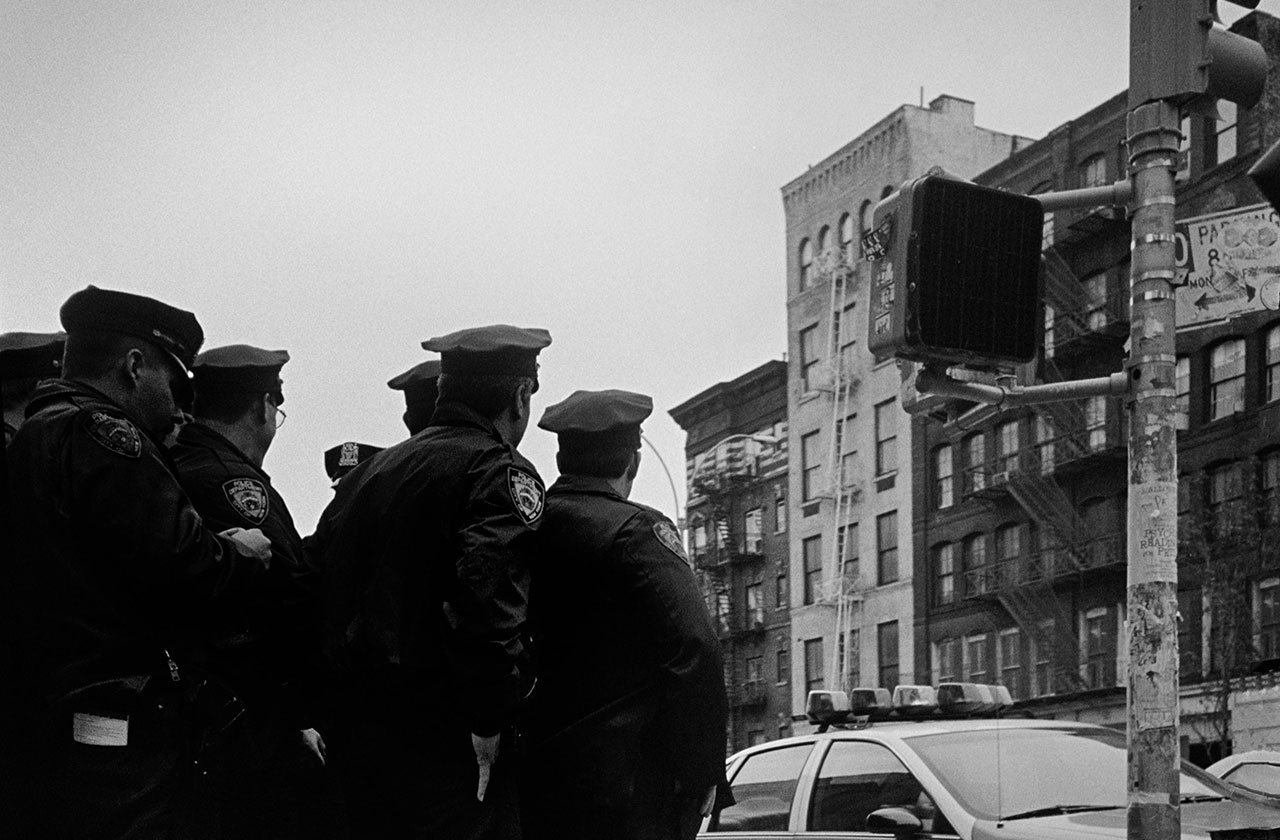
Policing in America is facing a PR crisis. Following the May 25th murder of George Floyd by Minneapolis police officer Derek Chauvin, the term “defund the police” has become a rallying cry for thousands across the country. Six months later, however, America has not defunded its police force––and in fact, has in some cases taken steps to give police departments even more money. Instead, police forces across America have taken an insidious approach: painting their departments in blackface.

After the January 6th Trump riot at the Capitol building , Yoganda Pittman, a Black woman, was named the new Chief of Capitol Police. Her appointment followed the resignation of former Chief Steven Sund and the arrest and firing of several white police officers who were found to be in attendance at the MAGA riot. Pittman’s appointment appeased many liberals who falsely believe that allowing Black folks to infiltrate or run law enforcement agencies will lead to higher levels of safety for Black Americans. The termination of several officers  who took part in the riot has convinced many that we are one step closer to “reforming” the police by weeding out the racist, bad apples within the department. 

This is a nice narrative, but a false one; in order to understand why, we must look at the history of policing in this country. Modern policing in America was originally created as a replacement for America’s slave patrol system wherein squadrons made up of white volunteers were empowered to use vigilante tactics to enforce laws related to slavery. These “enforcers” were in charge of locating and returning enslaved people who had escaped, crushing uprisings led by enslaved people, and punishing enslaved workers who were found or believed to have violated plantation rules. After slavery was legally abolished in 1865, America created its modern police force to do the exact thing under a different name: maintain the white supremacist hierarchy that is necessary under racial capitalism. The purpose of policing––to jail and kill Black folks––remains the same regardless of the officers’ race. 

Liberal media has also contributed to the recent valorization of Black cops. In the days after the January 6th riot, many news outlets aggressively pushed a story about Eugene Goodman, a Black capitol police officer who led several rioters away from the Congress people’s hiding places while being chased by a white supremacist mob. Several news outlets published testimonials of Black police officers disclosing instances of racism within the department. A January 14th article in ProPublica  notes that over 250 Black cops have sued the department for racism since 2001: some Black cops have alleged that white officers used racial slurs or hung nooses in Black officer’s lockers, and one Black cop even claimed he heard a white officer say, “Obama monkey, go back to Africa.” 

These white officers’ racism is unsurprising, and I am not denying any of these claims. But focusing on these singular, isolated moments of racism wherein white cops are painted as cruel and Black cops are the sympathetic victims grossly oversimplifies the narrative of structural racism that modern American policing was built upon. After hearing these slurs that they were allegedly so disgusted by, these Black cops still intentionally chose to put on their badge, don their guns, and work alongside these white police officers who insulted and demeaned them, laboring under a violent system with the sole purpose of harming and terrorizing Black and low-income communities. Similarly, while Goodman’s actions most likely saved many lives during the riot, we cannot allow one moment of decency to erase centuries of racist violence. 

The great Zora Neale Hurston once said: “All my skinfolk ain’t kinfolk.” Her words ring ever true today, and these Black police officers are an excellent example of why. It’s tempting to believe that putting Black folks on the force will solve racial violence, but this is a liberal myth we must break free of. Allowing Black people into inherently racist systems does not make those systems better, safer, or more equitable: a quick look at many Black folks in power today, such as Barack Obama, Kamala Harris, Lori Lightfoot, and Keisha Lance Bottoms immediately prove this to be the case. Everyone supporting racial capitalism must be scrutinized and held accountable, regardless of their identity. We cannot on the one hand say that ‘all cops are bastards’ and then suddenly feel sympathy when those cops are not white. If we want to defund and abolish the police, we must resist the narrative that Black cops have anything to offer us.

GameStop and Revolution

By Peter Fousek

It seems that nearly everyone, from major media outlets and economic analysts to folks hopping on Twitter while bored at home or work, has something to say about the recent market activity surrounding a surprising selection of stocks. The securities in question, namely GameStop ($GME), AMC Theatres ($AMC), and BlackBerry ($BB), are unlikely candidates for financial news headlines at a point in time where their respective products and markets have been all but outmoded. Nonetheless, and in fact on account of their perceived antiquation, these companies (and other similarly “obsolete” brands) have become the focus of widespread popular attention.

And yet, only a marginal few of the countless commentaries currently filling up our newsfeeds make note of the most remarkable conclusions to be drawn from these events. This is not to say that the present analyses and examinations are anything short of illuminating: he reaction of regulatory leaders and financial institutions, while largely predictable, are very important for the public to see and process. As in 1987, 2002, 2008, 2020, and any number of other instances of financial distress, we see the powers that be scrambling for means of self-protection while the system that they have constructed for their own benefit temporarily runs the risk of transforming them into its victims.

Of course, market volatility and the resultant risk of financial devastation is an inherent attribute of capitalist economics. But, when the fundamentalist free market works as it is designed, the brunt of that necessary burden is borne almost entirely by the working masses. Whether through exploitative, unjust labor practices during even the best of times, or through the funneling of massive federal funding in the form of bailouts and subsidies to the wealthy while the already minimal safety nets for the workers are further cut during periods of turmoil, we are not hard pressed to find examples of the inequity of capitalism. For proof of the intentional, systemic nature of this injustice, we need only to notice which class it is that takes the risks resulting in frequent crises: the beneficiaries of the system are simultaneously its guarantors, and from their position of power they are able to keep themselves all but invincible to their own carelessness and greed.

While that inherent impenetrability of the capitalist class has not come close to being displaced by the recent events in the market, it has certainly been shaken. Stock market speculators, betting on the failure of a business and doing everything in their power to see it to that end (without concern for the 50,000+ employees who would resultantly lose their jobs) were forced, if only for a moment, to face financial consequences for their profit-seeking irresponsibility. And they were forced to do so not by competitors, peers among the elite, but by members of the working class.

The sad but almost certain outcome of this moment of resistance to the norms of market trends will be the propping up of the hedge funds at risk, and perhaps increased regulation preventing such unprecedented collective action from readily occurring again. We’ve already seen the popular trading platform (ironically named Robinhood) prohibit its users from buying any more of the securities in question—an effort intended to pressure them into selling before the hedge funder’s short positions expire and the elite are forced to pay their dues. And while there is talk of a class action lawsuit against the platform, with reports that Citadel reloaded their short position before instructing Robinhood to block the relevant trades, we cannot expect real justice from a system designed to protect and perpetuate the existing order.

Despite these obstacles, despite these odds, and despite the unfortunate likelihood of an unsatisfactory short-term outcome, these events that we are currently witnessing should be a major cause for hope. One prevalent stance on social media right now is the position that the working-class day traders should sell. On one hand, doing so would benefit the hedge funds that shorted the stocks, as they would be given the chance to buy back at a lower price than when their contract fulfilment deadlines expire. On another, many of the people who have taken part in this mass movement run the risk of losing their money in a world that has refused them any safety net. The greatest cause for optimism comes from a common response to this stance, paraphrased here has it has been stated by many of the working-class day traders in question: we will not sell, because we have nothing to lose.

Many of us who have bought into this moment of collective action against the status quo have done so with the full knowledge that we might not win. Nonetheless, we have taken our position and chosen to hold it, to demonstrate our dissatisfaction with a system designed to subjugate us while empowering and enriching its elite. Because the system is designed as such, we are not afraid to make sacrifices to challenge the present order. The possibility of change is easily worth the risk of losing what we have, because what we have now is worth very little. But the power of our collective action is valuable beyond belief.

The calamity of the COVID crisis has made it blatantly clear that the capitalist class is more than happy to grow its wealth at the direct expense of our most basic rights and safety. The recognition of this flawed reality is reflected, in its early stages, in the collective action taken against those hedge funds who got too sloppy for their own good. This day trader rebellion is not some singular event, and it will certainly not break the current system. What makes it such an incredible historical moment is that it demonstrates the initial awakening of working-class consciousness. The willingness to sacrifice for the sake of a greater good requires us to recognize the injustice of the present order; the events of the past few days have demonstrated that we are beginning to adopt a mindset of that recognition.

To effectively challenge the status quo in a substantial way (such as that achieved by a general strike) the people cannot act out of short-term self-interest. Therefore, successful collective action and resultant progressive change is only possible once our reality under the status quo is so blatantly insufferable that we become willing to sacrifice it for the sake of disrupting the extant order. This is only possible once we realize that the existing system is exploiting us unequivocally, and therefore that we have essentially no chance of “making it” within said system. That realization then compels us to take the only other option: of trying to make it without. The popular resistance demonstrated by the GameStop situation should inspire us to action because in it, we’re witnessing the working-class organically arrive at a trade-unionist consciousness. This indicates that the historical conditions of the present moment are becoming ripe for the working class to achieve class consciousness, from which systemic change can come.

Questioning Violence in the Wake of the Right-Wing Mob Attack in Washington, D.C.

By James Dugan

“The way the oppressor tries to stop the oppressed from using violence as a means to attain liberation is to raise ethical or moral questions about violence. . . . [V]iolence in any society is neither moral nor is it ethical. It is neither right nor is it wrong. It is just simply a question of who has the power to legalize violence.”

–Kwame Ture, 1969.

We won’t soon forget January 6, 2021—the day in which the nationalistic, xenophobic, and vitriol spewing conspiracy theorist, President Donald Trump, incited a violent far-right mob to descend upon and occupy the U.S. Capitol. The riot, all but ushered in by Capitol Police, resulted in 5 deaths, the evacuation of lawmakers, and the disruption of what is typically a ceremonial session to certify the Presidential election results. Elected officials quickly took to Twitter to denounce the siege and criticize violence from both sides of the political spectrum. Senator Ted Cruz tweeted, “The Constitution protects peaceful protest, but violence—from Left or Right— is ALWAYS wrong.” Presiding over the resumption of the Joint Session of the Congress, Vice President Mike Pence echoed the sentiments of many Twitter handles, stating, “To those who wreaked havoc in our Capitol today, You did not win. Violence never wins. Freedom wins.” In short, condemnations of violence carried the day. Yet, as we continue to unravel and examine these extraordinary events, we might detour to ask why politicians were so quick to equate and denounce violence from both sides when the violence on January 6th came from only one: the extreme end of the far-right.

As a jumping off point, we might first question the assertion that violence is “ALWAYS wrong” by asking whether it has ever been true in our country. In what way is the claim that “violence never wins” accurate? Does not the State, from the Pentagon to the local police precinct engage in violence to enforce policy every single day? Is our country’s origin not rooted in and upheld by violence? These questions in mind, an initial attempt at interpreting the real meaning of the unified denouncement of violence by elected officials on January 6th might read, “Violence on both sides is wrong because violence has been monopolized by the State. Violence is only right when the State engages in it.”

While this definition is certainly more instructive, two lines of questioning should be raised before we accept its legitimacy. First, at what point in this country’s history has violence from the left and violence from the right ever been treated equally by the State? Isn’t our history littered with examples of white vigilante violence that the State either openly allied itself with or swept under the rug? From the civilian militias that assisted the State in quelling slave revolts in the 1800s, to the campaigns of terrorism deployed by the KKK throughout the 20th Century, to the police departments that align themselves with white supremacist organizations at protests today (E.g., Kenosha, Wisconsin), violence coming from the far-right has not only evaded punishment, it has been effectively endorsed by the State.

The second line of questioning that should be pursued relates to the position of the State itself. When the State is engaging in violence, is it doing so as some neutral enforcer of justice? Upon the political spectrum, does the State sit objectively in the middle between right and left? To answer this, we might first say that the function of the State is to maintain the structural integrity and stability of Society. At first blush, that sounds neutral enough. But, if our society is inherently unequal—if it is steeped in racial and economic inequality—if it is built upon a foundation of colonization, slavery, and imperialism—is the State which upholds it truly an unbiased authority? Or does it sit far to the right of the political spectrum as an entity that maintains systems of oppression on behalf of those who benefit from economic exploitation and white supremacy? Asked in simpler terms, if the status quo is unequal, and the State exists to maintain the status quo, to which side of the political spectrum does the State’s existence benefit? Understood in these terms, the State exists not as an impartial mediator between left and right, but—as put by Lenin—the “creation of ‘order’, which legalizes and perpetuates [] oppression.” The State thereby exists to deprive “the oppressed classes of definite means and methods of struggle to overthrow the oppressors.” As such, the position of the State is indistinguishable from the position of those who seek to maintain this country’s unequal conditions—i.e., the conservative right.

Why is the State willing to denounce violence from “both sides” if the State effectively exists to serve the right? Well, it should first be noted that this hasn’t always been the case. At times when the State has been unable to quell liberation struggles and social justice movements on its own, it has called upon reactionary civilians to assist in “maintaining order.” By way of example, we can point to the militias that assisted the U.S. Army in protecting settlers as they invaded unceded indigenous land and the militias that assisted the State in massacring coal miners who went on strike to improve working and living conditions. We can point as well to the Fugitive Slave Act—whereby civilians were required to enforce and return fugitive slaves on behalf of the State and wealthy plantation owners. That the street-level fascists—who, as an aside, were so anti-mask that they chose not to wear them while committing crimes in one of the most heavily surveilled buildings in the world—will certainly be made examples of and serve prison time for their federal offenses doesn’t change this reality. It is merely an example of what Benjamin L. McKean calls the “dance between the far right and the electoral right.” As stated in his recent take on the events for Jacobin Magazine, “Right-wing political parties can deplore right-wing street violence while using the disorder caused by reactionary mobs as another occasion for extending power.”

That aside, the State is comfortable in denouncing violence from “both sides” because, when push comes to shove, the State will act on its own behalf to violently suppress any movement that threatens the established order.  In an era in which the Defense budget is to the tune of $740 billion and nearly every local police department is militarized to the point of mimicking a Regiment in the U.S. Marine Corps, the State doesn’t need far-right extremists because the State has the ability to use violence whenever necessary. By monopolizing the use of violence, the State masquerades as a neutral body that proffers to only use force when absolutely justified. But, in practice, the left is typically the only side in which the use of force is ever necessary. The State need not use violence against the far-right because they exist on each other’s behalf—i.e., they are on the same team. The far-right doesn’t threaten the current order, which as we established above, is one of domination and inequality. Thus, in effect, we have finally reached an understanding of what the trope in question actually translates to: “Violence from the left—i.e., violence from the side of the oppressed—is always wrong.” This is the language that has been and will continue to be weaponized against pro-justice movements that yearn for a less oppressive existence. We should be unsurprised when the aforementioned tweets from January 6th resurface in the future to justify the brutal repression of efforts from the left to change the racist and exploitative status quo.

So, let’s return once more to the premise that violence is “ALWAYS wrong.” How can this be true? We have shown that the State has engaged in violence for centuries. We have also shown that the right has done the same without reprimand. Finally, we have established that the current order of our society is one of inherent inequality; an immoral condition of antagonism between—as Malcolm X once put—“those who want freedom, justice and equality for everyone and those who want to continue the system of exploitation.” At this juncture, Paulo Freire’s words are instructive: “With the establishment of a relationship of oppression, violence has already begun. Never in history has violence been initiated by the oppressed. How could they be the initiators, if they themselves are the result of violence?”

What do we do with the apparent paradox that Freire raises? Perhaps it is the initiation of violence, rather than violence itself, which is always wrong. Is violence always wrong, or is violence only wrong when it is used to oppress and exploit; to subjugate and tyrannize? Maybe the more important conclusion to reach here is that self-defense, whether violent or not, is not wrong. Malcolm X had one of the most percipient understandings of the nuances between violence and self-defense. To quote his words once more, “I don’t believe in violence—that’s why I want to stop it. And you can’t stop it with love. So, we only mean vigorous action in self-defense and that vigorous action we feel we’re justified in initiating by any means necessary.”

Alternatively, the paradox could be resolved even if we come to agree with establishment politicians and reactionary conservatives in saying that violence is always wrong. Taking Freire’s words as true, this is merely an admission that the current conditions in this country—the current relationship of oppression—is violent and wrong. If such is true, then perhaps we narrow the definition of “violence” so that it doesn’t include self-defense. Nonetheless, whether only the initiation of violence is wrong, or whether violence is inherently wrong but is defined in such a way as to exclude acts of self-defense, the result is the same: the oppressed are justified in striving for freedom by any means necessary.

With this analysis in mind, we can test the veracity of the Mike Pence/Ted Cruz assertion by raising a few historical questions:

Was Toussaint Louverture wrong to lead the Haitian revolution?

Was Nat Turner wrong to initiate the Southampton insurrection?

Was John Brown wrong to raid Harpers Ferry?

As we ruminate on these final inquiries, we might keep the wisdom of Assata Shakur and Kwame Ture in mind. The former informed us, “Nobody in the world, nobody in history, has ever gotten their freedom by appealing to the moral sense of the people who were oppressing them.” The latter concisely stated, “In order for nonviolence to work, your opponent must have a conscience. The United States has none.” 

Reclaiming Hope in a Neoliberal Age

[Photo credit: Joe Brusky]

By Yanis Iqbal

In the second declaration of Havana - delivered on February 4, 1962 - Fidel Castro said, “It is the duty of every revolutionary to make the revolution.” Piercingly clear and searingly sharp - this statement demystifies our coldly scholastic and meek attitude toward socialism. In a world where leftists submissively mold themselves to the contingencies of history, Castro invites us to collectively dare for a firmly definite objective: overthrowing the bourgeoisie state. Such lucidity and precision - apart from organically integrating the ultimate goal of socialism into the planning of concrete action - foregrounds the little explored territory of hope - hope that love and solidarity will survive in the face of barefaced barbarism; hope that the masses will indignantly demand what is theirs; hope that the spirit of revolution will seep through the cracks of hunger and poverty.

Hope

The globalization of capital, the move toward post-Fordist economic arrangements of flexible specialization, and the consolidation of hyper-individualized culture has resulted in a shift from a politics of hope to one of despair. The drastic weakening of the Left has heralded a new age of defeatist literature, absolutely incapable of battling with shifting conjunctural equations. In sum, a historically informed understanding of capitalism and the immense power possessed by the wretched of the earth has given way to theoretical abstractions devoid of any sense of class struggle. What is urgently needed, therefore, is a re-affirmation of the potentialities for liberation and the crystallization of hope as an important element in the entire panorama of endless efforts.

In his book Pedagogy of Freedom, the great Brazilian educator Paulo Freire noted, “our being in the world is far more than just “being.” It is a “presence”…that can reflect upon itself, that knows itself as presence, that can intervene, can transform, can speak of what it does, but that can also take stock of, compare, evaluate, give value to, decide, break with, and dream.” Insofar that we constitute a living “presence”, we are capable of understanding structural conditionedness in depth, in its essence, detaching it from its contingent factuality, from its sheer concrete “being there”.

As human beings, we are conditioned by social relations, not determined by them; the past influences us and our actions, but does not determine those actions or what the future will bring. As soon as we grasp this fact and emerge out of our submersion in reality, we start to treat obstacles as problems rather than as givens and thus, gain the ability to act to change them as well as reflect on the consequences of that action. When we reclaim human agency, our day-to-day interaction with the existential universe acquires an element of hope: since the future is open-ended rather than closed, what we want to create always exists as a true possibility within the womb of our present society. The tomorrow which we want to see has yet to be fashioned by the transformation of today, the present reality. It is something not yet here but a potential, something beyond the barriers we face now, which must be created by us beyond the limits we discover.

Hope acts as the bond between the utopia we desire and the obscenely harsh reality we live in. It is a response to an existential reality that pushes a person forward in anger, indignation and just rage, forcing him/her to negate the ugliness of everyday life. Without hope, there is no possibility for resistance, dissent, and dialogue. It is the prerequisite for all forms of critical agency which aim to radically reconstitute our society. Hope expands the space of the possible, and becomes a way of recognizing and naming the incomplete nature of the present while providing the foundation for informed action. While despair is passive - we are the objects, closed in on by time in a way that we see as inevitable, hope is active - we exercise agency, piercing through time by seeing the alternatives, the possibilities available to us in moving beyond a particular obstruction.  

In Pedagogy of Hope, Freire says, “We need critical hope the way a fish needs unpolluted water… After all, without hope there is little we can do. It will be hard to struggle on, and when we fight as hopeless or despairing persons, our struggle will be suicidal. We shall be beside ourselves, drop our weapons, and throw ourselves into sheer hand-to-hand, purely vindictive, combat.”

Hope can never be divorced from practice and action. It is effective only when undergirded by struggle. Freire writes: “Hope, as an ontological need, demands an anchoring in practice. As an ontological need, hope needs practice in order to become historical concreteness. That is why there is no hope in sheer hopefulness. The hoped-for is not attained by dint of raw hoping. Just to hope is to hope in vain.” Thus, hope, rigorous and intellectual, requires struggle and action. It is not naïve optimism; it is critical and reflective action.

Hope must be concrete, a spark that not only reaches out beyond the surrounding emptiness of capitalist relations, anticipating a better world in the future, but a spark that also speaks to us in the world we live in by presenting tasks based on the challenges of the present time. In The Utopian Function of Art and Literature, the German philosopher Ernst Bloch argues that hope cannot be removed from the world. Hope is not “something like nonsense or absolute fancy; rather it is not yet in the sense of a possibility; that it could be there if we could only do something for it.”

The inseparability of hope from concrete struggle necessitates that it always be social in nature, rather than individual. Hope is not about individual aims, desires, or ambitions; it is beyond simply dreaming of a better day and into consciously thinking about how to work toward a collective vision. Hoping is not tied to having hope-for something, a state of mind that is closer to desire. Hope is concerned with a collective act of hope-in something, rather than with an individual future. It must be capable of producing people willing and able to expand and deepen their sense of themselves, to think of their socio-economic environment critically, to imagine something beyond their own self interest and well-being, to serve the public good, and struggle for an egalitarian future.

Utopia

Without hope, humans would despair in the face of their unfinishedness and would become immobilized. It is hope that helps in leading the incessant pursuit of the oppressed towards humanization. It is hope, in other words, that drives us ever onwards as travelers, wayfarers, seekers, in pursuit of completeness. In this pursuit of completeness, in this hope-driven search for fully realized humanity, education is extremely important. For Bloch, hope left to itself is undisciplined and “easily led astray”, taking the form of wishful, magical “meaningless hope” or, when manipulated by the bourgeoisie, a domesticated, privatized and “fraudulent hope”.

Hope may also manifest itself as passive patience while on the other it may take the form of an unfocused rebelliousness. Since such impatient hope is at risk of turning into defeatism, it needs to be bolstered by careful attention to and analysis of material data. A reckless false hope, an over-zealous hope fails to consider counter-acting forces and ends up in a welter of immobilizing frustration.

Education is, therefore, required in order to provide “contact with the real forward tendency into what is better”. By means of utopian images, hope can be educated, taught, “trained unerringly, usefully, on what is right”. Freire, too, argued that undisciplined, naïve, spontaneous hope needed education in order to connect it tightly to the project of humanization - to sharpen, clarify and illuminate its objective. The need for utopian, humanizing education is rendered all the more important because of the continual operation of dehumanizing forces. As the dominators “have nothing to announce but the preservation of the status quo”, they invariably try to cage the future and make of it “a repetition of the present”. In this context, “the struggle for the restoration of utopia [is] all the more necessary. Educational practice itself, as an experience in humanization, must be impregnated with this ideal”.

In The Politics of Education, Freire outlined what such a utopia can look like: “Revolutionary utopia tends to be dynamic rather than static; tends to life rather than death; to the future as a challenge to man's creativity rather than as a repetition of the present; to love as liberation of subjects rather than as pathological possessiveness; to the emotion of life rather than as cold abstractions; to living together in harmony rather than mere gregariousness; to dialogue rather than silence; to praxis rather than ‘law and order’; to men who organize themselves reflectively for action rather than men who are organized for passivity; to creative and communicative language rather than empty verbosity; to reflective challenges rather than enslaving slogans; and values which can be lived rather than to myths which are imposed.”

Informed by utopia, the language of hope becomes a medium of struggle of those who refuse to lose their grip on reality. This is the language of sound and sober hope, an educated hope grounded in a careful study of material conditions. Educated hope demands that the fact in which it believes be abandoned the moment concrete experience is against it. This method requires continual alertness to indicators that call hope into question and entail a change in praxis.

Faith in Class Struggle

In his book Beyond US Hegemony: Assessing the Prospects for a Multipolar World, Samir Amin states: “There are no ‘laws of capitalist expansion’ that assert themselves as a quasi-supernatural force. There is no historical determinism prior to history itself. Tendencies inherent in the logic of capital encounter the resistance of forces that do not accept its effects. Real history is therefore the outcome of this conflict between the logic of capitalist expansion and other logics stemming from the resistance of social forces that suffer the effects of such expansion.”

As is evident from the quotation, capitalism is not an essentially closed and immutable phase of history, standing above the vagaries of class struggle. Rather, it is a hegemonic arena of constant push-and-pull, open to the possibility of hope. When that hope is recognized by socialists, there emerges a “weak teleological force of open possibilities” - the belief that the collective struggle of the masses will steer the undecidedness of the world process toward a better future. Today, we need to reclaim hope so that we can navigate through the indeterminacy of history and prepare the working class for a revolutionary upheaval.

Yanis Iqbal is an independent researcher and freelance writer based in Aligarh, India and can be contacted at yanisiqbal@gmail.com

Martin Luther King Jr. and the Socialist Within

By Stephen Joseph Scott

To date, the image and memory of Martin Luther King Jr., social justice warrior, peace activist and civil rights icon in the United States, and around the world, has been manipulated, watered-down or diminished of meaning to serve the very forces of capitalist power and domination that the man spent his life in opposition to. In school textbooks in the U.S. for example, young people are taught about King the moderate man of peace, but not the radical King who, criticized by other civil-rights-leaders for speaking out against the Vietnam war, proclaimed, on April 4, 1967 at Riverside Church in New York City, the U.S. to be, “the greatest purveyor of violence in the world today.” By sanitizing the image of the man, they, corporate and governmental powers, not only control the narrative, but they dumb-down and oversimplify the message by lobotomizing the historical record. As W.E.B. Du Bois, American intellectual, asserted: “The difficulty, of course, with this philosophy is that history loses its value as an incentive and example: it paints perfect men and noble nations, but it does not tell the truth.” What Du Bois was saying is that by stripping, containing and distorting historical narratives the learner is robbed of the substance, nuance and otherness that history should provide. Each year in January as King is honored in the eyes of the public, there is little mention of the demands of the man and his mission: his fight for economic justice in a society that was built on inequality from the very start, “We can’t have a system where some of the people live in superfluous, inordinate wealth while others live in abject, deadening poverty.” King the radical has been passed-over and neutralized in order to make a moderate image of the man more digestible, not only to whitewash the general public and students alike, but to also pacify the capitalist and white supremacist power structures that he so fiercely opposed.

In an early and intimate correspondence, written in 1952, to his then jeune amour Coretta Scott, King declared “I am more socialistic in my economic theory than capitalistic.” When addressing a book sent to him by Coretta: Edward Bellamy’s Looking Backward: 2000-1887, King expressed: “On the negative side ... Bellamy falls victim to the same error that most writers of Utopian societies fall victim ... idealism not tempered with realism.” King was a pragmatist who understood fully the cause and effect of a capitalist system that pushed aside the needs of its populous in the name of profit, “So today capitalism has outlived its usefulness. It has brought about a system that takes necessities from the masses to give luxuries to the classes. So I think Bellamy is right in seeing the gradual decline of capitalism.” This letter reveals that King was an admitted Socialist and firm in his agreement with Bellamy’s prediction of the inevitable degeneration of capitalism.

Reflecting upon his longtime hero and mentor, Norman Thomas, King espoused the 1932 Socialist Presidential nominee’s views as an inspiration to his own antiwar stance concerning Vietnam in an article published in Pageant magazine in June 1965, “Thomas, a Presbyterian minister, found his interest in socialism stimulated by the antiwar declaration of the Socialist Party in 1917.” It was to President Franklin Roosevelt’s acclaim, that he, once in office, took on much of Thomas’ socialist platform when putting together his well-known New Deal program: “Old-age pensions for men and women 60 years old; Abolition of child labor; The six-hour day, five-day week with no wage reductions; Health insurance and maternity insurance; and, Adequate minimum wage laws.” King inspired by Thomas’ unorthodox socialist approach to the issues of his day, steadfastly admired his principled stand calling him “The Bravest Man I’ve Ever Met,” and embodied Thomas’ following sentiments in words and deeds, “The hope for the future lies in a new social and economic order which demands the abolition of the capitalist system.” The seeds were planted; the capitalist opponent and unyielding guardian of socialist values stood evident throughout King’s ministry.

January 10, 1957 marked the birthday of the Southern Christian Leadership Conference at Ebenezer Baptist Church in Atlanta, Georgia, founded by Martin Luther King Jr. and his father, to fight for civil rights and economic fairness. Increasingly throughout the 1960s, King became more anticorporate; and, more explicitly judgmental of capitalism as a system of innate inequality. In May 1967, while speaking at a SCLC staff meeting, King pushed radical against the injustices baked into the fundamental structure of capitalism, as well as the corrupt and unethical political system that allowed it to ride roughshod over its own population, “We must recognize that we can’t solve our problem now until there is a radical redistribution of economic and political power.” Meaning, the movement had to demand a radical-paradigm-shift in the administrative and monetary structures that undergirded the American system of capitalism, “We must see now that the evils of racism, economic exploitation and militarism are all tied together you cant [sic] really get rid of one without getting rid of the others the whole structure of American life must be changed.” Again, in August 1967, at a SCLC annual conference, King asked, “Why are there forty million poor people in America? ... When you begin to ask that question, you are raising questions about the economic system, about a broader distribution of wealth ... you begin to question the capitalistic economy.” King was insistent that the resistance to an unjust system of inequality had to arise. In fact, in that same speech, in defense of workers’ rights, King invoked Walter Reuther, leader of organized labor, founder of the United Auto Workers of America and civil rights activist, “Walter defined power one day. He said, power is the ability of a labor union like UAW to make the most powerful corporation in the world, General Motors, say ‘Yes’ when it wants to say ‘No.’ That’s power.” King, the supporter of cooperative ethics, denoted unions and the ability of workers to bargain collectively against corporate supremacy as an essential tool in checkmating capital and its abuses.

As explained by historian Thomas Jackson, in his work From Civil Rights to Human Rights: Martin Luther King, Jr., and the Struggle for Economic Justice, King was definitive as to where public policy in the U.S. needed to go, “Policy must ‘reduce the gap’ between the poor and the majority by making the poverty line a percentage of median income." King argued, raising the poverty line, which was inordinately low in 1964, would bring a response to millions of working poor that President Lyndon Johnson’s War on Poverty overlooked. In King’s estimation, the inadequacy of the government’s solution to the War on Poverty coupled with the war in Vietnam equaled a travesty that disproportionately punished the disenfranchised:

[T]he war was doing far more than devastating the hopes of the poor at home. It was sending their sons ... to die.... So we have been repeatedly faced with the cruel irony of watching Negro and white boys on TV screens as they kill and die together for a nation that has been unable to seat them together in the same schools ... I could not be silent in the face of such cruel manipulation of the poor.

The war in Southeast Asia, in King’s view, was not only a brutal attack on a distant and poor “third-world” country half way around the globe, but a direct assault on America’s poor and working class populace. Again, what King was asserting was that race, war and economics were inextricably woven within the fabric of the U.S. political economy.

A New York Times editorial, dated April 7, 1967, published just three days after King’s powerful antiwar declaration above, encapsulated the prevailing counter assessment of the time. By ignoring class altogether, the conservative view of the day was camouflaged by “temperance,” insisting that the war in Vietnam and racial injustice in the United States had nothing to do with each other, “The moral issues in Vietnam are less clear-cut than he suggests; the political strategy of uniting the peace movement and the civil rights movement could very well be disastrous for both causes.” The point this editorial avoided was the enormous sums of public funds spent on the war, and their violent social and economic impact domestically, which King defined as wasteful and destructive, “I knew that America would never invest the necessary funds or energies in rehabilitation of its poor so long as adventures like Vietnam continued to draw men and skills and money.” In place of King’s economic mandate, the editorial used an erroneous conflation designed to convince the reader that melding the anti-war movement with civil rights was more about coupling the issues of race and militarism rather than King’s actual emphasis, economic justice.

King first announced his Poor People's Campaign (a multiracial non-violent crusade focused on jobs and dignity for the poor) at a staff retreat for the SCLC in November 1967. After having crisscrossed America building an alliance for his PPC, gathering support through a coalition of Blacks, farm workers, Native Americans and poor Whites, King delivered a speech, on March 10, 1968, in NYC (just a month prior to his assassination), entitled “The Other America.” King sermonized before a union, Local 1199, mostly comprised of African Americans, “If all of labor were to follow your example of mobilizing ... our nation would be much closer to a swift settlement of that immoral, unjust, and ill-considered war.” It was this kind of tutelage, this kind of unifying, enlisting and organizing of King’s multiracial army of the poor and working class, that threatened the establishment, i.e., government officials, corporate elites and mainstream media. Furthermore, in that same speech, King challenged not just the establishment and its propaganda, but also those among his ranks that doubted the efficacy of his mission to end the war:

I would yet have to live with the meaning of my commitment to the ministry of Jesus Christ. To me the relationship of this ministry to the making of peace is so obvious that I sometimes marvel at those who ask me why I am speaking against the war.

King, the theologian, in defense of his anti-war stance, harkened back to the teachings of the social gospel as his grounding – itself, a radical pacifist document; and, a passionate plea for the rights and dignity of the poor.

On a prior date, April 14, 1967, at Stanford University, King had given a different version of the same speech, one in which he invoked Frederick Douglass, abolitionist, author and former slave. King publicly attacked the United States and its long vicious history of elite control, systematic racism and unjust class bigotry:

This is why Frederick Douglas [sic] could say that emancipation for the Negro was freedom to hunger ... freedom without roofs to cover their heads. He went on to say that it was freedom without bread to eat, freedom without land to cultivate. It was freedom and famine at the same time.

King’s acknowledgement of Douglass helps to clarify his radical view of the long and inhumane historical narrative, which defined America. He was telling his audience that in a system founded on greed, white supremacy and inequality, freedom was not “freedom” if one was Black or poor. Written from his cell years earlier, in 1963, in his now celebrated Letter From a Birmingham Jail, King penned, We know through painful experience that freedom is never voluntarily given by the oppressor; it must be demanded by the oppressed.” In a top-down system of cascading violence King, the shepherd, attempted to give voice to the voiceless and consciousness to the beleaguered masses.

When matching the inequities of the American economic system against other systems, in May 1965, while speaking before the Negro American Labor Council, King lauded the Scandinavian modus of democratic socialism and demanded a fair and just redistribution of America’s affluence: “Call it democracy, or call it democratic socialism, but there must be a better distribution of wealth within this country for all God’s children.” Again, years earlier, from his jail cell in Birmingham, King, the radical humanist, had elegiacally weaved together the socialist values of the collective within faith, race and socioeconomic condition, “I am cognizant of the interrelatedness of all communities and states ... We are caught in an inescapable network of mutuality, tied in a single garment of destiny. Whatever affects one directly, affects all indirectly.” Additionally, public statements like, “I think black people and poor people must organize themselves ... we must mobilize our political and economic power,” congealed King’s position as a “Communist,” as well as a dangerous man whose every move needed to be tracked. Even if one publicly condemned communism as King certainly did, as far back as his Atlanta sermon, given on September 8, 1953, asserting, “Let us begin by stating that communism and Christianity are at the bottom incompatible. One cannot be a true Christian and a true Communist simultaneously.” A open denunciation of communism of this sort mattered little to the foundations of power that were bitterly opposed to the rights and unification of Blacks, the poor and the working class, “Perhaps the quintessential example of a target of state surveillance was Martin Luther King Jr. The surveillance of King was carried out with great intensity by the FBI, in concert with local police forces.” The powers of the State were now solidified and King was the target of that solidification, “[King was] subject to increasing scrutiny and harassment from the FBI, which had wiretapped his phones since 1963,” however, it did not begin under the Kennedy and Johnson administrations; it began much earlier, as early as the first freedom marches in Montgomery Alabama in the mid-1950s.

The FBI directive, dated January 4, 1956, is proof positive that the U.S. government was purposefully investing manpower and resources into tracking King as early as 1955: “On 7 December [1955], the FBI’s Mobile Office began forwarding information on the bus boycott to FBI director J Edgar Hoover.” The document, although redacted, reveals that the FBI’s Special Agent in Charge was working closely with a Montgomery Police Officer gathering, with intent, as much defamatory evidence as possible against King in order to take him and his non-violent call for social-justice down.

The security state not only tracked King’s every movement, but it also harassed him for years using an array of methods from penetrating surveillance to psychological coercion. The foundations of power were deeply distressed by King’s radical decrees, and, his non-violent movement of civil disobedience, “The FBI was so concerned about King’s radicalism and potential for inciting a black revolution that it deemed his activities a threat to national security.” In fact, the FBI sadistically mocked, taunted and provoked King to commit suicide in an anonymous letter sent to him November 21, 1964 - just nineteen-days prior to his acceptance of the Nobel Peace Prize in Norway:

You are a colossal fraud and an evil, vicious one at that ... like all frauds your end is approaching ... your Nobel Prize (what a grim farce) and other awards will not save you ... It is all there on the record, your sexual orgies ... you are done ...  there is only one thing for you to do ... and you know what it is.

This FBI missive proves that the forces within government were willing to stop at nothing to end, what they considered, an imminent threat to the status quo. In fact, by April 3, 1968, after returning to Memphis (one day prior to his assassination), King’s hostility toward the U.S. political economy and its endemic inequalities grew into an overt attack on corporate America, “We are asking you tonight ... to go out and tell your neighbors not to buy Coca-Cola in Memphis ... Tell them not to buy–what is the other bread? Wonder Bread.” This direct challenge to the pecuniary interests of American business only intensified the image of King as a menace.

Governmental forces so loathed King the man and what he stood for, that they pursued the diminution of his persona for years after his murder in Memphis, Tennessee, “While the FBI did intensely track King through his death, it actually continued to besmirch his name even after he was assassinated,” but what authoritarian forces working on behalf of capitalist interests could not completely eviscerate they inevitably subsumed. During his speech on the creation of a national holiday for King - November 2, 1983, some fifteen-years after King’s brutal assassination, Ronald Reagan was one of the first conservatives to publically confiscate, misappropriate and alter King’s image to that of the “extraordinary” American, “In the fifties and sixties, one of the important crises we faced was racial discrimination. The man whose words and deeds in that crisis stirred our nation to the very depths of its soul was Dr. Martin Luther King, Jr.” In spite of the fact that Reagan, and most reactionaries in the U.S., long considered King a traitor, a communist subversive, and, an adversary to corporate and state power, Reagan used King’s words not only to support conservative ideals and policies, but also for his own political gain. Facing re-election in 1984 and waning poll numbers, “[Reagan and] his political advisers hoped for some positive effect among black and moderate white voters.” Reagan, in what can be considered a public-relations-coup, exalted King’s words through a histrionic burst of American exceptionalism, "All of God's children will be able to sing with new meaning ... land where my fathers died ... from every mountainside, let freedom ring," which, as preformed before the nation, deliberately sanitized, ignored and diminished the purpose of King’s mission which stood in direct opposition to the destructive forces of corporate greed.

Finally, what this conservative, and later neo-liberal, approach to King’s views conveniently overlooked, whether in political-thought or school textbooks, is King’s class oriented fight for justice. Throughout his brief life, King affirmed, in private and in public, his socialist beliefs – from his stance on race, war and poverty, to his evaluation of the global political economy. What the foundations of power have attempted to subvert, at all costs, was King’s clarion-call for the unification of the poor, “There is amazing power in unity. Where there is true unity, every effort to disunite only serves to strengthen the unity.” Again, Martin Luther King Jr. was a Socialist and radical humanist at his core, a resolute teacher of the social gospel, a committed supporter of cooperative principles and a firm champion of collectivist values. As a result of his commitment to those ethics, principles and values - he, not only fell victim to the pernicious and menacing powers of the capitalist state, but he also steadfastly and resolutely sacrificed his own life.


Stephen Joseph Scott is  a singer/songwriter, humanist/activist, record producer and actor – a self-taught musician, writer and performer; now living in Philadelphia.  As a musician, He uses American Roots Music, a blend of influences including Country, Soul, Rock, Rhythm and Blues, Bluegrass and Folk to illustrate the current American social and political landscape.  In the tradition of Woody Guthrie, Steve explores the inward and outward fragility of the human condition within a decimated working class – to which far too many fall victim. Emanating from his own humble origins, Steve expresses what he calls the “wrenching torment” of common folk: abuse, neglect, regret, struggle, sacrifice and loss! His latest video: "We Know They Lied" https://www.youtube.com/watch?v=e4_oSycHBCM