Black Liberation

Structural Oppression, White-Male Terror, and a Few Words on Violence

By Mimi Soltysik and Colin Jenkins

We recently saw a meme on social media that stated the following:

"There can be no 'unprovoked' violence against a Nazi. The sole aim and focus of their philosophical existence is violence. If you take up that identity, you've already declared violent intent. Anything done in response is just varying levels on self-defense."

violence.jpg

We think it's reasonable to take this a step further and include anyone who advocates for inherently racist/oppressive systems/structures. That support for inherently racist/oppressive systems/structures means people will suffer. Many have and will die as a result of that support. There can be little appeal for justice in a system that's flawed by design, that's inherently oppressive by design.

Violence is endemic in the United States because it is structural. We are all born into this violently oppressive society that is shaped by multiple, interconnecting systems: capitalism, patriarchy, white supremacy, imperialism, xenophobia, gender-normativity, and ableism. Some of these systems are intentional, and some are residual. For instance, capitalism creates and maintains strict class divisions in a very deliberate way, which in turn creates corollary systems of control (dictatorship of capital, militarized police, ICE) and residual systems of cultural oppression (misogyny, racism, homophobia, ableism). All of these systems interact to produce societal norms which are inherently oppressive and violent.

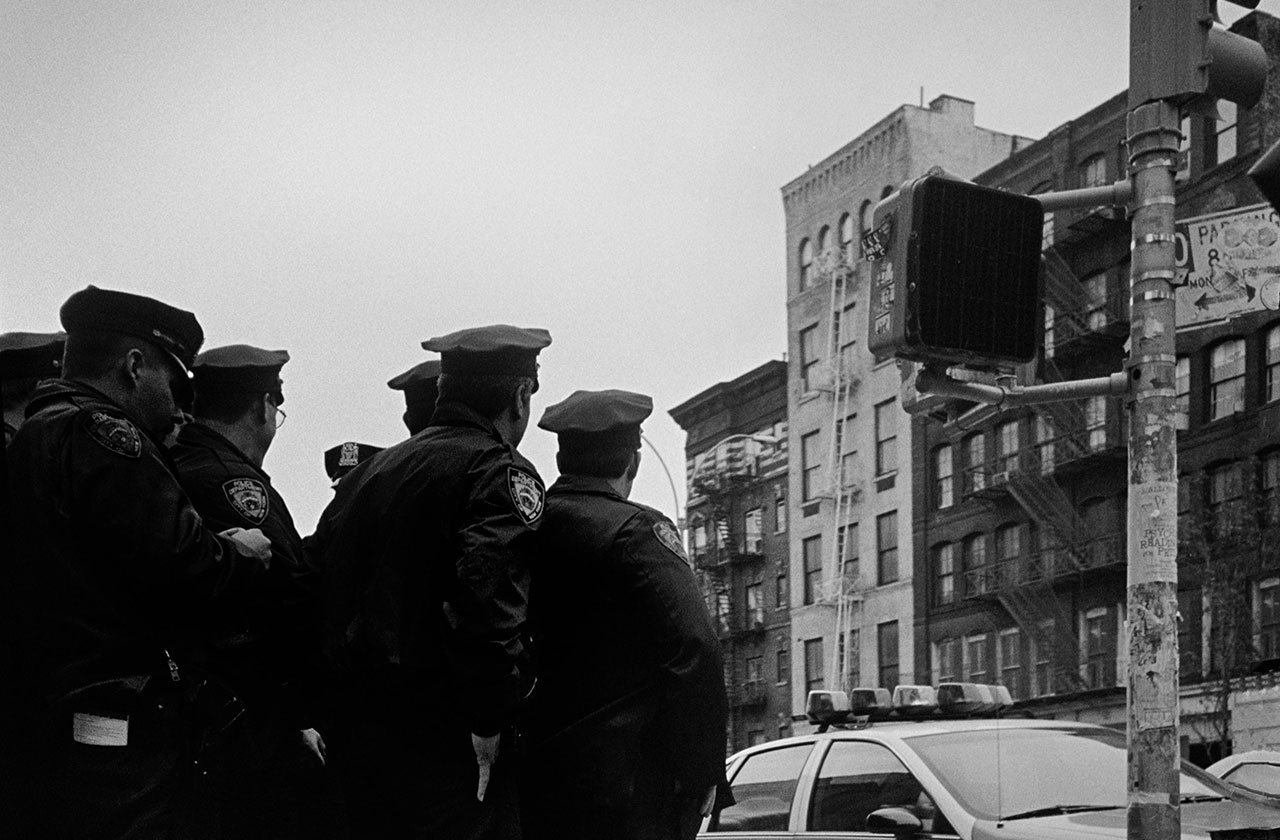
Structural violence is insidious because it is hidden beneath the surface, embedded in the systems that dictate our everyday lives. The violence is inherent in the forceful obstruction or dispossession of human dignity, autonomy, and self-determination. The systemic obstruction of basic needs (capitalism), such as food, clothing, shelter, healthcare, and education, is violent. The systematic targeting of Black and Brown lives (white supremacy), which manifests itself in daily extrajudicial killings of people of color by police and violent interventions and extractions carried out by ICE, is extremely violent. The dehumanization of transgendered folks (gender-normativity) is violent. The vitriol and hatred directed against women (patriarchy and misogyny) is violent. The underlying assumption that our value as human beings is based in what kind of productivity we can offer to the capitalist system (ableism) is violent. The proliferation of global wars and destruction (imperialism) is obviously violent. As an all-encompassing and all-consuming society of violence, the United States and its structures are designed to maintain hegemony and control.

In a 2017 piece, Devyn Springer and Joel Northam break down this layered process:

"As we unmask the US's hegemonic power, we find that it is maintained not only through sheer violent exploitation, but through perpetuating powerfully constructed western-centric epistemology as well. Within this epistemology, or societal perception of truth, validity, and opinion, the concept of 'violence' is constructed at a young age to be something always done unto the US and never perpetuated by the US. The US would not paint itself as an aggressor in any instance, presenting subjects like slavery, colonialism, and foreign regime changes through a lens of benevolence rather than the actual violence they represent. The ways the US crafts the narratives surrounding its history of enslaving Africans, for example, shows terms like 'worker' and 'laborer' often put in place of 'slave' or even 'enslaved African' in state-funded textbooks.

Another example of this crafting of narratives is the legacy of the Black Panther Party, which has been popularly referred to as an 'anti-white terrorist group' (shout out to Tomi Lahren) and compared to the KKK, even though all facts show this is far from where their actual legacy should be. This is an act of crafting a specific epistemology, one that projects a sense of benevolence and lack of responsibility onto the US legacy."

This breakdown is important because it not only exposes the complex process of legitimizing systemic violence, but also illustrates how struggles against this inherently oppressive system (like in the case of the original Black Panther Party) are so easily (and incorrectly) demonized. Under this sophisticated trickery, oppression and dominance from above is painted as the righteous state of things, while resistance from below is labeled "terroristic" or "immoral" or "illegal."

Both conservatives and liberals, Republicans and Democrats, work in tandem to legitimize this control from above.

An interesting element that springs from this structural violence comes from within the population at-large, both organically and through indirect support from these systems. The residual systems of cultural oppression, while shaped from the top, are essentially maintained through the formation of fascistic tendencies. These tendencies develop from the bottom as means to empower those who are structurally powerless.

In the United States, this development is most noticeable among white men. While white-male terroristic hate has been a staple of American society since its beginning, it has become especially apparent as both a reaction to the political ascendency of Barack Obama and a component of the political rise of Donald Trump.

It's 2018. The socio-political landscape is evolving. This month, the Southern Poverty Law Center (SPLC) referenced a recent report by South Asian Americans Leading Together detailing a rise in hate-inspired violence tied to the 2016 elections. The SPLC recently reported that the number of hate groups in the US has grown by 20 percent since 2014, and "more than 950 hate groups operated in the country last year, with the majority focused on white supremacy." Basic observations confirm this, with torch-bearing neo-Nazis making their presence known, so-called "alt-right" groups forming throughout the country, white-supremacist groups coming out of the woodwork, and numerous instances of white-male terrorism, including public shootings and knife attacks specifically targeting Black citizens, a recent string of mail bombs in Austin, Texas, and yet another mass shooting in a long line of mass shootings, this time at a Waffle House restaurant in Nashville, Tennessee.

Responding to both the structural violence stemming from systems and the internal violence stemming from fascism and white-male terrorism is crucial. While they both operate on separate fronts, they indirectly support one another in many ways. The overlap between police agencies and white supremacists is indicative of this on a cultural level, and the hesitation of our legal systems and media to address white-male terrorism is indicative on a systemic level.

Social justice work is multi-pronged and must be carried out by the Left. Fighting violent and oppressive systems through defensive-violence is not only a basic human right, it is often imperative for survival. Those who are backed into a corner cannot merely sit down and hope for the best, especially when those who have backed them into the corner have exhibited such vile levels of hate and disregard for human life. Instead, survival dictates that we start swinging. Or, at the very least, develop the means and propensity to respond with equal or greater force. We don't see what we are suggesting as advocacy for violence. We see this as a rational response to grand-scale violence. A response that may be necessary to preserve life while working to establish peace and justice.


This commentary originally appeared at The Socialist .


Colin Jenkins is founder and Social Economics Department chair at the Hampton Institute, a working-class think tank. He is also a member of the Socialist Party USA, Industrial Workers of the World, and General Defense Committee.

Mimi Soltysik is a member of the Socialist Party Los Angeles Local, the Stop LAPD Spying Coalition, the Coalition for Peace, Revolution, and Social Justice, and is the educator at the Maggie Phair Institute. He was the Socialist Party USA's 2016 presidential nominee and ran for California State Assembly in 2014.

The White Noise of Forgetfulness: How Imperialism and Racism Remain Central to Capitalism

By Steven L. Foster

Michael Corleone in the The Godfather II (1974) is son of the Godfather seeking legitimacy for the family's amassed Mafia fortune. It was attained by violent extortion from those considered more vulnerable and lesser people, through mass murder, general mayhem supporting groveling servitude, sexual slavery, and other gruesome activities. The money needed protection and cleansing, so Michael invested it into enterprises respected by the business community. The fortune was placed into legal gambling in Las Vegas because there's nothing more respected in capitalism than gambling against money tendered by other people. He achieved a veneer of acceptability.

He accomplished this by working with high level politicians while gaining respect from prominent members of the community. Even the church hierarchy paid him homage. Yet, while his son (and heir) was being baptized, the real ways the family gained wealth was busily doing what they do; murder and mayhem by systematically eliminating any, and all, potential rivals. Terrified fear as respect was always legitimacy to Mafioso. When questioned before the Congressional committee investigating him, he tells a story wholly unrelated to the truth, and may have even been convinced of his own confabulatory history.

Confabulation is a psychological term where historical recollections leave out important details, while making things up and twisting meanings placating personality dysfunctions-like narcissistic disorders. Argentinian born scholar, Enrique Dussel, has applied the term to western ways of narrating history.

The west has forgotten important details of an inordinately violent imperialist past supporting capitalism and central for making formerly marginal world cultures fabulously rich and globally dominating to this day. When the topic of imperialism is discussed, it's often treated as an artifact from an unfortunate past. Or, it recasts itself as the beneficent patron without which all of humanity would be in a far worse place had it not arrived. It's been deemed as socially evolutionary.

My purpose in taking us on a very short not so magical history tour is for clearing away the white noise of the west's forgetful self-deception about capitalist imperialism and the necessary racism accompanying it. My claim: capitalism has been devolutionary to human flourishing and not evolutionary as claimed by many supporters. I want to show that my Godfather illustration is more than mere metaphor.

In doing so, my intention is not berating people of western origins since the Scots represent half of mine. However, to understand the present and change the future, an honest and courageous appraisal of our pasts is indispensable.

A simple syllogism outlining my argument is: Western imperialism is (essentially) racist. Capitalism is imperialist. Therefore, capitalism is racist.

In western modernity imperialism, racism, and capitalism is a single historical package. You may define them as separate, but, historically they are inseparable as I hope to show.

Without segueing into what constitutes capitalism as a cultural construct, I'd like to use the term generally to include its various historical forms: mercantile, 19th century "free market", Keynesian, mixed-market, neoliberalism and whatever other flavors may be so bandied. The types and when they appear, disappear, and reappear, or even if present all at once in history, doesn't affect my use of the term since all types have directly, or indirectly, benefitted from imperialism throughout modern history.

Importantly, my charge regarding racism is: if capitalism can't use people of color as labor commodities driving down costs as much as possible for maximizing profits, the tendency is for killing them in vastly large numbers to gain what was wanted from them. Using racial difference has helped provide a certain relaxed ease in making the whole earth into one large mass grave for racially designated 'others.'

I refer to the attribute "white" in this essay as an artificial construction deeply situated in the legacy of the racist lexicon used for denoting an ingrained idea of "higher" and "lower" human natures.

First, let me briefly define in theory what are imperialist activities. Then I'll touch on only a few historical points from imperialist practices.

(To track sources and citations, I use a purposefully short bibliography of recent scholarship at the end of the essay [a number of them award-winning] so my argument won't be considered "dated", referring to last names in the narrative and locations in their works when necessary. It makes, hopefully, for an easier read.)

Mann defines imperialist actions as: "a centralized, hierarchical system of rule acquired and maintained by coercion through which a core territory dominates peripheral territories" (pg. 17). By "core" territories he follows Immanuel Wallerstein who assigns core to the original capitalist nation/states, like: Spain and Portugal (infant forms of capitalism), the Netherlands, Britain, France, Japan, and once colonies that gained independence like: the U.S.A., Canada, South Africa, Australia, etc. Those on the periphery would be the geographic areas and peoples pillaged by the core countries controlling their resources, institutions, labor, and cultural self-understandings, among other needful things between the core and periphery; as well as, dictating how the peripheries are to conduct relations with each other.

There are decidedly racial differences between core and periphery that can't be historically blurred. There was no such thing as a make-believe "melting pot."

Many post-colonial thinkers suggest capitalism as a globalizing social system began with Columbus. So, we'll start with him.


Columbus: Trail-Blazing Slaver

There are increasing histories written about the horrors of the African slave trade and who profited and how, but, few dealing with the enslavement of Amerindians. With apologies, my cursory focus will be more on the American Indigenous enslavement while still referencing the African occurrence because both were indispensably central to Europe's wealth accumulation.

Columbus was a seasoned sea-merchant operating in the Mediterranean early capitalist mercantile system before setting sail in a profit-making venture for his investors and himself. He correctly believed by travelling west he'd find a trading passage to the rich East, thereby circumventing hostile Muslims who dominated trade by controlling the Silk Road networks connecting Europe to the East. At Columbus' time, dissimilarities in human essences were deeply ingrained in the European mind (defined as 'the races' early in the 16th century and becoming solidified in the vocabulary during the 17th century). Papal pronouncements declared "blood" differences between Christians, Muslims, and Jews providing divine sanction for the permanent enslavement of non-Christians who were taken captive through "religious" crusades. Those definitions were extended to include the Indigenous of the Americas and African peoples, even though they were not at war with the Europeans as were Muslims.

Columbus visited the Portuguese fortress-Sao Jorge da Mina (later known as Elmina located in modern Guinea), 10 years prior to his famous voyage. At the time of Columbus' visit, it was already fast becoming a notorious port that ended up disembarking millions upon millions of enslaved Africans over the next centuries for the very lucrative Atlantic slave trade with human "product" destinations in the Caribbean, Americas and elsewhere in the world.

Todorov documents that the Europeans had not run into any people like those they met in the Caribbean on Columbus' first voyage. As Resendez remarks, the climate was like Africa, but the people were not as dark as African slaves, having straight hair, their physical features more like the Europeans, hence were considered cleverer than Africans. Columbus noted their mental capacities, but, recorded seeing them as "weaker and less spirited" than the Europeans, and therefore, ripe for domination. He wrote of their ingenuity and docility, how they shared things in common and freely gave gifts, were scantily dressed without immodesty, all characteristics Europeans thought people from hotter climates possessed, "making them suitable as slaves," like those sold from Africa (Resendez, pg. 22).

Columbus' voyage was a commercial venture above all else as he was to receive hefty percentages from all future wealth generated by his trip when Ferdinand and Isabella of Spain underwrote the endeavor. Mainstream histories have made much of Columbus' wish to "Christianize" the pagans of the "new" world when he "discovered" it. However, as his letters and diary entries attest, he was far more interested in finding gold than bringing new converts to God, using gold as motivation to keep potentially mutinous crews in line. Finding gold was a European preoccupation. An Amerindian lead the Spanish to where it may be found thinking no consequence in it. How wrong he was.

The curiosity displayed by Columbus toward the Caribbean peoples changed dramatically after initial quantities of gold were pointed out. The docile potential future subjects of the crown suddenly became labelled as savage, pagan idolaters and cannibals, not making for good vassals under civilized rule and suitable only for slavery.

Part of the return voyage's cargo included a couple dozen "Indians" (believing he had actually reached the Orient). They served as tokens of his success because quantities of gold were disappointing and they could possibly serve as interpreters for planned future voyages. Columbus' pressed business plans urging the crown to consider wholesale slavery from the Americas.

It was the reason the destination of Columbus' second commissioned voyage, consisting of seventeen ships carrying provisions and fifteen hundred colonists looking for golden opportunities, carried him further southwest in exploring any business potentials the hotter climates were thought to possess.

Resendez notes that 1600 Indigenous slaves were brought to port for the second voyage's return to Spain, 550 of which were crammed into four small boats since most of the colonists returned disappointed in not finding enough gold. Provisions and booty needing room were also loaded. Over 200 slaves perished on the voyage with half arriving in Europe very weakened and ill. Columbus again pressed his slaving proposal to Isabella and Ferdinand and indicated that he could easily ship 4,000 slaves, commanding large profits according to his most conservative calculations, but it would require a sizable number of ships in order to accomplish the task with less damage to the cargo. Resendez suggests Columbus wished to transform the new European outposts in the Caribbean into a similarly lucrative slave port like the one he witnessed on the West African coast.

Slavery was not readily accepted by the Spanish monarchy when there wasn't a war involved, the practice becoming technically illegal by Spain in the mid-16th century. Yet, it continued by the Spanish for centuries as it was firmly entrenched in the encomienda systems where land and everything contained on it, including human inhabitants, was given to loyal recipients. The English (along with other Europeans) quickly filled the role of legal slaving of those from Africa and vastly expanded it.

Since the African slave trade was legal, its extent could be readily quantified by comparing shipping bills of laden, formal property assessments, etc. This is not easily accomplished with the Indian slave trade in the Americas. Yet it was a thriving practice as Resendez uncovers, paralleling the profoundly inhuman trade in human flesh of the African slaves even though Indigenous numbers were ravaged by genocidal land grabs. He and Horne consider the slave trade of the Amerindians and Africans (along with a host of other scholars) playing the dominate role in what Todorov considered the greatest genocidal catastrophe in human history.

Indian numbers were thought by the Spanish as rather plenteous and could be used up and discarded as easily replaceable commodities. This assessment turned out to be wrong as whole language groups were eliminated from human history in the Caribbean and on the American continents. As slaves, the Indigenous endured unspeakable cruelty-similar to the Africans that followed, being used as beasts of burden in place of domesticated animals with the women from largely matriarchal societies forced into sex slavery in utter cultural humiliation.

Silver extracted from the Americas washed the European continent making it rich beyond compare. It became the preferred precious metal backing credit and trade. It was Indigenous slave labor digging the silver producing ore, often taken from mountains at perilous heights. As Resendez documents, Potosi in Bolivia has a peak of over 15,000 feet, many mine entrances at 12,000 feet. Tunnels were hand-dug hundreds of feet into the mountainsides and the ore was brought to the surface on the backs of Indigenous slaves who would then crush the rock into powder extracting the silver using mercury and lead, both known today as highly toxic materials causing severe disabilities and death. This mine alone was productive for centuries, to the extent that Spain built a minting factory near it. Hundreds upon hundreds of silver mines dotted the Latin American landscape, with over 400 in Mexico alone-that territory's top producing mine at its height yielded 14 times the amount of gold produced during California's gold rush bringing over 300,000 migrating prospectors for work in the western United States. This provides an indication of the amount of slave labor used to mine just silver alone.

As Horne documents, "From the advent of Columbus to the end of the nineteenth century it is possible that five million Indigenous Americans were enslaved (pr. 7)." Moreover, for reasons not just due to mining, the obliteration of an Indian labor force made the vast importation of African slaves a necessity for monocrop production that was then exported to European markets. As Horne indicates, this influx of African slaves represented two-thirds of those coming to the "new" world in the 17 th century alone. Against their will of course, and as hugely profitable commodities.

Horne, Ortiz, and Resendez follow a number of modern scholars who have convincingly refuted the allegations that up to 90-95 percent of the Indigenous died from diseases carried by immune Europeans for which Indigenous were biologically unprepared to thwart. The initial waves of disease were devastating. But, so were the plagues in Europe which decimated 40 percent of the populations in some areas, with plagues still occurring even at the time of Columbus. In Europe, not over 90 percent died from 'initial contact' from plagues. Horne suggests "Population may have fallen by up to 90 percent through devilish means including warfare, famine, and slavery, all with resultant epidemics (pg. 8)." Ortiz similarly comments that Jews were used as slave labor in the Nazi war production system, work from which an overwhelming majority went to their deaths because of diseases. Not all six million deaths came through the gas chambers and other means of directly systematic executions.

But, confabulated disease theories continue shrouding history helping frightened consciousnesses not question capitalist benevolence claimed by the imperial victors writing their own histories.


Sequels of the Same Saga

Those from the Iberian Peninsula sought treasure using slaves for its extraction. The English saw "empty" land in America as something to improve-meaning, English-style tilling making it materially profitable for capitalist agricultural production. It was a divine mandate: "subdue the earth" as God's useful creation to be mastered by humans; and natural law: idle land demands profitable use (Fields). Permanent colonies were needed for carrying out these mandates.

What constituted 'productive use' was being systematically defined (culminating with John Locke) as making land a commodity to be owned and used as the owner saw fit-as long as it was made profitable and tilled properly. Therefore, when the first permanent English colony survived at Jamestown, they had a narrow understanding of how land's productivity should look. Amerindians were considered wasting a divine gift! (Of note: a few short years after Jamestown survived as a colony, they purchased African slaves to work the land they ethnically cleansed of its inhabitants.)

Fields writes of two schools of thought about how wasted, empty land could be obtained from the Indians: "…the English could acquire Indian land lawfully by purchasing it." (Buying and selling land was a totally foreign concept for First Peoples). Or, they "could lawfully take Indian land (his emphasis)." Either way, 'lawful' is a key condition for ownership, and laws changed over time. Therefore, it's not surprising that taking the land from savages was the better cost option and this view gained widespread appeal after being introduced earlier in colonization by clergymen such as Robert Gray. He and a raft of other men-of-the-cloth underwent the utter demonization of the Amerindians, describing them as little more than violent animals with a propensity toward cannibalism. After the American Revolution, the foreboding portrayal of the ruthlessly savage won over land-hungry imaginations. First Peoples became cleansed from the land and any remaining were 'at-will' tenants with no rights to land claims against settlers enclosing their environments.

As the land was cleansed, plantations and smaller land holdings established, African slaves were imported by the 100 of thousands, with totals amounting to over 13 million during legal slavery in America. In some areas, slaves significantly outnumbered the "whites" who controlled them.

Also, the 'new' lands were colonized as a release valve from the social tensions occurring in England and other European territories due to a plethora of wars, with many displaced and unemployed because of the land enclosure processes occurring first on the British Iles and then throughout the continent that didn't end until the early 20th century. Ortiz records that approximately half of those coming to America financed their way by indentured service-some contracts of bond slavery lasting up to seven years-a very profitable capitalist ploy in leveraging the distress of others and gaining low-cost labor in return. Yet, as difficult as the work would be for bond-service, they knew they'd be better off than those considered beneath them as humans: First Peoples and African slaves. And, they'd be free after service ended to pursue their dreams of owning and farming their own land.

But, there was a difference in the promise of land and the fact of its actual possession. Therefore, waves of colonists functioned both as settler-farmers, and well-armed militia, cleansing the land of its original inhabitants. As new immigrants arrived to an independent America from different parts of Europe, it became a culturally normal duty slaughtering Indigenous as African slave importation filled the need for workers in areas newly claimed through conquest. Killing heathen became a socially unifying venture, a perverse right-of-passage into the higher "white" race while building a sense of pride in a national mission given by God- a "manifest destiny"- as land grabbing and massacre was later described in the 19th century.

The whole mission helped gloss over real class divisions between capitalists and those Europeans immigrants exploited by them (see Ortiz).

What the settlers turned into Ortiz describes as a "culture of conquest, violence, expropriation, destruction, and dehumanization (pg. 32)." Ortiz references historian John Grenier describing America's "first way of war" as it was fought against Amerindians: "razing and destroying enemy villages and fields; killing enemy women and children; raiding settlements for captives; intimidating and brutalizing enemy noncombatants; and assassinating enemy leaders…." (pg. 56). These were methods of war that Europeans found largely abhorrent when fighting amongst themselves in Europe prior to emigration (though it did occur), or even during the American Civil War, but, thoroughly applicable when dealing with those not considered fully human.

Imperialism needs justification for its missions. Theology and natural law joined science with the political/economic intentions of the times in the later portion of the 19th century. Evolution became the ultimate rationalization for exterminating those standing in the way of "white" control of resources and wealth marking an idea of progress. As summarized by an iconic American literary hero in the second half the century, Walt Whitman: "The nigger, like the Injun, will be eliminated; it is the law of the races, history…. A superior grade of rats come and then all the minor rats are cleared out" (quoted in Ortiz, pg. 117).

The enslavement and genocide of humans inhabiting the Americas and Africa for the sake of profit, as well as the monumental exploitation of resources, positioned collections of backwater cultures in Europe for violent world dominance. This is especially true of England whose rise as an empire had extensive control throughout the world. Populations not useful, or in the way, were massacred without mercy.


Liberal Democracies and Very Illiberal Behaviors

The nineteenth century has been labeled by Immanuel Wallerstein as "centrist liberalism triumphant." Political leadership and capitalist elites felt it was either provide a degree of salient state support for their populations, or, the rabble would pummel the system into submission. Initiated by Bismarck in the last quarter of the nineteenth century, some of the rudiments of the modern welfare state were instituted deterring revolt against capitalism. Other countries began to recognize its value (England and France), with America's New Deal (though never completely implemented) becoming supposedly standard fair after WWII. Capitalism could now remain intact and any democratic processes would be controlled enough by monied concerns ensuring capital would hold sway over governments.

However, liberalism's rise is also called the "age of imperialism," and "the new age of empires" when a 'scramble for Africa' occurred, the push for America to reach "sea to shining sea" was being completed, and British gun-boat diplomacy was subduing China and other parts of the world. Western nations of all stripes joined the ravenous quest for resource extractions in order to better position themselves in the context of unequal international "free trade." Yet, as if oblivious to imperial history, Western historians nostalgically referred to the time-frame from Napoleon's demise-1815, to the Great War's outbreak in 1914, as the "100 Years Peace." And except for the intense ruckus internal to nation/states because of restive populations under thumbs of capitalist elites, there were very few international conflicts by warrior Europe's prior historical standards.

Contrastingly, the 100 years of European international peace should be juxtaposed to the rest of the world's conflagration at the hands of, in-truth, not-so-peaceful Europeans.

The inordinate violence and forced labor by capitalists only accelerated all over the world during this time of liberal democratic visions, especially after Africa was carved into spheres of influence following the Conference of Berlin in 1885-a meeting setting the rules for colonization and resource extraction from the periphery ensuring core states would stay away from conflict with each other. Mann reports grisly casualty figures for non-Europeansover 50-60 million Africans and Asians were massacred at the hands of the imperialists scratching for raw materials. Ninety percent of these casualties were civilian.

And the rationale for the carnage? The now universal mission statement used by "white" cultures: "survival of the fittest"- the phrase coined by the influential English intellectual, Herbert Spenser. His views on natural selection saw the elimination and supersession of 'others' by European cultures as a necessary component for evolutionary progress (see the Whitman quote above).

After all, savages do not have the capacity for understanding what resources they possess and are profligate-mismanaging their treasures a civilized world could make better use of-a tried and true argument used for centuries. It was a "white man's" burden on an evolutionary mission dragging all of humanity toward progress.

Even tiny Belgium was economically transformed during liberalism's growing prevalence. It became the sixth largest economy in the world within less than a generation, making its King-Leopold II one of the earth's richest men. According to Prashad, the piece of Africa Belgium received after 1885, the Congo-immensely rich in raw materials, was eighty times the size of their home country. And, populating the Congo was a ready-made work force for Belgium's profitable exploitationHeads were cut off as an encouragement for others to work harder. In a single day 1,308 severed hands were sent to an official showing that those under his charge were being optimally motivated for doing their jobs. Mutilation, rape and torture, were prevalent. The imperial brutality reduced the size of the Congo's population from 20 million to 10 million during the short period 1885-1908 (Prashad).

Of course, when the gruesome actions came to light, there were outcries of bloodthirstiness levelled against Belgium; ironically, especially from the British. Yet during this period, as Prashad continues: "…much [the same] had been standard for the English elsewhere…the Putumayo region between Colombia and Peru followed the same kinds of barbarism, the U.S.-based United Fruit Company in Central America…, and in Portuguese Angola as well as French and German Cameroon…. (pg. 18)."

Horne, Ortiz, Prashad, and Resendez, from our short bibliography, document the war-driven nature of imperial Europe's technology (and capitalist Japan during liberalism's rise). Through their technological applications they've been able to inflict mass punishment from the 16th century until the rise of industrial levels of killing during liberalism's triumph. The new technologies were field tested on those of color.

Then, Europeans turned the weaponry on themselves in 1914.

It occurred at a time when Europe controlled 85 percent of the earth's surface for capitalist goals of insatiably competitive profiteering. Competition between capitalist countries was key in driving them into the Great War. As newer technologies for mass slaughter were invented, the ability in detaching a combatant from the carnage wrought through distance helped desensitize them from the results they inflicted. Destruction from long-range through the incessant artillery shelling caused 60 percent of the war's casualties. However, killing by dirigible and then plane was to revolutionize devastation from a distance. Yet, before the annihilating capacity of flying machines was used in the Great War, it had already been tested on non-whites.

Prashad quotes R.P. Hearne from Airships in Peace and War (1910), "In savage lands the moral effect of such an instrument of war [the air bomber] is impossible to conceive. The appearance of the airship would strike terror into the colored tribes," for these machines can deliver "sharp, severe and terrible punishment," and save "the awful waste of life occasioned to white troops by expeditionary work (pg. 42)." It became "standard policy" (Prashad) by Italians in North Africa, the British in India and Iraq, the Americans in Nicaragua, and other European nations visiting the Basques and Moroccans with air-born weapons.

When the Great War didn't end all wars between the imperium, the Second War brought its own new technological horrors that also included "The Bomb."

Much overlooked are the preparations a culture requires for dehumanizing others to the point of genocide. For the West, their preparation is marked by centuries of imperial debauchery against 'others' considered less human. Once practiced, it becomes easier for transferring supreme malice to anyone deemed 'other.'

The racist violence of the Nazis did not suddenly appear from a void. Germany already possessed a racist legacy destroying populations in Namibia, Uganda, Cameroon, and Tanzania prior to the Great War in 1914. German ideas of racial superiority provided license for invading eastern Europe in the late 1930s and executing 'master race' designs against "lesser" Slavs, and first and foremost-Jews. After using "commies" as warmups in populating the concentration camps, the sites would become thoroughly modern administrations of genocide.

Following the horrific revelations of the Nazi holocaust during the war crime trials, Martinique intellectual, Aime Cesaire, suggested what was being shockingly evaluated and brought to justice at Nuremburg had been occurring against non-whites for centuries. However, when genocide is committed by Westerners on people indistinguishable from themselves, breasts are pounded in anguished soul-searching despair.

The U.S. economy after WWII was unscathed by the war-and running at full tilt in need of trading partners. With its military prowess (it had demonstrated it would use the atomic bomb), the U.S. provided a needed role as the leading Western imperial power-an exhausted and bankrupt Britain relinquishing the hegemonic "burden." It's mission: making the world- it thought it "owned" (Noam Chomsky), safe for democracy American style. In reality, the mission is administrating the global capitalistic system.

The processes of rebuilding selected capitalist countries, including war nemeses Germany and Japan, were heavily controlled and financed by three U.S. dominated international institutions: the International Monetary Fund (IMF) and the World Bank (WB) - both established in 1944 (Bretton Woods institutions) dictating international monetary policy and providing loans for reconstruction. Additionally, the General Agreement on Tariffs and Trade (GATT) -effective in 1947- had goals of lowering tariffs and quotas on imported goods and services while opening doors to outside investments for promoting international trade.

The United Nations was founded in 1945 in hopes of achieving international cooperation and peace, what an earlier League of Nations failed to do. With high ideals, the UN General Assembly issued The Universal Declaration of Human Rights in 1948. In it, the humanity of all people on the earth was outlined mandating respect for basic human needs no matter the geographic and racial origins.

However, in matters of security and UN troop deployment, the U.S. dominated through the five-permanent member UN Security Council with allies in tow (Britain France), (the other two-Russia and China). The Council's determinations are legally binding with overriding power on questions of where and when to engage in violence, negating the General Assembly decisions of all UN nations.

UN human rights aspirations were placed on hold when tensions between the U.S. and Russia reached a very dangerous point in a Cold War. With the 1949 Maoist victory in China, battlegrounds of the Cold War took place in a "Third World" hungry for their own self-determination, but, consigned as pawns in an international struggle not of their making. Violence broke out in Korea, a country divided by Russia and the U.S. after WWII, with likely unifying elections in that country subverted by the U.S. War was waged in Korea and mass extermination of 'others' from a distance was brought to new heights.

The amount of munitions dropped from the air in the Pacific campaign during WWII amounted to 503,000 tons of ordinance in total. The U.S. dropped 635,000 tons of aerial munitions, mostly on civilian centers north of the Korean division which included 35,000 tons of napalm - the jellied gasoline bombs used in 1945 decimating Tokyo's civilian populations principally living in wooden structures.

Following an unresolved cease-fire on that peninsula, Third World revolutions for independence struggling to wrest control away from imperialism raged all over the globe. Irrepressible desires were recorded through the UN General Assembly's declaration of December 1960: On the Granting of Independence to Colonial Countries and Peoples. It expressed conditions towards reversing direct and indirect types of western imperialism entrenched for centuries.

America intervened in a number of countries before the 1960 statement and then militarily entered a fray in Vietnam, a former French colony winning independence after a long bloody struggle with the colonizer, American involvement occurring in more deliberate fashion after the statement by the UN.

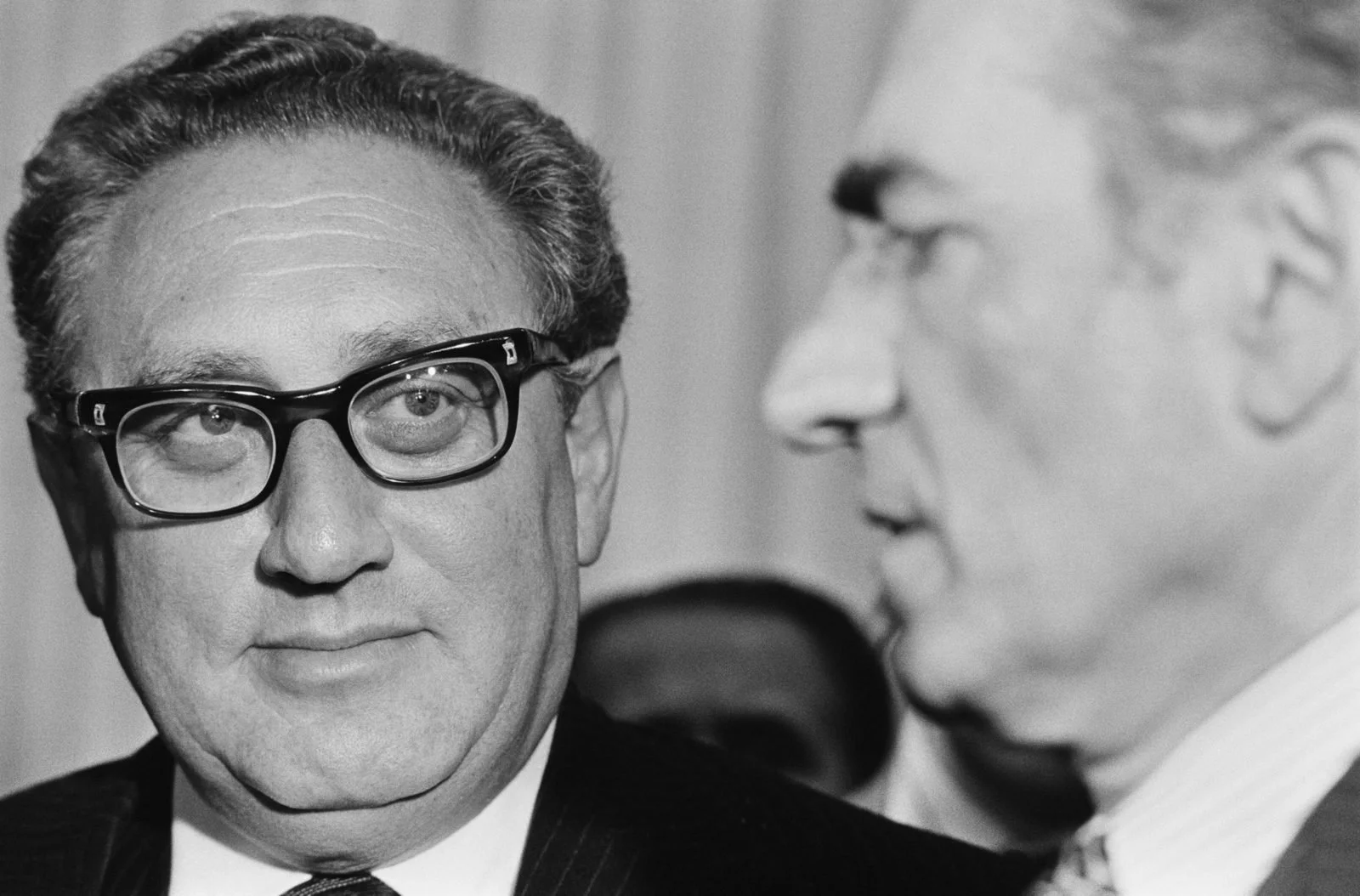
The U.S. dropped on Vietnam the equivalent of a 500-pound bomb for every child, woman, and man, a country comprised largely of poor farmers with a total population numbering 12 million. Napalm was liberally used on civilian populations as was the defoliating chemical Agent Orange. The conflict also included an American "secret war" in Laos and Cambodia with Henry Kissinger's desire to "bomb them into the stone age" - a fact hidden from an American public's view.

Laos, a nation with a population of about 2.5 million, attained the dubious distinction of the world's most bombed country in history, receiving 3.4 million tons of ordinance including over 250 million cluster bombs. Today, many of these initially unexploded bomblets are being accidentally detonated by farmers working in fields and kids playing unwittingly in infected areas causing 34,000 Laotian deaths, with many more maimed, since the Vietnam war ended.

Post WWII, liberal democracy's leader- the U.S., has very illiberally been directly or indirectly involved in overturning approximately 50 governments across the world, many democratically elected (Noam Chomsky), in spite of the UN declarations. In the process, the U.S. and its allies have supported some very undemocratic regimes for imperial interests, funding killing machines in Iran, Guatemala, Uganda, Indonesia, Chile, Argentina, Cambodia, Iraq, and many, many more. According to research provided by James A. Lucas in a November 2015 report for Global Research, since WWII, America has been involved with their clients in killing more than 20 million people in 37 countries, overwhelming territories of "color," with the U.S. directly accounting for approximately half of those deaths through military conflicts and economic wars of sanctions-like the 1990's Iraqi sanctions causing 500,000 child deaths according to UN studies.

Former U.S. Defense Secretary under George W. Bush, Donald Rumsfeld, when asked about Iraqi casualties, stated, "We don't do body counts." Nevertheless, others do. The levels of civilian deaths in the Middle East are frighteningly atrocious.

Underscoring the deep cynicism in which liberal democracy is embroiled in its foreign affairs, technology is now exploring small-scale versions of nuclear weaponry for tactical use with one trillion dollars in developmental appropriations authorized by the first African-American president of the U.S., and a 2008 Nobel Peace Prize recipient.

Keep in mind though, as I stated earlier in the essay, if cost-saving labor might be attained from those of "color," at the cheapest rates possible, ways to control that will be found.


Tummy Tucks Over Rotten Guts: Imperialism by Other Means

A new imperial mission statement has superseded the older ones. This occurred following the unavoidable independence of a Third World. The mission: development. More innocuously attractive than a phrase like "civilizing mission," or, "survival of the fittest," it's nevertheless mere cosmetics masking real intentions that have always accompanied capitalist imperialism: maximally making more money at the expense of non-western populations.

The meaning of development in the peripheries during the decades following WWII has changed. Development has shifted from "New Deal capitalism" or "social capitalism"-governmental redistribution of some wealth for financing state administered programs for people, to something else. As Robinson explains, now development means fostering "…laissez-faire, comparative advantage, free trade, and efficiency…." (pg. 54), an "ideology, a culture, a philosophical worldview that takes classical liberalism and individualism to an extreme. It glorifies the detached, isolated individual-a fictitious state of human existence-and his or her potential that is allegedly unleashed when unencumbered by state regulation and other collective constraints on 'freedom' (pg.55)." Neoliberalism drives our current international developmental regime.

Both forms of development, New Deal and neoliberal, are capitalist impositions of social ordering too often with little regard for real internal needs expressed by the populations being developed. Plus, to receive money, both demand strict criteria be met through aligning with the economic and political goals of the core countries doing the developing. Both have profitably exploited the periphery while claiming unmitigated beneficence.

Complicating things, no longer is it core imperial states dominating periphery territories and nations. Now, domination comes in the form of multinational corporations and transnational finance. This makes imperial control opaque, hidden behind life's every-day routines. Describing the current form of imperialism, Screpanti explains in his introduction, "[global capitalism is] a system of international relations in which state policies are forced to remove the obstacles that national agglomeration place in the way of the process of accumulation [profits] on a global scale." Global markets dictate to nation/states forcing them to dismantle barriers to international trade and the profits reaped. Not surprisingly, most of the bases of operations of transnational corporations and finance are in the core countries made rich to begin with though imperialism exercised over centuries.

Central are the post WWII governing bodies already mentioned, Bretton Woods institutions (IMF and World Bank) and the World Trade Organization (WTO)-born after several rounds of negotiations expanding GATT. The WTO administers and arbitrates the world's regional and global trade agreements. There's nothing democratic about these institutions even though they shape global economic policies in a time of liberal democratic triumphalism. (Authors in the bibliographic material below elaborate how they work because brevity beckons in this essay).

What has this meant for labor in developing the global periphery?

After all, hasn't poverty been reduced, jobs been added, hope primed into the previously dry pumps of hopeless futures? The short answer is: No. Appeals to GDP averages for a country's workers tell a very truncated story as they don't specifically provide how income is disseminated unless intentionally parsed for detailed information. Plus, cost of living change is excluded. Currently, inequality of wealth distribution is only increasing all over the world (See Oxfam reports and numerous university studies).

Economist John Smith introduced his work, stating: "The wildfire of [job] outsourcing spread during the past three decades is the continuation, on a vastly expanded scale, of capital's eternal quest for new sources of cheaper, readily exploitable labor-power." When a "crisis" of diminishing profits occurred in the core during the 1970s, elites began searching for cheaper labor pools as national worker costs were thought too high. As international investments took off in the 1980s and 90s-especially after 1995 with the expansion of the WTO, the whole world became a large labor resource from which capital could draw low-wage workers. Now, worker competition for jobs pits each against all in a global labor market. This is especially true in labor intensive manufacturing productions delivering most of the commodities exported from the periphery to the core. With advancements in technology, production formerly accomplished within a territory or nation, could now be done across the globe. The orchestrated poverty in the periphery under older forms of imperialism is being leveraged for low cost labor approaching near slavery status.

For example: The U.S. is the largest consumer of clothing in the world, but, makes only two percent of the clothing it purchases. Smith reports that in Bangladesh, a garment worker earns "1.36 euros in a day working 10-12 hours and producing 250 T-shirts per hour, or 18 T-shirts for each euro cent paid in wages.…" (loc 218). Nearly 85 percent of the garment workers are women because they are paid significantly less than their male counterparts. "The basic wage is barely one-fifth of what is necessary to nourish, house and clothe a garment worker, one adult, and two child dependents" (loc 244). This means lots of additional hours and multiple members of a family working just to get by. A cheap T-shirt may be marked up by 150 percent with low labor costs contributing to large profits on the item. More expensive clothing (and more heavily advertised) has mark-ups of over 700 percent, with some reported by Smith as much as 1800 percent.

Examining commodity supply chains, Smith shows how various components comprising a more complex product (like computers) needn't be made and assembled in a single location (the old corporate model of efficiency). Different tasks may be done in various countries completing segments in stages of a manufactured item assembled elsewhere. No longer is a multinational company compelled to invest in building overseas infrastructures for their operations and take cost responsibilities for maintaining an overseas work-force. Now, they can just issue contracts to different regions for various component production, keeping investment costs low and letting the lowest bidder perform the tasks demanded by the agreement. It's what Smith calls "arms-length" production. This lets the transnational corporation off the hook for any environmental degradation and worker exploitation. The foreign companies picking up the contract work and their governments are said to be responsible, making compliance to protections (if they exist) issues of the nationally based parties involved.

Additionally, because bids for pieces of product manufacture are very competitive, profit margins for those taking on the assigned operations are slim. A supplier's profit on the T-shirt example is claimed being in the single digits. It provides greater incentive in squeezing their workers and making the thin slice of profit for the company working on the consigned task thicker. Therefore, it's not only a race to the bottom for workers, it's also a similar situation for many contractors picking up arms-length agreements issued by large transnational companies, contractors often overtaken and put out-of-business by those from other geographic areas of exploited cheap labor doing a task for less.

Smith discusses Foxconn, International in China, the successful mammoth assembling arms-length contracted products for giants like Apple and Samsung. Foxconn puts together components made by low-paid employees from other global regions. And the Chinese workers' portion in the sale price of the iPhone? About 3.6 percent according to Smith's researchFoxconn is an example of Export-Processing Zones, "now found in over 130 countries…," all competing against each other for contracts with only a small fraction getting consistent business-like Foxconn has achieved. It's the logic of so called efficiency, meaning, the largest returns on investment over the shortest time for the benefit of transnational investors, regardless of social consequences. Social considerations, like the environment and basic worker needs being met, are externals deemed separate from business calculations.

Further, as Robinson documents, "capital-labor relations [are] based on deregulated, informalized, flexibilized, part-time immigrant contract, and precarious labor arrangements (pg. 52)." Robinson continues, "The International Labor Organization reported that 1.53 billion workers around the world were in such 'vulnerable' employment arrangements in 2009, representing more than 50 percent of the global workforce (pg. 53)." This means, in most countries (including those in the core), large segments of populations are working in so called "flexible labor" positions with little to no benefits and no guarantees of consistent future employment. Investment money may come and go freely across borders. People cannot do so when already insecure jobs leave with the investors. Expulsed workers in precarity are trapped in a system, if allowed to do so, that's driving wages toward the very profitable levels of quasi- slavery.

It seems approaching conditions of slavery is an ever-present goal for the capitalist. My, how things remain the same under the façade of change.

What happens when food prices jump because of market "forces"? - nearly 80 percent during the 2008 commodity crisis in some impoverished areas of the world causing food riots. A large portion of income for the majority of workers in the South goes toward food they can no longer grow themselves-unlike the slaves under former agrarian economies. Leech suggests violence should include human suffering "caused by social structures that disproportionately benefit some people while diminishing the ability of others to meet their fundamental needs…needs like food, health care and other resources… (loc 205)." Systemic violence by capitalism entails more than just imperial wars.


Conclusion

Are there specific counter-examples to my claims supporting something other than the contentions in the syllogism at the beginning of this essay? Of course. However, because all birds don't fly doesn't mean we stop saying that birds have the gift of flight. Look at the whole, not anomalies. Should someone reveal from actual history, while looking at the whole, that modern imperialism/capitalism isn't racist, or that actually existing capitalism didn't arise from imperial endeavors, unlike the paper-premises and theories from the Austrian School of Economics-Joseph Schumpeter's response to Lenin in particular, then let's talk about it. Have there been totalizing systems other than capitalism and its triumph through liberal democracy that have done better, like central state communism-Russian Soviet style, or state administered fascism? Not really, because both were imperialist, with fascism essentially wedding capitalist interests with the state and the U.S.S.R.'s massive bureaucracy controlling the "efficiencies" of quasi-capitalist style production; those forms invading others in superimposing their will. But, does that mean all options for the future are exhausted? Aren't we creatures who can dream of alternatives and work toward creating them?

But, what about capitalism with an Asian face in state dominated China? A new leader may fix it all.

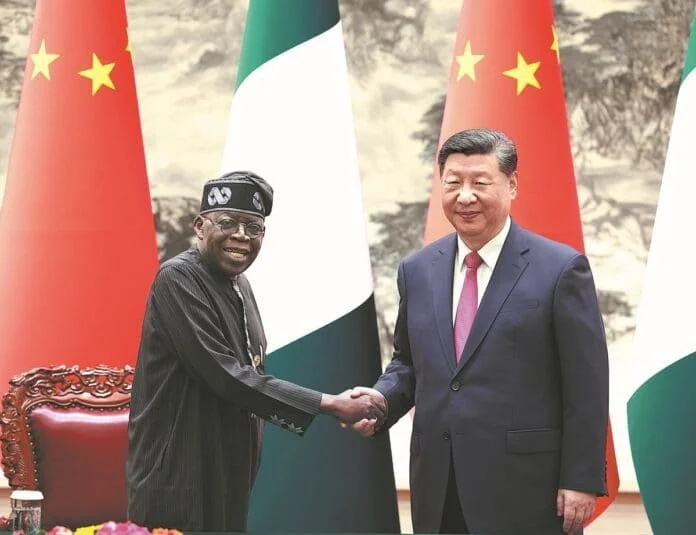
Under new imperialist tenets called development, China is already looking for cheaper labor outside its borders to fuel its own budding consumerism while keeping costs down and profits up. No longer does it just wish to be the manufacturing work-shop of the world. Its massive financial tentacle is far-reaching with infrastructure projects all over the world benefitting its own economic necessity at the expense of local populations. This is expressed through ventures such as large dam, mining and deforestation projects displacing Indigenous peoples and destroying food producing land, high speed rail construction leading to important Chinese cities-remaking the urban spaces and environmental landscapes through which bullet-trains travel, continued fossil fuel activities, purchase of arable land in food insecure areas (East Africa and elsewhere) for feeding themselves by exporting agricultural production necessitating local populations' importation of food as they're displaced off ancestral lands, etc. Plus, defaults on loans provided to poor countries are occurring and looming in greater numbers. What pounds of flesh will be exacted from them? It's flexing its military muscle in the South China sea and squashing dissent at home with a leader who wants that position without term limits. Though leading in renewable energy, historically with capitalism-profit always trumps environmental prudence. Yes, they are in competition with the U.S., but, increasing threats of violence is part of a competitive capitalist past that's sealed in its very concrete history. China is new to capitalism, but already the logic is becoming deeply ingrained.

Michael Corleone would likely not bet on China for providing a legitimate cultural framework cleansing capitalism. He's well aware how murder and mayhem work.

For the future of human flourishing, capitalism in all its forms is essentially violently imperialist, and therefore, racist. It's devolutionary because it's ultimately parasitical, devouring the host, and therefore killing itself (Michael Hudson) along with our environments -both natural and cultural (if you can even divide the two). It's also devolutionary for the fewer and fewer people gaining from it because capitalism makes them competitively callous human beings, stifling the very human abilities of mutuality and empathetic concern. And, it's all for the sake of what capitalism has been designed to do by elite beneficiaries from the beginning: make more money above all else-including human life and all life on the planet.


References

Dunbar-Ortiz, Roxanne, An Indigenous People's History of the United States, Beacon Press, 2015.

Fields, Gary, EnclosurePalestinian Landscapes in a Historical Mirror, University of California Press, 2017.

Horne, Gerald, The Apocalypse of Settler ColonialismThe Roots of Slavery, White Supremacy, and Capitalism in the Seventeenth-Century North America and the Caribbean , Monthly Review Press, 2017.

Leech, Gary, CapitalismA Structural Genocide, Zed Books, 2012 (Kindle book locations).

Mann, Michael, The Sources of Social Power: vol. 3, Cambridge University Press, 2012.

Prashad, Vijay, The Darker NationsA People's History of the Third World, The New Press, 2007.

Resendez, Andres, The Other SlaveryThe Uncovered Story of Indian Enslavement in America, Houghton, Mifflin, Harcourt, 2017.

Robinson, William I., Global Capitalism and the Crisis of Humanity, Cambridge University Press, 2014.

Screpanti, Ernesto, Global Imperialism and the Great CrisisThe Uncertain Future of Capitalism, Monthly Review Press, 2014.

Smith, John, Imperialism in the Twenty-First CenturyThe Globalization of Production, Super-Exploitation, and the Crisis of Capitalism , Monthly Review Press, 2016. (Kindle book locations)

Todorov, Tzvetan, Conquest of America:The Question of the Other, Harper and Row, 1984.

Building a Socialist Alternative: An Interview with Eljeer Hawkins

By Bryant William Sculos

(A shorter, edited-down version of this interview was first published with Truthout under the title "Inspiring a Socialist Alternative: An Interview with Eljeer Hawkins," published Feb. 24, 2018. The full version of the interview is reprinted here with permission.)


(The following is an interview conducted via email between Nov. 30, 2017 and Dec. 30, 2017, slightly edited for style)


Bryant Sculos: Can you say a bit about how you became an activist and what your early experiences were like?

Eljeer Hawkins: I was born and raised in East Harlem, New York City. It began for me at the age of 18 years old. I discovered the speeches of Malcolm X to the chagrin of my mother who was a child of the 1950s and 60s. My mom was 14 years old when Malcolm X was murdered; she wasn't very enthused to find her oldest listening to old Nation of Islam tapes with brother minister Malcolm X calling the "white man the devil." (laugh)

I never had a black history course until college. I was accepted to Howard University, but didn't have the resources to attend early classes that were in 1992. My dream was to attend Howard; I went to John Jay College for Criminal Justice, I wanted to be a defense attorney. My uncle, Wayne, my mom's brother, became instrumental in my early development as he helped me navigate US history, black history, art, and music particularly the black aesthetic. I will always be indebted to him and what he taught me.

So Brother Malcolm X was a natural starting point. My father wasn't in my life, so Malcolm X and Uncle Wayne were the men and examples I looked to growing up politically and culturally. The first bookstore I visited was Liberation bookstore in Harlem and bought my early black nationalist, cultural nationalist, and socialist books. In college, I joined the Organization of Black Students-became very active on campus-to the determent of my school work. My life changed forever when my mother died at the age of 43 from a massive heart attack. At this time I was engaged in solidarity work with a group in the Congo-formerly called Zaire under the brutal dictatorship of Mobutu. I also was on the periphery of the Workers World organization but never joined.

My mother's death destroyed me; I lost focus and left school after two years. I wanted to dedicate my life to the project of revolutionary ideas and action.


BS: Did you consider yourself a socialist from the beginning or did that develop later?

EH: I was a black revolutionary nationalist until one winter night after a protest in 1995. A sister activist asked me what society after the revolution was I aiming to build. I had ignorantly dismissed revolutionary Marxism as a white man's ideology. February of 1995 I attended a gathering of dissent Congolese organizations with various political and economic leanings. I worked with Serge Mukendi and the Workers and Peasants Movement of the Congo (POP). Brother Serge and the POP declared themselves to be Marxists; he played a foundational role in my political development and hunger to understand the world. Well we attended this meeting of the minds, and we stayed with a member of Labor Militant in Boston, Massachusetts (now Socialist Alternative). I began to look at the brother's bookshelf and was spellbound. I wasn't a member of any socialist organization at the time. So the comrade gave me the contact information of Labor Militant members in New York City. From February to about the early summer of 1995, I attended meetings and discussions. The organization was tiny at the time. After genuinely studying and reading the program, I decided to join and commit my life to the project of building socialism and workers' democracy internationally. I joined at a time following the fall of Stalinism, the triumphalism of capitalism, and decline of the workers' movement. So I participated in a dark moment for socialist ideas, and frankly, it steeled me in every way to march forward armed with a program, analysis, and history. So all the things I've learned and continue to learn have guided me, 23 years later in the international class struggle for socialism. Today, we are witnessing a resurgence of socialist thought and action. I'm humbled to be here for this moment.


BS: What is your take on the current state of the US left-as well as the left globally?

EH: We are at an embryonic stage of socialist ideas. The crisis of capitalism and decline of the institutions of capitalism like their two parties (Democratic and Republican) has led a whole generation to question what the hell is going on and what I can do to change things. Occupy Wall Street was the first shot across the bow, followed by vital social and political explosions and banners like Black Lives Matter, Standing Rock, #MeToo, and Arab Spring revolutions, etc. This is also a time for debate and discussion on how the socialist left globally can make gains and what is the best strategy and tactics to take the struggle forward. We need a level of patience, because this is a new and young milieu of activists and organizers who are feeling their way through this period of reform or revolution-battles for self-determination like in Catalonia, an environmental crisis like in California, Puerto Rico, and the Caribbean, and increased racial and sexual oppression. I think as this new left continues to engage in the struggle they will be forced to draw conclusions and rethink what they thought initially. We are truly living in a period of revolution and counter-revolution. We must prepare ourselves through an intense engagement in history, social struggle, and political analysis because of this uncharted territory moment.


BS: Given the unique path you've taken to become a socialist, now with decades of activist experience, I think people would be interested in hearing what your worst experience as a socialist activist has been? Best?

EH: The worst has always been debates to the point of losing sight of the centrality of the working class and their potential revolutionary agency to change the world. Now, please do not get me wrong, a debate organized and focused can provide clarity and a general roadmap on how to proceed in the struggle. The Bolshevik Party is a brilliant example of debate and discussion in the workers' movement-interconnected with political perspectives, action, and the program always centering the international working class and peasantry in the worldwide socialist revolution.

The best experience is winning a debate (laugh), just kidding. I would say witnessing how consciousness is transformed by events and interconnected developments that lead people to draw various conclusions. Consciousness can leap forward or backward based on events, how a situation is given a contextual explanation like an electoral win or defeat, and importantly who and what explains this process like an individual or organization in the struggle. I think of Erica Garner, the daughter of Eric Garner and her political awakening. After the death of her father, she immersed herself in telling the truth and keeping his spirit alive in organizing daily for a full year to decry law enforcement violence. That is powerful to me as an activist and grassroots historian. Mamie Till, the mother of Emmitt Till, said it best when events shape one's consciousness, "Two months ago I had a nice apartment in Chicago. I had a good job. I had a son. When something happened to the Negroes in the South, I said, `That's their business, not mine.' Now I know how wrong. I was. The murder of my son has shown me that what happens to any of us, anywhere in the world, had better be the business of us all."

Socialism is longer a dirty word, the gains like the fifteen dollar minimum wage spearheaded by low-wage workers, electoral victories and organizing of Socialist Alternative and socialist city councilor Kshama Sawant in Seattle, Washington, and a strong showing of Ginger Jentzen in the city council race in Minneapolis, Minnesota. The growth of independent working-class politics is on the agenda. The best moments are witnessing or participating in grassroots struggles that win, raising the morale, confidence, and fighting capacity of working people, the poor, and the most oppressed to change their conditions.


BS: In early November 2017 when you came to speak at a Socialist Alternative event in Worcester, MA, you said that you were a perpetual optimist. Given the state of the world today, the increasingly frequent and devastating crises of capitalism, structural racism, rampant unrepentant sexism and misogyny, and continued ecological degradation, how you can maintain your optimism?

EH: James Baldwin stated, "I cannot be a pessimist because I am alive. To be a pessimist means you have agreed that human life is an academic matter, so I am forced to be an optimist. I am forced to believe that we can survive whatever we must survive."

That optimism comes from a study of history and examples of people fighting back to form a union, stopping an abusive boss, people organizing together for a common goal. Now, we need as Dr. King correctly stated, an urgency of NOW! And we need some action to go along with that urgency. Yes, we have dark days and nights ahead of us, particularly in this era of Trumpism and the economic terrorism of capitalism. That's why we must engage in struggle and critical political study to fortify our resolve. History teaches us when people become fed-up and can't take it anymore, people begin to move. What is crucial for the radical socialist left globally is to be prepared for that moment building organization, program, and leadership in these battles are essential as victory or defeat hangs in the balance.


BS: Building on that question, do you think there is possibly a strategic role for a kind of hopeful pessimism -a kind of expectation, given the forces rallied against the left (as well as the left's self-inflicted failures) that, at least in the short-term, things probably aren't going to turn out well, but that is precisely why we need to struggle and remain hopeful that they can, in the future, turn out well? The strategic idea being that if left activists (especially those who are new to socialism or activism in general) become too optimistic about the possibilities of short-term victories, they will become disillusioned and demobilized when faced with failure. Do you think there is anything to this perspective?

EH: You can't have a blind optimism or a cheerleader's mentality that is not rooted in the reality of class struggle-its ups and downs. The 90s were difficult, but I would not trade it in because I learned during a period of defeat. I was politically developed as a member of the Committee for a Workers' International (CWI) that has a sober approach that follows in the best traditions of genuine Bolshevism. The CWI draws out global political perspectives to explain the events and developments we are living through, even more, critically elaborating on an action program to present to workers and youth in the class struggle rooted in their lived experience under this system.

It is true the left has made mistakes, and there is an uneven history when it comes analysis, strategy, and tactics. With that said, we can't throw out the baby with the bathwater either. The building of the left or revolutionary party, even more so, Socialism, is a project that will demand the full participation and activity of the working class, youth, poor, and oppressed on a daily basis. I firmly believe we need more than smart prose, intellectual verbiage that a tiny minority in the activist world can understand, and commentary that is divorced from the concrete struggle and lives of working people. I wonder what that term "hopeful pessimism" means to someone who has been on the left for years, who carries scares and tears, or a new person discovering these ideas and their voice in the struggle. That "hopeful pessimism" seems abstract and divorces oneself to standing on the sidelines and waiting. I would prefer to engage and test out my ideas in the living breathing struggle and allow the movement to judge me if I am right or wrong.


BS: Given that, and the importance that you (and Marxists in general) place on history, what historical models, regarding movements and organizations, do you think offer the best inspiration (both regarding principles and strategy/tactics) for the contemporary left?

EH: The debate and discussion that is in the air is reform or revolution. This past November marked the 100th anniversary of the Russian Revolution, and many are questioning the Bolshevik Revolution and party itself. I would say the Bolshevik Revolution would be instructive to study, but I would recommend all activists especially the new generation of activists to explore all the significant revolutionary movements of the past. Particularly after the Russian Revolution in 1917, like the German Revolution of 1918, Chinese Revolution (1925-27), Spain between 1931 and1937, etc. And counterpose it to the revolutions after WWII in the aftermath of the strengthening of Stalinism and Social Democracy, like China in 1949, Cuba in 1959, and anti-colonial revolutions in the so-called "third world." In my mind, this is vital because I think this generation needs a sense of historical memory and clarity of what a revolution is and how it comes to life under particular conditions and social forces. As you engage in this study, I think the Bolsheviks will stand out as a unique force that made a successful socialist revolution and fought to keep the flame alive in the face of imperial attack, third world social conditions, civil war, and isolation.


BS: You and I are both members of Socialist Alternative (SA), so obviously we have a shared vision of principles and strategy, but what is your perspective on the uptick in popularity and paper membership of the Democratic Socialist of America (DSA)? How should SA orient itself toward DSA, both locally and nationally? What are your experiences in working with DSA?

EH: This version of DSA is not your momma or daddy's DSA. DSA is a different organization from its original foundations in the 1960s under the leadership of Michael Harrington; I think this past summer's convention proved that to be true. I am interested to see how it will continue to develop with 30,000 members and several DSA members taking office on a city and statewide basis nationally. The Occupy banner, Bernie Sanders phenomenon, and the capitalist crisis have led us to this moment where socialism is being examined seriously for the first time in a generation or two. This generation will be worse off than their parents; they are living through a new gilded age of the super-rich reaping profits beyond imagination, and their lives are precarious in every way from income inequality to the climate crisis.

SA has worked with DSA members and chapters nationwide and would love to do so moving forward around the critical issues facing working people, poor, and the most oppressed around issues such as healthcare, jobs, education, housing, and ending law enforcement violence. We also want to engage in comradely discussion and debate around strategy and tactics for the left and related movements. We are aware of the meaningful conversations taking place inside DSA around the role of Democratic Party, building a sustainable fight back against corporate power, and countless other issues. SA wants to build a multi-racial mass movement of the working class with socialist forces as its backbone. I think the 40,000 strong rally and march against the forces of hate and reaction in Boston, MA (Aug. 2017) was a brilliant example of genuine united front work. And campaigning to show the potential power and organizing capacity of the working class and left that overshadowed and dwarfed the racist and neo-Nazi forces made the national and international news. This will be a period of clarification around ideas, history, and movement building strategy. SA is looking forward to engaging this new generation of activists and organizers because we are on the clock with no time to waste.


BS: Lastly, what do you see as the greatest obstacle to achieving progress towards socialism over the next, say, 5-10 years?

EH: We are up against an empire and global capitalism. There is no final blow against this system of oppression, war, hate, and environmental destruction. It has weapons of mass distraction and destruction at its disposal. We must be clear about what we are up against. As the Russian Revolution of 1917 and many other social movements against tyranny and corporate power have shown us, as the great Fannie Lou Hamer taught us, when people become sick and tired-the winds of change begin to swirl-what seemed impossible becomes possible. We have to prepare, which means we have to rebuild the fighting capacity of the working class, poor, and most oppressed, organizing in our workplaces, schools, and communities in a systematic and daily manner that encompasses defensive struggle to maintain what we have won and offensive battles to fight for what we want and need right now. One of the immediate tasks in front of us is reigniting the early stages of the resistance against Trump and the Republican Party as they advance the corporate agenda just like at this tax bill its naked class warfare. We must forge a mass movement that is not episodic but is sustaining and always pushing forward. Living that famous civil rights anthem to the fullest "Ain't Gonna Let Nobody Turn Me Around."

Trump can be defeated, but we must have the will, strategy, analysis, approach, and program that centers the lives of working people and seeks to unite the working class in a common struggle against the ruling 0.1%. That's why I am incredibly excited and interested in the Poor People's Campaign this year and its possibilities in forging that movement. I may not see socialism in my lifetime, but I have been proud to be part of the struggle for socialism. To stand with the millions around the world as we say enough is enough! We will build a new world with our bare hands rooted in love for humanity, a socialist society is possible.

--


Eljeer Hawkins is a community, labor and anti-war activist, born and raised in Harlem, New York, and member of Socialist Alternative/CWI for 23 years. Eljeer is a former shop steward with Teamsters local 851 and former member of SEIU 1199, currently is a non-union healthcare worker in New York City. He contributes regularly to Socialist Alternative Newspapersocialistworld.net , and The Hampton Institute on race, criminal justice, Black Lives Matter, and the historic black freedom movement. Eljeer is a member of the editorial board of Socialist Alternative newspaper. He has also lectured at countless venues including Harvard University, Hunter College, Oberlin College, and University of Toronto.


Bryant William Sculos, Ph.D. is a postdoctoral fellow at The Amherst Program in Critical Theory, adjunct professor at Florida International University, contributing writer for The Hampton Institute, and Politics of Culture section editor for Class, Race and Corporate Power . His recent work has been published with Constellations New Political Science Class, Race and Corporate Power , Public Seminar New Politics , and in the edited volumes The Political Economy of Robots (Palgrave, 2017) and Marcuse in the Twenty-First Century (Routledge, December 2017). He is also a member of Socialist Alternative/CWI.

The Endless American Horror: Lynching and Police

By Devon Bowers

This article was originally published on AHTribune.com.

Please note that this article contains graphic descriptions of lynchings. Discretion is advised.


In 1918 Brook County, Georgia, a local plantation owner was killed by Sidney Johnson, a black man who had been leased out to the plantation via the convict lease system, in a dispute over unpaid wages. Upon hearing this, the white community went on a rampage and lynched not only Johnson, but anyone they thought to even be remotely involved in Johnson's decision. One of these men was Hayes Turner. Not only was he lynched, but also castrated.

Turner's wife, Mary, who was eight months pregnant at the time, began to speak out against her husband's lynching; unfortunately, she too, became a victim. A white mob "hanged her by her feet, set her on fire, sliced her stomach open, and pulled out her baby, which was still alive." They stomped on the child's head, killing it. Then the mob "[took] the time to sew two cats in Mrs. Turner's stomach and making bets as to which one would climb out first."[1]

This can be described as nothing short of demonic. In many ways, even that fails to fully encompass the horror and pure wickedness of this event. Though, the only thing more horrid is that in a way, lynchings continue in the form of police murder.

Before delving into the connections between the aforementioned violence, it is imperative to first understand lynching. The origins of lynching truly lie in slavery where "there were numerous public punishments of slaves, none of which were preceded by trials or any other semblance of civil or judicial processes. Justice depended solely upon the slaveholder." [2] Punishment ranged from lashings to family separation to mutilation and branding. The overall idea behind these actions were that black people were not human beings, in a way, they weren't even property, they were just things, lesser than both humans and animals. This mindset continued in the post chattel slavery era, where slavery took on the form of both the convict leasing and sharecropping systems respectively. Yet, it also took place in the form of mob violence against blacks.

There have been many explorations as to the reasoning behind lynching. E.M. Beck, a professor of sociology at the University of Georgia, posited the argument that lynching was linked to the cotton markets. He argued that lynchings "[increased] during times of sparse cotton revenues, and declining with increasing cotton profits." The lack of profit from cotton led unemployed whites to want to replace black workers and that "Mob violence was a form of intimidation to facilitate this labor substitution." [3] While further studies have shown that fluctuations in cotton pricing don't explain lynching [4], it should be noted that white elites would have an interest in fueling white angst into hatred against blacks, effectively utilizing poor whites as foot soldiers in their mission to maintain the current racial and economic hierarchy.

The cause of lynching was first and foremost the culture of white supremacy that had existed for the past two centuries or so. Blacks became scapegoats for many of the problems that were going on and thus a subculture of violence that had arguably already taken root in the days of slavery, took on new form. "The existence of a subculture presupposes a complex pattern of norms, attitudes and actions" which "reflects 'a potent theme of violence current in the cluster of values that make up the life-style, the socialization process, [and] the interpersonal relationships of individuals living in similar conditions." [5] Effectively, violence becomes normalized and is used as a tool of to socialize and condition people as to how the society operates.

This normalization and conditioning can be seen in the form of the lynching. Lynchings were very much a community affair in which legal authorities seldom if ever got involved as "the judge, prosecutor, jurors and witnesses-all white-were usually in sympathy with the lynchers" and "local police and sheriffs rarely did anything to defend Negro citizens and often supported lynchings." [6] Newspapers as well were extremely biased in covering lynchings. "Southern editors often used sympathetic language in describing lynch mobs while reserving callous damnation for lynch victims. The southern press was extremely creative when it came to providing moral, if not legal, justification for the action of lynch mobs."[7]

We can see the affect that journalists had on the public's view of lynching in the case of the murder of the Hodges family in Statesboro, Georgia.

Henry and Claudia Hodges lived on a remote farm, near a black community, some of whom were the employees of the Hodges. Late on the night of July 28, 1904, two men saw the Hodges home aflame. They went to investigate and found the mutilated, charred remains of the entire family. The suspected motive was robbery as it was known that Hodges was better off than most farmers and it was even rumored that he possibly had several hundred dollars stashed away on his property.

The following morning, Bulloch County sheriff John Kendrick formed a group to hunt down the killers. After discovering strands of hair, a knife, a shoe, and tracks of mud, they were led to a small shack occupied by Paul Reed, a black laborer. While Paul denied involvement, he, along with his wife Harriet, were arrested and taken to jail. When being interrogated, Harriet broke down and revealed that her husband and another black man, Paul Cato, had planned to rob the Hodges. The shoe matched the one found on the Hodges farm and blood stains on his clothing seemed to seal the deal with regards to Paul Reed's guilt, however, no money was found. The sheriff also arrested thirteen other blacks who lived in the general vicinity.

Despite the lack of hard evidence in the form of money, newspapers assumed Reed's guilt. The Macon Telegraph wrote "The wholesale butchery . . . of the Hodges family near Statesboro by dehumanized brutes adds another to the long list of horrors perpetrated in this state since the emancipation of the African slaves in 1865" and noted that "the people of [Statesboro] ... displayed great moral courage and forbearance in permitting the perpetrators to escape summary punishment without the forms of law,"[8] a statement clearly hinting that lynching was on the table as an option. Others went even further in their demonization of the alleged perpetrators, such as the editor of Statesboro News who penned "Good farmers awoke to the fact that they are living in constant danger, and that human vampires live in their midst, only awaiting the opportunity to blot out their lives." [9] Language such as this only served to heighten white anxiety and fears that a black uprising had occurred in response to white mistreatment, something that had been the in the backs of their minds since the institution of slavery began.

The media actively went and pushed erroneous and misleading evidence, such as was with Morning News which stated that Reed had made a 'partial confession' to the murders, despite there being a lack of legal evidence to support the assertion. The Statesboro News continued to utilize inflammatory language, publishing an article which said in part "Their guilt has been established beyond a doubt - every chain has been traced and all lead to their door." [10] Additional stories argued that the rape of both Mrs. Hodges and their daughter Katy, where the real motives for the motive for the murders, again without the slightest shred of evidence.

Newspapers also noted that Reeds and Cato belonged to a distinct subset of blacks who were lazy and shiftless. This contrasts with the blacks who 'know their place' in society and often work on white farms. The only reason this was even discussed was because there were rumors floating around that the Hodges family may have been killed due to Mr. Hodges being too friendly with blacks, something that only aided to reinforce the region's racial caste system and conjure images of murderous black people who would attack whites were they to let their guard down.

An Atlanta News editorial minced few words in its character analysis: "It is true that the negroes in the turpentine campus of south Georgia are in the main a lot of irresponsible and half-savage vagabonds, apparently hopeless to the redeeming efforts of civilization, and that their presence makes a continual menace and threat to the peace and safety of the people."[11]

On August 15, the court case finally got underway. Superior Court Judge Alexander Daley was forbidden by Georgia law to request a change in court venue, despite his wanting to as to possibly give people time to 'cool off.' This was actually dangerous in some ways as such changes were often used by mobs as an excuse to lynch blacks on the grounds that they may have a chance to 'escape justice.'

When the trial began, the press continued to present rumor as fact. The Statesboro News reported that Reed had admitted to being part of a gang of blacks who were roaming the Bulloch County countryside, robbing, raping, and killing whites. Once again this increased the amount of fear in whites and put them more dead-set on lynching. It didn't help that throngs of whites were milling about outside the courthouse.

The actual trial was incredibly brief, lasting less than a day and a half, with Reed's and Cato's respective defenses lasting barely eight minutes, both men plead innocent. Still, the court sentenced them to hanging. As soon as this was done, the white mobs that had been surrounding the courthouse burst in and took both men, making no effort to hide their identities, despite the fact that soldiers (without any ammunition) had been dispatched to protect the men. Both men were beaten and eventually doused in kerosene and set ablaze and dead by 3:30 pm.

Many newspapers actively defended the lynching. The Forest Blade published an editorial which argued "While we will not say we are in favor of lynching principles, there are crimes - and this is one of them - that fully justified the act," similarly another editorial in the Sparta Ishmelite wrote "What society does not do for them [Georgia's whites], efficiently, they do for themselves." [12] The press played a major role in increasing tensions and outright encouraging lynchings, a serious act which helped to normalize the very act itself.

The normalization of lynching was rampant in Southern society. In 1893 in Paris, Texas, a black man by the name of Henry Smith was lynched for allegedly killing and raping the sheriff's daughter. Smith's lynching was in that a spectacle was made of it. It was the first "blatantly public, actively promoted lynching of a southern Black by a large crowd of southern whites with features such as 'the specially chartered excursion train, the publicly sold photographs, and the wide circulated, unabashed retelling of the event by one of the lynchers.'" [13] It should be examined in detail that there were a number of "event-like themes, such as a float, carnival, and parade" all of which indicates "that within the act of justice, the structures of entertainment were organized. […] In addition, the souvenir scrambling for burnt remains as well as promotional materials for acquisition or purchase provides a similar semblance to paraphernalia purchased at modern-day sporting events." [14]

Thus, what we see is within the context of lynching, there was also an aspect of entertainment and even revelry, as if it was something to be celebrated and loved. The squabbling over Smith's remains reinforces the unbroken idea from slavery that black people aren't human beings, but rather just things, in this case a trophy.

The situation went even further in the case of Jesse Washington, a 17 year old mentally disabled boy who was accused of murdering a white woman and subject to a kangaroo court. Children were even bought to view his horrific lynching:

Fifteen thousand men, women and children packed the square. They climbed up poles and onto the tops of cars. . . . Children were lifted up by their parents in the air. Washington was castrated, and his ears were cut off. A tree supported the iron chain that lifted him above the fire of boxes and sticks. Wailing, the boy attempted to climb the skillet hot chain. For this the men cut off his fingers. The executioners repeatedly lowered the boy into the flames and hoisted him out again. With each repetition, a mighty shout [from the crowd] was raised. [15]

It is in acts such as this, with the involvement of children and, as with Smith's lynching, the selling of Washington's remains as if they were memorabilia, that the murder of black people becomes normalized and something beyond a source of maintaining racial hierarchy, something akin to a form of entertainment. Among this murderfest, though, there were those who fought back such as Ida B. Wells.

Wells was a black woman who was mainly focused on battling racial discrimination and penning articles. This changed in 1892, "when a close childhood friend of hers, Thomas Moss, was lynched" in Memphis [16] Wells was of the mindset that lynching was an overreaction by whites against rapists, however, her views quickly changed given the fact that Moss was lynched for defending his grocery store from armed whites and being lynched for the simple act of self-defense. On top of this, Memphis law enforcement didn't even bother to lift a finger to arrest the lynchers, who were publicly known.

Wells took a bit of an academic-esque approach to the situation, thinking that if lynching were exposed as the incarnation of racial hatred it was, it would no longer be socially acceptable. For three months, she traveled around the South investigating lynchings and interviewing witnesses. She found that not only were Black men lynched for having consensual relationships with white women, but also virtually all lynchings became about rape after the lynching went public. She took her information and published a pamphlet entitled Southern Horrors: Lynch Law in All Its Phases. Eventually due to threats on her life, she fled Memphis and moved to Chicago, where she continued to write and speak out against lynching. Still, there were others who took a more hands on, self-defense approach to lynching as took place in Decatur, IL.

On June 3, 1893, in Decatur, IL, a black day labor by the name of Samuel L. Bush who had been accused of rape, was taken from the Macon County jail and lynched by a white mob after they had went on a rampage searching for him from March 31 to June 2. During this time, rather than meet with members of the black community to discuss Bush's situation, "State's Attorney Isaac R. Mills, Decatur Mayor David Moffett, Deputy Sheriff Harry Midkiff, and Decatur Marshal William Mason were meeting with Charles B. Britton and Charles M. Fletcher, the leaders of the vigilantes." They attempted to appease the leaders, with Mills stating that if Bush wasn't sentenced to death, "it would then be time to resort to extreme measures." [17]

Despite days of lynching rumors floating around, the authorities allowed for nearly one thousand people to gather across from the jail where Bush was being held and made no effort to move or in any way ensure Bush's safety. Just before 2 AM, "a mob composed of some of the county's leading citizens broke Sam Bush out of jail and lynched him." [18]

In response to the lynching, Wilson B. Woodford, the only black lawyer in town that Bush had hired, published an open letter to blacks living in Decatur, urging them to attend a mass meeting where a strategy for dealing with the lynching would be formed. At the meeting, Woodford advocated taking the legal route, pushing the state attorney, the same one who had been complicit in Bush's lynching, to take action. Some, such as Edward Jacobs, rejected it and pushed for armed blacks to go themselves and arrest Bush's murderers. The resolutions committee backed Woodford's strategy and messages were sent to both the governor and state attorney.

Woodford and Jacobs were coming from two separate worlds. Woodford, having a legal background, "was predisposed to distinguish between the law and enforcers of the law. Woodford, like other liberal race men and women, believed that racial prejudice and contempt for law and order were the twin causes of lynching" whereas Jacobs questioned this method of thinking. Jacobs acknowledged the cozy relationship between lynchers and the police and knew that "knew the authorities had mobilized the vigilantes to help them in capturing Bush but had rejected African-American support either to protect Bush or to arrest his murderers." [19]

Interestingly enough, the two strategies would merge as both Woodford and Jacobs were members of the National Afro-American League, an organization that push for black development and fight against white responses to said development. NAAL "combined the pre-eminent philosophy of self-help and racial solidarity with the protest tactics of legalism, direct action, and violent self-help."[20]

A year later, James Jackson, a black male porter, was accused of raping a white woman under questionable circumstances. The father of the woman was pushing for Jackson's lynching and stated that help was coming from Mt. Zion. This situation would turn out rather differently than Bush's.

Blacks controlled the streets surrounding the jail. They could be seen in doorways, under stair wells and behind wagons, armed and ready for action. Other African-Americans patrolled the streets scrutinizing whites who happened to be out at that late hour. And unlike at the protest meeting, at least two black women participated. [21]

They continued to patrol the streets around the courthouse, the police didn't attempt to intervene, and there were no attempts to lynch Jackson.

As the case with Bush shows, the police themselves were many times the very ones who were, at best, complicit (not that that truly matters), and at worst, active participants in lynchings. This shouldn't be surprising as not only were the police entrenched in the same racial mindset as the lynchers, but also the purpose of the police was (and is) a tool of social control, especially against black people.

The police themselves came out of slavery as "slave patrols and night watches, which later became modern police departments, were both designed to control the behaviors of minorities." [22] In fact, in 1871 Congress passed the Ku Klux Klan Act, "which prohibited state actors from violating the Civil Rights of all citizens in part because of law enforcements' involvement with the infamous group. "[23] (emphasis added) The police themselves oftentimes were directly involved in lynchings such as with the case of Austin Callaway, a sixteen year old boy.

Callaway was shot and killed in LaGrange, Georgia on September 8, 1940, having just a day earlier been accused of assaulting a white woman. He was arrested and taken to the local jail. Later that night, six men, one of them armed, went into the jail, forced the jailer to open the door, and murdered Callaway.[24] Though the killers were never found, it is known that the police were personally involved. It was noted in 2017 by LaGrange's police chief, Louis M. Dekmar, in an apology regarding Callaway's murder. Specifically, Dekmar said "I sincerely regret and denounce the role our Police Department played in Austin's lynching, both through our action and our inaction." [25] Callaway's story is just one in many[26] where police were directly or indirectly involved in lynchings. It is this historical backdrop in which police actively murder black people that today's police murders continue.

With lynchings, the body would hang for days as both a reminder to other blacks to 'stay in their place' but also a part of the aforementioned spectacle. This spectacle continues as can be seen with "the fact that Michael Brown's body was left on the street for hours after he was killed by police officer Darren Wilson," something "that points to just how little has changed in American race relations since the days of Jim Crow." [27] Leaving Brown's body out to languish was an illustration of the lack of concern and decency the Ferguson police department had for him and is reminiscent of leaving a lynch victim's body out for all to see, to remind everyone where black people stood on the racial hierarchy: the bottom.

The media, too, plays a role in police killings as they did during lynchings. Once again, the Michael Brown case puts this in stark view. Darren Wilson, the police officer who killed Brown, described him in disproportionate and even inhuman terms.

"When I grabbed him, the only way I can describe it is I felt like a five-year-old holding onto Hulk Hogan," Wilson, who is 6′ 4″ and 210 lbs., said of Brown, who was 6′ 4″ and 292 lbs. at the time of his death. […]He said Brown tried to get his fingers inside the trigger. "And then after he did that, he looked up at me and had the most intense aggressive face. The only way I can describe it, it looks like a demon, that's how angry he looked." [28]

Not only are black people described in nonhuman terms, but there is a constant implication that
they deserve to be shot due to past transgressions. In the case of Akai Gurley, "The New York Daily News ran a headline, Akai Gurley had criminal record, innocent when shot by cop, which they later switched out for ' Protesters call for arrest of rookie cop who shot Akai Gurley as victim's sister says he didn't deserve to die . '"[29] There is also guilt by association. When twelve year old Tamir Rice was killed by the police, the media bought up the fact that the family's lawyer had "also defended the boy's mother in a drug trafficking case" [30] and that Rice's father had a history of domestic violence. [31] Regularly, the media brings up information that has nothing to do with the actual incident in question, but actively works to defame and sully the victim's name.

Where there once were slave owners and slave catchers, the KKK, and lynch mobs, they have all now "become largely replaced by state agencies such as the criminal justice system, and local and federal police." [32] In August 2016, the United Nations Working Group of Experts on People of African Descent went on a mission to the United States. In their conclusion on their findings, they wrote: "Contemporary police killings and the trauma that they create are reminiscent of the past racial terror of lynching. Impunity for State violence has resulted in the current human rights crisis and must be addressed as a matter of urgency." [33]

This assessment is quite correct, especially within the ideas of the spectacle and normalization. While there may not be a sports theme to current police murders, there is a spectacle in and of itself in the near constant sharing of videos of black people dying at the hands of police and the footage being played again and again on the nightly news. While one shouldn't discount that videos are being shared to raise awareness and may very well get people involved in activism, at the same time by the videos being shared and viewed over and over, it can very well create a situation where it the death of black people is normalized and an immunity of sorts built up to it. As writer Feliks Garcia notes

To witness the final moments of someone's life is not supposed to be a regular experience, yet it feels like every week, we're presented with a new video of a different unarmed black man-or child-killed by police.

With the reach of social media, each of these videos is viewed ad nauseum, and you have to ask what purpose this serves. Who needs to see these videos at this point?[34]

Due to the constant viewing of black people dying at the hands of the police, coupled with the media's twisted narratives, seeing black people die becomes a normal occurrence.

The ongoing police murders of black people draw strong parallels to lynchings: from the involvement of the police to the utter dearth of justice to the larger social implications. It is both a tragedy and a nightmare, an endless horror.


Notes

[1] This American Life, Suitable For Childrenhttps://www.thisamericanlife.org/627/transcript

[2] Robert L. Zangrando, About Lynchinghttp://www.english.illinois.edu/maps/poets/g_l/lynching/lynching.htm

[3] E. M. Beck, "The Killing Fields of the Deep South: The Market For Cotton and the Lynching of Blacks, 1882-1930," American Sociological Review 55:4 (August 1990), pg 526

[4] James W. Clarke, "Without Fear or Shame: Lynching, Capital Punishment and the Subculture of Violence in the American South," British Journal of Political Science 28:2 (April 1998), pg 272

[5] Clarke, pg 275

[6] Robert A. Gibson, The Negro Holocaust: Lynching and Race Riots in the United States, 1880-1950 , Yale-New Haven Teacher's Institute, http://teachersinstitute.yale.edu/curriculum/units/1979/2/79.02.04.x.html

[7] Richard M. Perloff, "The Press and Lynchings of African Americans," Journal of Black Studies 30:3 (January 2000), pg 320

[8] Reed W. Smith, "Southern Journalists and Lynching: The Statesboro Case Study," Journalism and Communication Monographs 7:2 (2005), pg 63

[9] Ibid

[10] Ibid, pg 64

[11] Ibid, pg 65

[12] Ibid, pg 70

[13] Rasul A. Mowatt, "Lynching as Leisure: Broadening Notions of a Field," American Behavioral Scientist 56:10 (August 2012), pg 1371

[14] Ibid

[15] Ibid, pg 1376

[16] Amii Larkin Barnard, "The Application of Critical Race Feminism to the Anti-Lynching Movement: Black Women's Fight against Race and Gender Ideology, 1892-1920," UCLA Women's Law Journal 3:1 (January 1993), pg 15

[17] Sundiata Keita Cha-Jua, "A Warlike Demonstration,' Legalism, Armed Resistance, and Black Political Mobilization in Decatur, Illinois, 1894-1898," The Journal of Negro History 83:1 (Winter 1998), pg 54

[18] Ibid

[19] Cha-Jua, pg 57

[20] Ibid

[21] Cha-Jua, pg 59

[22] Victor E. Kappeler, A Brief History of Slavery and the Origins of American Policing http://plsonline.eku.edu/insidelook/brief-history-slavery-and-origins-american-policing

[23] Ibid

[24] Northeastern University Law School, Austin Callawayhttp://nuweb9.neu.edu/civilrights/georgia/austincallaway/

[25] Alan Binder, Richard Fausset, "Nearly 8 Decades Later, an Apology for a Lynching in Georgia," New York Times, January 26, 2017 ( https://www.nytimes.com/2017/01/26/us/lagrange-georgia-lynching-apology.html )

[26] State Sanctioned, Police and State Involvement with Lynchinghttps://statesanctioned.com/police-and-state-involvement-with-lynching/

[27] David G. Embrick, "Two Nations, Revisited: The Lynching of Black and Brown Bodies, Police Brutality, and Racial Control in 'Post-Racial' Amerikkka," Critical Sociology 41:6 (June 2015), pg 837

[28] Josh Sanburn, "All The Ways Darren Wilson Described Being Afraid of Michael Brown," Time, November 25, 2014 ( http://time.com/3605346/darren-wilson-michael-brown-demon/ )

[29] Simple Justice, The Outrage of the Victim's Rap Sheet Must Endhttp://blog.simplejustice.us/2014/11/23/the-outrage-of-the-victims-rap-sheet-must-end/ (November 23, 2014)

[30] Brandon Blackwell, "Lawyer representing Tamir Rice's family defended boy's mom in drug trafficking case," Cleveland, November 24, 2014 ( http://www.cleveland.com/metro/index.ssf/2014/11/lawyer_representing_tamir_rice.html )

[31] Brandon Blackwell, "Tamir Rice's father has history of domestic violence," Cleveland, November 26, 2014 ( http://www.cleveland.com/metro/index.ssf/2014/11/tamir_rices_father_has_history.html )

[32] Embrick, pg 838

[33] United Nations General Assembly, Report on the Working Group of Experts on People of African Descent on its mission to the United States of America https://documents-dds-ny.un.org/doc/UNDOC/GEN/G16/183/30/PDF/G1618330.pdf?OpenElement (August 18, 2016)

[34] Feliks Garcia, "Police brutality is modern lynching- and you may be a part of it," Daily Dot, April 20, 2015 ( https://www.dailydot.com/via/black-men-police-violence-lynching-internet/ )

Is It Nation Time?: The Black Nationalism of Black Panther

By Sean Posey

In the fall of 1992, a unique moment in American cinema captured the attention of the nation. Auteur Spike Lee released his magnum opus, Malcolm X, to wide critical acclaim. But more than that, for the first time, a biopic of one of the central characters in the history of Black Nationalism reached an audience around the country and the world. Hats with the 'X' logo appeared on the heads of black youth everywhere, and the film itself inspired introspection and dialogue among not just black intellectuals but also among African Americans from all walks of life. The film's ending credits merged scenes of Malcolm throughout his life and connected Harlem to Soweto and America to Africa.

A similar moment seems to be upon us with the recent release of Black Panther, a comic book film about an African king/superhero and the fictional nation of Wakanda. Symbols and themes from Black Nationalism and Pan-African history are laced throughout the film, which manages to elevate the comic book genre flick to a visual textbook for not just inspiring black pride, but also for reflecting important elements of the black past and possible future.

Black Nationalism is a complicated concept, one with roots stretching back to the nineteenth century and beyond. The reality of chattel slavery in the West led to the call for the birth of a black nation from men such as Martin Delany, often called the "grandfather of Black Nationalism," and Robert Alexander Young, author of the 1829 Ethiopian Manifesto, which postulated a universal connection between all black peoples.

Young was writing about an old idea - Pan-Africanism. Envisioning a future nation for blacks in North America and beyond (Black Nationalism) - and building connections between African peoples around the world (Pan-Africanism) - are concepts that pulse throughout Black Panther. During the early nineteenth century, Paul Cuffee, a black businessman and abolitionist in America, began bringing African Americans to Sierra Leone. The English had already begun to bring freed slaves to the area after the Revolutionary War to a place called Granville Town, also known as the "Province of Freedom." Cuffee hoped the region could be a future homeland for blacks looking to flee oppression in America.

In the twentieth century, Marcus Garvey, perhaps the most famous of the Black Nationalists and Pan-Africanists, envisioned Liberia as a future homeland for blacks looking to flee violence and discrimination in America. He hoped that such a place would become an advanced country where blacks could prosper and build a power the equal of any in Europe. The Garveyites and other such Black Nationalists saw themselves as indelibly linked to Africa.

In Black Panther, a modern and technologically advanced black nation in Africa has already been realized. The nation of Wakanda masquerades before the world as an underdeveloped state, but hidden behind an elaborate façade is the most advanced country on Earth, powered by a fictional metal known as vibranium. Mined from a sacred mound, the substance powers nearly everything in the country.

In this technologically advanced nation, what Patricia Hill Collins calls the "main ideas" of Black Nationalism - self-determination (political), self-definition (cultural), and self- reliance (economic) - are all fully realized.[1]

Maglev trains, Talon fighters, and vehicles designed to mimic flying animals are among the more wonderful aspects of Wakandan technology that we see in the film. Unlike Western countries, Wakanda incorporates technology that both mimics and exists in harmony with the natural world. Afrofuturistic cities mingle with gorgeous vistas of waterfalls and trees. There are skyscrapers sporting thatched roofs, grass sidewalks, sophisticated public transportation systems, and no visible cars.

There is nary a white face in sight as black vendors sell their wares in the street, and a black king, T'Challa, rules over a country that has never known colonization. According to Carvell Wallace, director Ryan Coogler loosely modeled his idea of Wakanda after the Kingdom of Lesotho, a landlocked country surrounded by South Africa. But Black Panther's kingdom is a futuristic polity beyond the wildest dreams of even Marcus Garvey.

From as far back as the nineteenth century, women such as Maria W. Stewart, a servant turned public figure, espoused the ideas of Black Nationalism on the national stage in America. However, in North America and throughout the African Diaspora, patriarchal structures relegated black women to largely supporting roles in the struggle for black liberation. Such gendered systems of power are absent in Wakanda.

It is easy to see the inspiration of historical figures such as Amy Jacques Garvey and Henrietta Vinton Davis in the characters of Nakia (played by Lupita Nyong'o) and Okoye (played by Danai Gurira).

Okoye is head of the fearsome Dora Milaje, an all-female bodyguard that protects Black Panther and the royal family. They might be thought of as a cross between the "Amazonian Guard" that protected the late Colonel Muammar Gaddafi of Libya and the Nation of Islam's Vanguard or "Warrior Class" of the Muslim Girls Training and General Civilization Class. The Dora Milaje bring to mind the term "an army of Amazons to lead the race," used to describe women in the United Negro Improvement Association. [2] Indeed, the Dora Milaje have been compared to the all-female African army of the Dahomey Amazons, who once fought the French in what is now the Republic of Benin.

Unlike Okoye, Nakia is a spy, a member of the secretive "War Dog" squad, which operates in a capacity similar to the C.I.A., minus the overthrowing of foreign governments. During the course of the film, she attempts to convince T'Challa of Wakanda's responsibility to help other embattled Africans across the continent. However, it has long been the tradition in Wakanda to avoid any entanglements with the outside world that might draw attention to the country's true power.

The tension between Wakanda's wealth and the impoverishment and agony among black populations throughout the world is symbolized in the character of Erik Killmonger (Michael B. Jordan). Killmonger is the son of a murdered Wakandan spy and prince, N'Jobu. While working undercover in Oakland, California, during the 1990s, N'Jobu witnesses the poverty and racial oppression facing blacks in America. He comes to believe that Wakanda should use its technology to aid the suffering of fellow blacks, wherever they may be.

N'Jobu comes to work with hated arms dealer Ulysses Klaue to in order to smuggle vibranium of out of Wakanda in order to facilitate an uprising among African Americans. When T'Chaka, who is both N'Jobu's brother and also T'Challa's father, confronts him, N'Jobu refuses to come back to Wakanda to stand trial and is killed by T'Chaka.

N'Jobu's son, the young Killmonger, is left behind in America. He grows to become a member of a black-ops unit, training for the day when he might return to Wakanda and seize the throne. There is more than a bit of Malcolm X in Killmonger, who wishes to arm the black people of the world for a final battle against white supremacy. But unlike X, Killmonger descends into violent acts against his own people (especially women) in his quest for power.

When he ultimately does return to Wakanda to confront T'Challa, it is easy to hear the words of Mittie Maude Lena Gordon, a Black Nationalist and Pan-Africanist, who spoke of the plight of blacks in the United States during the twentieth century: "How long shall we have to wait for something to be done for the black people's of this country?" [3]

T'Challa, the Martin Luther King to Killmonger's Malcolm X, rejects the idea of a global war. But he remains torn over Wakanda's policy of isolation from the rest of the world, particularly the black world outside of his country's borders. By the end of the film, T'Challa decides to open outreach centers throughout the United States, bringing Wakanda's technology to those in the African Diaspora - a true act of Pan-Africanism.

The chant of the Black Power movement during the 1960s and 1970s (Is it nation time?) is symbolically answered in Black Panther. For although Wakanda is a fictional African country, its importance extends throughout the diaspora.

The concept of Black Nationalism in modern times goes beyond the idea of creating a physical polity. According to Kate Dossett, "Black Nationalism in the United States has always been closely linked to Pan-Africanism, and can be better understood through an imagined community notion of nationalism rather than a euro-centric state model." [4]

Wakanda's example is one that reaches out beyond Africa to the masses of people of African descent. It is an imagined nation for an imagined community throughout the world.

Black Panther has the potential to help engage audiences with these concepts and with the history of Black Nationalism and Pan-Africanism. The beauty of the costumes, characters and the fictional world of Wakanda can do much more than entertain. They could mark the beginning of a new cultural and political awakening in a century where the key questions of black self-determination, self-definition, and self-reliance continue to be part of a needed dialogue.


Notes

[1] Patricia Hill Collins, From Black Power to Hip Hop: Racism, Nationalism and Feminism (Philadelphia: Temple University Press, 2006), 75.

[2] Kate Dossett, Bridging Race Divides: Black Nationalism, Feminism, and Integration in the United States, 1896-1935 (Gainesville: University of Florida Press, 2009), 157.

[3] Keisha N. Blain, Set the World on Fire: Black Nationalist Women and the Global Struggle for Freedom (Philadelphia: University of Pennsylvania Press, 2018), 181.

[4] Doessett, 6.

A Political Philosophy of Self-Defense

By Chad Kautzer

Editor's Note: This essay is an adapted excerpt from Setting Sights: Histories and Reflections on Community Armed Self-Defense (ed. scott crow).


In his 1964 speech "Communication and Reality," Malcolm X said: "I am not against using violence in self-defense. I don't call it violence when it's self-defense, I call it intelligence." Earlier that year, he made a similar point in his Harlem speech introducing the newly founded Organization of Afro-American Unity: "It's hard for anyone intelligent to be nonviolent."

To portray self-defensive violence as natural, in no need of justification, or as so commonsensical that it could barely be called violence has a depoliticizing effect. Since the goal of Malcolm X's speeches was to undermine critiques of armed black resistance, this effect was intentional. For good reasons, he was attempting to normalize black people defending themselves against the violence of white rule. When Malcolm X did speak of self-defense as a form of violence, he emphasized that it was lawful and an individual right. In his most famous speech, "The Ballot or the Bullet" (1964), he explicitly stated: "We don't do anything illegal." This was also, of course, how the Black Panther Party for Self-Defense justified its armed shadowing of police in Oakland in the late 1960s: it was the members' Second Amendment right to bear arms and their right under California law to openly carry them.

To develop a critical theory of community defense, however, we need to move beyond the rhetoric of rights or the idea that all self-defensive violence is quasi-natural or nonpolitical. The self-defense I discuss in this essay is political because the self being defended is political, and as such it requires both normative and strategic considerations. This project seeks to articulate the dynamics of power at work in self-defense and the constitution of the self through its social relations and conflicts.

Because communities of color defend themselves as much against a culture of white supremacy as they do against bodily harm, their self-defense undermines existing social hierarchies, ideologies, and identities. If we were to limit ourselves to the language of individual rights, these interconnections would remain concealed. Violence against women (but not only women), for example, has a gendering function, enforcing norms of feminine subordination and vulnerability. Resistance to such violence not only defends the body but also undermines gender and sexual norms, subverting hetero-masculine dominance and the notions of femininity or queerness it perpetuates. Since the social structures and identities of race, gender, class, and ability intersect in our lives, practices of self-defense can and often must challenge structures of oppression on multiple fronts simultaneously.

In the following, I do not focus on the question of whether self-defensive violence is justifiable, but rather on why it is political; how it can transform self-understandings and community relations; in what contexts it can be insurrectionary; and why it must be understood against a background of structural violence. It is necessary to clarify these dimensions of self-defense for two reasons in particular. First, arguments advocating armed community defense too often discuss the use of violence and the preparations for it as somehow external to political subjectivity, as if taking up arms, training, or exercising self-defensive violence do not transform subjects and their social relations. The influence of Frantz Fanon's The Wretched of the Earth (1961) on the early Black Panthers, Steve Biko, and others derives precisely from Fanon's understanding of the transformative effects of resistance in the decolonizing of consciousness. "At the individual level," Fanon writes, "violence is a cleansing force. It rids the colonized of their inferiority complex, of their passive and despairing attitude."

The second reason for clarification is to distinguish the strategies, ways of theorizing, and forms of social relations of liberatory movements from those of reactionary movements. There is an increasingly influential understanding of self-defense today that reinforces a particular notion of the self-a "sovereign subject"-that is corrosive to horizontal social relations and can only be sustained vis-à-vis state power. This notion of the self runs counter to the goals of non-statist movements and self-reliant communities. To be aware of these possibilities and pitfalls allows us to avoid them, a goal to which the following sketch of a critical theory of community self-defense seeks to contribute.


Resistance and Structural Violence

At the National Negro Convention in 1843, Reverend Henry Highland Garnet issued a rare public call for large-scale resistance to slavery: "Let your motto be resistance! resistance! resistance! No oppressed people have ever secured their liberty without resistance. What kind of resistance you had better make, you must decide by the circumstances that surround you, and according to the suggestion of expediency." I describe resistance as opposition to the existing social order from within, and, as Garnet suggested, it can take different forms, such as self-defense, insurrection, or revolution. We can think of an insurrection as a limited armed revolt or rebellion against an authority, such as a state government, occupying power, or even slave owner. It is a form of illegal resistance, often with localized objectives, as in Shays' Rebellion (1786), Nat Turner's Rebellion (1831), the insurrections on the Amistad (1839) and Creole (1841), the coal miner Battle of Blair Mountain (1921), Watts (1965), Stonewall (1969), and Attica (1971).

Distinguishing between defensive and insurrectionary violence can be complicated. In the Amistad case, for example, white officials initially described it as a rebellion and thus a violation of the law, but later reclassified it as self-defense when the original enslavement was found to be unlawful. In a rare reversal, the U.S. Supreme Court recognized the captives on the Amistad as having selves worthy of defense. That was never in question among those rebelling, of course, but it does indicate the political nature of the self and our assessments of resistance. "Since the Other was reluctant to recognize me," writes Fanon, "there was only one answer: to make myself known." On the Amistad, rebellion was the only way for the enslaved to make their selves known, meaning that their actions were simultaneously a defense of their lives and a political claim to recognition.

A sustained insurrection can become revolutionary when it threatens to fundamentally transform or destroy the dominant political, social, or economic institutions, as with the rise of the Zapatista Army of National Liberation in Mexico in 1994 and the recent wave of Arab uprisings in the Middle East and North Africa, including most significantly Rojava or Syrian Kurdistan. The armed rebellion led by John Brown in 1859, which seized the United States arsenal at Harpers Ferry, was intended to instigate a revolution against the institution of slavery. Although the insurrection was quickly put down, it inspired abolitionists around the country and contributed to the onset of the U.S. Civil War.

Brown's rebellion was not a slave revolt (and thus not an act of self-defense), but it did highlight the nature of structural violence. Henry David Thoreau, the inspiration for Gandhi's nonviolent civil disobedience and, in turn, that of Martin Luther King, Jr., wrote the most insightful analysis of this violence at the time. In his essay "A Plea for Captain John Brown," Thoreau defends Brown's armed resistance and identifies the daily state violence of white rule against which the insurrection took place:

We preserve the so-called peace of our community by deeds of petty violence every day. Look at the policeman's billy and handcuffs! Look at the jail! Look at the gallows! Look at the chaplain of the regiment! We are hoping only to live safely on the outskirts of this provisional army. So we defend ourselves and our hen-roosts, and maintain slavery. . . . I think that for once the Sharps rifles and the revolvers were employed in a righteous cause [i.e., Brown's insurrection].

In this passage Thoreau highlights how the so-called security of one community was achieved by oppressing another and making it insecure. To properly understand the insurrection, he therefore argues, one must view it as a response to illegitimate structural violence. He enumerates the commonplace mechanisms of this rule, which, for whites, fades into the background of their everyday lives: law and order upheld by a neutral police force, enforced by an objective legal system and carceral institutions, and defended by an army supported by the Constitution and blessed by religious authorities. The violence of white supremacy becomes naturalized and its beneficiaries see no need for its justification; it is nearly invisible to them, though not, of course, to those it oppresses. "The existence of violence is at the very heart of a racist system," writes Robert Williams in Negroes with Guns (1962). "The Afro-American militant is a 'militant' because he defends himself, his family, his home and his dignity. He does not introduce violence into a racist social system-the violence is already there and has always been there. It is precisely this unchallenged violence that allows a racist social system to perpetuate itself."

We all exist within hierarchical social structures and the meaning and function of violence, self-defensive or otherwise, will be determined by our position vis-à-vis others in these structures. FBI Director J. Edgar Hoover, for example, described the self-defensive practices of the Black Panther Party as "the greatest threat to the internal security of the country" and thus insurrectionary, if not revolutionary. Surely his assessment had more to do with the threat self-reliant black communities posed to white domination in the country than with the security of government institutions. "When people say that they are opposed to Negroes 'resorting to violence,'" writes Williams, "what they really mean is that they are opposed to Negroes defending themselves and challenging the exclusive monopoly of violence practiced by white racists." These structures of domination and monopolies of violence are forms of rule that operate in the family, the city, and the colony, and resistance to their violence, both dramatic and mundane, "makes known" the selves of the subjugated.

A satisfactory notion of self-defense is not obvious when we view self-defensive acts within the context of structural violence and understand the self as both embodied and social. Writing specifically of armed self-defense, Akinyele Omowale Umoja defines it as "the protection of life, persons, and property from aggressive assault through the application of force necessary to thwart or neutralize attack." While this is appropriate in many contexts, the primary association of self-defense with protection does not capture how it can also reproduce or undermine existing social norms and relations, depending on the social location of the self being defended. Describing the effects of his defense against a slaveholder, Frederick Douglass, for example, wrote that he "was a changed being after that fight," for "repelling the unjust and cruel aggressions of a tyrant" had an emancipatory effect "on my spirit." This act of self-defense, he asserts, "was the end of the brutification to which slavery had subjected me." Our understanding of self-defense must, therefore, account for the transformativepower of self-defense for oppressed groups as well as the stabilizing effect of self-defense for oppressor groups.


Social Hierarchies and Subject Formation

To see how self-defense can have several effects and why a critical theory of self-defense must, therefore, always account for relations of domination, we need to understand in what way the self is both embodied and social. By embodied I mean that it is through the body that we experience and come to know the world and ourselves, rather than through an abstract or disembodied mind. The body orients our perspective, and is socially visible, vulnerable, and limited. Much of our knowledge about the social and physical world is exercised by the body. Our bodies are sexed, raced, and gendered, not only "externally" by how others view us or how institutions order us-as, for example, feminine, masculine, queer, disabled, white, and black-but also "internally" by how we self-identify and perform these social identities in our conscious behavior and bodily habits. By the time we are able to challenge our identities, we have already been habituated within social hierarchies, so resistance involves unlearning our habits in thought and practice as well as transforming social institutions. As David Graeber writes, "forms of social domination come to be experienced in the most intimate possible ways-in physical habits, instincts of desire or revulsion-that often seem essential to our very sense of being in the world."

Since our location within social hierarchies in part determines our social identities, the self that develops is social and political from the start. This does not mean that we are "stuck" or doomed to a certain social identity or location, nor that we can simply decide to identify ourselves elsewhere within social hierarchies or somehow just exit them. To be sure, we have great leeway in terms of self-identification, but self-identification does not itself change institutional relations or degrees of agency, respect, risk, opportunity, or access to resources. These kinds of changes can only be achieved through social and political struggles. Our embodied identities are sites of conflict, formed and reformed through our practical routines and relations as well as through social struggle. Since the actions and perceptions of others are integral to the development of our own, including our self-understanding, we say that the self is mediated, or is formed through our relations with others in systems of production, consumption, education, law, and so forth.

In The Souls of Black Folks (1903), W. E. B. Du Bois theorized black life in a white supremacist society as experiencing one's self as split in two, a kind of internalization of a social division that produced what he called "double-consciousness," or "this sense of always looking at one's self through the eyes of others, of measuring one's soul by the tape of a world that looks on in amused contempt and pity." Although one may view oneself as capable, beautiful, intelligent, and worthy of respect, the social institutions one inhabits can express the opposite view. Part of the experience of oppression is to live this otheringform of categorization in everyday social life. Even when one consciously strives to resist denigration and to hold fast to a positive self-relation, the social hierarchy insinuates itself into one's self-understanding. In the most intimate moments of introspection, a unified self-consciousness escapes us because our self-understanding can never completely break from the social relations and ideologies that engender it. Social conflict is internalized, and it takes great strength just to hold oneself together; to live as a subjectwhen others view and treat you as little more than an object, and when you are denied the freedoms, security, and resources enjoyed by others. Ultimately, only by undermining the social conditions of oppression through collective resistance can the double-consciousness Du Bois describes become one.

Racism produces race and not the other way around. Racial categories emerge from practical relations of domination, unlike ethnic groups, which are cultural forms of collective life that do not need to define themselves in opposition to others. Racial categories are neither abstract nor biological, but are social constructions initially imposed from without but soon after reconfigured from within through social struggles. As with all relations of domination, the original shared meanings attributed to one group are contrary to the shared meanings attributed to other groups and, thus, often exist as general dichotomies. This oppositional relation in meaning mirrors the hierarchical opposition of the groups in practical life-a fact that is neither natural nor contingent.

Masculinity and femininity, for example, are not natural categories: they are social roles within a social order and thus have a history just as racial groups do. Yet, like those of race, the social and symbolic relations of gender are not contingent. Indeed, masculinity and femininity exhibit a certain kind of logic that we find in every institutionalized form of social domination. Because gender is a way of hierarchically ordering human relations, the characteristics associated with the dominant group function to justify their domination. Group members are said to be, for example, stronger, more intelligent, and more moral and rational. Nearly every aspect of social life will reflect this, from the division of labor to the forms of entertainment.

In reality, the dominant group does not dominate because it is more virtuous or rational-indeed, the depth of its viciousness is limitless-but due to its dominance it can propagate the idea that it is more virtuous, rational, or civilized. "The colonial 'civilizing mission,'" writes María Lugones, "was the euphemistic mask of brutal access to people's bodies through unimaginable exploitation, violent sexual violation, control of reproduction, and systematic terror."

The fundamental dependency of the oppressor on the oppressed is concealed in all ideologies of social domination. Although the very existence of the colonist, capitalist, white supremacist, and patriarch relies on the continuous exploitation of others, they propagate the idea of an inverted world in which they are free from all dependencies. This is the camera obscura of ideology that Karl Marx discusses in The German Ideology (1845-46). The supposedly natural lack of autonomy of the subordinated groups is, we are told, the reason for social hierarchy. Workers depend on capitalists to employ and pay them, women need men to support and protect them, people of color require whites to control and decide for them, and so forth.

Resistance to domination reveals the deception of this inverted world, destabilizing the practical operations of hierarchy and undermining its myths, for example of masculine sovereignty, white superiority, compulsory heterosexuality, and capital's self-creation of value. Violence and various forms of coercion support these myths, but such violence would be ineffective if some groups were not socially, politically, and legally structured to be vulnerable to it.

Ruth Wilson Gilmore defines racism as "the state-sanctioned or extralegal production and exploitation of group-differentiated vulnerability to premature death." Indeed, to be vulnerable to violence, exploitation, discrimination, and toxic environments is never the choice of the individual. Any radical liberatory agenda must therefore include among its aims the reduction of such group-differentiated vulnerabilities, which would strike a blow to many forms of social domination, including by not limited to race. This is not to say that vulnerability can be completely overcome. The social nature of our selves guarantees that the conditions that enable or disable us can never be completely under our control, and those very same conditions render us vulnerable to both symbolic and physical harm.

Turning specifically to consider self-defensive practices, while they cannot therefore eliminate vulnerability, they can reduce it for particular groups and undermine it at a structuring principle of oppression. Training in self-defense, writes Martha McCaughey in Real Knockouts (1997), "makes possible the identification of not only some of the mechanisms that create and sustain gender inequality but also a means to subvert them."


The Politics of Self-Defense

If we accept a social, historical, and materialist account of group and subject formation, and understand that groups are reproduced with the help of violence, both mundane and spectacular, then we can see why self-defense functions as more than protection from bodily harm. It will also be clear why self-defense is not external to questions of our political subjectivity. If we acknowledge that we are hierarchically organized in groups-by race, gender, and class, for example-which makes some groups the beneficiaries of structural violence and others disabled, harmed, or killed by it, we see how self-defense can either stabilize or undermine domination and exploitation.

Self-defense as resistance from below is a fundamental violation of the most prevalent social and political norms, as well as our bodily habits. As McCaughey writes: "The feminine demeanor that comes so 'naturally' to women, a collection of specific habits that otherwise may not seem problematic, is precisely what makes us terrible fighters. Suddenly we see how these habits that make us vulnerable and that aestheticize that vulnerability are encouraged in us by a sexist culture." Organized examples of resistance to this structured vulnerability include the Gulabi or Pink Sari Gang in Uttar Pradesh, India; Edith Garrud's Bodyguard suffragettes, who trained in jujitsu; as well as numerous queer and feminist street patrol groups, including the Pink Panthers. McCaughey calls these self-defensive practices "feminism in the flesh," because they are simultaneously resisting the violence of patriarchy, while reconfiguring and empowering one's body and self-understanding. We could similarly think of the self-defensive practices of the Black Panthers, Young Lords, Deacons for Defense and Justice, Brown Berets, and the American Indian Movement as anti-racist, as decolonization in the flesh.

Although self-defense is not sufficient to transform institutionalized relations of domination, unequal distributions of resources and risk, or the experience of double-consciousness, it is a form of decolonization and necessary for other kinds of mobilizations. The praxis of resistance is also an important form of self-education about the nature of power, the operations of oppression, and the practice of autonomy. When conditions are so oppressive that one's self is not recognized at all, self-defense is de facto insurrection, a necessary making oneself known through resistance. While the most common form of self-defense is individual and uncoordinated, this does not make it any less political or any less important to the struggle, and this is true regardless of the mind-set or intentions of those exercising resistance.

We must, however, also be attentive to how resistance, and even preparations for it, can instrumentalize and reinforce problematic gender and race norms, political strategies, or sovereign politics. A critical theory of community self-defense should reveal these potentially problematic effects and identify how to counter them. There is, for example, an influential pamphlet, The Catechism of the Revolutionist (1869), written by Sergey Nechayev and republished by the Black Panthers, which describes the revolutionist as having "no personal interests, no business affairs, no emotions, no attachments, no property, and no name." This nameless, yet masculine, figure "has broken all the bonds which tie him to the civil order." But who provides for the revolutionist and who labors to reproduce the material conditions of his revolutionary life? Upon whom, in short, does the supposed independence of the revolutionist depend?

Although the machismo and narcissism here is extreme to the point of being mythical-George Jackson said it was "too cold, very much like the fascist psychology"-it does speak to a twofold danger in practices of resistance. The first danger is that self-defensive practices are part of a division of labor that falls along the traditional fault lines of social hierarchies within groups. Men have, for instance, too often taken up the task of community defense in all contexts of resistance, which has the effect of reproducing traditional gender hierarchies and myths of masculine sovereignty. Considerations of self-defense must therefore be intersectionalist and aware of the transformative power and embodied nature of resistance, as discussed above. The group INCITE!, for example, seeks to defend women, gender nonconforming, and trans people of color from "violence directed against communities (i.e., police brutality, prisons, racism, economic exploitation, etc.)" as well as from "violence within communities (sexual/domestic violence)."

The second danger is a commitment to the notion of a sovereign subject, which is the centerpiece of authoritarian political ideologies and motivates so many reactionary movements. The growing number of white militias, the sovereign citizen movement, as well as major shifts in interpretations of the Second Amendment and natural rights, are contributing to an increasingly influential politics of self-defense with a sovereign subject at its core. For this sovereign subject-whose freedom can only be actualized through domination-the absolute identification with abstract individual rights always reflects an implicit dependency on state violence, much the way Nechayev's revolutionist implicitly relies on a community he refuses to acknowledge. The sovereign subject's disavowal of the social conditions of its own possibility produces an authoritarian concept of the self, whose so-called independence always has the effect of undermining the conditions of freedom for others.

Although one objective of self-defense is protection from bodily harm, the social and political nature of the self being defended makes such resistance political as well. Self-defense can help dismantle oppressive identities, lessen group vulnerability, and destabilize social hierarchies supported by structural violence. The notion of a sovereign subject conceals these empowering dimensions of self-defense and inhibits the creation of self-reliant communities in which the autonomy of each is enabled by nonhierarchical (and non-sovereign) social relations being afforded to all.


This excerpt was originally published at Boston Review .

Revolution and Black Struggle: Marxism as a Weapon Against Racism and Capitalism

By Marcello Pablito

Racism, Capitalism, and Slavery

In his most important work, Marx states that "Labour in a white skin cannot emancipate itself where it is branded in a black skin."1 Despite attempts by political and intellectual groups to deny Marx and Engels' (and, by extension, revolutionary Marxism's) uncompromising stance against racism, the founders of scientific socialism thoroughly understood that racist oppression served as a tool for the capitalist exploitation of all workers. The relationship between capitalism and racism has only grown stronger in subsequent generations. There have been cases in which the falsification of Marx and Engels' positions and the conscious attempts to equate Marxism with Stalinism have led to generalized attacks on Marxism.This brief article will describe how the leadership of the Russian Revolution understood the fight against racism.

Marxism was developed on the foundations of a new worldview based in historical materialism and offering an explanation that was superior to idealism, religious beliefs, or a view of history as a mere succession of random events. Contrary to these views, Marxism explains the development of history and the division of society into classes as emerging from the material development of human society, and it describes class struggle as the driving force of history. It is from a scientific view of the development of capitalism, and from a critique of political economy and the origins of the bourgeois state, that Marxism explains racism as an ideology that emerged to justify and rationalize one of the greatest atrocities in the history of mankind and identifies it as one of the fundamental pillars of primitive capital accumulation: the enslavement and trade of more than 11 million human beings to work on the plantations of the Americas and the Caribbean. This is a counter-perspective to idealistic conceptions that view racism as an ideology that has always existed and is intrinsic to human nature or as an idea that emerged out of nowhere, dissociated from its material foundations.

Without recognition of this fundamental aspect, it is impossible to have a scientific view of either the development of racism or of capitalism itself. As Eric Williams writes in his classic work Capitalism and Slavery:

Slavery was not born of racism: rather, racism was the consequence of slavery ... The reason was economic, not racial ... The features of the man, his hair, color and dentifrice, his "subhuman" characteristics so widely pleaded, were only the later rationalizations to justify a simple economic fact: that the colonies needed labor and resorted to Negro [sic] labor because it was cheapest and best.2

Throughout the book - whose theses continue to generate important debates - Williams describes the role slavery played in the process of primitive accumulation, focusing on the relationship between the slave trade and industrial development in England. In its imperialist phase, the era of "crises, wars and revolutions," the relationship between racism and capitalism was reinforced. It is no coincidence that theories of scientific racism became more fully developed as nation-states played a decisive role in combining racism and capitalism to increase exploitation, precisely when the African continent was occupied and divided up among the European powers.

This is the basis of a scientific explanation of how racism develops as ideology. It is impossible to understand the development of capitalism without considering the relationship between slavery and racism. It is unquestionable that, to this day, racism serves to further capitalist exploitation. Countless statistics indicate that black people have the most precarious, poorly paid jobs and receive far lower wages than white workers even if they do the same work. By increasing the levels of exploitation of the black worker, and especially of black women, capitalists are able to further undercut the wages and living conditions of the working class as a whole. For this reason, the fight against racism must necessarily be a struggle against capitalism.


Revolution and Slavery

The 1917 Russian Revolution showed the working class and the most oppressed sectors of society a glimpse of a future beyond the narrow limits of capitalist oppression. This did not only apply to the Russian workers; the peasants, who came from a history of serfdom in which they were branded like cattle, achieved their dream of agrarian reform; religious minorities obtained religious freedoms; women gained the right to abortion for the first time in history; and gay people were no longer persecuted.

Internationally, the Russian Revolution had a huge impact on class struggle and demonstrated that, even in underdeveloped capitalist countries like Russia or the countries of the African continent, the masses could lead a revolution.

The Third International, led by Lenin and Trotsky, was born out of the struggle against the social-chauvinists who supported the imperialist war in the early 1900s. The international perspective of the socialist revolution was decisive to its founders. After the triumph in 1917, they aimed to transform the newly created Soviet Republic into a barricade for international and global revolution. The interests of the Soviet workers were intertwined with those of the global working class and of the multitudes of oppressed peoples worldwide. One of the most egregious aspects of the early imperialist era was the division and rule of the African continent by 15 European countries at the Berlin Conference of 1885. The expansion of the Russian Revolution, the defeat of the European bourgeoisies, and the victory of the working class in these imperialist countries - which included France, Germany and England - would have been a fatal blow to their colonial project in the African continent. At the same time, the weakening of the European bourgeoisie would have increased the chances of African workers and the oppressed of overthrowing imperialist rule in their regions.

Great revolutionary leaders like Lenin and Trotsky left various testimonies to their enormous enthusiasm for black struggle against racist oppression and the role of all revolutionaries in merging with this struggle internationally. Even before the Russian Revolution, Lenin was already concerned about the situation of black people worldwide, understanding how crucial it was for communists to connect with the most oppressed and exploited sectors of the working class. In 1920, John Reed wrote a report at Lenin's request, describing the situation of black people in the U.S. to the Second Congress of the Third Communist International:

The Communists must not stand aloof from the Negro [sic] movement which demands their social and political equality and at the moment, at a time of the rapid growth of racial consciousness, is spreading rapidly among Negroes. The Communists must use this movement to expose the lie of bourgeois equality and emphasize the necessity of the social revolution which will not only liberate all workers from servitude but is also the only way to free the enslaved Negro people.3

In a society divided into social classes based on relationship to the means of production and the bourgeoisie's private appropriation of the social labor produced by the working class, Marxists argue that the exploiters end up being their own gravediggers. The working class, by virtue of its strategic role in the production of all that exists in society, is the only group capable of defeating capitalism, taking on the task of emancipating not only its own class but humanity as a whole. Black people are not only a fundamental part of the working class; they also comprise its most precarious sectors.

The Fourth Congress held in 1922, before the Stalinization of the Comintern, ratified its theses on black liberation, declaring that the revolutionary order of the day included the fight against racism and support for the struggles of black people on an international scale. After stating that "the enemy of [the black] race and of the white worker is identical: capitalism and imperialism," the theses affirmed that:

The Communist International should struggle for the equality of the white and black races, and for equal wages and equal political and social rights. The Communist International will use every means at its disposal to force the trade unions to admit black workers, or, where this right already exists on paper, to conduct special propaganda for their entry into unions. If this should prove impossible, the Communist International will organize black people into their own unions and then use the united front tactic to compel the general unions to admit them.4

These historical examples show that black struggle is worker struggle, a message that continues to have relevance today. Fighting for the working class means fighting against racism and defending, for example, wage equality between blacks and whites, men and women, and the direct hire of outsourced workers. This fight calls for an end to police brutality, the right to decent housing, and comprehensive agrarian reform, as this is the only way to unite the working class. This is a decisive question since unity is impossible without fighting against racism, and without this unity, victory cannot be achieved in a revolutionary process.


The Black Struggle and the International Revolution

Lenin and Trotsky did not regard the Russian Revolution as an end in itself but rather as the first step in the international and global expansion of the revolution that would first reach other European countries like Germany. This would mean the end of colonial domination in Africa and Asia and a tremendous advance from the point of view of the world revolution.

The reactionary policy of Stalinism in defense of "socialism in one country" promoted after 1924, along with the failures of the Chinese revolution in 1926 and the general strike in England in 1926, sealed the fate of the black struggles and resistance in the African continent. It signalled for the global imperialist bourgeoisie the possibility of regaining its strength and maintaining its international domination, thus delaying for decades the independence of African countries.

In Brazil, the Stalinism represented by the Brazilian Communist Party (PCB) played a deplorable role in racial politics. Among several examples until the 1960s, the PCB was opposed to discussing any demand for admitting black people into trade unions because they argued that it divided the working class, blatantly capitulating to the ideology of "racial democracy."

Trotsky devoted all his energy to combating the bureaucratization of the USSR. The Left Opposition, and then the Fourth International, were the continuation of the Bolshevik tradition. The passion and aspirations of these revolutionaries were anchored in the solid theoretical-programmatic foundations of the theory of permanent revolution which strongly encouraged the merging of revolutionary ideas with the most exploited and oppressed sectors of capitalist society such as black people in the U.S., Latin America, and Africa. In Trotsky's words:

We can and we must find a way to the consciousness of the Negro [sic] workers, the Chinese workers, the Indian workers, and all the oppressed in the human ocean of the colored races to whom belongs the decisive word in the development of mankind.5

The revolutionary struggle against exploitation and oppression, particularly among blacks, was decisive for the emergence of a generation of black Trotskyists. The fight against Stalinism and the development of the theory of permanent revolution itself were driving forces for the revolutionary perspective of the fight against racism. Perhaps the individual who most stands out in this respect is CLR James, the author of The Black Jacobins. James is recognized in academic circles as the person who revealed to the world the depth of one of the most glorious black achievements in world history: the Haitian Revolution. Few remember his Trotskyist past or the fact that when he examines Haiti, he does so through the lens of class struggle.

The power of this book is based, among other things, on the way James describes how the revolutionary conditions in France were intertwined with the weakening of Saint-Domingue's elite while highlighting the revolutionary and uncompromising audacity of the black people of the island in search of their freedom. Only someone with a worldview guided by the perspective of the exploited and oppressed in class struggle would be capable of a work that revealed how the revolution transformed the former slaves of Saint-Domingue into heroes.

CLR James was not only a historian but also a Trotskyist militant who sought to link the struggle for black liberation with the direct fight against the imperialist bourgeoisie and its cowardly counterparts in non-imperialist countries. He demonstrated how, in important moments of class struggle, the goals of the whole working class have more chances of being achieved with the unity of the laboring ranks, that is, between blacks and whites.

The Russian Revolution was the highest point in the struggle for an end to exploitation and oppression. It was a demonstration of the audacity, revolutionary courage, and scientific preparation of the Bolsheviks. Notwithstanding the limits of analogy, the same determination in the struggle for freedom flowed through the veins of the black people of Saint-Domingue in this decisive episode in the history of capitalism. The spirit of the Bolsheviks, the Left Opposition, and the Fourth International is reflected in these words:

What we as Marxists have to see is the tremendous role played by Negroes [sic] in the transformation of Western civilization from feudalism to capitalism. It is only from this vantage-ground that we shall be able to appreciate (and prepare for) the still greater role they must of necessity play in the transition from capitalism to socialism.6

From this perspective, the emancipation of both whites and nonwhites, to which Marx refers, acquires full meaning in the struggle for a society free from exploitation and any form of oppression: a communist society. Who, if not those who suffer the most under capitalism, will fight more vigorously for that future?


Translation by Marisela Trevin


This was originally published at Left Voice .


Notes

1 Karl Marx, Capital: A Critique of Political Economy, trans. Ben Fowles (London: Penguin Classics, 1990), 1:414.

2 Eric Williams, Capitalism and Slavery (Chapel Hill: University of North Carolina Press, 2014), 20, previously published in 1944.

3 John Reed, "The Negro Question in America: Speech at the 2nd World Congress of the Communist International, Moscow - July 25, 1920," in Second Congress of the Communist International. Minutes of the Proceedings (London: New Park Publications, 1977), previously published by Publishing House of the Communist International, 1921.

4 Jane Degras, ed., The Communist International, 1919 - 1943, vol. 1, 1914 - 1922 (New York: Oxford University Press, 1956), 401.

5 Leon Trotsky, "Closer to the Proletarians of the Colored Races," The Militant 5, no. 27 (2 July 1932), 1, previously published in Fourth International 6, no. 8 (August 1945): 243.

6 CLR James, "The Revolution and the Negro," New International 5 (December 1939): 339-343

Racial Terror by the Rules: On Anti-Black Psychic Violence as a Kind of Governmentality

By Zoe Samudzi

One of the most egregious but canonically crucial colonial acts was to make God and Jesus white men. Jesus, in this imagination, is not a brown-skinned Jewish man from Judea (today's Occupied Palestine): he's a fair complected man with reddish or brown hair. The insidiousness of this anglicization of religious iconography far exceeds contemporary instances of whitewashing; for example, Hollywood's miscasting of explicitly non-white characters with white actors. This whitening, which accompanied Christianity's spread through the Global South by colonial missions, represents the elevation of white manhood to the realm of the divine. The wretched colonized masses would not just worship these figures, but whiteness itself. God was not simply a heavenly father, but rather a kind of conceptual precursor to the modern surveillance state in all of its racializing glory: an omnipotent, omniscient, omnipresent white man whose wrathful streak can and will punish you for your wrongdoing or reward you for properly adhering to his (sometimes contradictory) cosmic rules. White Jesus is a discursive tool, a controlling image within racially governing technologies .

The first chapter of the book of Genesis says God created mankind in his own image. Friedrich Nietzsche famously posed the question of whether Man was one of God's blunders or God was one of Man's. Countless others have argued the function of a Christian God as a projection of the values of Man. Black interrogations have yielded the most useful attempts to understand the nature of what was once called "Man" - and now "humanity - as a projection of colonial idealism. Sylvia Wynter sees the project of "Man" as the coalescence of European Renaissance and Enlightenment values: this Man is an individual, an agent that is free and is capable of rational thought and self-reflection. This idealized Man is immortalized by Leonardo da Vinci's L'Uomo Vitruviano (The Vitruvian Man). Despite being universalizable, its Greco-Roman visual configuration of ideal proportionality, and its rooting in European aesthetics and anatomy undoubtedly racializes it/him. It was a vision of [hu]Man[ity] created in the image and espousing the values of ideal personhood. As Walter D. Mignolo glosses Wynter, this was an articulation "concocted and circulated by those who most convincingly (and powerfully) imagine the 'right' or 'noble' or 'moral' characteristics of Human and in this project their own image-experience of the Human into the sphere of Universal Humanness." The colonial episteme was not generous in its designations of human: the empire, as we know, was contoured by anti-blackness and it codified "Black" not as human, but as private property (Cheryl L. Harris reminds us how race in the United States is not only phenotypical distinction, but also property relation).

Anti-blackness encompasses so many material things that need not be recited here, but one of its most disturbing facets is intangible: our alienation from humanity. White supremacist systems' thriving relies upon this internalization. Imagine white supremacy as partly psychological conditioning. For Dylan Rodríguez, it is a militarized and enforced hierarchy of "human" difference; in Alexander Weheliye's account, an enunciation of assemblages manifested through visualizations of orderings of "humans, not-quite-humans, and nonhumans."

Memed images of anti-Black brutality and violence, both extraordinary in its nature and also painfully commonplace and familiar, compound all other reminders of our sub-humanity. The widespread circulation and consumption of these images is not simply careless social media usage, but a means through which whiteness (anthropomorphized for effect) is able to impose its will beyond classic coercion and the monopoly on the legitimate use of force that it flaunts enthusiastically. The accretion of these images, most importantly, constitutes a normalcy: they remind us of our place and position, they provide a unifying language to (non-Indigenous) non-Black people whose own humanity is built upon anti-blackness. They allow the state to gloat and revel in the impunity it has produced for itself.

What represents absolute power more than reducing adults to panic or tears through a single image? While riding the Muni in San Francisco not long ago, I encountered a white man. I scanned him for patches and tattoos and other hate group-identifying insignia and saw a huge swastika tattoo on his forearm. Recalling the racial stabbing attack by a neo-Nazi on a Portland light rail that left two men dead, I froze. No words were exchanged, I attempted to steady my breath and pretend I wasn't looking at him and I could feel his eyes boring a hole in my head. He got off of the train a couple of stops later, and when I finally got to my own stop, I sobbed and called my mother.

Who can defeat you when you hold the minds of your subjects in a vice? Racial terror, whether undertaken by state or non-state actors (or some collusion between them), is a rule-based necropolitical system. Our fear is a response to violent stimuli and also the means by which the state counts on us to "self-govern": in theory, "proper" self-governance is what assures our survival - respectability politics, not challenging authority (though success and survival are never assured when the state can only produce anti-blackness). The politics recently labeled (though long attacked) by the FBI as "Black Identity Extremism" pose a threat to and is a refusal of this rule-based racial order, and the punishment, historically, has been severe and often fatal.

Our internalization of these enforcements, conscious or otherwise, is present in other corporal ways. Epidemiologists often speak of "predisposition" to illness or pathology: they say that Black risk for diabetes or cardiovascular disease or stroke is genetically determined or somehow innate to the biophysiological Black condition. (On the American medical system, though, Lundy Braun writes about the racist history of the spirometer, which confirmed that whites had superior lung capacities than Blacks. Thomas Jefferson, in his 1785 Notes on the State of Virginia (where he also asserted that male orangutans preferred Black women to the females of their own species), noted the inferiority "pulmonary apparatus" of Blacks, which indicated that their bodies were solely fit for labor and little else; Samuel A. Cartwright, the identifier of drapetomania as mental illness, argued that slavery was beneficial for blacks as it helped their weak lungs to "vitalize" the blood and that "liberates their mind when under the white man's control.")

We know, however, that the experience of racial trauma takes a tremendous toll on human functioning, not to mention how structurally delineated racial geographies can heavily predetermine life expectancy, class, and resource access. In 2016, Venida Browder arguably died of a broken heart 16 months after her son Kalief hanged himself following his undoubtedly traumatic incarceration at Rikers Island - the stress of multiple lawsuits against the city of New York compounded by the unbearable grief. On December 30, 2017, Erica Garner-Snipes, the daughter of Eric Garner and outspoken activist in her own right, died of a massive heart attack at age 27: we were reminded, again, the toll these traumas take on Black women.

The aggregate effect of constant exposure to racism, among many other things, can result in a kind of race-based post-traumatic stress disorder. Trauma is not simply a single event, but a culmination of seemingly insignificant ones (including things referred to as microaggressions) that comprise the normal landscape of our Black lives. One might characterize many experiences of blackness like the positive and negative reinforcements necessary to heel an animal or silence a petulant child. Our mythical reward is proximity to whiteness (i.e. both humanity and/or material reward vis-à-vis the American Dream); your punishments range from more subtle alienation or humiliation, physical violence, confinement, death. Most of us are intimately familiar with this function of the system.

In the early hours of 2018, a few friends and I walked through Oakland to a New Years gathering. Seeing flashing lights, we knew the party had likely been shut down due to "noise complaints," and after confirming that, we turned to leave of our own volition. As we were leaving, three Oakland Police Department officers shepherded us off the street tapping their sidearms, the rhythm resembling a kind of racist Morse code only discernible to us well-trained Black subjects. My indignation turned into familiar terror quite quickly. I remembered a recent study that found a correlation between long police shifts and an increased likelihood of targeting and shooting Black people; I remembered that Oscar Grant was murdered by Johannes Mehserle, a BART Police officer, around that same time 9 years prior. The repetitive sound tapped into a primal fear of my own, and it reminded me of the rules to which I was beholden and upon which my Black life often depends.

What, then, demarcates this uneasy boundary between coping and capitulation? Between a complicity through compliance and the refusal of needless martyrdom? Frantz Fanon described blackness as a product of "a series of affective disorders" from which we must collectively extricate ourselves. But how? What does it mean to individually or even collectively de-shackle ourselves within a system predicated upon our victimization? A system that sustains itself with a carceral logic that demands we understand ourselves as criminal and deviant, and which ensures our humanity is won by convincingly demonstrating otherwise? We can cope, we can subvert, we can create liberatory epistemologies that refuse the subjugated position we are forced into. But it is not until racial capitalism and all of its various iterations are destroyed that we can be free of these conditionings and psychic violations.


This piece was originally published at Verso's blog


Zoé Samudzi is a Black feminist writer and doctoral student in Medical Sociology at the University of California, San Francisco. She is co-author, with William C. Anderson, of As Black As Resistance: Finding the Conditions for Liberation , forthcoming from AK Press.

Bury Me Not in a Land of Slaves: A Short History of Immediatist Abolitionism in Philadelphia, 1830s to 1860s

By Arturo Castillon (Edited by Madeleine Salvatore)

[The above image is a depiction of the 1851 Christiana Riot, near Lancaster, Pennsylvania, where a slave-owner was shot and killed when attempting to retrieve an alleged "fugitive slave." The subsequent trial took place in Philadelphia.]


I ask no monuments, proud and high,

To arrest the gaze of the passers-by;

All that my yearning spirit craves,

Is bury me not in a land of slaves.


-Frances Ellen Watkins Harper, "Bury Me in a Free Land"


In the 1850s, the author of the above poem, Frances Harper, was part of a network of revolutionaries who made it their mission to abolish slavery in the United States. Known as Abolitionists, these partisans of freedom fought for the immediate emancipation of slaves, and developed a specific approach to Abolitionism known as "immediatism." [1] In the 1820s, the most radical Abolitionists in England and the United States began using this term, "immediatism," to distinguish their strategy for abolition from the predominant, gradualist one. [2]

The Abolitionists that we are most familiar with today - Harriet Tubman, Frederick Douglass, John Brown - all fought for the immediate emancipation of slaves, a prospect that most people at the time, even most abolitionists, considered extreme and impractical. Yet in the long term, the immediatist tendency proved to be the most practical and strategic. Instead of miring themselves in legislative strategies or insular sects, the immediatists built organizations to secretly assist thousands of people fleeing from slavery, who in taking the risk of freedom, deprived the southern planters of their primary source of labor-slave labor.

In Philadelphia, black abolitionists like Frances Harper, William Still, and Robert Purvis would rise to the forefront of the immediatist struggle against slavery. Because of the city's proximity to the South, it was an important junction point on the Underground Railroad, a secret network of routes and safe houses that people followed northward when fleeing from slavery. Undeterred by the Fugitive Slave Act of 1793, which legally guaranteed a slaveholder's right to recover an escaped slave, hundreds of escapees made their way to Philadelphia every year, most coming from nearby Virginia and Maryland. With the Compromise of 1850, the Southern slaveholders strengthened the Fugitive Slave Act, which now required the governments and citizens of free states, like Pennsylvania, to enforce the capture and return of "fugitive slaves." This compromise between the Southern slaveholders and the Northern free states defused a four-year political crisis over the status of territories colonized during the Mexican-American war (1846-1848). For the immediatist wing of the Abolitionist movement in Philadelphia, the implications of the new Fugitive Slave Law were clear: it had to be disobeyed and disrupted, even if that meant engaging in illegal activities to assist fugitives.[3]

Already by the early 1830s, the Abolitionist movement in Pennsylvania had begun to radicalize, reflecting developments on the national scene, such as David Walker's 1829 Appeal to the Coloured Citizens of the World, and the 1831 Nat Turner slave insurrection. The older, mostly white Quakers, who had led the movement for decades, favored legal, non-violent measures for gradually abolishing slavery, while a growing tendency of mostly black abolitionists demanded the immediate abolition of slavery. [4] This growing dichotomy, between the gradualists and the immediatists, reflected the essential difference between reformist and revolutionary politics in the Abolitionist movement.

As the Abolitionist movement became more immediatist in the 1830s, the Vigilance Committee, as it came to be known, emerged as the principal organizational form for assisting fugitives as well as victims of kidnapping. After black Abolitionist David Ruggles founded the first Vigilance Committee in New York City in 1835, Robert Purvis and James Forten formed the "Vigilant Association of Philadelphia" in 1837. Abolitionists in the rural counties surrounding these cities soon followed suit, becoming part of a regional network between Philadelphia, New York City, and other nearby cities, like Boston. The Vigilance Committees raised money, provided transportation, food, housing, clothing, medical care, legal counsel, and tactical support for people escaping from slavery. [5]

The committee in Philadelphia was a racially integrated group that also included a (predominantly black) women's auxiliary unit, the "Female Vigilant Association." This degree of inter-racial and inter-gender organization was unheard of at the time, even in the Abolitionist movement. [6] The committee also included ex-slaves. Amy Hester Reckless, for example, was a fugitive who went on to become a leading member of the committee in the 1840s. [7]

While providing strategic resources to fugitives, the committee also carried out bold interventions. Members of the committee orchestrated two of the most notorious slave escapes of the 1840s: 1) that of William and Ellen Craft from Georgia, who used improbable disguises to make their way to Philadelphia in 1848, and 2) that of Henry "Box" Brown from Virginia, who arranged to have himself mailed in a wooden crate to Philadelphia in 1849. These daring escapes were widely publicized in the antislavery movement, and these fugitives appeared in public lectures in order to rally support to the Abolitionist cause. [8]

However, by the early 1850s, several waves of repression had left the committee disorganized. These included anti-abolitionist riots, and a string of crippling lawsuits against those who defied the Fugitive Slave Law, including participants in the Christiana Riot of 1851, wherein a slave-owner was shot and killed after attempting to capture a "fugitive." A new organization was needed, so in 1852 William Still and other abolitionists established a new Vigilance Committee to fill the void left by the older, scattered one. [9]

Led by William Still, who had escaped from slavery as a child with his mother, the new Vigilance Committee was even more effective than its predecessor, assisting hundreds of fugitives every year in their quests for freedom. By the mid-1850s, Still and the immediatists had transformed Philadelphia into a crucial nerve center of the Underground Railroad, by then a massive network that spanned the U.S. and extended into Canada. The most prominent "conductors" of the Underground Railroad, people like Harriet Tubman and Thomas Garrett, directed hundreds of fugitives to the Philadelphia Vigilance Committee every year. [10]

Although the original Vigilance Committee was a clandestine organization, its reincarnation operated both publicly and in secret. Some of the members of the committee were lawyers who defended fugitives in the Pennsylvania courts, while others assisted fugitives using methods that were unequivocally prohibited by those same courts. Some even published their names and addresses in the Pennsylvania Freeman newspaper and in flyers so that fugitives could easily find them. In order to generate public support for their cause, they used the antislavery press and public lecture circuit to broadcast the success of their illegal activities-without revealing specific incriminating details and only after the fugitives were safe. Carefully documenting the daily operations of the committee, William Still wrote extensively about the hidden stories of slave resistance and the inner workings of their secret network. When he finally published The Underground Railroad Records in 1872, it would be the first historical account of the Underground Railroad. [11]

This delicate balance between secret operations and public activity was dramatically demonstrated in the summer of 1855, when William Still and others organized the escape of Jane Johnson and her children from their owner, John Wheeler, as they were en route to New York, docked in Philadelphia. During the escape, Passmore Williamson, one of the only white members of the Vigilance Committee, physically held back Wheeler, a well-known southern Congressman, while Still led Johnson and her children away to a nearby safe house. [12]

In the legal proceedings that ensued, a federal judge charged Williamson with riot, forcible abduction, and assault. The judge in the case rejected an affidavit from Johnson affirming that she had left Wheeler of her own free will and that there had been no abduction, and Williamson spent 100 days in Moyamensing prison. The case became a national news story, as Abolitionists used the media to trumpet the success of the Johnson rescue, and to expose the southern slaveholders' domination of the federal court system, which the Abolitionists called a "Slave Power Conspiracy." Harriet Tubman, Frederick Douglass, and other Abolitionist leaders visited Williamson during his confinement and wrote admirably of his actions in the antislavery press. [13]

The Philadelphia immediatists were fully aware of their strategic role in the national struggle against slavery. At a mass meeting in Philadelphia in August 1860, leader of the immediatist wing, William Still, explained that because they were "in such close proximity to slavery" and their "movements and actions" were "daily watched" by pro-slavery forces, they could do, "by wise and determined effort, what the freed colored people of no other State could possibly do to weaken slavery." [14] By defying the Fugitive Slave Law in a border city, the immediatists in Philadelphia exacerbated the growing conflict between the free states of the North and the slave states of the South to a degree that few other Abolitionists could.

The Vigilance Committee acted as the organizational nucleus of the Underground Railroad in a city that was publicly very hostile to Abolitionism. Most white workers were opposed to the abolition of slavery as well as the legalization of racial equality, while the merchant elites and early industrialists of the city had close economic ties to slaveholders in the South and throughout the Atlantic. There where numerous anti-black and anti-abolitionists riots throughout the 1830s and 1840s in Philadelphia. [15] Even though they were vastly outnumbered, by subverting the Fugitive Slave Law in this border city, the immediatists antagonized the slaveholders and their allies-a much larger and well-established enemy.

As the overall antislavery movement continued to grow throughout the North, the southern slaveholders went on the defensive. With the John Brown attack at Harpers Ferry, Virginia, in 1859, and the 1860 election of Abraham Lincoln, who campaigned against the expansion of slavery, the slaveholders in the South became more entrenched and alienated from the rest of the United States. In February 1861 the Lower South region of the U.S seceded, creating a separate country called the Confederate States of America, also known as the Confederacy. The U.S. national government, known as the Union, refused to recognize the Confederacy as a legal government. The Civil War officially began in April 1861, when Confederate soldiers attacked Fort Sumter, a Union fort in the harbor of Charleston, South Carolina. As the Civil War took its course, Abolitionists from Philadelphia, like Octavius Catto, worked to radicalize the Unionist cause from within. Catto and other Abolitionists organized the enlistment of black troops into the Union army and advocated for a coordinated military assault on slavery in the South, for which they were strongly condemned by white Philadelphians. [16]

Before the war, and during its initial years, much of white Philadelphia was sympathetic to the Southern slaveholder's grievances. But with the deepening of the conflict between North and South, most Philadelphians came to support the Union and the war against the Confederacy. A turning point came in 1863 when the city was threatened with Confederate occupation. Entrenchments were built and people fought to defend the city, defeating the Confederate Army at the Battle of Gettysburg. [17] However, even with the shifting of opinion against the South, most white Philadelphians still believed that the Civil War had nothing to do with slavery. Many white Americans continued to believe that the Civil War was a "white man's war" to preserve the Union and nothing more. Abolitionists and black Philadelphians continued to be the targets of mob violence, and some white Philadelphians even blamed the Abolitionists for the war. [18]

With all odds stacked against them, the Abolitionists proclaimed the need to end slavery from the very beginning and identified the structural contradictions that would tear the nation apart. But rather than wait for the gradual disintegration of slavery, the immediatists worked to hasten its destruction. In a society that was for the most part hostile to their cause, the immediatist wing of the abolitionist movement performed the historic duty of following through, with long-term consistency, those revolutionary tactics that alone could save the Union and drive the Civil War to a decisive conclusion. More and more slaves escaping from plantations, the enlistment of black troops into the Union army, the immediate emancipation of slaves throughout the South-these tactics were indeed the only ways out of the difficulties into which the Civil War had descended.

The Civil War stemmed from a breakdown of the structural compromise that developed between two distinct modes of production-northern industrial wage labor, and southern slave labor. The growth and radicalization of the antislavery movement over time made this "unholy alliance" impossible to maintain. In this, the Civil War confirmed the basic lesson of every revolution, which stands the logic of gradualism on its head. Revolution doesn't advance with small increments, with legislative preconditions, but with prompt, uncompromising actions that destabilize the structural limits of the existing system.

The will for revolution can only be satisfied in this way-with strategic, revolutionary activity. Yet the masses of people can only acquire and strengthen the will for revolution in the course of the day-to-day struggle against the existing class order-in other words, within the limits of the existing system. Thus, we run into a contradiction. On the one hand, we have the masses of people in their everyday struggles within a social system; on the other, we have the goal of immediate social revolution, located outside of the existing system. Such are the paradoxical terms of the historical dialectic through which any revolutionary movement makes its way. The immediatists transcended this contradiction by responding to the mass self-activity of the slaves, who in their day-to-day resistance to the slave system offered the Abolitionists a means to realize their revolutionary objectives.

For over three decades, through ebbs and flows, victories and defeats, the immediatists consistently engaged with the everyday struggles of the slave class. They constructed multi-racial, multi-gender organizations that operated both legally and illegally, publicly and secretly, in order to help people emancipate themselves from slavery, to help them stay free, and to help them gain basic legal rights. In doing so, they fostered the development of a revolutionary movement that precipitated the U.S. Civil War and culminated in one of the greatest social revolutions of world history-the emancipation and enfranchisement of millions of slaves and workers in the South during the Reconstruction Era.

By the end of the Civil War, a once-persecuted minority of fanatical Abolitionists were now national leaders. Today we see them as good-hearted activists, or even as moderates. But there should be no mistake about it-all Abolitionists were considered extremists prior to the Civil War, and during most of it. Few people believed that the slave system would fall. The Abolitionists certainly did not believe their revolutionary goal would one day become official government policy. In the end, the Abolitionists recognized the historical crisis in front of them for what it was, and the immediatists responded to it better than any other Abolitionist tendency of their time.


"Lines," Frances Ellen Watkins Harper:

Though her cheek was pale and anxious,

Yet, with look and brow sublime,

By the pale and trembling Future

Stood the Crisis of our time.

And from many a throbbing bosom

Came the words in fear and gloom,

Tell us, Oh! thou coming Crisis,

What shall be our country's doom?

Shall the wings of dark destruction

Brood and hover o'er our land,

Till we trace the steps of ruin

By their blight, from strand to strand?


Arturo Castillon is an independent historian and retail-service worker from Philadelphia, who has participated in movements and struggles against gentrification, police violence, sexual harassment, homophobia, workplace exploitation, and racism.


This article was previously published on the blog of the Tubman-Brown Organization .


Notes

[1] On Harper's and others contributions to the abolitionist movement in Philadelphia, see Still, Underground Rail Road, 740-61; Helens Campbell, "Philadelphia Abolitionists ," The Continent; an Illustrated Weekly Magazine, January 3, 1883, 1-6.

[2] Junius P. Rodriguez, "Immediatism," The Historical Encyclopedia of World Slavery, Volume 1; A-K (Santa Barbara, California, 1997), 364.

[3] On the Underground Railroad in Philadelphia and Pennsylvania, see Fergus M. Bordenwich, Bound for Canaan: The Epic Story of the Underground Railroad, America's First Civil Rights Movement (New York, 2005), 49; Carol Wilson, "Philadelphia and the Origins of the Underground Railroad," unpublished essay on file in the archives at Independence National Historic Park, Philadelphia.

[4] On the radicalization of the antislavery movement in Pennsylvania, see Richard S. Newman, The Transformation of American Abolitionism: Fighting Slavery in the Early Republic (Chapel Hill, N.C., 2002), chapter 3.

[5] Beverly C. Tomek, "Vigilance Committees," http://philadelphiaencyclopedia.org/archive/vigilance-committees/

[6] Ibid, Tomek.

[7] Joseph A. Borome, "The Vigilant Committee of Philadelphia," Pennsylvania Magazine of History and Biography 92 (January 1968); 320-51.

[8] Elizabeth Varon, " 'Beautiful Providences': William Still, the Vigilance Committee, and Abolitionists in the Age of Sectionalism" Antislavery and Abolition in Philadelphia, 230-31.

[9] Ibid, Varon; Borome, "The Vigilant Committee of Philadelphia," 320-51.

[10] James A. McGowan, Station Master on the Underground Railroad: the Life and Letters of Thomas Garret (Jefferson, N.C, 2005); Kate Clifford Larson, Bound for the Promised Land: Harriet Tubman, Portrait of an American Hero (New York, 2004), 122-25.

[11] Varon, "'Beautiful Providences'" Antislavery and Abolition in Philadelphia, 233- 34.

[12] For a detailed account of the Jane Johnson rescue and its impactions, see Nat Brandt and Yanna Koyt Brandt, In the Shadow of the Civil War: Passmore Williamson and the Rescue of Jane Jane Johnson (Columbia, South Carolina, 2007).

[13] Ibid, Brandt.

[14] National Anti-Slavery Standard , August 18, 1860.

[15] Russel F. Weigley, "The Border City in Civil War, 1854-1865" Philadelphia: A 300-Year History, (New York and London, 1982), 295-296.

[16] Donald Scott, "Camp William Penn's Black Soldiers in Blue-November '99 America's Civil War Feature" http://www.historynet.com/camp-william-penns-black-soldiers-in-blue-november-99-americas-civil-war-feature.htm .

[17] Ibid, Scott, 389-93.

[18] Ibid, Scott.

How Liberals Depoliticize White Supremacy

By Amir Khafagy

It could be argued that this past year was the year that the term "white supremacy" has gone mainstream. Everybody and their mother is talking about fighting or resisting white supremacy. White leftists are usually the ones who are seemingly throwing themselves on the front lines. They also come across as the most eager to smash white supremacy, ultimately overshadowing the ones who are directly oppressed by it. Since the arrival of Trump, liberals have joined the fray, focusing much of their anger on the man himself.

So, let me be real about this and come out and say that it bothers me. For the longest time I couldn't really articulate it but in my gut something just didn't feel right. The term "white supremacy" has never been a popular colloquial term, nor has it ever been even truly acknowledged by white America as a very real reality for most black Americans. If white supremacy was ever discussed, it was generally talked about in its isolated fringe form and relegated to annals of day-time talk shows.

Throughout the 90s I would remember the times I stayed home from school and watched sensationalist shows such as Jerry Springer or Geraldo Rivera when they would bring on neo-Nazis and Klan members to generate easy ratings. Geraldo even got his nose broken during one episode, when a Klan member threw a chair at his face. For the majority of white liberal Americans of the post-civil rights era, white supremacy has been viewed in the context as a mere relic of history only maintained by isolated, fringe, far-right groups. White supremacy was viewed as a part of history, not as existing in the present or lingering into the future.

Only with the rise of Trump have we begun to have mainstream discussions about the role white supremacy plays in our society. And that's great! We need to be having that discussion. Yet what has been lacking from that conversation is the systematic nature of white supremacy and how it's directly tied to capitalism. Liberals who claim to be part of the "resistance" are acting as if Trump has opened a long, dormant Pandora's Box of hatred, xenophobia, and white supremacy. The "resistance" accuses the current head of the American empire of being a white supremacist fascist, without ever questioning whether or not the American empire is inherently white supremacist in nature.

Much of the focus coming from liberal camps has been on the symbolism of what Trump the individual represents, and not on the material reality of what America represents. With this approach, the horror of white supremacy is ultimately stripped of its historical and current roll in supporting capitalism and empire. It becomes diluted when liberals only see white supremacy through the prism of individualistic, interpersonal relations.

Privilege politics is a manifestation of individualizing white supremacy. If "radical" means "grasping things at the root," like Angela Davis once said, then this myopic approach taken under the banner of privilege politics is the opposite of radical. It is superficial. Rather than recognizing and struggling against the structural forces that create white privilege in the first place, we are instead expected to politely ask that white people somehow give up their privileges; or, at very least, recognize that they have privilege.

It should be obvious to anyone that this approach makes little sense because it forces us to depend on white people to enact symbolic change while we surrender what little power we have in the first place to make fundamental change. Privilege politics also assumes that white supremacy in our society is result of individualistic patterns and behaviors - that is an outlier, not a norm. In reality, people's patterns and behaviors reflect the political and economic conditions of society. Systems don't change because people change, people change because systems change. All of this amounts to the depoliticizing of white supremacy, and it's preventing us from fully understanding that America's foreign, domestic, and economic policy is essentially white supremacy in action, and always has been.

For an example of what the depoliticization of white supremacy looks like, we can assess the reaction to the recent debate between Dr. Cornel West and writer Ta-Nehisi Coates. In an article he penned for the Guardian, Dr. West put it bluntly and accused Coates of being "the neoliberal face of the black freedom struggle." West went on to say that "any analysis or vision of our world that omits the centrality of Wall Street power, US military policies, and the complex dynamics of class, gender, and sexuality in black America is too narrow and dangerously misleading." He then adds his most powerful indictment by saying "In short, Coates fetishizes white supremacy. He makes it almighty, magical, and unremovable."

In looking past the controversy and fanfare sparked from his article, we can see that West's words and message are crucial. He accurately theorizes that any discussion which removes structural white supremacy from its central role in upholding America's capitalist empire will inadvertently end up reinforcing white supremacy. However, instead of seeing West's critique of Coates as a valid insight on the state of the black liberation struggle, most folks chose to frame the debate as some sort of personal beef between the two most prominent black intellectuals in the country, resembling some sort of Hip-Hop celebrity feud.

Detractors of West, such as Dr. Michael Eric Dyson, have even gone on accusing West of "throwing shade" because he's somehow jealous of Coates' success, echoing the same responses given to West's vital critiques of Obama. As if West's criticisms were based on piety narcissism rather than grounded in a legitimate concern for the fate of black America. It's just plain dismissive to reject what West has to say without fully analyzing the points he was trying to make. Borrowing West's own logic, the reactions are indicative of a neoliberal culture that is insistent on removing all traces of critical thinking which challenge the orthodoxy of privilege politics.

Critics of West have completely ignored his points, choosing instead to denounce him as a "washed-up, bitter, old man." An important message has been lost in the winds of this drama. West was trying to make us understand that white supremacy is embedded into every fabric of American life and society. It is not relegated to fringe groups or individuals like Trump, and it is not some mystic force that is indestructible. He wants us to understand that the responsibility to make change is not held by those who have privilege. It's not for them to kindly give up their privilege or come to terms with it; rather, it is our responsibility to struggle against this unjust system that creates such unearned privileges.

Only when we are able to see that the fights against white supremacy and capitalism are interconnected struggles (two sides of the same oppressive coin) is when we will finally be able to make real progress towards liberation. The gatekeepers of neoliberalism come in many forms. West was handing us a key.


Amir Khafagy is a self-described "Arab-Rican" New Yorker. He is well known as a political activist, journalist, writer, performer, and spoken word artist. Amir is currently pursuing a Master's degree in Urban Affairs at Queens College. He can be reached at amirkhafagy@gmail.com