Black Liberation

The Minneapolis Uprising and the Heavy Stick of Reaction

[PHOTO CREDIT: David Gannon/AFP/GETTY]

By Ashton Rome

Republished from Left Voice.

Vladimir Lenin is once supposed to have said, “There are decades where nothing happens, and there are weeks where decades happen.” The events following the murder of George Floyd prove the dictum. Floyd was murdered on May 25, and less than a month later, the world looks completely different. The cops who killed Floyd were fired, and Derek Chauvin, who had his knee on Floyd’s neck for almost nine minutes, was charged with second-degree murder. The other three officers, Alexander Kueng, Thomas Lane, and Tou Thao, were charged with aiding and abetting second-degree murder and second-degree manslaughter. Floyd’s murder happens in the broader context of the murders Breonna Taylor, Ahmaud Arbery, and now Rayshard Brooks. Within the first 10 days after Floyd’s murders, protests spread from Minneapolis to cities around the country and internationally, to Germany, England, and elsewhere. Not surprisingly, it has also inspired state and reactionary responses. This rebellion has quickly gone to phase 2 — the heavy stick of the state.

The Carrot and the Stick

The protests are going on during a period of economic and social crisis, exacerbated by a global pandemic and fueling — and being fueled by — a historic decline of U.S. global hegemony. The crisis is marked by a collapse in confidence in traditional institutions of power in the United States, and growing approval of “socialism,” especially by young people and people of color. It is yet to be seen how much the capitulation of Bernie Sanders’s campaign and his endorsement of Biden has affected people’s political consciousness, but it is likely a significant factor. It has at a minimum prompted reflection on the political expediency of inside-outside and similar strategies. When the old rules and traditional institutions of a society can no longer deliver stability amid crisis, the ruling class is prone to rely on naked violence from the state and “stormtrooper”-like elements.

In the face of crisis, the capitalist class maintains power by using a combination of “carrots” and “sticks,” reform and repression. The exact ratio depends on the ruling class’s ability to contain the crisis at particular moments. The stick is often used during a crisis of legitimacy, in which the ruling class feels itself under existential threat. The reforms are meant to placate the most moderate wings of the movements. They are also an ideological tool to convince a movement that the system is “reformable,” which means that more confrontational approaches to politics are not needed. The stick, on the other hand, is meant to serve both an ideological and coercive goal — to show what happens when individuals and movements verge outside of acceptable boundaries.

A good example of these tactics is found in response to the unrest in the 1960s. In response to the challenges against what Martin Luther King called the “three evils” (racism, poverty, and war), the state combined repressive initiatives like the Counter Intelligence Program (Cointelpro) and LBJ’s Omnibus Crime and Safe Streets Act with reforms like the War on Poverty and initiatives that supported “Black capitalism” and Black elected leadership. In his book Black Awakening in Capitalist America, Robert Allen argues that the ruling class was terrified by the mass movements and promoted the ideas of “Black capitalism” and community development programs to redirect current and potential radicals into safe channels. By contrast, Cointelpro was the stick — surveilling, infiltrating, discrediting, and disrupting organizations deemed subversive.

As the U.S. economy shifted toward neoliberalism, the carrot has been significantly impoverished, consisting now mainly of favorable media attention, foundation funding, and positions within nonprofits. “Black capitalism,” embodied in the 1960s slogan “Black Faces in High Places” — now called “trickle-down social justice” — was promoted as a way of integrating a section of Black Americans into mainstream society. These “representational demands” were placed in contrast to the revolutionary aims of the Black Left like the Black Panther Party.

Under neoliberalism, nonprofits have also proliferated, existing within a set of relationships that link political parties and the state, donor foundations and educational institutions, leftist movements and capitalist enterprises. Because this arrangement involves class collaboration instead of class conflict, nonprofits are ripe for co-optation. The number of nonprofits in the United States has risen from 3,000 in 1960 to more than 1.5 million in 2016. Individuals and charities typically fund the bulk of these organizations, alongside philanthropic foundations redistributing a micro-percentage of the wealth accumulated by the 1 percent.

Funding from the 1 percent and nonprofits’ needs for funding have helped the financial backers direct and moderate organizations and movements. In her essay “The Price of Civil Rights,” Megan Francis shows how the NAACP’s early civil rights litigation agenda was redirected from a focus on white-supremacist violence and lynching during the crucial Red Summer of 1919 and redirected toward education and integration. The author discusses a phenomenon called “movement capture,” which she describes as “the process by which private funders use their influence in an effort to shape the agenda of vulnerable civil rights organizations.”

The usual co-option will unlikely hold in the face of the current level of social instability, anger, and scale of the protests. As Lara Putnam, Erica Chenoweth, and Jeremy Pressman point out in the Washington Post, protests are even spreading to conservative towns in rural and suburban America. They have likely occurred in more places and in greater numbers than even the Women’s Marches of 2017. The twin crises of the pandemic and economic downturn have the potential to incite protests beyond even what occurred after the 2007–8 economic crisis. Currently, just 19 percent of Americans say they can trust the government always or most of the time, among the lowest levels in the past half-century. The burning of the 3rd Precinct police station in Minneapolis is more popular than Biden and Trump. Though May’s unemployment figures may look positive due to “cooking the books,” the unemployment rate is the worst since World War II, with some estimating that 42 percent of recent layoffs could become permanent job losses.

Fascism

Political and economic crises spur mass action and sometimes even revolution, but they also provoke state reaction and counterrevolution. At the same time, fascism, a political movement that uses brute force to eliminate workers’ organizations and liberal democracy, unfolds in a way corresponding to the crisis that creates the conditions for it. The intense state reaction to the current rebellion, alongside the political violence and increased organization of the Far Right, should be cause for concern. Fascists seek to use the mass anger of a crisis situation like the one we now face — a crisis that under the right circumstances can lead to mass class action — and divert it through appeals to racism, xenophobia, and conspiracy theories.

During the 1960s, the Far Right grew substantially, waiting in reserve for when things got out of hand. It is important to remember that the massive civil rights movement was accompanied by the rise of far-right groups like the Minutemen, the KKK, and the John Birch Society. The latter had in 1966 an estimated 80,000 members, operating with a revenue of $5 million. According to Eckard Toy in The Right Side of the 1960s, the John Birch Society’s inaugural meeting included among its luminaries President Eisenhower’s first commissioner of Internal Revenue, a former personal aide of General Douglas MacArthur, two past presidents of the National Association of Manufacturers, a banker, and a University of Illinois professor and rich businessmen. These far-right groups and others aimed to figure out how to mobilize the white working class in the interest of a reactionary and violently oppressive racial order. This goal subsequently became central to the remaking of the Republican Party, reaching its apotheosis in the current presidency.

Protests by heavily armed conservative activists against the Covid-19 lockdowns suggest what can be expected if traditional state means of controlling the working class fail. The protests included an array of explicitly far-right groups, including the Proud Boys and militia groups like the Boogaloos. The majority of the attendees were small-business owners but also disgruntled workers upset by the economic devastation due to the pandemic and lockdown.

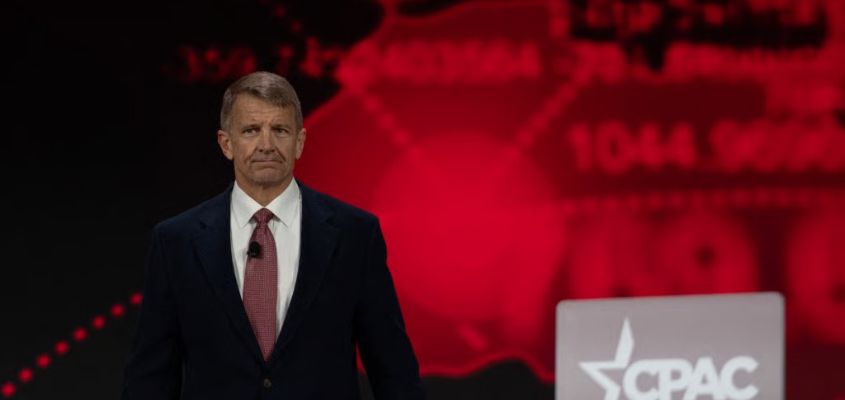
The Michigan Freedom Fund, cohost of one such rally, received more than $500,000 from the family of Secretary of Education Betsy DeVos, which includes among its luminaries the far-right businessman and mercenary-supplier Erik Prince. It was also assisted by Fox News, which ran favorable coverage, and President Trump, who used Twitter to mobilize his base around the protest.

State Repression

Scenes reminiscent of Ferguson have appeared throughout the country as states have deployed the National Guard and militarized police to enforce curfew orders and protect private property. So far, the National Guard has been activated in 15 states and Washington, DC, and 40 cities have imposed curfews. While police in militarized gear like tactical uniforms and utilizing armored personnel carriers were seen in previous events like Occupy and the Ferguson Protests, the Blackhawk helicopter at a DC protest on June 1 and a Predator droneat a protest in Minneapolis, are emblematic of the escalation in state repression. Equally threatening, Trump threatened to invoke the Insurrection Act to deploy active-duty soldiers if governors do not themselves violently crackdown on the protests.

Such a deployment would be the first since the 1992 Rodney King riots and the 1967 riots in Detroit. From January 1965 to October 1971, guard units were used in 260 disturbances, whereas from 1945 to 1965 they were used to handle 88 disturbances. Ironically, the Kerner Commission, which produced a presidential study of the riots of the 1960s, determined that instead of calming communities, the National Guard (as well as inadequate housing, high unemployment, and voter suppression, and racial discrimination) contributed to the years of rioting. The death of David McAtee calls into question their effectiveness in restoring “law and order” currently.

Even before the current protests, Trump and the DOJ were looking for more ways to indefinitely detain people in order to curb the protests. Importantly, Trump and Attorney General William Barr used the DOJ to help whip up the far-right and “angry middle class” protests against social distancing policies. The DOJ’s actions under Trump makes it harder for it to serve the same role as it did in response to rebellion under Obama with Eric Garner. This is because Barr’s predecessor, Jeff Sessions, severely restricted prosecutors’ ability to seek consent decrees and court-enforced agreements.

Simultaneously, Trump has again invoked the threat of “Antifa” and “anarchists,” promising on May 31 that “the United States of America will be designating ANTIFA as a Terrorist Organization.” Terrorist organizations, not ideology, are typically designated by the secretary of state, and once selected, they become illegal to join. Even if Trump and the security apparatus of the state do not have the constitutional authority to designate Antifa a terrorist group, there are several essential considerations. Simply threatening to label Antifa a terrorist group may signal to law enforcement that they are expected to investigate and aggressively single out one section of protesters.

The threat could inspire the creation of a category such as “Black Identity Extremist (BIE),” which was cooked up after the Ferguson Protest. Then, it was used to justify assessments or informal investigations by the FBI, subjecting protesters to physical surveillance, informants, and other means. By singling out “anarchists” and “outside agitators,” the state can likely pursue harsh charges against one section of protesters and follow up with others.

In response to inauguration protests led by DisruptJ20, an umbrella coalition of groups, 234 people, including activists, journalists, medics, and legal observers, were arrested and charged with felonies, including inciting to riot, assaulting a police officer, and conspiracy to riot, all of which carry long prison sentences. The case of Ferguson activist and live streamer Michael Avery, who was arrested by the FBI for a social media, post is worrying. They claim that he encouraged looting in Minneapolis. Such an incident, unfortunately, will not be isolated.

Relying on police and the coercive state to subdue movements is complicated. As the degree of conflict intensifies, and the police assume a greater role in repressing demonstrations, strikes, and other forms of resistance, pressure may grow among law enforcement officers to break with the state. During times of mass action and reaction, law enforcement’s everyday functions and legitimacy are called into question, and police experience broad public hostility. This development is embodied by recent calls to “Defund the Police” as a means of curtailing departments’ coercive power. Protests tend to cause splits, as seen in the wave of Black police associations created across the country to deal with racism during the civil rights era. It has also inspired police organizations to react to crisis conditions by using trade union tactics to advocate benefits or defenses against cuts. Repression is not automatic. All these reactions by the police challenge the ordinary functioning of class rule and create another reason for the state to rely on an auxiliary of far-right militants.

The “Anarchist Threat”

Within the first couple of days of the George Floyd protest in the San Francisco Bay Area, “calls to action” were posted online, some of which could easily be attributed to right-wing trolls. The “calls” have no political content and typically call for looting. These likely fake posts created local hysteria that has whipped up the right-wing reaction, up to and including armed citizen patrols, and contributed to a wave of curfews and other restrictions on freedom of movement for activists.

Across the country, news articles have detailed the violent reactions in this environment of hysteria. Only recently, a multiracial family of four visiting Forks, Washington, was confronted by cars full of people, some with semiautomatic weapons, spouting allegations that they were Antifa. There have also been social media posts alleging buses full of Antifa protesters coming to local areas. These posts are tailored to even rural counties throughout the country. These social media posts seems to be in line with a white-supremacist strategy called accelerationism, which says that supremacists should foster polarization to “accelerate” its destruction of the current political order.

Tactics

Aside from the provocations launched through fake accounts, genuine anger has led to looting. This has led to renewed conversations on the Left about tactics. The article “In Defense of Looting,” published by the New Inquiry during a wave of “riot shaming” in the Ferguson Uprising, makes some very good points. Importantly, it shows that the distinction between violent and nonviolent protesters stems from a long-standing discourse about Black criminality and ignores that, historically, change has not come through nonviolence. The author correctly points out that the attention produced by property destruction reflects the primacy of private property for the rich. In this context, the author questions the often-repeated attack that “protesters are burning down their communities”:

Although you might hang out in it, how can a chain convenience store or corporate restaurant earnestly be part of anyone’s neighborhood? The same white liberals who inveigh against corporations for destroying local communities are aghast when rioters take their critique to its actual material conclusion.

But what is the usefulness of looting as a tactic? The article says that “it represents a material way … to help the community by providing a way for people to solve some of the immediate problems of poverty and by creating a space for people to freely reproduce their lives rather than doing so through wage labor.” This could be true at an individual level, but when we talk about a capitalist system and a state that serves the ruling class, we are talking about a question of power.

Spontaneous action like looting and rioting can help disrupt business as usual. Relying on spontaneous action, however, doesn’t get past pressuring those in power to alleviate the issue. Spontaneous action may get the ruling class to pay attention. It does not answer tactical questions like how to turn a temporary rebellion into a movement by bringing in new people. Riots bring increased attention to immediate grievances, which means funding for nonprofits, career opportunities, media appearances, and VIP visits; but by failing to address the root causes of the crisis, it results in a worsening condition for Black people.

At many protests, voting has been a major theme. In November, there will be elections for all 435 seats in the House of Representatives, 35 of the 100 seats in the Senate, and, most notably, the presidency. Joe Biden likely hopes that this uprising can be captured to bring much-needed enthusiasm to his campaign. The election might be why demands like “Dismantle/Defund the Police” have gained popularity among some elected Democrats, at least in word.

If this election cycle is anything like 2016, the Democratic Party will be cautious not to offer concrete proposals, as was recommended in a memo to the Democratic Congressional Campaign Committee. We must also be realistic and understand that no single election decides questions of power, and that the threat of fascism is not a short-term problem. The Democratic Party’s identity as a capitalist party, albeit one based in the labor and other social movements, means that it can not offer radical solutions willingly.

The risk of fascism highlights the need for a multiracial working-class movement. Though legal support, countersurveillance, and physical defense are important, it is essential to transform the current rebellion into a movement. The economic and social crisis can be exploited to grow the ranks of the Far Right, but it can also be used to build the workers’ movement. The Left can do more than demand the conviction of the four officers who murdered George Floyd. It can and must lay out a program that will address the root causes of the current crisis.

In Our Flag Stays Red (1948), Phil Piratin, an MP for the Communist Party of Great Britain, describes how the party used its tenant associations and trade union work in the 1930s and 1940s to undercut inroads by the British Union of Fascists (BUF) in his borough of Stephaney, London. The BUF, led by former Labor MP Osward Mosley, held meetings throughout the country and was making advances into working-class communities. The party organized unemployed workers in the National Unemployed Workers’ Movement and did work to strengthen the trade union movement. As well, the party famously organized counterdemonstrations like the one that led to the Battle of Cable Street on October 4, 1936.

The CP deduced that the BUF’s anti-Semitic propaganda struck a chord among some workers, but especially in areas of East London where people were living in miserable conditions and facing unemployment and low pay. The party organized demonstrations like the famous “Battle on Cable Street” that used direct action to limit the spread of the BUF and show that it could be defeated. They also organized in working-class areas where the BUF was creating a base. In the midst of its tenant organizing, the CP discovered that one of its families were members of the BUF. Piratin wrote,

I discovered that in both cases they were members of the BUF and obviously wanted no truck with us. The other was prepared to listen. We pointed out to them, so far as we could judge … that the bailiffs had the law on their side and the only thing to do was to prevent the bailiffs gaining access. This might mean a fight, but we convinced them that it would be worth while. … We called a meeting of as many tenants as possible in one of the rooms, put to them our proposals, and they agreed to make the fight. As a result of this solidarity the other family the next morning decided to take part. Meanwhile, in conversation, we asked this member of the BUF about to be evicted what the fascists had done for him. He said that he had raised the matter, but they had no intention of doing anything. This was a very valuable piece of information to be used by us in disillusioning many of the BUF supporters.

What this historical example shows is that we can undercut the basis of fascism before it forms by appealing to economic interests. This would be much easier if we had an actual left political party and left leadership in this country that could expose the limitations of right-wing populism and fascism. Unfortunately, in its absence we are left with milquetoast Democrats who dress in kente cloth and put forth Band-Aid reforms.

Conclusion

This historical example does not mean that socialists should reduce the unique oppression of the Black working class into a “secondary contradiction.” The anti-Blackness of capitalism is the skeleton key to unlocking all the contradictions of this system for ordinary working people. It exposes the role of the police and state violence in maintaining capital’s domination of society, it exposes how race and class determine who will die from the Covid-19 pandemic, and it exposes the primacy of property in our society.

This period brings profound opportunities and dangers. The crises that define this period have created openings for the Left to grow and challenge the legitimacy of traditional institutions of power and capitalism itself. Already a majority of Americans support the protests, and white Americans’ favorable perceptions of the police have dropped by 10 points to 61 percent. This is particularly noteworthy because “riots” in the United States typically cause pro-police beliefs to rise. But we must also be attuned to, and weave into our tactics, the unique conditions that exist today for the emergence of a fascist movement.

Anti-Black Police Terrorism

By Ameer Hasan Loggins

Republished from the author’s blog.

An email was leaked the other day. In it, the sender praised the police, and wrote that people protesting in honor of George Floyd were involved in a “terrorist movement.” I repeat, the writer wrote that the protesters were involved in a terrorist movement. The person responsible was the president of the Minneapolis Federation of Police — Lieutenant Bob Kroll. The same Kroll who was accused by four Black officers of openly wearing a “White Power badge” on his motorcycle jacket.

For eight minutes and 46 seconds we watched. For eight minutes and 46 fucking seconds we were forced to fix our eyes on George Floyd’s face buried into the asphalt, gasping for air, crying out for his deceased mother’s help — but no help came. We watched a dying man scream, “Tell my kids I love them,” to whomever was willing to listen. We watched Floyd bawl, “Please let me stand,” while two policemen pinned his handcuffed body to the ground. We watched as Officer Derek Chauvin kneeled on his neck until he could no longer cry out, “I can’t breathe.”

For eight minutes and 46 seconds…

We watched an act of terror.

We watched a man being terrorized.

We watched four officers, on camera, for eight minutes and 46 seconds, commit an anti-Black

act of domestic police-terrorism.

I was not an eyewitness, but I know what I witnessed.

What I saw, with my water-filled eyes, was not a case of mere excessive force. Nor was it simply an act of police brutality. There was something so much more precious than Floyd’s civil rights being violated. That language did not fit what I watched for eight minutes and 46 seconds. There was something morbidly perverse about how unbothered Officer Derek Chauvin was as he took Floyd’s life. There was no struggle. No sense of danger. Chauvin appeared to be at peace with his decision to lynch George Floyd.

I am calling the lynching of George Floyd an anti-Black act of domestic police-terrorism because that is what I witnessed. And I am doing so by employing the framing provided by the government of the land of the (un)free, home of the enslaved to make such a proclamation.

Section 802 of the USA PATRIOT Act defines domestic terrorism as an act that occurs primarily within the territorial jurisdiction of the United States. It is an act that is dangerous to human life, that is intended to intimidate or coerce a civilian population or influence the government, by mass destruction, assassination, or kidnapping. The FBI adds that acts of domestic terrorism are, “violent, criminal acts committed by individuals and/or groups to further ideological goals stemming from domestic influences, such as those of a political, religious, social, racial, or environmental nature.”

Minneapolis is within the territorial jurisdiction of the United States.

George Floyd is a human being that had his life violently taken away. The four men who nonchalantly terrorized Floyd, are a part of a larger group of state-sponsored law enforcers. Law enforcers who throughout America have historically and contemporarily racially profiled and targeted Black civilian populations.

Some Americans have the birthright to view the police as protectors and peacekeepers. Some fully embrace the plethora of programs painting law enforcement as heroes, heroines, and damn near deities. I am not from that America. I am from the Othered side of America. Coming from where I’m from, the police protectors of the people is a fallacy. But it is a fallacy I am familiar with. It is a fallacy that is persistently pumped into the brains of Othered-American imaginations through copaganda. Film franchises like Beverly Hills Cop, Rush Hour, Big Momma’s House, and Bad Boys all are pro-police programing. But those movies do not mirror the real-life horror films being captured on cellphones and shared through social media. We are watching Black civilians being put to death in public execution videos. And the executioners are the police.

I repeat…

For eight minutes and 46 seconds, we watched four officers, on camera, commit an anti-Black act of domestic police-terrorism.

It may come as a shock to some that I am calling the police terrorists, and their anti-Black actions acts of domestic terrorism. I am diagnosing what the police do to Black folks acts of terror because it is the truth.

I am calling it police-terrorism because I need you to come to

a

complete

stop.

I need you to critically reflect and decolonize the context in which you engage with the term terrorism within itself. It reminds me of Malcolm X asking a room packed full of Black folks, one of the most crucial questions I have ever heard. The question Brother Malcolm asked was, “Who taught you [Black people] to hate yourself?” With that question in mind, I would ask, who taught you what terrorism can be imagined as being? Who taught you which individuals and groups gets the dishonor of being labeled as a terrorist? Former White House Task Force Deputy Director on Terrorism in the Reagan administration, Edward Peck said that terrorism and terrorist are, “in the eye of the beholder.”

I am looking at police-terrorism through the eyes of a Black man.

I am looking at the police the long memory of the Black experience in America.

I am looking at policing through the Black gaze.

Policing units and individuals have terrorized Black people in the United States as far back as the slave patrols and night watches, and continue to the present. When bell hooks said, “Black folks have, from slavery on, shared in conversation with one another a ‘special’ knowledge of whiteness gleaned from close scrutiny of white people,” some of that special knowledge was, and still is, dedicated to surviving encounters with the police. That special knowledge is passed down from the elders to the young folks when they reach a certain point in physical maturity. My elders called it, “lookin’ grown.” It was an acknowledgement that I clearly was not an adult, but in the eyes of all (citizens and law enforcement) invested in policing my Black boy body, I looked older. I looked less innocent. I looked criminal.

I looked killable in the eyes of those policing me.

Black parents are forced to pass down special knowledge with their children about how to hide in the shadows and the shade to avoid the adultifying policing gaze. What routes to take coming home. What clothes to wear. What tone to speak in. How to reach for your wallet. It’s all a part of the talk to try and teach your child how to survive the unfortunate potentiality of being terrorized by the police.

The predictability of police terrorism took the lives of Oscar Grant, Aiyana Jones, Michael Brown, Tamir Rice, Kathryn Johnston, Kayla Moore, Breonna Taylor, George Floyd, Rayshard Brooks, and countless others. The randomness of these people reminds the broader Black community that as long as you are Black and breathing, the police are willing to steal your last breath.

While the public debate has largely focused on the appalling injustice of state-sponsored terror against individual Black folks, an additional, overlooked injustice is taking place. It is the collective consequence of seeing individuals that look like you, or someone that you love lying defenseless and dead in the streets. It is when an individual being terrorized is converted into communal terror. Police-terrorism spreads acute fear, among the whole Black community. The people who are wronged are not only those who are killed, but also their Black neighbors who witness the terror through their windows. The Black bystander filming Black death on their cellphones. The Black families who bury their breathless bodies afterwards. They feel a justifiable fear or terror of the police.

This fear is not incidental, but intentional.

From the Black gaze, the police conduct themselves as a state sponsored group of, “racially motivated violent extremists,” that target the Black community, which according to the FBI, makes them a “national threat priority.” But American history has shown that protecting Black bodies from the threat of domestic terrorism is not a priority.

Reminder…It is 2020 and lynching is still not a federal hate crime in America.

Reminder…It is 2020 and the Ku Klux Klan are not classified as a terrorist organization in America.

This is America.

And in America, the police are permitted to treat Black people with, what James Baldwin would call, a special disfavor, because of the color of our skin. It is in this special disfavor that we can have our doors kicked in by the police, and be shot to death in our sleep. It is this special disfavor that can lead to the police shooting us in the back, as we run with the same feet as our enslaved ancestors fleeing from Slave Patrolmen. It is this special disfavor that can lead to the police gunning our children down in less than two seconds, while they’re playing outside. It is this special disfavor that made a policeman rape 13 Black women, and that same special disfavor made those Black women believe that no one would believe them. It is this same special disfavor that renders the souls of Black folks breathless, while we are still physically alive. It is this special disfavor that made the world stop for eight minutes and 46 seconds to witness an act of anti-Black domestic police terrorism.

Group Violence as it Relates to Lynching and Police Violence

[Photo credit: Getty Images]

By V. Alexis

What is Group Violence?

Collective or group violence is a type of violence enacted by people who identify as members of a group (Hawdon). In all the literature on group violence, there is little written on lynching. This piece will cover the basic features of group violence, or more specifically how people who are considered “ordinary” are capable of committing atrocities. The atrocities discussed in this piece are police violence and lynching. This piece will also propose that police violence is a form of group violence and functions similar to lynch mobs. 

There are three main features of group violence as it relates to lynching and police violence. These features include strongly identifying with said group, dehumanizing outside groups, and fear mongering. Group membership boosts self-esteem and provides a sense of self and pride. These groups create members and non-members. People tend to define themselves in contrast of other groups. This creates and “us” versus “them” mentality towards other people outside of the group. Discriminating against people outside of the group is often a way to elevate one’s position within the group. As the difference between “us” and “them” grows, there is more of a chance for violence against the outside group(s).

Graphic1.png

When people who are not experienced with violence do engage in violent behavior, they typically experience physiological and psychological distress. The proposed reason for why this occurs is that the person who committed an act of violence experiences outcome aversion. This outcome aversion is distress from considering the negative outcomes associated with harming others. These negative outcomes can come from knowing that the victim is likely experiencing distress or from expecting punitive consequences.

Motivation for Engaging in Group Violence and the Manifestation of White Supremacy

One way groups will decrease the aversive effects of committing acts of violence is through creating more social distance between them and the outside group. A common way to increase this social distance is through dehumanization. Strong social ties in the group make it easier for dehumanization to occur. Having strong social ties within groups decrease the need for making connections with people in outside groups.

One example of dehumanization is the history of claiming that black people have more proximity to animals than any other race of humans. Early scientists used to examine every part of the black body, but specifically facial angles to prove their theory that black people are less human. These practices and ideas have evolved but have never gone away (Hund). In modern times, there are studies which show that even many medical professionals have the preconceived notion that black people feel less pain (Hoffman). Just last year, there were a few female Track and Field athletes who were subjected to constant scrutiny of their bodies in an effort to figure out why they were so successful in their respective events. Some officials and scientists employed to conduct studies even went as far as insisting these women either take medicine to decrease their testosterone levels or compete with men.

The strategy of fear mongering entails claiming the outside group poses a threat. This threat can be economic, social, or a threat to survival. After the civil war, black veterans were targeted for lynching because white people thought black participation in the war meant that black people were getting “too much power” within the broader society. When lynching was prominent, there was a trend that as prices of cotton went up, the number of lynchings went down (Dutton). One could presume that this trend meant that when black and white people were closer to being financially equal, white people felt threatened economically. Or that black people were only worthy of living when being productive for white owners. Current studies show that black children are viewed as older and black names evoke threatening images in white minds. Black people are viewed as inherently dangerous.

How this Applies to Lynching

Lynch mobs included three main groups of people; instigators, participants, and spectators. Instigators are the group leaders. They are the people who motivate others to lynch people. Participants are the people who participate in the brutalizing of the victim. The spectators are people who would come to watch and pass around limbs like it was some festival. Even children were spectators and celebrated these brutal deaths. The in-group in the case of lynch mobs are “white conservatives.” I specify conservative because white people with progressive ideas were also lynched. They were not, however, as nearly as vulnerable to lynching as black people.

How this Applies to Police Violence

One could argue that the violence of the U.S police force should be considered as group violence instead of individual isolated incidents or “bad apples.” Following the same framework as previously laid out, the U.S police force has a collective identity characterized as an in-group. This in-group would be considered “the good guys.” The outside group or out-group would perhaps be considered “the bad guys.” The bad guys are disproportionately black, brown, and indigenous people.

The use of dehumanization is arguably the same as during chattel slavery and the time of frequent lynching (Goff). The description of Michael Brown, who was murdered by the police in Ferguson, is one additional example of modern-day dehumanization of black people. The cop Darren Wilson’s account of the murder described Michael Brown as “superhuman.” He was quoted saying, “The only way I can describe it is I felt like a 5-year-old holding on to Hulk Hogan. That’s just how big he felt and how small I felt just from grasping his arm.” Wilson also said, Brown looked like a “demon.” The idea that black people are simultaneously in bad health and superhuman has been around since at least the Jim-Crow era.

This idea that black people are superhuman also falls under the category of fear mongering – having ideas that black and indigenous people are inherently dangerous and thus must be controlled or dominated. The three groups in lynch mobs can all be applied to police violence: The instigators are the cops who start the aggression; the participants are those who are physically involved in the brutality and or murder; and the spectators are the so called “good cops” who do nothing to stop the “bad cops.”

Thinking of police violence as collective or group violence is important because all too often it is blamed on one “maniac” or “psychotic” individual. This type of language takes away from the fact that these cops are simply racist and/or are working in a racist system, performing in-group duties within a racist group (institution) with violent tendencies. It’s worth noting that this type of language is also ableist, as it further stigmatizes people with mental illnesses. Not everyone who is psychotic or who has any mental illness is violent and not every violent person is mentally ill or has psychotic traits. The only way to stop these acts of group violence, both lynching and police violence, is to abolish the in-groups.

References

Dutton, Donald G. The Psychology of Genocide, Massacres, and Extreme Violence: Why "Normal" People Come to Commit Atrocities. Praeger Security International, 2007.

Goff, Phillip Atiba, et al. “The Essence of Innocence: Consequences of Dehumanizing Black Children.” Journal of Personality and Social Psychology, U.S. National Library of Medicine, Apr. 2014, www.ncbi.nlm.nih.gov/pubmed/24564373.

Hawdon, James. “Group Violence Revisited: Common Themes across Types of Group Violence.” Academia.edu, www.academia.edu/20265986/Group_Violence_Revisited_Common_Themes_across_Types_of_Group_Violence.

Hoffman, Kelly M, et al. “Racial Bias in Pain Assessment and Treatment Recommendations, and False Beliefs about Biological Differences between Blacks and Whites.” Proceedings of the National Academy of Sciences of the United States of America, National Academy of Sciences, 19 Apr. 2016, www.ncbi.nlm.nih.gov/pubmed/27044069.

Hund, Wulf D., et al. Simianization: Apes, Gender, Class, and Race. Lit Verlag, 2016.

Dear Black America, Don't Let Them Fool You: We Cannot Vote Ourselves Out Of This Problem

By Christian Gines

Voting is not the way to solve anything for black people, oppressed people. First, reform does not work in a white supremacist capitalist patriarchy. Every issue we hear talked about on the news, "this [issue] disproportionately affects people of color, women, the LGBTQ community, etc." This statement shouldn't be that mind-boggling. This system isn't made to benefit us in the first place, so why would a change in that system work in the first place. When a car breaks down, you put in new parts. If you continue to put new parts in a car, it will eventually break down. That is all these reformist polices are doing. If you're not abolishing the system, then you're just allowing the car to keep on going with new parts that will enable the car to run on fumes until it breaks down. Calls to abolish and defund the police are already being coopted into reformist policies to appease the ruling class. It shouldn't be that radical to call for an abolishment of a system that kills over 1,000 people a year despite being "reformed."

Second, voting is to subdue the masses to choosing between two evils and allowing them to decide what's acceptable and what's not acceptable in the realm of discussion. As Noam Chomsky eloquently put it, "The smart way to keep people passive and obedient is to strictly limit the spectrum of acceptable opinion, but allow very lively debate within that spectrum — even encourage the more critical and dissident views. That gives people the sense that they have free thought, but the presuppositions of the system are being reinforced by the limits put on the range of the debate." As a people, we have been taught and sold that voting is the only way to make a change in society. From talking to my parents, family members, and community members doing the peak of the 2020 Democratic primary, and now they are sold on voting as our only means of creating change. Saying we have to make the change within the system. Their stance on voting has been fed to them for so long that they will fight you to the grave on this, but it is so ahistorical that we need to disprove it today. Our ancestors didn't have the right to vote, and they achieved the abolition of slavery, end of segregation, right to citizenship, right to work, right to own property, the Civil Rights Act of 1964, and the removal of Jim Crow Legislation, the right to vote.

When you look at any change that has happened within the The US, the change has come from outside the system, not within. As James Connolly Said, "Governments in capitalist society are but committees of the rich to manage the affairs of the capitalist class." When we vote, we are voting for whoever the ruling class has told us to vote for. Whether through endless spending with SuperPAC's or "black faces in high places," telling us who to vote for, we have no say in Democracy. As Malcolm X said, "Democracy is Hypocrisy." Voting is the way that the empire can keep us under control and keep themselves in power. The Black Panther Party couldn't vote, yet they had a Free Food, Free Housing, Free Medical Care, Free Busing, Free Clothes, and 50 other programs that we hear white liberals advocate for today. They were doing that within their community, and that's why Herbert Hoover fought to get rid of them. The BPP's initial government surveillance started because of their Free Breakfast Program. The settlers have taught us that's their way of governance is the best way, and we have fallen for that. We believe that we, the masses, and oppressed people can vote and change the system that was set up with the thought that either we weren't citizens, we weren't humans, or that we were too dumb, so there should be a safeguard.

The ruling class had a chance to maybe postpone a revolution in our lifetime with the compromise candidacy of Bernie Sanders. Sanders, running on a political revolution, had a tremendous amount of support from young people in general, but especially young black people. With his calls for Medicare for All, a Green New Deal, and other social democratic policies, they had a chance to satisfy the short term wants of most Americans. They had an opportunity to assuage the masses for a while, as they did with FDR's candidacy. The ruling class, though, was so caught up with their money and profits that they failed to see that Bernie Sanders was offering them. They were so scared that he would tax them that they colluded against him as they did in 2016 to ensure that their establishment candidate won. Now we are stuck choosing between the lesser of two evils again. We have one person who has been accused of sexual harassment and assault, an architect of mass incarceration (who refuses to apologize for it), and full of blunders. On the other hand, we have Donald Trump. I remember when people were saying that they will vote for Joe Biden over Trump because at least we can push him left. Now, this isn't an essay on whether you should vote or not, but I will say that we have had weeks of protest worldwide, and Joe Biden has not even inched to the left. He doesn't support abolishing or defunding the police department. Even Bernie Sanders said that he doesn't support defunding the police and says that they need more funding. This was the candidate who claimed that he was for the people, and he doesn't even support our demands. The Democratic Party has sold out black people for so long that it shouldn't be controversial not to support them, but we continuously have for decades. 

The façade that we can vote our problems away is one that we cannot fall victim to today. We have tried that time and time again, and what happens? The politicians run on something, go in there and don't do anything for our community. Black and white politicians alike have sold us out time and time again. To get real change, we must stay in the streets. As you see in Minneapolis, with protesting, burning, rioting, and looting, the change will come. If you support non-violent or violent protest is your prerogative. If you support the liberation of the black community and think that we must vote to get Trump out of office, that is your choice. But one thing is for sure. We cannot vote ourselves out of this situation because if we think that is the way to solve our problems, we will end up in the same place we started.

Christian Gines is a published student writer, poet, and activist whose writings discuss race within the black community and its effect on black youth.

Juneteenth and Abolitionist Dreams

By Justin C. Mueller

Republished from the author's blog.

Once, people dreamed of the end of slavery. Such dreams were needed, because utopias don’t birth themselves, and a world without chains was utopian before it was imagined to be inevitable. In the US, which holds 25% of the world’s prisoners, it still is.

We mark the culmination of that past utopia with the commemoration of Juneteenth, honoring when chattel slavery was finally ended in all former Confederate states. The Union Major General Gordon Granger landed in Texas, the last slaver state bastion, on June 19, 1865 with enough military power to finally enforce the Emancipation Proclamation. The Republic of Texas was already established in large part as a militant pro-slavery revolt by white settlers against the Mexican empire and it’s ban on slavery, but as the luck of the Confederacy dwindled during the war, slavers had further migrated to Texas. Fully a quarter of whites held slaves by the time Granger landed, and 30% of the Texas population were slaves.

Slavery would not die out on it’s own. It took centuries of slave resistance, abolitionist organizing, and a bloody civil war and military occupation of the South for chattel slavery and the slaver class to finally be dismantled. The re-creation of informal slavery through the Black Codes and convict leasing, debt bondage, and exploitative sharecropping conditions immediately after the Civil War, as well as the steady introduction and spread of Jim Crow laws after the end of Reconstruction led to the retrenchment of white supremacy. Yet, Juneteenth is an important holiday commemorating a rare moment of victory, however incomplete, in the dismantling of one of the systems of racial dominance and inequality that has defined the character of the United States and citizenship within it since its creation.

Utopias are won with hope and struggle, and their commemorations are time machines for drawing out their connection to the present and lessons for the future. As a memorial for the victory of a past utopia of abolition, Juneteenth can help us think about today’s struggles for abolition and the unfinished project of dismantling white supremacy. It can also, more immediately, help fuel the dreams needed to carry these utopias to fruition. We could take away many lessons, but here are three that I think are particularly important:

Lesson One: Extremism can be a more effective tool for producing a just world than moderation or compromise. The uncompromising firebrands for slavery abolition, like John Brown and Wendell Phillips, were widely castigated as impractical utopians at best and dangerously insane fanatics at worst. Alongside the persistent refusal of slaves to submit quietly to their enslavement, radical abolitionists’ firm refusal to compromise on their principles or accept “reasonable” electoral compromise with slavers played a key role in escalating the conflict over chattel slavery to the point where it could conceivably be dismantled. It was only after the smashing of the slaver regimes that the need for them to be uncompromisingly smashed could be seen as obvious or common sense. The political common sense of today is built on the dreams of dead radicals and past utopias.

The abolitionists of today who demand an end to prisons and policing are thought of as similarly unreasonable or extremist. Yet, it is by making demands that go beyond what is considered acceptable to the world as it currently is that new worlds and new boundaries of what counts as reasonable can come into being. Even when extremists don’t succeed, stridently advocating and organizing around ideas that are beyond the pale can shift what counts as a permissible reform. Remember that it is largely because of their fear of Malcolm X and the nascent, more militant Black power and Black nationalist movements that the white U.S. leadership of the 1960s eventually considered Martin Luther King, Jr. to be a comparatively safer figure to bargain with on civil rights legislation.

There are times when compromise is important in order to institutionalize political demands, but at other times compromise can be detrimental to the process of organizing people to push for comprehensive systemic change. Regardless of what a more strategically necessary at a given moment, it isn’t compromise in itself that brings about substantive or even incremental transformation.

Lesson Two: We must demand and expect more than utopia. This may seem absurd. Isn’t it unreasonable enough to demand utopia? Utopias, though, don’t require us to be naive. They can be used as standards of values and expectations that allow us, by contrast with the current world, to critically assess and understand the world as it actually is. Utopias are well-developed hopes and weaponized dreams, and they can be powerful. But, what is often forgotten about them is that they can be achieved. As underwhelming as the state of the world is today, it should be understood as the outcome of the victory of many people’s utopias, and not just the utopias of villains.

We should expect and demand utopia, not because we can’t achieve it, but precisely because we can, and will then need to demand more and continue struggling for more once those victories have been secured. Demanding a static utopia alone runs the risk of disillusionment, but being infinitely demanding of endlessly renewed utopian dreams both orients our struggles and protects us against disappointment at not achieving a static notion of a “perfect” world.

Lesson Three: Abolitionism today must be both a negative demand and a positive vision for what alternative futures are possible. Many white abolitionists were perfectly content to retire from active political life after the end of chattel slavery, even with the continuation and emergence of new forms of white supremacy and Black unfreedom. For some, like the early white settlers of Oregon, their abolitionism was even fueled by their commitments to white supremacy. Opposition is not enough. Abolitionist politics today requires not just negative opposition, such as being against incarceration or policing, but also requires what Angela Davis describes as the creation of positive social, economic, political, cultural, and institutional conditions that would make these violent institutions obsolete. Achieving these abolitionist conditions requires a utopian vision in order to guide people’s struggles and practically achieve their goals.

***

The original Juneteenth marked the utopian achievement of a negative abolition, but also the beginning of a long struggle for the achievement of a new, positive vision wherein oppression could be rendered obsolete. We must remember our past utopias, then. Not just to learn from them, mind you, but also to appreciate that they aren’t even truly past. They are ready-at-hand palettes bequeathed by the struggles of those who fought for better worlds before us, and from which we can and will find inspiration to paint the utopias of the future.

Abolish it All: Towards Eradicating the Prison and Military Industrial Complex

By Blake Simons

I, like many other Black radicals who follow the Black radical tradition, are filled with hope to see such a large amount of people talking about abolishment of the police. A few months ago, many would deem us wild to even think that abolishment was such a possibility, let alone a mainstream conversation. With national discussion, however, nuance is erased and conversations become watered down, and the reality of the conditions we are in are not properly articulated. I want to recognize the work of Mariame Kaba, who helped me come to this abolitionist politic; in addition, I want to thank the many folks like Angela Davis who have laid the foundation for abolitionist thought. This piece seeks to provide clarity and guidance to the people, and a framework for which abolishment of the prison industrial complex is possible. 

For starters, it is important to note that the prison industrial complex is deeply tied to the military industrial complex. The weapons and gear manufactured by captured Africans in penitentiaries is used to loot countries in the 3rd world. This makes way for corporations like apple, tesla, google, and microsoft to come to the continent to loot Africa’s resources while also using African child labor. This is only made possible because the police force captures Africans and then enslaves us in penitentiaries in which our people are forced to make weapons and materials for the military. This undeniably connects the prison industrial complex with the military industrial complex. It’s important that we know our enemy and what we are up against if we are going to abolish the PIC. 

The us empire and its military is the most violent imperial regime in human history. Do we think that the biggest purveyor of violence will willingly concede to demands of abolishment? The national guard was called in and military rule began when windows were broken and buildings were burned. Similarly, if we seek to abolish the PIC, this fascist state will have a violent response. I purposefully start here with this framework because it’s important to know what we will be up against if we seek to truly abolish prisons and the police, and thus the military industrial complex. 

america’s economy runs off the exploitation of captured Africans and global imperial dominance. To think that prisons and police will be abolished through non violence underestimates the capacity for violence that america has. ‬america will do anything to preserve its colonial violence, history shows us this and it is a scientific fact.

Prisons won’t be abolished through the reformist calls to defund. Schools are defunded. Healthcare is defunded. Section 8 housing services are defunded. Just because the police are defunded doesn’t mean that they will be abolished. Revolution doesn’t come from policy changes, it comes from destroying these systems that kill us. This is an important distinction necessary for us to be aware of. We must be wary of reformist calls that will somehow “lead” us to abolishment. 

We know that reform only furthers fascism. The past 400 years shows us that. We can’t settle for nothing less than the complete eradication of the systems of oppression that kill and exploit our people on the daily. Whether it is transphobia, ableism, or police violence (which are all deeply connected and often intersect at the same time) we can’t concede to the demands of a fascist state for reform. As George Jackson says,.“...with each reform, revolution became more remote[...]But if one were forced for the sake of clarity to define [fascism] in a word simple enough for all to understand, that word would be ‘reform.”Our people’s lives depend on revolution. 

While new calls to abolish the police show that the general public is ready for change, we have to be honest about what true abolishment will take. As prison-industrial-complex abolitionists, we seek to eradicate systems of violence that enslave, kill, and exploit us. We seek to create new systems that address violence at its core to create peace in our communities. Kwame Ture teaches us that we (revolutionaries) are not only destroyers but we are creators. Creators of a new world where peace is possible. But we must understand that in order for peace to exist, there is a scientific method that must be used to obtain it.

We must understand that armed struggle in defense of and against this fascist state is the only way to eradicate fascism. Mussolini wasn’t defeated through non-violent protests. Hitler wasn’t defeated through non-violent protests. And trump and the united corporations of america won’t be destroyed through non-violence. Revolutionary (counter)violence, which is a defensive and life-affirming posture as much as it is an act of self-preservation, will create the conditions in which we can abolish these systems that have oppressed us for the past 400 years. As Malcolm X said best, there’s been no revolution in the world without bloodshed — from Haiti, to Venezuela, to Cuba, to Ghana. 

While many might say our people are not ready for this, I would like to remind people that it was unarmed protestors in Minneapolis who sent pigs squealing and retreating from their precinct. This happened as people in current time created a plan to do so. Imagine if the people had more organization? Imagine if the people were armed? There’s endless possibilities if we have an organized guerrilla front. 

As I said earlier, revolutionary (counter)violence is at the core of abolishment, but as revolutionaries we also create twice as much as we seek to destroy. As my comrade noname said,

“when the dust settles and the protests stop, communities will still be poor, police will still murder and violate citizens. prisons will still be filled with millions of ppl. half a million ppl will still be houseless. the past 2 weeks was the easy part. solidarity isn’t a trend”.

This is why we have to create programs, people’s programs, that serve the material needs of our people pending armed struggle. We have to show our people that a future outside the parasitic conditions of capitalism do exist. We need food programs for the hungry. Housing programs for the houseless. Medical programs for the people. COVID-19 testing for the community. We must provide this for our people. If we are to claim the title as revolutionary, it is our duty to serve the people, love the people, and free the people. 

In struggle.

*

Blake Simons is co-host of Hella Black podcast and co-founder of People’s Breakfast Oakland, a grassroots Black socialist organization in Oakland, CA. The author is on Twitter @BlakeDontCrack.

Law Enforcement Continues the Racist Legacy it Was Born From

By Ben Luongo

The killing of George Floyd has put on full display the persistent and overt racism present in America’s law enforcement. The way in which he was murdered typifies the gratuitous violence that white officers use on a daily basis against black men. The police always deploy force disproportionately against minorities, and that force is often deadly. Black men make up only thirteen percent of the population, but they constitute a quarter of the people shot and killed by cops. This makes them three times more likely than white people to be killed by police, despite the fact that white people are more likely to be armed.

The brutal and oppressive racism in the police force has led activists and political leaders in recent years to call for police reform. Those calls have reached new levels following the murder of George Floyd. One example is Joe Biden who said on a live-stream last week “It’s time for us to face that deep open wound we have in this nation. We need justice for George Floyd. We need real police reform.” Other examples include the founder of Utah’s Black Lives Matter, Lex Scott, who recently called for certain measures such as “data collection, de-escalation training for police, implicit bias training for police, less than lethal weapons for police.”

These are reasonable measures and we should seriously consider them. However, it is important that we not place complete faith in the promise of reform and that we remain open to alternatives to law enforcement. The reason for this is that the police have major structural problems which may be too deep-seated for modest reforms to solve. The idea of reform assumes that a system functions largely as it should aside from a few noticeable flaws. Whatever those flaws are can be corrected, or reformed, by implementing simple adjustments to improve how the system functions. As this relates to police reform, it assumes that police are a vital part of law enforcement and that we can fix the problem of racism to ensure that policing is more just and fair.

There are two issues with this view, however, which exposes the limitation of police reform. The first is that it assumes police are somehow a natural fixture of modern society that play a necessary role in maintaining order. This just isn’t the case. In reality, today’s institution of policing is a rather recent historical development emerging out of modern changes of property relations and white supremacy. As a result, policing continues an outmoded legacy of social order which serves very little purpose for our modern society. This brings up the second issue: because the police are rooted in racist and classist modes of social order, white supremacy may be a built-in feature which cannot be expunged from the institution of police.

One has only to consider this history in order to realize that the police were never intended to serve and protect people. Instead, they were designed to protect the property and economic interest of white elites and slave owners. Two related points in American history exemplify this.

The first can be found in 200 year-old methods designed to control and repress slave populations. As historian Salley Hadden writes in Slave Patrol, “the new American innovation in law enforcement during the eighteenth and early nineteenth centuries was the creation of racially focused law enforcement groups in the American south.” As the south began to industrialize, slave owners found new lucrative opportunities in “renting out” their slaves to employers in the city. This meant that slaves spent more time away from their owners who were used to monitoring their every move. White people grew fearful of the opportunities this provided for slaves to organize and revolt against their masters. As a result, the state instituted race-based forms of legal repression called slave patrols. These slave patrols, as Robert Wintersmith rights, “scoured the country side day and night, intimidating, terrorizing, and brutalizing slaves into submission.”

Today’s police also has its origins in 19th century class struggle and how American cities in the north used state violence to repress and control immigrants and the working poor. As historian Sydney Harring writes in Policing a Class Society, “The criminologist's definition of 'public order crimes' comes perilously close to the historian's description of 'working-class leisure-time activity.” As rural peasants migrated to urban areas looking for work, city and business leaders worried about the rise of “disorderly conduct,” which was essentially code for worker strikes, riots, and other kinds of collective activity. Cities stopped this kind of activity by hiring watchmen, which were groups of men who often resorted to extreme forms of violence in order to keep the peace. They slowly morphed into municipal police departments in the mid-19th century as states began to centralize power.

In general, the origins of the police reflects an oppressive history of white and propertied elites protecting their interests by controlling black people, immigrants, and the working poor. As a result, our modern society has been saddled with a paradigm of social order which reflects the interests of white supremacy and private property. Just consider how white cops brutally murdered George Floyd after receiving a report of him allegedly purchasing merchandize with counterfeit money. We like to think that, after two hundred years, today’s police academy reflects more modern values of justice and equality. While social institutions do evolve throughout history, however, they rarely abandon the legacy they were born out of. The structures of power that gave rise to the police simply reproduce themselves in new ways that make the paradigm of police violence more acceptable. In today’s context, this takes form in a racist discourse that justifies police brutality against the backdrop of “super-predators” and “thugs” that threaten social order.

Quite frankly, the idea that cops prevent crime is a myth that Americans should disabuse themselves of. Not only has the overall number of cops declined for the past five years, but the ratio of police per citizen has dropped for the past two decades. During this time, the number of violent crimes have actually gone down. This shows quite clearly that social order is not maintained by police. Instead, we need to recognize that social stability is rooted in racial equality regarding issues in housing, education, health, and employment. Just like the police, however, each of these issues continue an insidious and persistent legacy of racism which still haunts black Americans today. The best way to address these injustices is to take resources wasted on police reform and redirect it to rebuilding our communities.

Consider the fact that Minneapolis spent just over a third of its general fund ($163 million) on police. The general fund refers to discretionary spending which could very well have been spent on a more constructive community-based initiative. For instance, Minneapolis has the fourth highest unemployment gap between white and black residents in America. Imagine how that money could have be spent on closing that gap. It’s these kinds of investments which are necessary for erecting a fair and just society.

Ultimately, we need to adopt a new paradigm of social order, one that doesn’t rely on reforming the police. The problem of racism is far too entrenched and widespread for police reform to solve. Correcting this requires that we rebuild and restore the lives of black Americans which the police, up to this point, have only ruined.

*

Ben Luongo teaches international human rights and international political economy at University of South Florida’s School of Interdisciplinary Global Studies. He previously worked as a campaign organizer and directed several campaigns for groups like the Human Rights Campaign and Save the Children. His analysis has appeared in the Foreign Policy Journal, Foreign Policy in Focus, International Policy Digest, and New Politics.

What's Next for the Anti-Racist Movement?

By T.R. Whitworth

Republished from Independent Socialist Group.

In my opinion, the young generation of whites, blacks, browns, whatever else there is, you’re living at a time of extremism, a time of revolution, a time when there’s got to be a change. People in power have misused it, and now there has to be a change and a better world has to be built… And I, for one, will join in with anyone—I don’t care what color you are—as long as you want to change this miserable condition that exists on this earth.

- Malcolm X, 1964

The recent murders by police of George Floyd and Breonna Taylor and the lynching of Ahmaud Arbery have reignited the anti-racist movement in the U.S. The current situation is eerily similar to what we saw in 2014, when Michael Brown’s murder by Officer Darren Wilson in Ferguson, Missouri, sparked protests that quickly spread around the country. Then, as now, the protests were met with fierce repression and violence by highly militarized police forces. Then, as now, the mainstream media smeared—largely peaceful—protesters as rioters and looters in an effort to discredit the movement.

While the 2014 movement under the banner of Black Lives Matter was energetic and inspiring, like many past movements against police racism and brutality, it failed to materialize real systemic changes. The Obama Administration’s Justice Department begrudgingly carried out a few more investigations of corrupt and racist police departments, but even that minor reform was quickly rolled back by the Trump Administration. Body cameras for the police, a central demand of the 2014 movement, have only been implemented in a patchwork fashion, and even where wearing one is official policy, officers frequently turn them off without consequence.

Encouragingly, the current emerging movement is even larger and more energetic than in 2014. Protests have taken place across all 50 states, many protests continuing for days. The protests are characterized by instinctive multi-racial and multi-ethnic solidarity against racism and police violence. And public support for the movement is high. According to a Reuters/Ipsos poll, “64% of American adults were ‘sympathetic to people who are out protesting right now,’ while 27% said they were not and 9% were unsure.” Given the massive support for and participation of youth in the movement, this 64% figure is probably a conservative estimate.

The ruling class has been shaken to its core by this uprising, and the heavy-handed repressive response of police departments and the Trump Administration has so far backfired, adding steam to the protests instead of extinguishing them. We’ve seen a series of concessions in past days, granted under pressure from the protests. All four Minneapolis police officers involved in George Floyd’s murder have been fired and indicted. Six Atlanta police officers have been criminally charged for using excessive force on protesters. And institutions across the country, especially universities and colleges, have publicly severed ties with their cities’ police departments.

But the current anti-racist protest movement lacks organization, leadership, and democratic decision-making structures. Without these, it is vulnerable to fizzling out without achieving lasting change, as people succumb to protest fatigue. It is also vulnerable to being co-opted and de-radicalized by self-appointed “leaders” who would rather celebrate cops hugging black protesters than fight for systemic change.

What we need to win

The systemic changes we need include an end to racial profiling, “broken windows” policing, “stop and frisk” policies, the racist War on Drugs, and the criminalization of poverty—which disproportionately affects black communities. All police officers who espouse any form of racist or white supremacist ideas should be fired without question.

The assault on our democratic right to peaceful protest must end. The military, including the National Guard, should be immediately withdrawn from our cities and streets. The use of tear gas, rubber bullets, flash bangs, and riot gear in response to protests should be banned. We should demand the immediate release of all arrested protesters and the dropping of their charges, as well as the release of former Black Panthers and all other imprisoned black liberation activists.

All killer cops, past and present, should be prosecuted. It needs to be easier to fire police officers with excessive force complaints and criminally charge and convict killer cops. District attorneys’ offices have shown that they are not capable of prosecuting the same police officers that they work with on a daily basis and rely on to testify in court. Police departments have proven that they are not capable of investigating themselves.

We need community control of the police through democratically elected committees of workers and community members with hiring and firing power, the ability to review and create policy and budgets, and authority to conduct independent investigations into cases of police misconduct.

Police unions like the Patrolmen’s Benevolent Association and the International Brotherhood of Police Officers should be decertified. Law enforcement unions are not like other unions. The main role of police in the U.S. is to serve the will of the capitalist class, including by enforcing racist and anti-worker policies, repressing strikes and labor activity, and putting down protests. Police unions exist to protect police officers from facing any consequences for their actions (up to and including murder). They make it difficult to discipline or fire bad cops and they oppose any public oversight of the police.

Police departments across the country must be demilitarized and their budgets reduced. Cities must stop wasting public funds on military technology and weaponry and invest the money instead in affordable housing, public transit, schools, and other social programs and services in order to make a dent in the poverty that disproportionately affects black workers. Even many police themselves complain that they are expected to do the job of social workers. Let’s take some of the public money currently spent on police budgets and use it to hire actual social workers instead.

Finally, we need a political party—a workers’ party—that will offer a real alternative to racism and austerity. Both the Democratic and Republican Parties have failed for decades to meaningfully improve the conditions under which we live: widespread poverty, entrenched racism, lack of access to decent education, housing, jobs, and healthcare. Both parties play off of each other and seek to divide workers along racial lines—as well as by nationality, gender, sexual identity, etc. Despite their more “progressive” rhetoric of racial justice, when in office the Democrats have disappointed again and again. Just look at cities like Los Angeles, New York, Chicago, and Minneapolis, where decades of Democratic Party rule have not resulted in reforms to policing, and in many cases have actually passed some of the worst police policies, including “stop and frisk.” In fact, Democratic Party controlled major cities have been the epicenters of the majority of the murders of unarmed black people by police for decades.

How to win these demands and more

To achieve these needed systemic changes will require a high level of organization and coordination. The ruling class and their police and military forces are organized and we should be too. We should immediately form neighborhood committees, with elected members—workers, youth, and community members—and democratic structures, to decide future actions and tactics and develop a program with clear demands to direct the movement. These neighborhood committees should elect delegates to city-wide committees, which should in turn build links state- and nation-wide.

These elected neighborhood committees should prepare plans, train volunteers, and collect supplies and equipment for dealing with tear gas, rubber bullets, “kettling,” and other aggressive police tactics at protests and demonstrations. They should be ready to assess situations, make tough calls, and put forward proposals in the heat of the moment for how best to keep protesters and neighborhoods safe from police and right-wing aggression. They could also organize neighborhood patrols to document police interactions with community members.

Labor unions need to get involved and take a strong stand against police brutality and in support of the protests. Issuing public solidarity statements is a good first step, but unions should go further by organizing workplace meetings and discussions on the movement, and mobilizing members to form union contingents at protests. Unions should also use their legal resources to defend protesters. Representing 11.6% of all U.S. workers—and 12.7% of black workers—unions are among the most diverse institutions of the working class. Solidarity against racism and all forms of oppression must be a key point of struggle for the whole workers’ movement.

Protesting can only be one part of our organizing strategy. Protests are effective to the extent that they call attention to the issue, demonstrate public outrage or support, and disrupt “business as usual.” But ultimately the ruling class only cares about actions that affect their bottom line—their ability to make profit. We should begin to organize for 24-hour general strikes of workers in all sectors in cities across the country to win the movement’s demands by putting further economic pressure on the bosses who are already staggering from the blows of the health and economic crisis. They will quickly get the message to their paid-off politicians that it’s time to grant substantive reforms.

Unions should play a key role in calling for and planning any general strikes, but both union and non-union workers should participate. If the union bureaucrats won’t do it, rank-and-file union members and workers should take up the planning themselves (and then elect new union leaders prepared to genuinely represent their class, not suck up to the bosses).

We need to build a truly mass movement to unite workers of all races in the struggle against capitalism and the racist inequality and violence that the system was founded upon. Only a multi-racial working-class movement has the power to win demands like demilitarizing the police, convicting killer cops, ending the War on Drugs, and community control of the police.

Only a movement that unites workers and youth regardless of race, ethnicity, gender, sexual identity, or any other form of oppression, can win guaranteed jobs, housing, healthcare, education, and a living wage for all. These reforms can be paid for by taxing the rich and nationalizing big corporations, as a step toward ultimately ending capitalism and replacing it with a democratic and egalitarian socialist society with power firmly in the hands of the working class. As MLK, Malcolm X, and Fred Hampton all came to conclude, the only way to defeat racism is to defeat capitalism.

fred-hampton.png

False Flags Fail to Derail National Uprising

By Werner Lange

The use of false flag operations designed to crush democracy and create tyranny has a long and sordid history. Arguably the most notorious and effective one took place in Berlin with the burning of the Reichstag on February 27, 1933, less than a month after Hitler was named Chancellor by an anxious capitalist elite threatened with a workers’ revolution. The very next day President von Hindenburg stripped the German people of core freedoms protected under the Weimar Constitution and thereby opened the legal door for the Nazi reign of terror. The empowered Nazis, who were the actual arsonists, successfully laid blame on anti-fascists, particularly Communists, and began a bloody campaign of persecution and extermination of all opponents of Hitler’s Third Reich. Within weeks some 10,000 German anti-fascists were rounded up and sent to concentration camps. Yet anti-fascist resistance continued both inside the Third Reich and in exile. Among the most effective of the early anti-fascist organizations was the Paris-based “International Struggle Against War and Fascism” and its widely distributed publication “ANTIFAschisticheFRONT”, which demanded the downfall of the brown-shirt arsonists in its September 1933 edition. That did not happen, and internal Nazi terror systematically degenerated into total war by 1939 when a series of false flag operations along the German-Polish border were used to justify the invasion of Poland.

Since its use in the 1930s as the title for an anti-fascist publication, ANTIFA has gained new notoriety in 2020. So have false flag operations. On May 31, St. John’s Episcopal Church on Lafayette Square (one block from the White House), also known as “The Church of Presidents,” was damaged by arsonists. It was Pentecost Sunday, a day when the scripture reading for churches everywhere came from the account of the first Pentecost recorded in the Book of Acts which, interestingly enough, makes explicit reference to “tongues of fire.” No reference to Pentecost or anything else was made by President Trump holding a bible during his brief visit to the damaged church the very next day. A path through Lafayette Park was cleared for Trump and his entourage (Attorney General Barr, Secretary of Defense Esper, and Chairman of Joint Chiefs of Staff Milley) by violently driving out anti-racist protestors with clouds of tear gas and swarms of baton-wielding officers decked out in riot gear. Immediately before this awkwardly staged photo op at the church, Trump issued a short but ominous threat in the Rose Garden to protestors, singling out Anitifa twice by name. Similarly, right-wing media outlets, like Christianpost.com were quick to post tweets blaming the church arson on Antifa and claiming that “earlier in the night, rioters ripped down a U.S. flag displayed outside the church as people chanted, ‘burn that shit.’”

This has all the markings of a false flag operation, but an unsuccessful one. The same holds true for a series of violent attacks, arson fires, organized looting, and wanton property damage perpetrated by a host of agent provocateurs throughout the country who infiltrated Black Lives Matter protests in the wake of the police murder of George Floyd in Minneapolis on Memorial Day. Members of scores of violent right-wing groups, some recently minted, emerged from their chambers of hate onto the streets of America to damage the legitimacy of anti-racist protests as much as possible. Though carrying various group identities, several agent provocateurs also carried various assault weapons to demonstrations, and all carried the common goal of inciting violence to such extent that it would ignite a “fascist counterrevolution through accelerationism.” The intent is to accelerate societal collapse, foment civil disorder, foster polarization, and, as one of their leading neo-Nazi ideologues put it, “to fan the flames” against “The System.” That may have literally been the plan in Minneapolis, epicenter for the mass protests, where some 87 fires broke out in a span of five days following the police murder of George Floyd. On the night of May 30 alone, over 40 persons were arrested in Minneapolis and, according to its Safety Commissioner, “some were people linked to white-supremacist groups.”

Among the most vicious and violent of the white-supremacist groups is The Base (in Arabic, al-Qaeda), founded in 2018 and hell-bent on fomenting a race war to create white ethnostates. Its recruiting motto is “save your race, join the base.” In January 2020, three of its members were arrested in Georgia for plotting to murder a married couple affiliated with Antifa.  An older racist group, Alexandria-based Identity Evropa, whose members habitually show up to assault and harass protesters at Trump rallies, recently ran a fake ANTIFA twitter account calling upon members to loot “white hoods.” Rumors about busloads of ANTIFA rioters coming to “fuck up the white hoods” sufficed to get scores of heavy-armed residents onto neighborhood streets in several rural counties. Even the elderly protester who was forcefully shoved to the pavement by Buffalo police officers and left bleeding from his head was called a possible “ANTIFA provocateur” by Trump. ANTIFA was also explicitly identified as a “threat to national security” and its members as “domestic terrorists” in a video recently posted by Three-Percenters, a pro-gun right-wing militia taking its name from the dubious belief that only 3% of American colonists actively fought against the British (one of their members, the leader of the White Rabbit Three Percent Illinois Patriot Freedom Fighters Militia, was arrested for bombing a mosque in Minnesota). The very name of another extreme right-wing outfit, Boogaloo, is a code word for another civil war. Three of its members, all with extensive military experience, were arrested in Nevada for manufacturing explosives to be used at protests in Las Vegas and for urging participants to resort to violence. Another “Boogaloo Boi” was arrested in Texas in April after declaring his intent to kill police officers. Some have a habit of displaying Nazi symbols and all carry assault weapons wherever they appear, as they have at protests in at least six states.

Related in ideology and identify are the Proud Boys, a virulent pro-Trump gang of thugs who plan to hold a “Resist Marxism” rally in Providence in 2020 and pride themselves in their stated desire to “smash commies.” Their affiliate on the West Coast, Patriot Prayer, engaged in violent actions in Los Angeles and Portland. Heavily-armed members of another vigilante gang, New Mexico Civil Guard, showed up at a BLM protest on June 1 to harass and intimidate participants. On the same day, three heavily-armed white men from southern Ohio who identified themselves as “Ohio patriots” menaced peaceful protesters in Warren, in NE Ohio. At least one Boogaloo member, armed with assault weapons, traveled from North Carolina to infiltrate protests in Minneapolis. Two young anti-government agitators who traveled from Pennsylvania to protests in Cleveland were arrested for conspiring to incite violence after police found commercial fire gel, a Glock firearm, ammunition, spray paint, and a hammer in their car; five others carrying fire starters were arrested for trying to break into Progressive Field, home of the Cleveland Indians. At a June 5 news conference, the U.S. Attorney for northern Ohio affirmed the hijacking of peaceful protests: “So let me get out in front of any questions as to whether there were out-of-state agitators who hijacked last weekend’s peaceful protest for their own purposes. The answer is undoubtedly yes, as seen with today’s arrests.” The same can be said for nearly all other protests.

Despite some attempts to show support, unprovoked police violence against protestors remains the norm, often with fatal consequences, as in Columbus and Louisville where protestors were killed by police action; two other protesters were killed in Indianapolis by unknown assailants. Also increasingly common is outright affiliation of law enforcement officers with white supremacist groups. A former Officer of the Month in the Philadelphia Police Department proudly wears a Nazi tattoo on his arm. A current Chicago police officer actively engaged with Proud Boys in a “Fuck Antifa” telegram chat channel. Among the New Mexico Civil Guard harassing protesters was an officer from the ICE prison in Torrance County.  A former sheriff’s deputy in Illinois is an active member of a Three Percenters militia.  A heavily disguised white man who wantonly smashed windows with a hammer at a Minneapolis AutoZone store and sprayed-painted “Free Shit for Everyone Zone” on its wall is alleged to have been a St. Paul police officer.  To facilitate destruction of property, piles of bricks have been strategically placed and left unattended in several U.S. cities hit by major protests. And as happened with the murder of a young woman protesting the “Unite the Right” rally in Charlottesville, cars are increasingly being used as weapons against BLM protestors who are commonly labeled “speed bumps” by militias. A black protestor was killed by a white driver in Bakersfield; and, in Seattle, a white man who drove his car menacingly into a BLM crowd shot and wounded a black man upon exiting his car on June 6. On the same day, the president of the state’s KKK plowed his truck into a BLM protest in Virginia. At least 17 such incidents have occurred since Memorial Day, resulting in serious injury to protesters and a few attempted murder charges against their assailants.

A nationwide call from “Team Trump” for direct action against protesters was posted on FaceBook in early June by the “Trump Make America Great Again Committee”: “Dangerous MOBS of far-left groups are running through our streets and causing absolute mayhem. They are DESTROYING our cities and rioting - it’s absolute madness. It’s important that EVERY American comes together at a time like this to send a united message that we will not stand for their radical actions any longer. We’re calling on YOU to make a public statement and add your name to stand with President Trump against ANTIFA. Please add your name IMMEDIATELY to stand with your President and his decision to declare ANTIFA a terrorist organization.” That message, essentially a call to arms, will resonate with millions of pro-Trump Americans, ones who have foolishly forgotten that not so long ago hundreds of thousands of Americans, along with millions of others, gave their lives in an existential struggle against fascism. “Either the United States will destroy ignorance,” prophetically proclaimed W.E.B. Du Bois during another dark period in our history, “or ignorance will destroy the United States.” Team Trump is making sure ignorance wins.

While the full extent and nature of ties between white-supremacist groups inciting the violence and the Trump regime is unknown, it is clear that both share a virulent racist ideology and praxis. The self-identified “President of Law and Order” has no reservations about explicitly calling for looters to be shot; threatening to unleash “vicious dogs and most ominous weapons” against protesters; identifying elected officials who reject violent suppression of protests as “weak liberals”; labeling protesters themselves, such as the ones he terrorized in Lafayette Park, as terrorists; and surrounding himself with avowed racists like Stephen Miller, a senior Trump advisor and ally of a white-supremacist “nativist empire.” White supremacy, a defining feature of fascism, is the tie that binds Trump’s regime to his racist foot soldiers in the streets attempting to accelerate the trajectory toward civil war in America.

Demonization of anti-fascists in particular, and anti-racist protesters in general, as “terrorists” has its consequences, both intended and unintended. For we treat people and situations as we define them. As a classic sociological dictum has it: “If men define situations as real, they are real in their consequences.” Whether or not the definition is true or accurate is immaterial; false definitions, like false flags, have real consequences. And in this case, to be defined as terrorist is an open invitation for pre-emptive violence, even murder. Also at work here are the dynamics of the self-fulfilling prophecy as articulated by sociologist Robert Merton: “The self-fulfilling prophecy is, in the beginning, a false definition of the situation evoking a new behavior which makes the original false conception come ‘true’. The specious validity of the self-fulfilling prophecy perpetuates a reign of error.” Reign of terror more accurately approaches our current reality. As of today, the 76th anniversary of D-day which marked the beginning of the end of the fascist Third Reich, US military forces are at a near-wartime alert level (Force Protection Condition Charlie) in and around the nation’s capital to stop projected acts of violence by anti-fascists. As proclaimed by Trump on June 1, “I want the organizers of this terror to be on notice that you will face severe criminal penalties and lengthy sentences in jail. This includes Antifa and others who are leading instigators of this violence.” However, an internal FBI report found no evidence of Antifa involvement in this violence but did warn of calls by “far-right provocateurs to attack federal agents” and “use automatic weapons against protesters.”

Masters of deceit are not interested in facts, and the Trump regime has repeatedly demonstrated its utter disdain for truth. Given the dismal track record of this thoroughly racist regime, it is not beyond imagination that a major false flag operation is in the works and will explode in the near future or come as an October surprise. If and when that happens, it will be conducted covertly by criminal fascist gangs in the suites emboldened and empowered by a Trump regime threatened with disempowerment.

Attempted manipulation of anti-racist protests by an assortment of far-right groups to ignite a new civil war through a series of coordinated false flag operations has, so far, failed. By contrast, unlike its largely marginalized status for years, the Black Lives Matter movement has caught fire and carries with it the potential for change – radical, systemic change. For as Marx clearly realized in another historical context pregnant with potential for revolutionary change: “The weapons of criticism cannot, of course, replace criticism by weapons, material force must be overthrown by material force; but theory also becomes a material force as soon as it has gripped the masses.” Black Lives Matter is not only an idea whose time has come, but an idea that has clearly gripped the masses of all colors, especially America’s youth. a luta continua vitória é certa.

The 1992 Rebellion in Los Angeles: The Context of a Proletarian Uprising

Originally published by Aufheben Group (1992).

April 29th, 1992, Los Angeles exploded in the most serious urban uprising in America this century. It took the federal army, the national guard and police from throughout the country five days to restore order, by which time residents of L.A. had appropriated millions of dollars worth of goods and destroyed a billion dollars of capitalist property. Most readers will be familiar with many of the details of the rebellion. This article will attempt to make sense of the uprising by putting the events into the context of the present state of class relations in Los Angeles and America in order to see where this new militancy in the class struggle may lead.

Before the rebellion, there were two basic attitudes on the state of class struggle in America. The pessimistic view is that the American working class has been decisively defeated. This view has held that the U.S. is - in terms of the topography of the global class struggle - little more than a desert. The more optimistic view held, that despite the weakness of the traditional working class against the massive cuts in wages, what we see in the domination of the American left by single issue campaigns and "Politically Correct" discourse is actually evidence of the vitality of the autonomous struggles of sections of the working class. The explosion of class struggle in L.A. shows the need to go beyond these one-sided views.

Beyond the Image

As most of our information about the rioting has come through the capitalist media, it is necessary to deal with the distorted perspective it has given. Just as in the Gulf War, the media presented an appearance of full immersion in what happened while actually constructing a falsified view of the events. While in the Gulf there was a concrete effort to disinform, in L.A. the distortion was a product not so much of censorship as much as of the total incomprehension of the bourgeois media when faced with proletarian insurrection. As Mike Davis points out, most reporters, "merely lip-synched suburban cliches as they tramped through the ruins of lives they had no desire to understand. A violent kaleidoscope of bewildering complexity was flattened into a single, categorical scenario: legitimate black anger over the King decision hijacked by hard-core street criminals and transformed into a maddened assault on their own community." Such a picture is far from the truth.

The beating of Rodney King in 1991 was no isolated incident and, but for the chance filming of the event, would have passed unnoticed into the pattern of racist police repression of the inner cities that characterizes the present form of capitalist domination in America. But, because of the insertion of this everyday event into general public awareness the incident became emblematic. While the mainstream television audience forgot the event through the interminable court proceedings, the eyes of the residents of South Central L.A. and other inner cities remained fixed on a case that had become a focus for their anger towards the system King's beating was typical of. Across the country, but especially in L.A., there was the feeling and preparation that, whatever the result of the trial, the authorities were going to experience people's anger. For the residents of South Central, the King incident was just a trigger. They ignored his televised appeals for an end to the uprising because it wasn't about him. The rebellion was against the constant racism on the streets and about the systematic oppression of the inner cities; it was against the everyday reality of racist American capitalism.

One of the media's set responses to similar situations has been to label them as "race riots". Such a compartmentalisation broke down very quickly in L.A. as indicated in Newsweek's reports of the rebellion: "Instead of enraged young black men shouting `Kill Whitey', Hispanics and even some whites - men, women and children - mingled with African-Americans. The mob's primary lust appeared to be for property, not blood. In a fiesta mood, looters grabbed for expensive consumer goods that had suddenly become `free'. Better-off black as well as white and Asian-American business people all got burned." Newsweek turned to an "expert" - an urban sociologist - who told them, "This wasn't a race riot. It was a class riot." (Newsweek, May 11th, 1992).

Perhaps uncomfortable with this analysis they turned to "Richard Cunningham, 19", "a clerk with a neat goatee": "They don't care for anything. Right now they're just on a spree. They want to live the lifestyle they see people on TV living. They see people with big old houses, nice cars, all the stereo equipment they want, and now that it's free, they're gonna get it." As the sociologist told them - a class riot.

In L.A., Hispanics, blacks and some whites united against the police; the composition of the riot reflected the composition of the area. Of the first 5,000 arrests, 52 per cent were poor Latinos, 10 per cent whites and only 38 per cent blacks.

Faced with such facts, the media found it impossible to make the label "race riot" stick. They were more successful, however, in presenting what happened as random violence and as a senseless attack by people on their own community. It is not that there was no pattern to the violence, it is that the media did not like the pattern it took. Common targets were journalists and photographers, including black and Hispanic ones. Why should the rioters target the media? - 1) these scavengers gathering around the story offer a real danger of identifying participants by their photos and reports. 2) The uncomprehending deluge of coverage of the rebellion follows years of total neglect of the people of South Central except their representation as criminals and drug addicts. In South Central, reporters are now being called "image looters".

But the three fundamental aspects to the rebellion were the refusal of representation, direct appropriation of wealth and attacks on property; the participants went about all three thoroughly.

Refusal of Representation

While the rebellion in '65 had been limited to the Watts district, in '92 the rioters circulated their struggle very effectively. Their first task was to bypass their "representatives". The black leadership - from local government politicians through church organizations and civil rights bureaucracy - failed in its task of controlling its community. Elsewhere in the States this strata did to a large extent succeed in channeling people's anger away from the direct action of L.A., managing to stop the spread of the rebellion. The struggle was circulated, but we can only imagine the crisis that would have ensued if the actions in other cities had reached L.A.'s intensity. Still, in L.A. both the self-appointed and elected representatives were by-passed. They cannot deliver. The rioters showed the same disrespect for their "leaders" as did their Watts counterparts. Years of advancement by a section of blacks, their intersection of themselves as mediators between "their" community and US capital and state, was shown as irrelevant. While community leaders tried to restrain the residents, "gang leaders brandishing pipes, sticks and baseball bats whipped up hotheads, urging them not to trash their own neighborhoods but to attack the richer turf to the west".

"It was too dangerous for the police to go on to the streets" (Observer, May 3rd 1992).

Attacks on Property

The insurgents used portable phones to monitor the police. The freeways that have done so much to divide the communities of L.A. were used by the insurgents to spread their struggle. Cars of blacks and Hispanics moved throughout a large part of the city burning their targets - commercial premises, the sites of capitalist exploitation - while at other points traffic jams formed outside malls as their contents were liberated. As well as being the first multi-ethnic riot in American history, it was its first car-borne riot. The police were totally overwhelmed by the creativity and ingenuity of the rioters.

Direct Appropriations

"Looting, which instantly destroys the commodity as such, also discloses what the commodity ultimately implies: The army, the police and the other specialized detachments of the state's monopoly of armed violence."

Once the rioters had got the police off the streets looting was clearly an overwhelming aspect of the insurrection. The rebellion in Los Angeles was an explosion of anger against capitalism but also an eruption of what could take its place: creativity, initiative, joy.

A middle-aged woman said: "Stealing is a sin, but this is more like a television game show where everyone in the audience gets to win." Davis article in The Nation, June 1st.

"Looters of all races owned the streets, storefronts and malls. Blond kids loaded their Volkswagon with stereo gear... Filipinos in a banged up old clunker stocked up on baseball mitts and sneakers. Hispanic mothers with children browsed the gaping chain drug marts and clothing stores. A few Asians were spotted as well. Where the looting at Watts had been desperate, angry, mean, the mood this time was closer to a maniac fiesta".

The direct appropriation of wealth (pejoratively labelled "looting") breaks the circuit of capital (Work-Wage-Consumption) and such a struggle is just as unacceptable to capital as a strike. However it is also true that, for a large section of the L.A. working class, rebellion at the level of production is impossible. From the constant awareness of a "good life" out of reach - commodities they cannot have - to the contradiction of the simplest commodity, the use-values they need are all stamped with a price tag; they experience the contradictions of capital not at the level of alienated production but at the level of alienated consumption, not at the level of labor but at the level of the commodity.

"A lot of people feel that it's reparations. It's what already belongs to us." Will M., former gang member, on the "looting". (International Herald Tribune May 8th)

It is important to grasp the importance of direct appropriation, especially for subjects such as those in L.A. who are relatively marginalized from production. This "involves an ability to understand working-class behavior as tending to bring about, in opposition to the law of value, a direct relationship with the social wealth that is produced. Capitalist development itself, having reached this level of class struggle, destroys the `objective' parameters of social exchange. The proletariat can thus only recompose itself, within this level, through a material will to reappropriate to itself in real terms the relation to social wealth that capital has formally redimensioned".

Race and Class Composition

So even Newsweek, a voice of the American bourgeoisie, conceded that what happened was not a "race riot" but a "class riot". But in identifying the events as a class rebellion we do not have to deny they had "racial" elements. The overwhelming importance of the riots was the extent to which the racial divisions in the American working class were transcended in the act of rebellion; but it would be ludicrous to say that race was absent as an issue. There were "racial" incidents: what we need to do is see how these elements are an expression of the underlying class conflict. Some of the crowd who initiated the rebellion at the Normandie and Florence intersection went on to attack a white truck driver, Reginald Oliver Denny. The media latched on to the beating, transmitting it live to confirm suburban white fear of urban blacks. But how representative was this incident? An analysis of the deaths during the uprising shows it was not.

Still, we need to see how the class war is articulated in "racial" ways.

In America generally, the ruling class has always promoted and manipulated racism, from the genocide of native Americans, through slavery, to the continuing use of ethnicity to divide the labor force. The black working class experience is to a large extent that of being pushed out of occupations by succeeding waves of immigrants. While most groups in American society on arrival at the bottom of the labor market gradually move up, blacks have constantly been leapfrogged. Moreover, the racism this involves has been a damper on the development of class consciousness on the part of white workers.

In L.A. specifically, the inhabitants of South Central constitute some of the most excluded sectors of the working class. Capital's strategy with regards these sectors is one of repression carried out by the police - a class issue. However the Los Angeles Police Department (LAPD) is predominantly white and its victims massively black and Hispanic (or as P.C. discourse would have it, people of color). Unlike in other cities, where the racist nature of the split between the included and excluded sectors is blurred by the state's success in co-opting large numbers of blacks on to the police force, in L.A. capital's racist strategy of division and containment is revealed in every encounter between the LAPD and the population - a race issue.

When the blacks and Hispanics of L.A. have been marginalized and oppressed according to their skin color, it is not surprising that in their explosion of class anger against their oppressors they will use skin color as a racial shorthand in identifying the enemy, just as it has been used against them. So even if the uprising had been a "race riot", it would still have been a class riot. It is also important to recognize the extent to which the participants went beyond racial stereotypes. While the attacks on the police, the acts of appropriation and attacks on property were seen as proper and necessary by nearly everyone involved, there is evidence that acts of violence against individuals on the basis of their skin color were neither typical of the rebellion nor widely supported. In the context of the racist nature of L.A. class oppression, it would have been surprising if there had not been a racial element to some of the rebellion. What is surprising and gratifying is the overwhelming extent to which this was not the case, the extent to which the insurgents by-passed capital's racist strategies of control.

"A lot of people feel that in order to come together we have to sacrifice the neighborhood." Will M., former gang member, on the destruction of businesses. (International Herald Tribune May 8th, 1992.)

One form the rebellion took was a systematic assault on Korean businesses. The Koreans are on the front-line of the confrontation between capital and the residents of central L.A. - they are the face of capital for these communities. Relations between the black community and the Koreans had collapsed following the Harlins incident and its judicial result. In an argument over a $1.79 bottle of orange juice, Latasha Harlins, a 15-year old black girl, was shot in the back of the head by a Korean grocer - Soon Ja Du - who was then let off with a $500 fine and some community service. While the American State packs its Gulags with poor blacks for just trying to survive, it allows a shopkeeper to kill their children. But though this event had a strong effect on the blacks of South Central, their attack on Korean property cannot be reduced to vengeance for one incident - it was directed against the whole system of exchange. The uprising attacked capital in its form of property, not any property but the property of businesses - the institutions of exploitation; and in the black and Hispanic areas, most of these properties and businesses were owned by Koreans. But though we should understand the resentment towards the Koreans as class-based, it is necessary to put this in the context of the overall situation. In L.A., the black working-class's position deteriorated in the late 1970s with the closure of heavy industry, whereas at the end of the 60s they had started to be employed in large numbers. This was part of the internationalization of L.A.'s economy, its insertion into the Pacific Rim center of accumulation which also involved an influx of mainly Japanese capital into downtown redevelopment, immigration of over a million Latin Americans to take the new low-wage manufacturing jobs that replaced the jobs blacks had been employed in, and the influx of South Koreans into L.A.'s mercantile economy. Thus while Latinos offered competition for jobs, the Koreans came to represent capital to blacks. However, these racial divisions are totally contingent. Within the overall restructuring, the jobs removed from L.A. blacks were relocated to other parts of the Pacific Rim such as South Korea. The combativity of these South Korean workers shows that the petty-bourgeois role Koreans take in L.A. is but part of a wider picture in which class conflict crosses all national and ethnic divides as global finance capital dances around trying to escape its nemesis but always recreating it.

Class Composition and Capitalist Restructuring

The American working class is divided between waged and unwaged, blue and white collar, immigrant and citizen labor, guaranteed and unguaranteed; but as well as this, and often synonymous with these distinctions, it is divided along ethnic lines. Moreover, these divisions are real divisions in terms of power and expectations. We cannot just cover them up with a call for class unity or fatalistically believe that, until the class is united behind a Leninist party or other such vanguard, it will not be able to take on capital. In terms of the American situation as well as with other areas of the global class conflict it is necessary to use the dynamic notion of class composition rather than a static notion of social classes.

"When Bush visited the area security was massive. TV networks were asked not to broadcast any of Mr Bush's visit live to keep from giving away his exact location in the area." (International Herald Tribune, May 8th, 1992.)

The rebellion in South Central Los Angeles and the associated actions across the United States showed the presence of an antagonistic proletarian subject within American capitalism. This presence had been occluded by a double process: on the one hand, a sizeable section of American workers have had their consciousness of being proletarian - of being in antagonism to capital - obscured in a widespread identification with the idea of being "middle-class"; and on the other, for a sizeable minority, perhaps a quarter of the population, there has being their recomposition as marginalized sub-workers excluded from consideration as a part of society by the label "underclass". The material basis for such sociological categorizations is that, on the one hand there is the increased access to "luxury" consumption for certain "higher" strata, while on the other there is the exclusion from anything but "subsistence" consumption by those "lower" strata consigned to unemployment or badly paid part-time or irregular work.

This strategy of capital's carries risks, for while the included sector is generally kept in line by the brute force of economic relations, redoubled by the fear of falling into the excluded sector, the excluded themselves, for whom the American dream has been revealed as a nightmare, must be kept down by sheer police repression. In this repression, the war on drugs has acted as a cover for measures that increasingly contradict the "civil rights" which bourgeois society, especially in America, has prided itself on bringing into the world.

Part of the U.S. capital's response to the Watts and other 60s rebellions was to give ground. To a large section of the working class revolting because its needs were not being met, capital responded with money - the form of mediation par excellence - trying to meet some of that pressure within the limits of capitalist control. This was not maintained into the 80s. For example, federal aid to cities fell from $47.2 billion in 1980 to $21.7 billion in 1992. The pattern is that of the global response to the proletarian offensives of the 60s and 70s: first give way - allowing wage increases, increasing welfare spending (i.e. meeting the social needs of the proletariat) - then, when capital has consolidated its forces, the second part - restructure accumulation on a different basis - destructure knots of working class militancy, create unemployment.

In America, this strategy was on the surface more successful than in Europe. The American bourgeoisie had managed to halt the general rise in wages by selectively allowing some sectors of the working class to maintain or increase their living standards while others had their's massively reduced. One sector in particular has felt the brunt of this strategy: the residents of the inner city who are largely black and Hispanic. The average yearly income of black high school graduates fell by 44% between 1973 and 1990, there have been severe cutbacks in social programs and massive disinvestment. With the uprising, the American working class has shown that capital's success in isolating and screwing this section has been temporary.

The re-emergence of an active proletarian subject shows the importance, when considering the strategies of capital, of not forgetting that its restructuring is a response to working class power. The working class is not just an object within capital's process. It is a subject (or plurality of subjects), and, at the level of political class composition reached by the proletariat in the 60s, it undermined the process. Capital's restructuring was an attack on this class composition, an attempt to transform the subject back into an object, into labor-power.

Capitalist restructuring tried to introduce fragmentation and hierarchy into a class subject which was tending towards unity (a unity that respected multilaterality). It moved production to other parts of the world (only, as in Korea, to export class struggle as well); it tried to break the strength of the "mass worker" by breaking up the labor force within factories into teams and by spreading the factory to lots of small enterprises; it has also turned many wage-laborers into self-employed to make people internalise capital's dictates. In America, the fragmentation also occurred along the lines of ethnicity. Black blue-collar workers have been a driving force in working class militancy as recorded by C.L.R. James and others. For a large number of blacks and others, the new plan involved their relegation to Third World poverty levels. But as Negri puts it, "marginalization is as far as capital can go in excluding people from the circuits of production - expulsion is impossible. Isolation within the circuit of production - this is the most that capital's action of restructuration can hope to achieve." When recognizing the power of capital's restructuring it is necessary to affirm the fundamental place of working class struggles as the motor force of capital's development. Capital attacks a certain level of political class composition and a new level is recomposed; but this is not the creation of the perfect, pliable working class - it is only ever a provisional recomposition of the class on the basis of its previously attained level.

Capitalist restructuring has taken the form in Los Angeles of its insertion into the Pacific Rim pole of accumulation. Metal banging and transport industry jobs, which blacks only started moving into in the tail end of the boom in late 60s and the early 70s, have left the city, while about one million Latino immigrants have arrived, taking jobs in low-wage manufacturing and labor-intensive services. The effect on the Los Angeles black community has not been homogeneous; while a sizeable section has attained guaranteed status through white-collar jobs in the public sector, the majority who were employed in the private sector in traditional working class jobs have become unemployed. It is working class youth who have fared worse, with unemployment rates of 45% in South Central.

But the recomposition of the L.A. working class has not been entirely a victory of capitalist restructuring. Capital would like this section of society to work. It would like its progressive undermining of the welfare system to make the "underclass" go and search for jobs, any jobs anywhere. Instead, many residents survive by "Aid to Families With Dependent Children", forcing the cost of reproducing labor power on to the state, which is particularly irksome when the labor power produced is so unruly. The present consensus among bourgeois commentators is that the problem is the "decline of the family and its values." Capital's imperative is to re-impose its model of the family as a model of work discipline and form of reproduction (make the proles take on the cost of reproduction themselves).

A Note on Architecture and the Postmodernist

Los Angeles, as we know, is the "city of the future". In the 30s the progressive vision of business interests prevailed and the L.A. streetcars - one of the best public transport systems in America - were ripped up; freeways followed. It was in Los Angeles that Adorno & Horkheimer first painted their melancholy picture of consciousness subsumed by capitalism and where Marcuse later pronounced man "One Dimensional". More recently, Los Angeles has been the inspiration for fashionable post-theory. Baudrillard, Derrida and other postmodernist, post-structuralist scum have all visited and performed in the city. Baudrillard even found here "utopia achieved".

The "postmodern" celebrators of capitalism love the architecture of Los Angeles, its endless freeways and the redeveloped downtown. They write eulogies to the sublime space within the $200 a night Bonaventura hotel, but miss the destruction of public space outside. The postmodernists, though happy to extend a term from architecture to the whole of society, and even the epoch, are reluctant to extend their analysis of the architecture just an inch beneath the surface. The "postmodern" buildings of Los Angeles have been built with an influx of mainly Japanese capital into the city. Downtown L.A. is now second only to Tokyo as a financial center for the Pacific Rim. But the redevelopment has been at the expense of the residents of the inner city. Tom Bradley, an ex-cop and Mayor since 1975, has been a perfect black figurehead for capital's restructuring of L.A.. He has supported the massive redevelopment of downtown L.A., which has been exclusively for the benefit of business. In 1987, at the request of the Central City East Association of Businesses, he ordered the destruction of the makeshift pavement camps of the homeless; there are an estimated 50,000 homeless in L.A., 10,000 of them children. Elsewhere, city planning has involved the destruction of people's homes and of working class work opportunities to make way for business development funded by Pacific Rim capital - a siege by international capital of working class Los Angeles.

But the postmodernists did not even have to look at this behind-the-scenes movement, for the violent nature of the development is apparent from a look at the constructions themselves. The architecture of Los Angeles is characterised by militarization. City planning in Los Angeles is essentially a matter for the police. An overwhelming feature of the L.A. environment is the presence of security barriers, surveillance technology - the policing of space. Buildings in public use like the inner city malls and a public library are built like fortresses, surrounded by giant security walls and dotted with surveillance cameras.

In Los Angeles, "on the bad edge of postmodernity, one observes an unprecedented tendency to merge urban design, architecture and the police apparatus in a single comprehensive security effort." (Davis, City of Quartz p. 224) Just as Haussman redesigned Paris after the revolutions of 1848, building boulevards to give clear lines of fire, L.A. architects and city planners have remade L.A. since the Watts rebellion. Public space is closed, the attempt is made to kill the street as a means of killing the crowd. Such a strategy is not unique to Los Angeles, but here it has reached absurd levels: the police are so desperate to "kill the crowd" that they have taken the unprecedented step of killing the toilet. Around office developments "public" art buildings and landscaped garden "microparks" are designed into the parking structures to allow office workers to move from car to office or shop without being exposed to the dangers of the street. The public spaces that remain are militarized, from "bum-proof" bus shelter benches to automatic sprinklers in the parks to stop people sleeping there. White middle class areas are surrounded by walls and private security. During the riots, the residents of these enclaves either fled or armed themselves and nervously waited.

We see, then, that in the States, but especially in L.A., architecture is not merely a question of aesthetics, it is used along with the police to separate the included and the excluded sections of capitalist society. But this phenomenon is by no means unique to America. Across the advanced capitalist countries we see attempts to redevelop away urban areas that have been sites of contestation. In Paris, for example, we have seen, under the flag of "culture", the Pompidou centre built on a old working class area, as a celebration of the defeat of the '68 movement. Here in Britain the whole of Docklands was taken over by a private development corporation to redevelop the area - for a while yuppie flats sprang up at ridiculous prices and the long-standing residents felt besieged in their estates by armies of private security guards. Still, we saw how that ended... Now in Germany, the urban areas previously marginalized by the Wall, such as Kreuzberg and the Potzdamer Platz, have become battlegrounds over who's needs the new Berlin will satisfy.

Of course, such observations and criticisms of the "bad edge of postmodernity", if they fail to see the antagonism to the process and allow themselves to be captivated by capital's dialectic, by its creation of our dystopia, could fall into mirroring the postmodernists' celebration of it. There is no need for pessimism - what the rebellion showed was that capital has not killed the crowd. Space is still contested. Just as Haussman's plans did not stop the Paris Commune, L.A. redevelopment did not stop the 1992 rebellion.

Gangs

"In June 1988 the police easily won Police Commission approval for the issuing of flesh-ripping hollow-point ammunition: precisely the same `dum-dum' bullets banned in warfare by the Geneva Conventions." (Mike Davis, 1990, City of Quartz, p. 290.)

We cannot deny the role gangs played in the uprising. The systematic nature of the rioting is directly linked to their participation and most importantly to the truce on internal fighting they called before the uprising. Gang members often took the lead which the rest of the proletariat followed. The militancy of the gangs - their hatred of the police - flows from the unprecedented repression the youth of South Central have experienced: a level of state repression on a par with that dished out to rebellious natives by colonial forces such as that suffered by Palestinians in the Occupied Territories. Under the guise of gang-busting and dealing with the "crack menace", the LAPD have launched massive "swamp" operations; they have formed files on much of the youth of South Central and murdered lots of proletarians.

As Mike Davis put it in 1988, "the contemporary Gang scare has become an imaginary class relationship, a terrain of pseudo-knowledge and fantasy projection, a talisman." The "gang threat" has been used as an excuse to criminalise the youth of South Central L.A. We should not deny the existence of the problems of crack use and inter-gang violence, but we need to see that, what has actually been a massive case of working class on working class violence, a sorry example of internalised aggression resulting from a position of frustrated needs, has been interpreted as a "lawless threat" to justify more of the repression and oppression that created the situation in the first place. To understand recent gang warfare and the role of gangs in the rebellion we must look at the history of the gang phenomenon.

In Los Angeles, black street gangs emerged in the late 1940s primarily as a response to white racist attacks in schools and on the streets. When Nation of Islam and other black nationalist groups formed in the late 50s, Chief Parker of the LAPD conflated the two phenomena as a combined black menace. It was a self-fulfilling prophecy, for the repression launched against the gangs and black militants had the effect of radicalizing the gangs. This politicization reached a peak in the Watts rebellion, when, as in '92, gang members made a truce and were instrumental in the black working class success in holding off the police for four days. The truce formed in the heat of the rebellion lasted for most of the rest of the 60s. Many gang members joined the Black Panther Party or formed other radical political groupings. There was a general feeling that the gangs had "joined the Revolution".

The repression of the movement involved the FBI's COINTELPRO program and the LAPD's own red squad. The Panthers were shot on the streets and on the campuses both directly by the police and by their agents, their headquarters in L.A. were besieged by LAPD SWAT teams, and dissension was sown in their ranks. Although the Panthers' politics were flawed, they were an organic expression of the black proletariat's experience of American capitalism. The systematic nature of their repression shows just how dangerous they were perceived to be.

As even the L.A. Times admitted, the recrudescence of gangs in L.A. in the early 70s was a direct consequence of the decimation of the more political expressions of black frustration. A new aspect of this phenomena was the prodigious spread of Crip sets which caused the other gangs to federate as the Bloods. As Davis puts it, "this was not merely a gang revival, but a radical permutation of black gang culture. The Crips, however perversely, inherited the Panther aura of fearlessness and transmitted the ideology of armed vanguardism (shorn of its program). But too often Crippin' came to represent an escalation of intra-ghetto violence to Clockwork Orange levels (murder as a status symbol, and so on)...[the Crips] achieved a "managerial revolution" in gang organisation. If they began as a teenage substitute for the fallen Panthers, they evolved through the 1970s into a hybrid of teen cult and proto-mafia".

That gangs, even in their murderous mutation as "proto-mafia" Crips and Bloods, have been an expression of the need for political organisation is indicated in a few instances where they have made political interventions. In two major situations, the Monrovia riots in 1972 and the L.A. schools busing crisis of 1977-79, the Crips intervened in support of the black community. These gangs, as an expression of the proletariat, are not in the grips of a false consciousness that makes them think all there is to life is gold chains and violence. Whenever they have been given a chance to speak, for instance in December 1972 at the beginning of the transformation of the gangs into the ultra-violent Crips and Bloods, they have come out with clear political demands. Every time they have been given a chance to express themselves, similar demands have been voiced. The LAPD does everything in its power to stop the gangs being given a voice so as to maintain its war against them.

Still, if the gangs wanted to appeal to people's sympathies, they have done themselves no favors by dealing in crack. However, if we look closely at this we find that the mass move into this trade is pushed on them by capital. Young blacks moved into the alternative economy of drugs when traditional occupations were destroyed. We are dealing with material pressures.

For a member of South Central's youth proletariat, the only rational economic choice is to sell drugs. While the internationalization of the Los Angeles economy has meant a loss for working class blacks, what the Crips and Bloods have managed to do is insert themselves back into the circuit of international trade. While the international trade in legal commodities decided that the Los Angeles blacks were expendable another branch found them eminently useful. Southern California has taken over from Florida as the main route of entry of cocaine into the United States. When in the early 80s the cocaine business found the market for its product saturated, its price falling and profits threatened, it, like any other multinational, diversified and developed new products, the chief one being crack - "the poor man's cocaine". Young proletarians participate in this business because it is the work on offer. It is not them but capital that reduces life to survival/work. We can see, then, that selling crack is in a sense just another undesirable activity like making weapons or cigarettes that proletarians are forced to engage in. But there is a significant difference. Within most occupations proletarians can organize directly within and against capital; but the drug dealing gangs do not confront capital as labor. Gangs do not confront the capital of the enterprise, they confront the repressive arm of capital-in-general: the State. In fact, to the extent that the gangs engage in the cocaine trade and fit firmly into the circuit of international capital, they are the capitalist enterprise. This is a problem. The drive-by shootings and lethal turf wars of the black gangs is the proletariat killing itself for capital.

It is necessary to see, then, that the murderous gangbanging phenomenon which is presently halted has not been, as the bourgeois press would have it, the result of the breakdown of "family values" and the loss of the restraining influence of the middle class as they left for the suburbs; rather it resulted from: 1) the economics of capitalist restructuring (the replacing of traditional industries with drugs) and 2) the active destruction of political forms of self-organisation by state repression. The solution to the problem of the murderous crack wars is the rediscovery of political self-activity of the sort shown in the rebellion. The solution to inter-proletarian violence is proletarian violence.

The irrepressible nature of the gang-phenomenon shows the pressing need for organisation on the part of the youth proletariat of L.A. For a while in the 60s it took a self-consciously political form. When this manifestly political form of organisation was repressed, the gangs came back with a vengeance, showing that they express a real and pressing need. What we have seen in and since the uprising is a new politicization of gang culture: a return of the repressed.

Political Ideas of the Gangs

Since the rebellion, some attention has been given to the political ideas and proposals of the gangs (or, more precisely, the gang leadership). The proposals are mixed. Some are unobjectionable, like that for gang members with video cameras to follow the police to prevent brutality and for money for locally community controlled rebuilding of the neighbourhood; but others, like replacing welfare with workfare, and for close cooperation between the gangs and corporations, are more dubious. The political ideas from which these proposals spring seem largely limited to black nationalism. So how should we understand these proposals and this ideology?

The attempt by the gang leadership to interpose themselves as mediators of the ghetto has similarities to the role of unions and we should perhaps apply to them a similar critique to that which we apply to unions. It is necessary: 1) to recognise a difference between the leaders and the ordinary members 2) to recognise the role of the leadership as recuperating and channelling the demands of the rank and file.

Some of the gang leaders' conceptions are, quite apart from being reactionary, manifestly unrealistic. In the context of capitalist restructuring, the inner city ghetto and its "underclass" is surplus to requirements - it has been written off - it has no place in capitalist strategy, except perhaps as a terror to encourage the others. It is extremely unlikely that there will be a renegotiation of the social contract to bring these subjects back into the main rhythm of capitalist development. This was to an extent possible in the 60s and 70s, but no longer.

Understandably, in the light of the main options available, there is a desire in the inhabitants of L.A. for secure unionized employment. But capital has moved many industries away and they will not come back. Many of the people in these areas recognise the change and want jobs in computers and other areas of the new industries. But, although individual people from the ghetto may manage to get a job in these sectors (probably only by moving), for the vast majority this will remain a dream. Within capital's restructuring, these jobs are available to a certain section of the working class, and, while a few from the ghetto might insert themselves into that section, the attractive security of that section is founded on an overall recomposition of the proletariat that necessarily posits the existence of the marginalized "underclass".

But, leaving aside the change in the conditions which makes large scale investment in the inner cities very unlikely, what do the gang leaders proposals amount to? Faced with the re-allocation of South Central residents as unguaranteed excluded objects within capital's plan of development, the gang leaders present themselves as negotiators of a new deal: they seek to present the rebellion as a $1 billion warning to American capital/state that it must bring these subjects into the fold with the gang leaders as mediators. They are saying that they accept the reduction of life to Work-Wage-Consumption, but that there is not enough work (!) i.e. they want the proletariat's refusal of mediation - its direct meeting of its needs - to force capital to re-insert them into the normal capitalist mediation of needs through work and the wage. The gangs, with their labor-intensive drug industry, have been operating a crypto-Keynesian employment programme; now in their plans for urban renewal the gang leadership want fully-fledged Keynesianism, with them instead of the unions as the brokers of labor-power. But, even apart from the fact that capital will not be able to deliver what the gang leaders seek, the rebellion has shown the whole American proletariat a different way of realising its needs; by collective direct action they can take back what's theirs.

These demands show the similarity of gang and union leadership: how they both act to limit the aspirations of their members to what can be met within the capitalist order. But for all the negative aspects to the union/gang organization, we must recognise that they do originate from real needs of the proletariat: the needs for solidarity, collective defense and a sense of belongingness felt by the atomised proletarian subject. Moreover the gangs are closer to this point of origin than the sclerotic unions of advanced capitalist countries. The gang is not the form of organization for blacks or other groups, but it is a form of organization that exists, that has shown itself prepared to engage in class struggle and that has had in the past and now it seems again to have the potential for radicalizing itself into a real threat to capital.

Black Nationalism

The limitations of the practical proposals of the gang leaders are partly a result of their conflict of interest with the ordinary members but also a function of the limits of their ideology. The gangs' political ideas are trapped within the limits of black nationalism. But how should we view this when their practice is so obviously beyond their theory? After all, as someone once observed, one doesn't judge the proletariat by what this or that proletarian thinks but by what it is necessary impelled to do by its historical situation. The gangs took seriously Public Enemy's Farrakhan-influenced stance on non-black businesses and "shut 'em down". Although Farrakhan does not preach violence as a political means many in the black gangs agree with his goal of black economic self-determination and saw the violence as a means towards that goal. In reality this goal of a "black capitalism" is wrong but the means they chose were right. The tendency of separation and antagonism shown by the rebellion is absolutely correct but it needs to be an antagonism and separation from capital rather than from non-black society. It is necessary that as the marginalized sector rediscovers the organisation and political ideas that were repressed in the 60s and 70s that it goes beyond those positions.

But, just as blacks were not the only or even the majority of rioters, the Crips and Bloods are not the only gangs. Chinese, Filipinos, Vietnamese, Salvadorans and most other Latin American immigrants have all evolved the gang as an organizational form for youth. Now, just as these gangs are far less involved in the international side of the drug business - selling indigenous drugs such as marijuana, PCP and speed at much smaller profit - they also do not have the nationalist leanings of the black gangs. Before the rebellion, a level of communication was reached between black and Latino youth through the shared culture of rap music and the experience it expresses. The tentative alliance between blacks and Latinos that emerged during the uprising shows a way forward. Los Angeles and America generally does need a rainbow coalition, but not one putting faith in Jesse Jackson; rather, one from below focusing on people's needs and rejecting the mediation of the existing political system. For [working-class] blacks, a leap is required, but it will not happen through some "battle of ideas" with the black nationalists carried out in the abstract, but only in connection with practice; only by and through struggle will the [working-class] blacks of L.A. and the rest of the American proletariat develop a need for communism to which the direct appropriation of goods showed the way.

"In one crowded apartment building 75% of the tenants were found to possess looted goods and were swapping goods among themselves." LAPD Lieutenant Rick Morton (International Herald Tribune, May 8th 1992.)

We might say the proletariat only sets itself the problems it can solve. Only by and through a new round of struggles such as began in L.A. will there be the opening for the American working class to find the ideas and organizational forms that it needs.

Conclusion

"Let us please not go back to normal." Distressed caller on radio talk show during the riots. (Understanding the Riots, LA Times book, 1992.)

The rebellion in Los Angeles marked a leap forward in the global class struggle. In direct appropriation and as an offensive against the sites of capitalist exploitation, the whole of the population of South Central felt its power. There is a need to go on. The struggle has politicised the population. The truce is fundamental - the proletariat has to stop killing itself. The LAPD is worried and are surely now considering the sort of measures they used to break the gang unity that followed the Watts rebellion. The police are scared by the truce and by the wave of politicisation which may follow it. That politicization will have to go beyond black nationalism and the incorporative leanings of the gang leadership - another leap is required. In the multi-ethnic nature of the uprising and the solidarity actions across the country, we saw signs that the proletariat can take this leap.

For years, American rulers could let the ghetto kill itself. In May '92 its guns were turned on the oppressor. A new wave of struggle has begun.