Media & Propaganda

Moms For Liberty and the Classical School

By Chris Richards


The Nazis want to control American education, and it's scary. What's scarier is that the Nazis don't advertise themselves as Nazis. They advertise themselves as teachers, educators, parents, pastors, and intellectuals striving to connect your kids with the truth and beauty of Western civilization. They give their groups catchy names like "Moms for Liberty." In the end, however, they still want to segregate your kids' schools by race, economics, and religion. They want to promise you that your kids will grow up to be straight Christians and good citizens, not poor gay people in prison. They want you to believe this promise is something real, that they can deliver on, so that you help them spread their message to more communities.

This morning, while surfing some Substack headlines, I noticed the excellent journalists of Popular Information were reporting that a Moms for Liberty chapter in South Carolina has announced that they are opening the "Ashley River Classical School." It was the combination of "Moms for Liberty" and "Classical School" that particularly caught my attention because this reminded me of some research I started because of some OpEds praising Ron DeSantis back in 2023. I started a major project and started sharing what I was learning. Then the project went on hold because I was distracted by other things, but little things keep pulling me back.

The OpEd that got everyone's attention and briefly made cable news before disappearing, was credited to the byline "Cornel West and Jeremy Wayne Tate" in the pages of the Wall Street Journal*. The title of the OpEd, "DeSantis' Revolutionary Defense of the Classics," was very much in line with its content. The Washington Post, MSNBC, and the Guardian all carried commentary or journalism about the OpEd or the DeSantis policy inspiring the OpEd before the end of the year! Dr. West's name on the byline around the same time he was announcing that he was running for President was quite a big deal. The attention that Ron DeSantis's education policy had been getting in the media helped inspire Glenn Youngkin to run for Governor of Virginia in 2021 and fueled DeSantis's own presidential aspirations.

So who is Jeremy Wayne Tate?

Jeremy Wayne Tate is the CEO of Classics Learning Test, a company that publishes an alternative standardized test adopted by the state university system in Florida under Governor Ron DeSantis. The Guardian article references it directly and the company's public facing website includes a lot of information about who the organization is and what they want to achieve. He hosts the "Anchored" podcast, a show about education and culture that is strongly colored by Western chauvinism and conservative educational bias. He speaks at right wing educational conferences where keynote speakers are former Republican presidential candidates and religious zealots. In addition to Dr. West, the board of his organization includes  ultra-Catholic "American Solidarity Party" activist Patrick Deneen and professional queer-basher Christopher Rufo.

Most importantly for the purposes of the Popular Information news story, the board of CLT includes Moms for Liberty activist Erika Donalds

Mrs. Donalds is a former school board member from Naples, FL. She is the wife of Florida Congressman Byron Donalds, a vocal MAGA partisan openly aligned with Christian nationalists. She founded an organization for conservative school board members to provide an official sounding counterweight to the Florida School Boards Association. Most importantly, she is the CEO of the Optima Foundation... a non-profit that operates Christian charter schools as a franchise of pro-discrimination Christian institution Hillsdale College. Ron DeSantis appointed her to the board of trustees for Florida Gulf Coast University.

SUPPORT OUR WORK BY MAKING A DONATION TODAY!

So a prominent school choice activist affiliated with Moms for Liberty already owns a chain of schools in Florida. There are similar schools and organizations in other states. A friendly acquaintance who supported Dr. West when he was the only announced third party progressive in the race told me that I should take a closer look into the organization's president and that I might change my mind about the CLT being a right wing org.

It didn't. In fact, it scared me.

The board president, Dr. Angel Adams Parham, is the co-author of the sneakily titled "The Black American Intellectual Tradition." While the book does not use this language, instead using a lot of liberal language about Western culture and the education of great Black thinkers (who were grounded in "the classics") to essentially advance the argument that the Black American intellectual tradition is an outgrowth of the white American intellectual tradition. I can't accept that Black slaves in America learned the truth and beauty of Western civilization from their owners. While it is true that Black American thinkers were often very well educated in the classics, this was because the classics were the language of the white Academy. It is also true that it was necessary to refute classical arguments in defense of inequity and inequality with classical arguments for equality, equity, and democracy.

Yet I believe that it is wrong to accept the arguments of Dr. Adams Parham and her co-author (Dr. Anika Prather, who runs an online classical school herself) that Black and white intellectual traditions come from a shared culture. Black intellectuals were struggling against white academic culture to create an intellectual culture of their own. Is it accessible and understandable in a common language? Yes. However, the Black intellectual tradition in America is best understood (in my opinion) as an intellectual counter-culture in opposition to the white Academy. What we call "Western culture" was inherited from the Roman Empire by her bastard granddaughter, the Catholic Church, and grandma stole it from the Greeks in the first place. Yet the Greeks borrowed it from ancient Egypt and ancient Persia. So how "Western" is it?

Which brings us back to Erika Donalds. To her, "Western" means "Christian" in the sense of European Christendom. Which means it also means "white" because it is European. This is really just Enlightenment pan-Germanism (remember, the English and French are "German" too) cast in a new frame of reference for the 21st Century. It still leads to the same narrow set of liberal or reactionary conclusions. Unless one is willing to challenge it by studying its critics and rebels, the truth and beauty of Western civilization is where our crushing social and economic inequity come from.

The spirit of "Classical Education" is best exemplified by Plutarch's "Parallel Lives." Plutarch was writing short biographies of the "greatest" Greeks and Romans of history in which he included very pointed moral critiques.  He then had short passages comparing them to one another both morally and by terms of their accomplishments. Yet Plutarch's moral critique is very clearly biased on behalf of aristocratic republics as opposed to democracy, blaming democracy for tyranny and social disorder in an open manner. Plutarch would sympathize with Samuel Huntington's famous paper for the Tri-Lateral Commission, "The Crisis of Democracy," in which Huntington wrote that the Western crisis of democracy was that the West was too democratic to successfully compete with the Soviet "East."

Huntington was also a student of "the classics," after all.

The far right has a clear vision for an educational system they believe will unify us in happy obedience to the truth and beauty of capitalism and white supremacy. Moms for Liberty is selling that vision in a figurative sense, while Jeremy Wayne Tate is literally selling it. The problem is that too many stakeholders in our society are buying.

That's the problem with the marketplace of ideas. The market is regulated by the dictatorship of capital. It is not a "free market," just another liberal market.


* I apologize for the pay-walled link, it's WSJ content and I cannot currently find a free link to the full article. The WaPo op-ed by Karen Attiah is not pay-walled and its description of the article credited to West is accurate.

The History Behind the So-called "Israel-Hamas War"

(Photo by Ahmad Hasaballah/Getty Images)

By Dylan Jones


Where we start a narrative makes a big difference. If we start the narrative on October 7th, when Palestinian resistance launched rockets into Israel, then it’s easier to justify a military response from Israel. However, is this an honest place to start telling the story from? What different conclusions would we draw if we started the story from 75 years ago? Or thousands of years ago? Starting the narrative in a different place by adding historical context allows us to understand the obstacles to everyone's liberation in this situation.

First, I would like to acknowledge that there is no doubt important Jewish cultural and spiritual ties to Palestine. And indeed, before Israel was founded there were many Jews living peacefully alongside Muslims and Christians in Palestine. Palestinians have lived there since time immemorial, with genetic ties going back to the Canaanites[1]; they have social, cultural, and spiritual ties to the land. In this way, Palestinians are indigenous to the land. This is not to say that non-Palestinian Jews are not also Indigenous to Palestine, a question which I will show has absolutely no bearing on the current situation. An Indigenous person from a given area can also act as a colonizer/settler under the conditions of a settler colonial nation state such as Israel. This becomes clear when we analyze the last 75 years— since Israel’s founding.

The modern state of Israel has its roots in Western colonialism. Theodore Herzl in the 1800s defined the goal of today’s zionism, to create a home for white Ashkenazi Jews from Europe. He decided it could be in Argentina, Uganda, or Palestine. At this time, Britain controlled Palestine as a colony and, under the Balfour Declaration (1917), it promised an area of Palestine to the zionists in order to quell anti-semitism in Europe. Palestinians had no say in this decision. As tensions heightened due to Israeli settlers converging in Palestine and inevitably seizing property from its inhabitants, the U.N. announced a partition plan in 1947 which would designate over half of Palestine to establish the nation state of Israel. When Palestinians rejected the plan, Israel committed genocide to take it by force. In what is called the Nakba, Israeli military forces and vigilante settlers murdered 15,000 Palestinians overnight, displaced 850,000 people, and destroyed 550 villages. After this initial genocidal campaign, Israel took even more land than it was promised in the UN partition plan. To this day, Israel actively prevents those it displaced from returning. Israel meets protests asserting the right to return with violence.

Since the Nakba, over the course of decades, Israel has consistently evicted more Palestinians from their land, forcefully displacing families and entire communities. It arbitrarily imprisons Palestinians, including children. It has developed an apartheid system that denies basic human rights to Palestinians. There are policies of environmental racism such as not allowing Palestinians to drill for well water and spraying herbicide on Palestinian farms to destroy their sources of food and economic livelihood. This is state terrorism. This is a settler colonial state in operation. Israel is displacing, invading, ethnically cleansing Palestinians, and occupying more and more of Palestine in order to replace the existing society with its own.

PLEASE SUPPORT OUR WORK BY MAKING A DONATION TODAY!

Israel regularly bombs Palestine, hardly warranting a few articles in mainstream news. But when the rockets launched on October 7th, mainstream news immediately stated condemnation. When a white Israeli citizen dies, it is news. When an Israeli bomb severs a Palestinian child’s head from their body, it is normal; we can immediately jump to justifications. Similar to its response to other Palestinian resistance, Israel is using October 7th to justify a second genocide, a second Nakba. Since October 7th, Israel has murdered more than 15,000 Palestinians, over 6,000 children, and over 4,000 women. They have blocked water and food. They have bombed schools, hospitals, and refugee camps. Israel has hundreds of child hostages but has the power to define them as prisoners. There are around 10,000 Palestinian hostages in Israel. Every hour, Israel drops 42 bombs and half of the population of Gaza is children.

According to Israeli officials themselves, the goal is not to hunt down Hamas but rather to seize this opportunity to murder and displace Palestinians living on the land Israel would like for its own. Netanyahu himself says “you must remember what Amalek has done to you, says our holy bible, we do remember,” referring to the ancient enemy of the Israelites in scripture. This references a call to exterminate the entire population of Amalekites—every man, woman, child, and piece of property.[2] A former Israeli intelligence chief, Rami Igra on CNN said, “the non-combatant population in the Gaza strip is really a nonexistent term. All of Gaza voted for Hamas and as we have seen on the 7th of October most of the population in Gaza strip are Hamas”.[3] Imagine if the same outrageous claim were made about Israelis having voted for Netanyahu. The Israeli Minister of Agriculture, Avi Dichter announces, “we are now rolling out the Gaza Nakba,” “Gaza Nakba 2023”.[4] In this way, Israeli officials are clear that the intention is not to hunt down Hamas, it is a campaign of ethnic cleansing and genocide. Despite how clearly Israeli officials admit genocide and ethnic cleansing, western media still focuses on the “hunt for Hamas” narrative. We must reject this narrative and when we are asked to condemn Hamas, we should say instead…

Israel—as a terrorist, settler colonial nation state—is dependent on violence against Palestinians and it thereby jeopardizes the health and safety of its own inhabitants, rather than protecting them. It supposes that one people’s self-determination, rights, and lives have to come at the expense of others. Among Zionists goals are creating a safe space for Jewish people and creating a relationship with an important spiritual place to Jewish people living around the world. There are peaceful ways to do this that respect the existing Palestinian society. Establishing the theocratic settler colonial ethnostate of Israel erases Palestinian society. Therefore, the dismantling of zionism is the only truly just and safe path for Palestinians and Jews. If the Palestinian resistance stops its resistance, Israel will only continue its occupation, annexing more land, extra-judicially imprisoning Palestinians—including children (read: taking as hostages), and bombing Gaza. This characterizes life under the boot of Israel since it was founded. This does not advocate violent resistance as the only option, but points out that the root of all the violence rests clearly with the settler colonial state of Israel. Free Palestine is not a cry for retribution. It does not advocate violence against Israelis. Free Palestine means dismantling the social and political project of zionism and moving toward liberation for everyone.

I believe most people have wondered what they would have done during the holocaust when Nazi Germany slaughtered millions of Jews, Romanis, Sintis, people with disabilities, and others. I say emphatically you do not have to wonder what you would have done. What you would have done is what you’re doing right now for Palestinians living in Israel’s death camps. Attend and/or uplift: rallies for a permanent ceasefire, vigils, assembly meetings, sit-ins, and shutdowns. Call legislators and demand a ceasefire. Advocate for Palestine among your friends and family. Whether we would like to be activists or not, our tax dollars are funding the bombs eviscerating Palestinian people. At a moral bare minimum, we are called to be activists now. I do not believe I would have come to support Palestine if it were not for the values for love and kindness that my family and friends taught me. Now I call on all my friends and family to live out these values. Long live Palestine! Long live Gaza! From the river to the sea, Palestine will be free!

Notes

[1] https://www.brown.uk.com/teaching/HEST5001/Palestinians.pdf

[2]https://www.npr.org/2023/11/07/1211133201/netanyahus-references-to-violent-biblical-passages-raise-alarm-among-critics

[3]https://www.cnn.com/audio/podcasts/anderson-cooper-360/episodes/d61ee373-605b-4ec4-82dd-b0a9001d97a9

[4]https://www.nbcnews.com/news/world/gaza-nakba-israels-far-right-palestinian-fears-hamas-war-rcna123909

It's Not a Hamas-Israeli Conflict: It's an Israeli War Against Every Palestinian

By Ramzy Baroud


Republished from MintPress News.


At one time, the ‘Arab-Israeli Conflict’ was Arab and Israeli. Over many years, however, it was rebranded. The media is now telling us it is a ‘Hamas-Israeli conflict.’

But what went wrong? Israel simply became too powerful.

The supposedly astounding Israeli victories over the years against Arab armies have emboldened Israel to the extent that it came to view itself not as a regional superpower but as a global power. Israel, per its own definition, became ‘invincible.’

Such terminology was not a mere scare tactic aimed at breaking the spirit of Palestinians and Arabs alike. Israel believed this.

The ‘Israeli miracle victory’ against Arab armies in 1967 was a watershed moment. Then, Israeli ambassador to the United Nations, Abba Eban, declared in a speech that “from the podium of the UN, I proclaimed the glorious triumph of the IDF and the redemption of Jerusalem.”

In his thinking, this could only mean one thing: “Never before has Israel stood more honored and revered by the nations of the world.”

PLEASE SUPPORT OUR WORK BY MAKING A DONATION TODAY

The sentiment in Eban’s words echoed throughout Israel. Even those who doubted their government’s ability to prevail over the Arabs completely joined the chorus: Israel is unvanquishable.

Little rational discussion took place back then about the actual reasons why Israel had won and if that victory would have been possible without Washington’s complete backing and the West’s willingness to support Israel at any cost.

Israel was never a graceful winner. As the size of territories controlled by the triumphant little state increased three-fold, Israel began entrenching its military occupation over whatever remained of historic Palestine. It even started building settlements in newly occupied Arab territories, in Sinai, the Golan Heights and all the rest.

Fifty years ago, in October 1973, Arab armies attempted to reverse Israel’s massive gains by launching a surprise attack. They initially succeeded, then failed when the US moved quickly to bolster Israeli defenses and intelligence.

It was not a complete victory for the Arabs, nor a total defeat for Israel. The latter was severely bruised, though. But Tel Aviv remained convinced that the fundamental relationship it had established with the Arabs in 1967 had not been altered.

And, with time, the ‘conflict’ became less Arab-Israeli and more Palestinian-Israeli. Other Arab countries, like Lebanon, paid a heavy price for the fragmentation of the Arab front.

This changing reality meant that Israel could invade South Lebanon in March 1978 and then sign the Camp David Peace Accords with Egypt six months later.

While the Israeli occupation of Palestine grew more violent, with an insatiable appetite for more land, the West turned the Palestinian struggle for freedom into a ‘conflict’ to be managed by words, never by deeds.

Many Palestinian intellectuals argue that “this is not a conflict” and that military occupation is not a political dispute but governed by clearly defined international laws and boundaries. And that it must be resolved according to international justice.

That is yet to happen. Neither was justice delivered nor an inch of Palestine retrieved, despite the countless international conferences, resolutions, statements, investigations, recommendations, and special reports. Without actual enforcement, international law is mere ink.

But did the Arab people abandon Palestine? The anger, the anguish, and the passionate chants by endless streams of people who took to the streets throughout the Middle East to protest the annihilation of Gaza by the Israeli army did not seem to think that Palestine is alone–or, at least, should be left fighting on its own.

The isolation of Palestine from its regional context has proven disastrous.

When the ‘conflict’ is only with the Palestinians, Israel determines the context and scope of the so-called conflict, what is allowed at the ‘negotiations table,’ and what is to be excluded. This is how the Oslo Accords squandered Palestinian rights.

The more Israel succeeds in isolating Palestinians from their regional environs, the more it invests in their division.

It is even more dangerous when the conflict becomes between Hamas and Israel. The outcome is a whole different conversation that is superimposed on the truly urgent understanding of what is taking place in Gaza, in the whole of Palestine at the moment.

In Israel’s version of events, the war began on October 7, when Hamas fighters attacked Israeli military bases, settlements, and towns in the south of Israel.

No other date or event before the Hamas attack seems to matter to Israel, the West and corporate media covering the war with so much concern for the plight of Israelis and complete disregard for the Gaza inferno.

No other context is allowed to spoil the perfect Israeli narrative of ISIS-like Palestinians disturbing the peace and tranquility of Israel and its people.

Palestinian voices that insist on discussing the Gaza war within proper historical contexts–the ethnic cleansing of Palestine in 1948, the occupation of Jerusalem, the West Bank and Gaza in 1967, the siege on Gaza in 2007, all the bloody wars before and after–are denied platforms.

The pro-Israel media simply does not want to listen. Even if Israel did not make unfounded claims about decapitated babies, the media would have remained committed to the Israeli narrative, anyway.

Yet, suppose Israel continues to define the narratives of war, historical contexts of ‘conflicts,’ and the political discourses that shape the West’s view of Palestine and the Middle East. In that case, it will continue to obtain all the blank checks necessary to remain committed to its military occupation of Palestine.

In turn, this will fuel yet more conflicts, more wars and more deception regarding the roots of the violence.

For this vicious cycle to break, Palestine must, once more, become an issue that concerns all Arabs, the whole region. The Israeli narrative must be countered, western bias confronted, and a new, collective strategy formed.

In other words, Palestine cannot be left alone anymore.

The Publishing Problem: Reading Between the Lines of Industry Self-Censorship

By Chris Richards


Republished from the author’s substack.


At first I didn’t know what to make of Judd Legum’s piece on what he calls “Scholastic’s Bigot Button.” It raises some interesting ideas about whether or not a publisher should pander to conservative political biases by allowing them to hide liberal titles. It shows how not offending certain kinds of white people continues to be an important cultural priority. It informs readers of a right wing pressure campaign against Scholastic Corporation, spearheaded by a conservative Christian publisher of children’s books called “Brave Books.” What it doesn’t really engage with is who Scholastic Corporation is and why the company has so much power.

This is important because who Scholastic is, what they do, and the power they have is central to the right wing pressure campaign to which Scholastic is capitulating. At the moment, Scholastic is selling at $37.48 a share. As Judd Legum points out in his article, it is a publicly traded company with more than a billion dollars of market capitalization. What that means in plain English is that Scholastic’s division Arthur A. Levine Books is the original US publisher of JK Rowling and Philip Pullman. Levine himself left Scholastic in 2019 to establish his own company, but Scholastic still handles the back catalog. That means Harry Potter and “The Golden Compass” are controlled by Scholastic here in the US. In addition, Scholastic itself is the publisher of Suzanne Collins. That’s a lot of Young Adult literary culture in one place.

PLEASE SUPPORT OUR WORK BY MAKING A DONATION TODAY

That’s just one of Scholastic’s four main business lines. Children’s and Young Adult publishing is big money as it is, but the media rights for those books is big money too. Which is why Scholastic Entertainment exists, to develop intellectual property from Clifford the Big Red Dog, to Harry Potter, the Hunger Games, and the Golden Compass, to Goosebumps. There’s a lot of money in this area too, and a lot of power, but this isn’t why Kirk Cameron’s publisher is going after Scholastic.

You see, Scholastic pretty much controls school book fairs. It turns out that schools don’t just hold book fair themselves using decorations made by teachers and librarians. They pay someone to run the book fair for them. Usually that someone is Scholastic Book Fairs. So nearly every time a public school holds a book fair, Scholastic makes a buck. Scholastic also has book fair packages designed to appeal to different schools as different markets. Here is where Brave Books and their pressure campaign targeting Scholastic comes in.

According to its website, Brave Books was founded by Trent Talbot. Dr. Trent Talbot was a practicing ophthalmologist who was so disgusted by “the inappropriate content being pushed upon children”that he just needed to found a right wing Christian kids’ book and YA publishing company to give parents and schools “a wholesome alternative.” So he naturally decided that Kevin Sorbo and Kirk Cameron were the people he should turn to for help. I think of “wholesome” and I immediately want Kevin Sorbo to teach my kids about masculinity, right?

Because being an obnoxious conservative bigot is a brand in today’s America, Brave Books opened its own book club and book fair divisions to compete with Scholastic and chose an openly confrontational marketing tactic. Brave decided to accuse Scholastic of advancing the LGBTQ+ agenda, because we all know that blatantly accusing your competition of wanting to groom parents’ kids is one way to stake out your own recognizable brand. It also makes it clear that you value the thoughts, feelings, and spending money of the Christian conservative market.

This is the basic background of the specific issue that Legum is writing about. I want to be clear about this background before touching on the specifics of his piece and the core problem left unaddressed by his piece. That core problem, imo, is more important than the immediate specifics of what Scholastic is doing under pressure from Brave. The problem is one of capitalism, and of how the fiduciary responsibilities of corporate officers are seen in the modern business culture.

The specifics of this news are simple. In the face of a marketing offensive from a competitor accusing Scholastic of marketing “inappropriate material” at book fairs, Scholastic has introduced an easy button that school employees planning a book fair can use to eliminate any “objectional content” from their school’s book fairs. Naturally the “objectional content” is all about racial inclusion, the lives of Black people like Ketanji Brown Jackson and John Lewis, and teaching kids that LGBTQ+ families are as valuable as traditional Christian families.

It’s important to keep this in the proper context and look at the material underpinnings of what is happening. This isn’t about Scholastic executives being afraid they will be censored by an out of control state governor like Ron DeSantis. This isn’t even about complaints being made by vigilante parents. This is about a corporate competitor of Scholastic choosing to compete by condemning the morality of Scholastic, as a company, in order to try to sell some schools Christian book fair packages. This is the business of capitalism as usual, with Brave Brooks choosing to brand themselves as the “choice for Christians who want their kids to be safe at the book fair.” It’s a marketing gimmick.

When Scholastic adds a button to their system to exclude liberal content to which conservatives might object, they aren’t knuckling under to any public censorship campaign. They aren’t bowing to the forces of a repressive state. No, it’s much simpler.

They are protecting their market share by giving conservative Christian school employees the easy and quick option to keep liberal material out of the book fair. They don’t want to lose market share because the school districts in Texas and Florida go with the conservative book fair option. So they are making sure their interface allows conservative Christian school employees to feel comfortable with their buying decisions.

There’s a conversation that we should be having about corporate control of our “public” education system that we’re not having.

Assessing Empire: A Marxist Review of Vijay Prashad and Noam Chomsky's 'The Withdrawal'

By Edward Liger Smith


Republished from Midwestern Marx.


Last year in the summer of 2022 a wonderful friend named Debbie sent me a copy of Noam Chomsky and Vijay Prashad’s new book The Withdrawal. A year later I finally got the chance to sit down and read it (sorry it took me so long Debbie) and I was not disappointed as this text provides an excellent history of the major events and developments that have taken place within Western Capitalist imperialism throughout the last forty years or so. Those looking for a dense historical text will be disappointed as The Withdrawal is actually a transcribed conversation between Prashad and Chomsky, but this makes it a quick and easy read, perfect for beginners setting out to understand modern American policy and geopolitics.

Going into this book I was curious to see how Chomsky and Prashad reconciled their views on existing socialist countries. Prashad is someone I’ve always admired for his ability to stand up for existing socialist countries and his refusal to parrot U.S. State Department talking points about countries like China. Chomsky on the other hand, has always provided brilliant critiques of the American empire, but has a tendency to sound like a mainstream  liberal propagandist when the topic of the Soviet Union or Leninism comes up. However, it seems that Chomsky may be turning over a new leaf at the ripe age of 94 as attacks on China, Vietnam, and other existing socialist countries are notably absent from this book. 

The Withdrawal provides an excellent summary of the American Empire going back thirty years at least, and it does an incredible job of placing the major geopolitical events of the past few decades within their proper historical context. By example Chomsky’s analysis of the 9/11 terror attacks doesn’t begin on September 11th 2001. Instead he details the millions of dollars that were funneled into Osama Bin Laden’s terrorist group known as the Mujahideen by the United States after the Soviet Union occupied Afghanistan in an attempt to stabilize the country. Through this historical analysis Chomsky reveals how the U.S. empire created the forces who carried out 9/11, then used 9/11 as justification to invade two countries, Afghanistan and Iraq, who had nothing to do with the attacks on September 11th. In fact, the U.S. waged war against Taliban and Iraqi Governments that were actually enemies of Osama Bin Laden’s Al-Qaeda group, an outgrowth of the Mujahideen. 

Notably absent from Chomsky’s analysis is the claim so often made by Western academics that Soviet imperialism in Afghanistan was just as bad as American imperialism. Instead, Chomsky admits that most Afghans see the era of Soviet occupation as the most hopeful time in the country’s history. The Soviet soldiers fought bravely on behalf of the Marxist Democratic Government in power at the time against U.S. backed terrorist groups like the Mujahideen. They also helped the Government build factories, hospitals, infrastructure, and launch literacy campaigns teaching people to read even in the impoverished rural regions of the country. The U.S. on the other hand, dumped money and arms into Jihadist extremists who would throw acid on the faces of literacy workers and women who dared to walk outside without being covered head to toe. Thankfully, The Withdrawal avoids falling into the Western myth that tries to conflate Soviet and American imperialism as equal evils. And this may be due to the influence of Prashad, who has said in another book, Washington Bullets, that the CIA makes a concerted effort to conflate Soviet foreign policy with the worst acts of Western imperialism

Similarly absent from the book are any attacks against the People's Republic of China (PRC), which Prashad and Chomsky accurately say is providing a counterweight to the long-held hegemony of the American empire. The Shanghai Cooperation Organization (SCO) and Belt and Road Initiative (BRICS) were created to counter American imperialism through cooperation and economic development, not to rival American imperialism through exploitation and debt trapping. The authors refuse to fall into the Western trope of dismissing everything that the PRC is doing as “authoritarian” or “imperialist” as so many academics tend to do. Instead, they take a measured and fact-based approach to looking at the foreign policy of the PRC, which ends up making socialist China look pretty dang good.

The book covers four core topics including Vietnam and Laos, 9/11 and Afghanistan, Iraq, and Libya. It will be an enlightening read for anybody who believed the mainstream media myths surrounding these major events. Chomsky brilliantly counterposes the facts of what actually happened in these four wars, to the mainstream media myths that were created to justify them. He also explains how the empire’s justification myths have morphed over time from the war against communism, used to justify the horrific bombing campaigns against Vietnam, Laos, and Cambodia, into the war on terror, used to justify the invasions of Afghanistan, Iraq, and Libya (as well as Syria although it’s not discussed thoroughly in The Withdrawal). 

PLEASE SUPPORT OUR WORK BY MAKING A DONATION TODAY

In totality the book provides a fantastic summary of American imperialism since World War II, and I would recommend that beginners in the field of geopolitics read this text in conjunction with Prashad’s Washington Bullets that I mentioned earlier (After you read Imperialism the Highest Stage of Capitalism by Lenin of course). The Withdrawal is an easy read and it is not cluttered with hundreds of academic sources, but it is filled with the knowledge of two academics who have spent most their lives studying the U.S. Empire.


Critique 

My criticisms of The Withdrawal are contained to the explanations given by Prashad and Chomsky as to WHY the U.S. carries out the murderous and imperialistic policy that it does. For one, the authors use the analogy of the Godfather to explain U.S. policy, arguing that since World War II the U.S. has held unrivaled and unprecedented power on the global stage, allowing them to act like a mafia, breaking the knees of anybody who goes against their interests. I agree with this description of American power, and I find the Godfather to be a useful analogy for how the U.S. conducts foreign policy, constantly ignoring international law in order to violently protect their own economic interests.

Where I disagree with Chomsky and Prashad is when they say that American Policy is “rooted in a settler-colonial culture” or history. Make no mistake American policy is ROOTED in the mode of production, in the economic system of capitalism. America is not a uniquely evil country where people are born with some kind of innate drive to conquer foreign lands. Rather, we are a country of working people who are dominated by multinational corporations and finance capitalists that deceive the public in order to use them as pawns for advancing their global interests. It is not an attitude held by the American public that drives imperialist aggression, it is the incessant need for capital to expand, and the drive for surplus value inherent to the capitalist mode of production. The U.S. did not invade Iraq because Americans are a bunch of settler colonialists who wanted to seize a random country in the middle east. The U.S. invaded Iraq because the Koch brothers and other capitalists wanted Iraq’s oil. That is what American imperialism is rooted in, the need for constant expansion and increased profits which results from the capitalist mode of production, the basis for American society. And it is only through transforming this mode of production into a socialist one that we can bring a halt to American imperialism. Labeling the American working class as “settlers” will simply not achieve this goal.

In fact, America’s settler colonial attitude and history, to the extent that it has existed historically, is itself rooted in the capitalist mode of production, not the other way around. It was the expansion of capital that brought European settlers to America in search of new land, labor, and resources; and it was capitalism that incentivized the mass genocide of the native populations. As Karl Marx brilliantly details in Capital Volume I, in order for capitalism to work it requires a large population of workers who do not own their own means of production or produce their own means of subsistence (food and other things humans need to survive) and thus are forced to sell their labor power to capitalists in order to survive. When European settlers got to America the native peoples already had their own mode of production and produced their own means of subsistence, and thus they needed to be wiped out by the settlers, or divorced from their own means of production and subsistence, in order for capitalism (and the bourgeois form of slavery seen in the American south) to take hold as the dominant mode of production. The genocidal settler colonial culture of European settlers at the time was rooted in the capitalist mode of production and its incessant need to expand. To say that American imperialism and the expansion of capital is rooted in a settler colonial attitude or culture is to flip reality on its head. Although, the capitalist mode of production has certainly benefited from such attitudes.

Additionally, over 500 years have passed since European settlers first came to America. The U.S. is no longer a settler colonial project akin to the apartheid state of Israel, where every day native Palestinians are being forced off their land to make room for new Israeli settlement. It cannot be said that a settler colonial attitude has carried over hundreds of years later, and now acts as the motive force of American Imperialism in the year 2022 (the year the book was published). 

From the Marxist perspective, settler colonial or American exceptionalist attitudes stem from the mode of production, and in turn help to condition the mode of production. By example the attitude of American exceptionalism has been produced and maintained by the ruling economic class of capitalists in order to get the American people on board with their regime change wars. American exceptionalism is rooted in the capitalist imperialist system, and in turn helps to keep that system churning. Again, to say that U.S. imperialism is rooted in an attitude of American exceptionalism or settler colonialism is to flip reality on its head.

Chomsky has never claimed to be a Marxist or dialectical materialist, and so I was not surprised to see him make this mistake. Prashad however, does come from a Marxist-Leninist tradition similar to myself, and I hope that he gets a chance to read this review and reconsiders his use of the word rooted when it comes to describing attitudes of American exceptionalism and settler colonialism. 

Regardless, The Withdrawal is a fantastic text from two intellectuals who I deeply admire. It is filled with information about American Imperialism that has been systematically withheld from the American public by the American ruling class of capitalist, bankers, shareholders, and neoconservative/neoliberal politicians. I would recommend this text to any Americans who want to know what our government has been doing around the world in our name for the last 75 years or so. 


Edward Liger Smith is an American political scientist (with a focus on Geopolitics, Socialist Construction, and U.S. health care), wrestling coach, and Director of the Midwestern Marx Institute for Marxist Theory and Political Analysis

Educators Must Help Defeat the New Racist and Imperialist 'Red Scare'

By Derek R. Ford

Originally published on PESA Agora

Introduction: Racism and imperialism unite ‘both sides of the aisle’

Responding to criticism of the political system of the newly-independent Tanzania, the great African teacher, revolutionary, and theorist Julius Nyerere responded, observing ‘the United States is also a one-party state, but with typical American extravagance, they have two of them.’ He was and is right. Rhetorical differences and popular presentation aside, the two ruling-class parties effectively function as a dictatorship domestically and globally. For concrete and contemporary evidence, look no further than the New McCarthyism and Red Scare promoted by media outlets and politicians on ‘both sides of the aisle,’ from Fox News and Marco Rubio to The New York Times and Chuck Schumer.

On August 5, The New York Times released a report that, in essence, boldly and baselessly suggests groups and other organisations advocating for peace with China are part of an international conspiracy by the Chinese Communist Party (CCP). Despite the absence of any substantive proof, politicians are already using it as ammunition in their broader ‘new McCarthyism’ agenda, which could potentially have devastating consequences for the globe. Fortunately, a variety of institutions and networks are already mobilising against it by building a fight-back movement in which education plays a key role, and you can too.

Their presentation opens with the racist logic guiding their investigation as they try to discredit the multitude of spontaneous global actions against anti-Asian racism in 2021. They narrate a single action in London where a scuffle broke out, they contend, after activists with No Cold War (one of the event’s organisers) ‘attacked activists supporting the democracy movement in Hong Kong.’ They offer only two words to back up this narrative: ‘witnesses said.’

No Cold War is dedicated to promoting peaceful relations between the US and China, organising in-person and virtual events to advance the global peace movement. Having spoken on their panels and attended others, I can confirm they are educational, generative and productive intellectually and politically. They include a range of perspectives, given they are working toward peace. This principle is unacceptable for the Times and the New McCarthyites, however, as the journalists ‘reveal’ that No Cold War is merely ‘part of a lavishly funded influence campaign that defends China and pushes its propaganda.’ So too, it seems, is any group advocating for peace.

The investigators construct an international conspiracy centred on Neville Roy Singham, a millionaire sympathetic to peace and socialism who donates his millions to left-wing non-profits who, in turn, help finance very active and crucial anti-war, anti-racist, and anti-imperialist organisations. This is where the most dangerous suggestion emerges, one upon which pro-war forces quickly seized: that groups receiving funding from Singham could be agents of the Chinese Communist Party and thus in violation of the Foreign Agents Registration Act (FARA).

These suggestions are completely unfounded. The only ‘evidence’ presented are statements made by a handful of former employees and members of some organisations partly funded and supported directly or indirectly by Singham, including the Nkrumah School, the media outlet New Frame, and the Socialist Revolutionary Workers Party in South Africa. Then, of course, there is the fact that Singham supported Hugo Chávez, has relationships with some of the million members of the Chinese Communist Party, is pictured at a CCP meeting (excuse me, ‘propaganda forum’) taking notes in a book ‘adorned with a red hammer and sickle.’ And I almost forgot the nail in the hammer: a plaque of Xi Jinping hanging in Singham’s office.

Fox News and other right-wing outlets and politicians are at the helm of the bandwagon as well. For years they promoted propaganda alleging China is influencing US schools and universities as a method of attacking freedom of inquiry and speech in the US, including in my state of Indiana. In August 2021, Indiana’s Attorney General Todd Rokita (whom most Hoosiers don’t support) threatened to investigate the Confucius Institute at a small college, Valparaiso University, saying it operates ‘to spread propaganda and circulate the mantra of the CCP at both the university and in several K-12 schools in Indiana.’ The University closed the Institute but, importantly, maintained Rokita was lying about its function, which is to promote cross-cultural understanding and dialogue. Unfortunately, almost all such institutes have shuttered.


Old or new, ‘McCarthyism’ is reality, not hyperbole

On August 9, Senator Marco Rubio officially called on the Department of Justice to investigate a range of progressive organisations in the US for violating FARA and acting as unregistered Chinese agents. Rubio’s evidence? The Times ‘investigation.’ Rubio includes but adds to the groups smeared in the Times article. The strategy is to discredit anti-war groups, grassroots movement hubs, and anti-imperialist and anti-racist organisations as CCP operatives, thereby silencing opposition to their foreign policy strategy, part of which includes funding separatist movements in places like Hong Kong. In their opening, the Times journalists neglect to mention that most people in that region of China actually oppose the ‘freedom movement,’ partly because of its political character, exemplified by its leaders such as Joshua Wong, a close collaborator of Rubio, who led the charge to nominate Wong for the Nobel Peace Prize.

Rubio’s letter to the Biden Administration’s Attorney General names nine entities, including the anti-war group Code Pink, the Tricontinental Institute for Social Research, and The People’s Forum, amongst others. This list will likely expand to include numerous others who either didn’t respond to the journalists’ red-baiting or who maintain some connection to the groups identified.

Already serious, it could potentially be devastating. I don’t know a peace or social justice activist, let alone an anti-imperialist or anti-racist revolutionary organisation, with a substantial base, membership, or level of activity, that isn’t somehow related to one of these organisations and networks. The People’s Forum should be of particular concern for educators, as it is the most active and pedagogically innovative popular education institute in the US. Academic journals and publishers work with them to host events and book launches, and a range of professors, including myself, teach classes for them (without getting a paycheck, let alone a ‘lavish’ one, I should add).

There are several continuities between the anti-communist and anti-Black witch-hunts of the 1940s-50s and the new McCarthyism. In both cases, the same ruling-class parties united as outlets like The New York Times recklessly promoted their campaign, slandering heroic Black figures like W.E.B. Du Bois, Langston, Hughes and Paul Robeson. Newspaper headlines alone facilitated this work, such as the 1949 Times headline calling Robeson a ‘Black Stalin’ who “Suffered ‘Delusions of Grandeur.”’ This continued with the Civil Rights Era and was a major factor stalling its militancy and has again resurfaced. They never apologised for their role in spreading such racist propaganda.


Imperialism and white supremacy: More than and predating McCarthy

Labeling this wide historical period and its complex political configurations as ‘McCarthyism’ is useful in speaking popularly, but educators should note it can be misleading. The anti-Black and anti-communist/radical crusade preceded Sen. Joseph McCarthy. Historian Gerald Horne cogently locates the foundations of contemporary racist US capitalism in the imbrication of white supremacy and anti-communism insofar as it

‘is undergirded by the fact that slave property was expropriated without compensation.… [O]ne of the largest uncompensated expropriations before 1917 took place in this nation: African-Americans are living reminders of lost fortunes.’

Similarly, Charisse Burden-Stelly’s concept of modern US racial capitalism specifically designates a ‘political economy constituting war and militarism, imperialist accumulation, expropriation by domination and labour superexploitation.’ Like Horne, the system ‘is rooted in the imbrication of anti-Blackness and antiradicalism.’

History proves their theses correct. For one example, take Benjamin J. Davis, the first Black communist ever elected to public office in the US. He served as a New York City Councilman from 1943 until 1949, when he and other Communist Party leaders were arrested under the Smith Act. In Davis’ set of ‘autobiographical notes’ penned while captive in an apartheid federal prison in Terre Haute, an hour’s drive from where I’m writing, the Black Party leader recounts how, following the end of the US’s alliance with the Soviet Union, ‘the pro-fascist, Negro-hating forces which had been held in check during the war, began to break loose.’ The Republicans, Democrats, FBI, and other state elements sat idly by as racist attacks, including a mass lynching in Atlanta by the Klan, intensified.

Communists, on the other hand, responded immediately, with the Party’s Black leadership uniting and mobilising broad sectors of society. It was only then that the state responded, and not to the racist lynching but to those fighting them. In other words, while the US state passively accepted racist and fascist groups in the US, they turned to active repression when Black people and their supporters and comrades fought back.

The 1949 conviction and imprisonment of Davis and other Party leaders for violating the anti-communist Smith Act was an example of this repression. The US imprisoned and suppressed hundreds of communist leaders and fellow travelers, with countless others driven underground, blacklisted, and deported.

SUPPORT OUR WORK BY MAKING A DONATION TODAY!

It was not only their organising that threatened the state; it was also their ideology. Thus, prison administrators prevented the publication of Davis’s book for a decade after he was released. Physically and ideologically repressing communism was part of a project to exterminate the revolutionary, internationalist, and Black Liberation movements and traditions just as a new wave of US imperialist aggression was kicking into high gear.


Decolonisation and anti-colonialist struggle: A matter of survival, not academic fodder

This leads to one other glaring connection between the Red Scare of today and then, one that demonstrates the historical and ideological continuity of racist US imperialism, helps define the current conjuncture, and might convince academics we don’t need new words and more language but action: the US war against the Korean national liberation and socialist struggle.

Seventy years ago, on July 27, the resistance of the Korean masses forced the US to sign an armistice agreement, ceasing the US’s horrendous violence against the peninsula. Despite their military might, new chemical and biological weapons, and bombs that even the Air Force admits inflicted ‘greater damage than German and Japanese cities firebombed during World War II,’ they couldn’t defeat the freedom fighters in the Korean People’s Army (many of whom were from the south).

Before the armistice signing on February 2, Trinidadian-born Black communist Claudia Jones, who at 37 years of age was a high-ranking Party member and leading organiser and theorist, stood before Judge Edward J. Dimrock in a New York courtroom along with a dozen other Party leaders They were all convicted of several charges, including conspiring to overthrow the US government. The pre-sentencing statement is generally used to plea for leniency, but, as a revolutionary communist, Jones saw another opportunity to agitate and raise consciousness.

Jones opened by making it clear it wasn’t meant for the Judge or the state. No, Jones addressed the real power in the world: the global revolutionary movement. ‘If what I say here,’ she began, ‘serves even one whit to further dedicate growing millions of Americans to fight for peace and to repel the fascist drive on free speech and thought in our country, I shall consider my rising to speak worthwhile indeed.’

Overall, this and other trials that persecuted communists and progressives weren’t about specific articles or actions, although, as Denise Lynn notes, in 1947, J. Edgar Hoover directed the FBI to surveil ‘her every speech, radio interview, mention in the Daily Worker, and all of her written work as well as party functions she attended or hosted.’

The prosecution, Jones highlighted, introduced her articles as evidence but did not read them; actually, they could not read them aloud because, in the first place, doing so would affirm ‘that Negro women can think and speak and write!’

Jones then called attention to the second piece of evidence they could not read: her historic speech delivered at an International Women’s Day rally and published in Political Affairs under the title ‘Women in the Struggle for Peace and Security’ in March 1950, the same year the state obtained her deportation order.

In that speech, delivered months before the ‘barbaric’ war against Korea, as she called it, Jones proposed that ‘a fundamental condition for rallying the masses of American women into the peace camp is to free them from the influence of the agents of imperialism’ by linking them with the new phenomenon of a global anti-imperialist women’s movement spanning 80 countries. This would ‘inspire the growing struggles of American women and heighten their consciousness of the need for militant united-front campaigns around the burning demands of the day.’ Thus, the prosecution could not read it aloud because

‘it urges American mothers, Negro women and white, to emulate the peace struggles of their anti-fascist sisters in Latin America, in the new European democracies, in the Soviet Union, in Asia and Africa to end the bestial Korean war … to reject the militarist threat to embroil us in a war with China, so that their children should not suffer the fate of the Korean babies murdered by napalm bombs of B-29s, or the fate of Hiroshima.’

How terrifyingly presciently Jones’s words resonate with us here today, 70 years on. We face ongoing imperialist aggression against the Korean people and their struggle for peace, national liberation, and reunification, the ramping up of US militarism as they prepare for a war against China, and the accompanying ‘Red Scare’ to produce consent, silence dissent and inhibit solidarity efforts.


The US is a … Pacific power?

The US’s ‘Pivot to Asia’ dates at least back to 1898 when they waged a war against and occupied the Philippine Republic, but its current iteration emerged in November 2011, when then-President Barack Obama told the Australian Parliament ‘The United States is a Pacific power, and we are here to stay.’ That month, his Secretary of State, Hillary Clinton, published an article in Foreign Policy (the unofficial organ of the US State Department) articulating the US’s new line, that first and foremost entailed ‘a substantially increased investment – diplomatic, economic, strategic and otherwise – in the Asia-Pacific region.’

We all know what Clinton meant by ‘otherwise,’ as did the Chinese people, government, and governing Party. For some context, recall that this came out one month earlier Clinton erupted in joy during a CBS interview after hearing of African revolutionary Muammar Gaddafi’s brutal assassination by reactionary forces (whose campaign was based on disproven propaganda and racism against migrant workers from the southern part of the continent). ‘We came, we saw, he died,’ she said laughingly after destroying an independent African nation and its widely popular government.

As the US was waging dozens of wars, occupations, covert military operations, and more, China followed the CCP’s line of a ‘peaceful rise.’ They did so as long as they could, and when it was clear the US wasn’t stopping, both China and Russia finally stood up to the US.

Especially since the election of Xi Jinping to the position of General Secretary of the CCP, China has made a sharp shift to the left and now, after decades, finally offers an alternative pole for the world order so the people of the world can finally be freed from the colonial rule of the US through military occupations and other mechanisms like the International Monetary Fund and World Bank. This is why the Belt and Road initiative is critical to formerly colonised states, and why it is falsely labeled ‘colonialist’ by ruling-class figures from Steve Bannon to Clinton.


What would you do then? Do it now! Resisting intimidation is the path to victory

Rubio ended his letter to the DOJ by proclaiming: ‘The CCP is our greatest adversary, and we cannot allow it to abuse our open system to promote its malign influence any longer.’ The threat of war is not rhetoric. The Department of Defence’s new military doctrine is explicitly guided by ‘Great Power Rivalry, a euphemism for an all-out war to recolonise and redivide China.

As US imperialist occupations expand, as they continue conducting military exercises in the South China Sea, China remains remarkably restrained. Can you imagine what the US would do if, say, China sent nuclear-armed submarines to the shores of California, patrolled the Atlantic waters off the coast of New York City, or stationed military bases throughout Mexico and Canada?

It is irrelevant wherever one stands on China, its political system, or any issue or policy. In terms of internationalist solidarity, the least that educators in the imperialist core can do is restrain our government. Even if one of your colleagues supports US imperialism, however, they will hopefully at least stand against attempts to intimidate and silence opposition and free speech. As the petition against the New McCarthyism states:

‘This attack isn’t only on the left but against everyone who exercises their free speech and democratic rights. We must firmly resist this racist, anti-communist witch hunt and remain committed to building an international peace movement. In the face of adversity, we say NO to xenophobic witch hunts and YES to peace.’

Read, sign and, share the petition now. Don’t be intimidated. The heroic freedom fighters we teach and write about, the ones we admire, never gave in despite their extraordinary oppression and unthinkable suffering.

For those of us committed to ending white supremacy, capitalism, imperialism, or at the very least, to protecting the freedom of speech and dissent, one small thing to do now is to talk with everyone about it, to sign this petition and affirm that you won’t be silenced or intimidated. Let’s follow the words and deeds of Jones, not Marco Rubio.

Our enemies aren’t in Russia or China, North Korea or Cuba. They are right here in the US, from the Pentagon and Wall Street to the cops who routinely murder and harass the exploited and oppressed. What the police do here, the US military does across the globe. Together, we can defeat them.


Full Citation Information:


Ford, D. R. (2023). Educators must help defeat the new racist and imperialist ‘Red Scare.’ PESA Agora. https://pesaagora.com/columns/educators-must-help-defeat-the-new-racist-and-imperialist-red-scare/

Pavlovian Socialism: How Metrics of Empire Can Ruin the Left

By Juan Gonzalez Valdivieso


It has been roughly a year since Ketanji Brown Jackson was sworn in to replace Stephen Breyer and become the 116th Justice of the US Supreme Court. The appointment has been hailed by liberal figureheads far and wide since then. President Joe Biden called the nomination an act of “[preserving] freedom and liberty here in the United States of America.” Senate Majority Leader Chuck Schumer celebrated the appointment as a “greater moment for America as we rise to a more perfect union.” In reality, the affair speaks to a vital yet often ignored aspect of sociopolitical oppression in the United States: metrics of empire. 

In the United States, like in any imperialist force, the powers-that-be employ many different tactics to preserve their rule. These tactics include Pentagon involvement in Hollywood filmmaking, the deliberate whitewashing of grade-school education, and the skewing of news coverage to manufacture consent for pro-elite policies. Metrics of empire fall under this same category, as they refer to a carefully curated incentive structure by which accomplishments and developments in American society are measured and rewarded. 

The structure itself can be further broken down into three subcategories: Government, Private and Public. The Government subcategory consists of exactly what its name suggests: governmental forms of legitimation and recognition. American society has been made to believe that prominent government positions carry an inherent degree of legitimacy and sophistication, such that they should be admired and revered simply for existing, rather than routinely interrogated as hotbeds of imperialist empowerment and corruption. Such positions — due to their aforementioned societal rank — thus become rewards in and of themselves, serving as markers of achievement that deserve public reverence and praise regardless of their occupants’ work or character. Jackson’s Supreme Court nomination exemplifies this perfectly.

As a black woman working within the American legal system, Jackson experienced no shortage of hardships and systemic obstacles in her professional journey. Considering demographic data alone, it is clear that Jackson was in largely uncharted territory, as just under 5% of first-year law students are black women while they make up just over 3% of associates and less than 1% of partners. In the end, however, what was her reward for surpassing these systemic hurdles and beating overwhelming odds? A seat on the Supreme Court, a grossly antiquated, inherently undemocratic, and historically oppressive institution that most often operates at the behest of capital and bends to the will of America’s most reactionary impulses.

The Private category consists of entities such as private universities and privately owned publications:

  1.  Universities (ex: The University of Chicago): The school is considered one of the 10 best in the country and has historically boasted competitive rankings across a broad range of subject areas and specializations. Yet, it was the so-called “Chicago Boys” — a group of economics graduates — who cultivated and ultimately spearheaded the implementation of neoliberal economic policy abroad, namely in Augusto Pinochet’s Chile. This cohort of Chicago alumni collaborated with the United States government to advance business interests by using Augusto Pinochet’s Chile as a testing ground for the economic models and policies they hoped to pursue domestically. 

  2.  Publications (ex: The New York Times): Despite being heralded as the gold standard for journalism nationwide, the investor-owned New York Times routinely employs biased coverage and partisan language when discussing matters relevant to American foreign policy -- including Israel’s ethnic cleansing of the Palestinians and the Iraq War — whitewashing such atrocities to manufacture consent for the imperial project.  

The Public category consists of entities such as nonprofit organizations and public-facing awards:

  1.  Nonprofits (ex: Doctors Without Borders): Though it is ranked 26th among America’s Top 100 Charities according to Forbes magazine, this organization is a hotbed of white saviorism and intraorganizational racism that perpetuates US hegemony abroad through the lens of healthcare and medical treatment. 

  2.  Awards (ex: The Nobel Prize): The prize is widely considered to be the most prestigious recognition of achievement in the world. Yet, the awardees of the Peace Prize have included the likes of Henry Kissinger and Barack Obama. 

This state of affairs spells a particularly grim prognosis for the socialist movement across the United States. Metrics of empire have the very real potential to serve as direct inhibitors to tangible progress in the fundamentally socialist areas of social justice, economic transformation, and material improvement. As such, a sort of Pavlovian socialism can develop, one in which it is only through the awarding of such imperial accolades and symbols of legitimation that our work is perceived as successful, casting out all other achievements in the process.

Please Support OUR WORK BY DONATING TODAY!

At best, this dynamic can create a qualitative hierarchy in which the work recognized by metrics of empire is considered superior. At worst, the dynamic can become a hegemonic enclosure fundamentally opposed to the radical dimensions of socialist praxis, eventually creating a scenario in which the metrics themselves become the sought-after achievements rather than the empirical progress made by the work that warranted the metrics’ awarding in the first place. 

We’ve seen this play out already with organizations across the country, one such organization being the Sunrise Movement. While its founding principles contained more radical conceptions of action and changemaking — including sit-ins at government offices, Wide Awake demonstrations, and recognition by prominent leftist figures such as Noam Chomsky — Sunrise’s more recent activism has left much to be desired. Since the beginning of this decade, it has largely shifted away from direct action-based initiatives to focus on electoral endorsements and armchair advocacy. Most notably, these shifts have resulted in a severe lack of climate victories on the legislative front as well as serious organizational neglect of representation and empowerment of marginalized voices in the movement, particularly those of color.

The shift can be largely understood as a pragmatic change resulting from an outstanding reliance on big-money donations as well as ties to government officials and politicians. Through accepting and actively engaging with metrics of empire in this context, namely of the governmental and private varieties, the Sunrise Movement and organizations like it have provided a glimpse of what such a dynamic could mean for the socialist movement when applied to actual revolutionary praxis in the future.

This is not to suggest that socialist praxis should be entirely devoid of notable awards or recognitions. After all, acknowledgements of outstanding achievement can be an incredibly valuable way of qualifying motivated, focused, and effective work. These “metrics of the proletariat,” however, must have a carefully curated relationship to the doers of the work and to the empirical effects of it. The metrics themselves must never come to occupy the place of the work’s initial objective: substantive and revolutionary change. 

As such, “metrics of the proletariat” are a thing of the socialist future, an element of our aspirational imaginary that can come to occupy the dynamics of our work down the line, but not that of the present day. So long as systemic injustices and widespread oppression reign supreme — further emboldened by the unrelenting fervor of imperial capitalism — these metrics will inevitably reward advantaged and privileged socialists and, more pressingly, will run the risk of becoming metrics of empire in and of themselves.  

Thus, as the socialist movement carries on with its vital work of national and global changemaking, it cannot neglect the very real hurdle that metrics of empire can come to represent. Only by preemptively abolishing the air of legitimacy these metrics now hold — and looking toward a future in which new metrics of success and achievement that honor socialist ideals and avoid imperial capitalist corruption will be established — can the movement avoid existing structures of incentive and recognition that seek to counteract its aims at every turn.


Juan Gonzalez Valdivieso is a Colombian Marxist. In his writing, he seeks to interrogate the nuances of socialist thought and praxis.

Red Scared: Revising History at the Victims of Communism Museum

By Billie Anania


Republished from The Baffler.


“THERE IS NO WAY he is a victim of communism,” my partner quips, pointing to a photo of the late Pope John Paul II. We are near the end of our visit to the new Victims of Communism Museum, standing in an elevator-size lobby with photographs of “victims” screen-printed all over the walls. Among the many victims and honorees: Chinese artist Ai Weiwei, the Dalai Lama, Romanian writer Herta Müller, Hong Kong activist Joshua Wong, and Hungarian neofascist Viktor Orbán.

These public figures are the latest faces of a long campaign to flip the historical script. Ai Weiwei, among the highest-selling artists in the world, has earned his keep resolutely opposing the Chinese Communist Party. Meanwhile, Orbán’s vocal denunciations of Soviet occupation helped launch a political career filled with what critics call “pure Nazi speech.” Despite the cognitive dissonance of this display—Müller’s father served in the Waffen-SS, for god’s sake—the strategy allows the decades-old Victims of Communism Memorial Foundation to position all anti-communists as renegade freedom fighters regardless of their fascist associations, thus rebranding its Holocaust revisionism anew. What better destination for their new museum than Washington, D.C., just one mile away from the U.S. Holocaust Memorial Museum?

Originally founded during the Clinton era by a unanimous act of Congress, the Victims of Communism Foundation is a relic of Cold War-era propaganda. Its central belief that communism has claimed “more than 100 million” victims was lifted from The Black Book of Communism, a controversial piece of Western agitprop that has since been delegitimized by its own contributors. The book, as well as the foundation, peddle the spurious notion that a “double genocide” took place in the twentieth century: one by fascists and another by so-called “Judeo-Bolshevik Communists.”

According to the Victims of Communism team, all Nazis killed by Soviets are victims of communism, as are all deaths resulting from Covid-19. Inside the museum, Mao Zedong figures as a “mass murderer,” but Adolf Hitler is nowhere to be found. Vladimir Lenin and Joseph Stalin, too, are portrayed as running authoritarian, anti-democratic regimes, yet British colonialism and American imperialism garner nary a mention. Hardly anywhere in the foundation’s documents, or in the museum, are Nazis, fascists, royals, colonizers, or capitalists portrayed as aggressors. In fact, World War II isn’t even included in the museum’s timeline.

Is now a good time to mention that the Victims of Communism Foundation’s original co-chairman, Yaroslav Stetsko, once led the Organization of Ukrainian Nationalists to ally with Nazi Germany alongside Stepan Bandera, who is now a national hero of Ukraine? Not only does the foundation count Nazi sympathizers among its scant few donors, but many other immortalized “victims” were involved in the deportation and extermination of Jews, Poles, Roma, Serbs, Belarusians, and Ukrainians on behalf of Nazi puppet regimes across Europe. I went into the museum expecting to see the usual suspects among the victims—from Holocaust perpetrators Ante Pavelić and Roman Shukhevych to the kulaks and Cuban plantation owners—but was surprised to find the vaunted list has gotten a facelift. Perhaps they hope to attract a new generation of culture warriors, or just far-right trolls with Turning Point USA aspirations.

After more than an hour wandering around the building, I was left deeply unsure what, in their view, even constitutes a “victim” of communism, let alone a “communist.” No one will walk out of this institution knowing much more than some fudged numbers and fashy buzzwords. This kind of hyperbolic revisionism meets roadside tourist trap is capitalist projection at its finest, an alternative history built by dark money and reinforced by disinformation. Nonetheless, considering how much the art world masks its own regressive politics, an unabashed right-wing exhibition of this magnitude is a genuine treat for sickos like me.

Part fascist propaganda, part Epcot ride, the Victims of Communism “museum” is actually just three claustrophobic rooms of dystopian imagery and haunted house sounds, all designed to shock and appall. Tickers run at the bottom of screens endlessly tallying “victims,” while jump-cut documentary footage rushes between shots of Cuba, China, Poland, and Hungary. Along the floors and walls, the words WAR, REVOLUTION, and TERROR pop out against deep shades of black and crimson. LIES, one placard announces near an illuminated image of Eastern European Christians holding crosses. RELIGIOUS OPPRESSION, reads another, juxtaposed with stock imagery of barbed wire.

I can only describe the videos in this place as Ken Burns documentaries from hell. The first begins once visitors trigger a foot plate, enhancing the venue’s dungeon-esque quality. Then a series of jagged screens light up, interspersing photographs of Lenin, Trotsky, and Tsar Nicholas with an ominous, staccato orchestral score. Rather than address the complex historical conditions leading up to the October Revolution, our humble narrator goes straight for the gold: “Reformers hoped for a democratic solution—the Bolsheviks had another idea.”

It was hard for me not to burst out laughing at this appeal to Menshevik supremacy, but I held my cool, lest I offend the solitary front desk worker—who was, I should add, the only other person in the building. Afterward, I noticed a small glass display that held a first edition of The Communist Manifesto, as well as a Russian newspaper from the day after the Bolsheviks took power. “Marx and Engels’ manifesto gave birth to the world’s most violent regimes,” the nearby text intones. Lenin, too, is accused of single-handedly building the gulags and killing “hundreds of thousands” of Russians, leaving a “blood-soaked legacy” upon his death a few years later. Based on this room alone, one might surmise that communism is an individualistic, tyrannical ideology oriented around exploitation.

Of course, they would be wrong, but no matter to our humble curators; the museum never sets out to define communism in any capacity. In their selective version of history, once upon a time, Marx and Engels wrote an evil little pamphlet, and then—skipping right over the Paris Commune—we find ourselves in 1917 at the start of the Russian Revolution. We then jump, curiously, from Stalin consolidating power in the 1930s to the Cold War and beyond. These glaring gaps in history feel intentional in the displays devoted to starvation and imprisonment, in which Soviet gulags take precedence, but Nazi concentration camps are nowhere to be found.

A related video juxtaposes the gulags with prisons in Vietnam, China, Korea, and Cuba. Paintings and sketches made by detainees are interwoven with quotes from Nobel laureate Aleksandr Solzhenitsyn (a favorite of Steve Bannon and Jordan Peterson). Hearing the words of prisoners and experiencing their art, I was somewhat moved by the concept of creative resilience in confinement, particularly given the brilliant work produced by incarcerated artists here in the States. But it’s hard not to see this as artwashing Nazi war crimes, or what Ljiljana Radonić calls “comparative trivialization.”

By downplaying the Holocaust, the museum can seamlessly move to the Holodomor and Great Leap Forward, two periods of enforced economic reform that they portray as intentional massacres. And with little wall space remaining, they do a speed-run through Vietnam, China, North Korea, and Cambodia, sloppily tying together Juche, the state ideology of North Korea, with the Khmer Rouge. This rhetorical trick, which is hard not to perceive as racist, allows them to gloss over the nuances inherent to these distinct regions while avoiding what happened in Cambodia before Pol Pot took power. (As Anthony Bourdain once said, if you visit Cambodia, you will “never stop wanting to beat Henry Kissinger to death with your bare hands.”) In a final video, the narrator also claims that Czech protesters from 1968 desired, above all, “democracy and free markets,” rather than the loosening of Soviet control over creative and political forms of expression. As it ended, my gaze fell on a nearby wall photograph showing an East German guard fleeing to West Berlin, which is credited to the CIA.

Toward the exit, an interactive choose-your-own-adventure game allows visitors to reflect on all this “information” as a Cuban, Korean, or German individual. Two paths can be chosen on the screens provided: in the first, you comply with a newly appointed communist government, while the other takes you on the dissident path. No matter which path I chose, however, my protagonist ended up compromised—either by facing persecution or bringing shame on my legacy. The framing is utterly nihilistic, a downward spiral resulting in entrapment no matter the response. In many ways, it resembles how people describe getting arrested in the United States.

PLEASE SUPPORT OUR WORK BY DONATING TODAY!

Before going any further, I should clarify a few things. I don’t doubt the existence of persecution and suffering in communist countries. I’m well aware of the mortal consequences of agrarian reforms in China and Russia, as well as the problems of absolute power. But the Victims of Communism Museum is not the place to find valid critique; it’s a wasteland of thinly veiled bigotry. Their fast-and-loose analysis feeds into a far-right strategy to whitewash imperial, feudal, and fascist histories, developed at a time when Western countries welcomed former Nazis into top-brass positions. Moreover, selectively lifting stats from long-debunked sources only further promotes disinformation; for an example, look no further than the “horrors of socialism” resolution recently passed in the House, which parrots the “100 million victims” statistic.

Undercutting all of this, of course, is the role that Western powers have played in constraining—violently and otherwise—Soviet and Third-World autonomy. Not a single revolution of the twentieth century went without its fair share of trade sanctions, assassination attempts, and disinformation campaigns. Rather than focusing on building a new society, revolutionary movements have always been forced on the defensive—and even still, freedom of art flourished in the well-funded Soviet film industry, and Vietnam successfully ousted its occupiers. Should we really be taking what Holocaust revisionists claim about China, Cuba, and elsewhere today at face value?

Conflating communism with fascism—while conveniently eliding the horrors carried out by its own fascist honorees—is old hat for this foundation, and the museum treads well-worn territory. Curiously, many of the foremost “victims” are men, and few are Black. I almost have to admire their attempts to tiptoe around slavery and identity politics, if it weren’t for the number of Black radicals persecuted by and within capitalist countries—from the outright assassinations of Amílcar Cabral and Patrice Lumumba to the persecution of intellectuals like Assata Shakur and Paul Robeson. Of course, even the nightmare fantasies concocted here include a tinge of casual racism, and it’s remarkable they even thought to acknowledge communist revolutions in Africa (albeit in small text near the exit).

As this all makes clear, the museum is not really for anyone who disagrees with conservative doctrine, or even for centrists playing both sides; it’s for far-right ideologues who already champion the views espoused here and would like their children to do the same. As with most roadside attractions, every reactionary impulse is thrown to the wall to see what sticks. While Covid-19 is simultaneously a hoax and communist plot, you can still find the Victims of Communism-branded hand sanitizer in its gift shop, along with supposedly real fragments of the Berlin Wall, anti-Che Guevara shirts, bracelets made by a Ukrainian jeweler, and—oh my—a Nora D. Clinton book on the perils of quarantining. Communists are simultaneously to blame for Covid-19, as well as for lockdowns, but please do remember to wash your hands!

By now you’ve likely seen the videos of the expansive encampment across from the museum in D.C.’s McPherson Square. Social media posts hardly convey the scale; there are countless tents across multiple city blocks keeping the city’s unhoused population warm through the winter months. “When you step outside the building you conveniently enter the real-time updating Victims of Capitalism Museum,” one astute reviewer noted. While D.C. officials recently cleared the premises—an action endorsed by the entire Washington Post editorial board—I doubt they recognize the irony here.

This is the world the Victims of Communism Foundation seeks to preserve, and the one they also tend to blame on their liberal opponents—who are also, supposedly, all communists. Coincidentally, the museum is located in the United Mine Workers of America Building where, as Mike Davis has written, union leader John L. Lewis notoriously banned communists and imposed top-down leadership to limit local autonomy. Much like Lewis, the museum’s goal is to obfuscate, yet for anyone with a working smartphone, much of it can easily be written off. At the same time, Eastern European countries like Hungary, Lithuania, and Latvia have all passed laws criminalizing opposition to the “double genocide” claims, so maybe the propaganda really is working.

For now, the Victims of Communism Museum continues its mission uninterrupted—or at least from 9:00 a.m. to 3:00 p.m., five days a week—all while its foundation still receives donations from fascist sympathizers across Eastern Europe and the Balkans. As recently as 2021, they installed a controversial memorial in Ottawa entirely with private funding. Rather than name victims on the memorial, the foundation instead listed the monument’s moneyed donors. Perhaps letting people Google victim names might get them into trouble again. At the very least, Canadian media remains skeptical.

“Terror is an absolute necessity during times of revolution,” a quote from Soviet officer Felix Dzerzhinsky reads on one wall back in the museum. True enough, but terror for whom? For the profiteers of state terror at home and abroad? Or enslavers of the prison-industrial complex who sit on museum boards? I fail to see what Mao or Stalin could do beyond the grave to significantly impact my life, but I can see how white nationalism threatens my agency. I can see that by flipping the script, fascists quickly transform into freedom fighters, and thus the severity of slavery and extrajudicial killing in capitalist countries become mere matters of opinion. Such sore winners will never be happy until every last speck of land is open for extraction—and even then, it still won’t be enough.

But, hey, don’t just take my word for it! Listen to the voices of their workers—or, if you will, the Victims of the Victims of Communism Foundation. One woman who worked there for a few months notes that “sexist and conservative management” contributed to a “toxic work environment.” Another employee claims that anyone who is not a “staunch conservative” will be “extremely uncomfortable” with management’s daily discussions and that employees are not allowed to “openly voice concerns.” While none of this sounds surprising for a U.S. nonprofit, it does speak volumes about an institution that claims to be on the right side of authoritarianism—turns out they’re just on the right.

What the Titan Submersible Says About Capitalist Culture

By Saheim Patrick


It is ironic that the name of the doomed sub that captivated the minds of Americans this past week, contains the suffix: -gate, a morpheme that has become de facto synonymous with conspiracy theories. The irony stems from the fact that conspiracy theories, or at least the ones that attach -gate to their title, are a direct product of the type of distracting, unified discourse characteristic of our current, US society that has allowed the topic of the OceanGate submersible to thrive.

The story, largely irrelevant for reasons which will be divulged, goes like this: five men aboard a twenty-two foot carbon-fiber and titanium craft, named the Titan, planning to tour the ruins of the famed Titanic shipwreck. At an hour and forty-five minutes into their expedition, contact was lost with their surface ship: the Polar Prince. In the days following, the story and question of whether they were alive or not, left the public reeling, and the media magnates sensationalizing. It is important, for the sake of critiquing the discourse surrounding it, to note that the men aboard paid 250,000 USD each for this trip. This particular detail has stoked a fire in the discussions of the event, namely on Twitter, and has promoted a false dichotomy, a false binary, in talking about the sub. The sides that you can take are presented as: finding the likely deaths of these men a tragic event, or ridiculing and showing apathy towards their deaths. It is not uncommon for a simplification of this sort to happen in modern discourse.

The dominant medium of communication in the US is social media. It is easy to believe it to be the Internet as a whole, but the difference between a technology and a medium must be noted (not only for this clarification, but for our understanding of modern discourse as a whole). Neil Postman’s 1985 treatise on dominant mediums of communication throughout history and television as a medium, Amusing Ourselves to Death: Public Discourse in the Age of Show Business, tackles specifically this difference.

We might say that a technology is to a medium as the brain is to the mind. Like the brain, a technology is a physical apparatus. Like the mind, a medium is a use to which a physical apparatus is put. A technology becomes a medium as it employs a particular symbolic code, as it finds its place in a particular social setting, as it insinuates itself into economic and political contexts. A technology, in other words, is merely a machine. A medium is the social and intellectual environment a machine creates.

In other words, a technology is a machine, and a medium is the use of that machine. It then becomes clear that while the Internet is a dominant technology today, the dominant medium, its dominant use, is social media. And with this in mind, it becomes abundantly clear as to why discourse today is the way it is.

There is a constant, pervasive threat of irrelevance anytime one posts on social media, and I am sure that anyone who has spent more than a few days on any given platform can attest to the rapid speed at which one buzzing topic moves to the next. As a result, arguments, ideas, and discussions are spewed out quick and without any nuance. Actual engagement with the ideas being talked out cannot be risked. In the time it takes you to study, read a book, or to genuinely think about the subject you are so fervent about, there is a new point of mass interest, and you are left speaking into a void which no longer cares to hear what you have to say.

Please support our work by donating today!

It is then not surprising to me that discourse on Twitter has taken such an extreme split; such a sharp turning away from the simple and foundational idea that multiple things can be true about a given thing at once. It is possible to believe that the deaths of the billionaires aboard the Titan are sad. Objectively, I think if any one of us were in that situation, ignoring of course the circumstances that got them in the situation in the first place, we would be primally and utterly terrified. That is a chilling thought. However, it is also possible to believe, at the same time, that the reaction this has caused in us is utterly terrifying. What is there to happen when people believe that they have to passionately defend billionaires’ sanctity of life? What does this mean for revolution in America?

I will put it this way: we are slaves on a plantation. Our plantation’s master has gone away on a boating trip with neighboring plantation masters. On this trip, an accident happens which leads to our master, and his master friends, dying. If you asked me, a slave, to put myself in the master’s shoes, and to divorce myself from the fact that I as a slave do not even have the resources to take a boating trip, I would surely say that would be a scary moment for me and I may feel your idea of empathy. However, my master has died, his plantation still exists, a new master will come soon to rule that plantation, and I am still a slave. Therefore, that idea of empathy that you have has its limits on me. As well, if there were a group of slaves on the plantation so intensely tore up about master’s death and scolding other slaves for not being as tore up, it would lead me to fear that when the time to fight for our liberation comes, these fellow slaves will not be able to be counted on. It brings into question whether someone is truly for the people; for if you are not staunchly for the people, you are against them.

The even more frightening factor here is that people so loudly championing empathy for the billionaires are not even aware that they are serving capitalist interests. They cannot tell that — by the way that the meticulous, scientific system of capitalism works — anytime you defend billionaires, you are defending capitalism. It is no coincidence that this story was pushed as hard as it was. Within three days of the submersible going missing, a documentary on it has already been filmed, produced, edited, and sent to air. Ask yourself, and I mean seriously ask yourself: why do we not hear the stories of the people who are ruthlessly exploited by billionaires as much as we do this? In that answer is also the answer as to why you will not hear the same people championing empathy for these billionaires, also championing empathy for their victims, whom are countless and suffering daily.

Aside from the political thought that this story may inspire, it is a synecdoche of a larger culture of irrelevant news and information that has been in place for centuries in US. What so many people fail to recognize about this story, and its parts, is that it simply does not matter.

What bearing does this have on your day-to-day life? I am not asking this to say that any story or information that is not directly related to you cannot have value, but I am saying that a lot of the information sensationalized by US media has no actual value, and for a reason.

It is the job of the capitalist system to keep the people subordinated and unconscious. If the system succeeds in doing this, people will blindly practice, uphold, and promote the interests and values of capitalism. For if the masses of people took even the most simple view of capitalism, it would become abundantly clear how unjust it is. A handful of people control and own not only the means of production, but the production, while those who work on these means of production and produce have no stake in where they work and often can’t even access what they produce. It is clear from even this base-level understanding of capitalism that it is a system built on exploitation. By extension, to keep people subordinated, unconscious, and unaware of this, they must remain uninformed; or, better yet, consumed with useless information. As Kwame Ture once put it, “the capitalist system makes the people think they’re thinking, when in fact they are not thinking.” Therefore, when the people waste our time discussing a situation which has no true effect on our lives, convinced that value can be traded for entertainment — and then, at that, discuss without a tinge of nuance, critical thinking, or rhetoric — the capitalist rejoices! This is because all while doing this, the people truly believe we are contributing to an important cultural discourse. Sure, the culture is having discourse, but what is it doing for the culture?

This irrelevant news disguised in a cloak of being relevant is not new. As Henry David Thoreau incisively remarked in 1849:

We are in great haste to construct a magnetic telegraph from Maine to Texas; but Maine and Texas, it may be, have nothing important to communicate .... We are eager to tunnel under the Atlantic and bring the old world some weeks nearer to the new; but perchance the first news that will leak through into the broad flapping American ear will be that Princess Adelaide has the whooping cough.

My point is this: if you can tell me five facts about the Titan submersible, or any other nationally syndicated story, but not five about the community directly around you, you are not an informed person, you are a distracted one. And this battle of focusing and reshifting toward real issues and real change is one we must be constantly waging, because capitalism is constantly waging against that.

Cornel West, the Pitfalls of Bourgeois Politics, and Forging a New Future Among the Rubble

By Colin Jenkins


On Monday, June 5th, Dr. Cornel West announced his bid to run for the presidency of the United States in 2024. Coming on the heels of two such runs by Bernie Sanders, as well as current runs by Marianne Williamson and Robert Kennedy, Jr. West is seeking to fill what many view as a “progressive” void on the grandest electoral stage. However, in contrast to the other three, West, a longtime member of the Democratic Socialists of America (DSA), will shun the Democratic Party and run on a third-party ticket under the People’s Party.

West’s announcement came via his Twitter account, where he has one million followers, and has amassed over 18 million views, 47k likes, and 18k shares in a few days. The announcement coincided with an interview on Russell Brand’s Rumble livestream, Stay Free, and sparked a flurry of mainstream news reports over the last few days.

As the buzz continues to gain momentum, we should ask ourselves a few questions. What does this candidacy mean for working-class politics? Considering the recent betrayals by Bernie Sanders, can we expect anything different from West? Can any significant change come from participating in bourgeois elections? And, finally, should working-class people invest our time, energy, and resources to support West?


What does this mean for working-class politics?

While West’s candidacy could properly be described as the most potentially-overt, working-class (aka anti-capitalist, left-wing) endeavor we have seen on this stage since perhaps the 1960s, it remains to be seen how far he is willing to go. Outside of the Green Party, which has made strides to fill this void in recent years by including explicitly anti-capitalist wording in its national platform and running candidates such as Ajamu Baraka, there is no actual, organized, mainstream left in the United States. Socialist parties that are grounded in working-class emancipation exist, but they are typically small, fragmented, at constant war with one another, and subjected to mainstream censorship. The Green Party itself falls into the same traps, is scattered and unorganized due to a lack of resources, and has been chronically hamstrung by the capitalist duopoly’s (Democrats and Republicans) increasingly difficult standards for getting on ballots.

A major problem for authentic working-class politics in the US is the widespread misconception that Democrats and liberals are, in fact, “left wing.” This is an ahistorical belief that is ignorant to the formation, and subsequent historical developments, of political ideology. It is also an issue that has been historically unique to the US, as an international powerhouse birthed from the fascistic wombs of Native Genocide and chattel slavery and maintained by fascist tendencies embedded within the utter dominance of capital (the wealthy minority) over labor (the working majority). It goes without saying that the US government, in serving global capital, has thrived on exploiting not only much of the world, especially the Global South, vis-à-vis colonialism and imperialism, but also much of its own population, especially working-class peoples from historically-marginalized demographics (black, brown, women, migrants).

Thus, the country’s proclaimed “democracy,” or “republic,” has never actually been democratic in any genuine manner because self-determination and self-governance do not, and cannot, exist under capitalist modes of production. A “common good” can also not exist, which means that a so-called “social contract” cannot exist. These are realities that were firmly understood by the founders of the country, all of whom were privileged men of wealth hell-bent on breaking free from the confines of a monarchy while simultaneously arranging their own elaborate system of class dominance for centuries to come. The masses have been led to believe that the two capitalist/imperialist political parties which run the US exist in vastly different ideological wings, and that we have civic empowerment through the act of voting. However, this could not be further from the truth. And a West candidacy has the potential to destroy this illusion simply by showing the people what a genuine working-class (aka left-wing) candidate looks like – something most have never seen.

However, before we decide on where to stand with West’s campaign, there are many questions that need to be pondered. Because West’s track record is a mixed bag. There are aspects of his politics that are promising, just as there are aspects that are problematic. In light of the last few elections, we can’t help but ask ourselves if he will choose the same path as Bernie Sanders by building potentially radical momentum among the masses, only to pull the plug and herd us back to the Democrats? Or will he understand the importance of truly breaking from not only the capitalist duopoly, but also the dominant bourgeois (capitalist) institutions, narratives, and psychological tactics that have us all trapped in a tightly-manicured ideological space, inundated with delusions, paranoia, and hysteria pushed by capitalist media? Will he use this campaign in an ironically-masterful manner to steer us away from the electoral arena? And, if so, can he leave us with at least a foundation of formidable working-class organizations that are prepared for both the fascist wave and the demise of both capitalism and the United States as we know it?


the bernie lesson, the good and the bad of west, and will we ultimately be sold out again?

So, will West and his campaign ultimately herd us back to the Democratic Party? Anyone who has been involved in working-class politics – most notably, the Bernie Sanders campaigns – would likely ponder this question with fear, and understandably so. Sanders has been the closest thing we have had as a representative of the working class on a national stage in decades. Sanders’ first run in 2016 was especially electric in this regard, as he railed against capitalist greed, did not shy away from the “socialist” label, and generally maintained a solid campaign in support of the working-class masses, at least by US political standards. In terms of tangible results, Sanders spearheaded a formidable organizational following and gave millions of young adults the courage to call themselves “socialists,” even if perhaps many still did not know what this meant.

However, as beneficial as Sanders was to many, some noticed warning signs early. In a 2015-piece at Black Agenda Report, as the Sanders phenomenon began to gain steam, the late Bruce Dixon published a scathing critique, and what would come to be a prophetic warning, about Sanders serving as a “sheepdog” for the Democratic Party and its anointed candidate, Hillary Clinton. Unfazed by the momentum, Dixon brilliantly noted,

“Spoiler alert: we have seen the Bernie Sanders show before, and we know exactly how it ends. Bernie has zero likelihood of winning the Democratic nomination for president over Hillary Clinton. Bernie will lose, Hillary will win. When Bernie folds his tent in the summer of 2016, the money, the hopes and prayers, the year of activist zeal that folks put behind Bernie Sanders' either vanishes into thin air, or directly benefits the Hillary Clinton campaign.”

Dixon’s article was labeled as unnecessarily cynical by many at the time. However, to those who had followed electoral politics from a working-class perspective for some time, it was an accurate reflection of a decades-old tactic used by Democrats:

“1984 and 88 the sheepdog candidate was Jesse Jackson. In 92 it was California governor Jerry Brown. In 2000 and 2004 the designated sheepdog was Al Sharpton, and in 2008 it was Dennis Kucinich. This year it's Vermont senator Bernie Sanders. The function of the sheepdog candidate is to give left activists and voters a reason, however illusory, to believe there's a place of influence for them inside the Democratic party, if and only if the eventual Democratic nominee can win in November.”

In the end, Dixon’s warnings and predictions came to fruition. Sanders did, in fact, throw in the towel, publicly lauded Clinton, and asked his army of loyal followers to support her in the general election against Trump.

A much greater degree of skepticism followed Sanders’ second run in 2020. In a 2019 piece for Left Voice, Doug Greene exposed Sanders as a consistent supporter of US imperialism, opening with the following breakdown:

“On February 19, 2019, Vermont Senator and “democratic socialist” Bernie Sanders announced his plans to run for the Democratic Party nomination for President. The announcement was met with cheers from large swaths of the American left who identify with his support for expanded labor rights, Medicare for All, free college, and a litany of other progressive issues. Those appear to be very compelling reasons to back the Sanders’ campaign. However, when it comes to American imperialism and war, Sanders may offer slightly different rhetoric than other Democratic candidates or Donald Trump, but his record proves him to be no alternative at all.”

Greene went on to provide detailed examples of Sanders’ support of the US war machine as a battering ram for global capital, which included backing the arms industry during the Reagan years, supporting sanctions and bombings during the Clinton years, supporting Bush’s initial response to the 9/11 attacks on the world trade center, providing lukewarm responses to Israel’s brutalization of Palestinians while refusing to support the BDS movement, and finally “by voting in favor of the military budget in 20092010, and 2013, and supporting Obama’s military actions against Libya, sanctions against Russia, providing a billion dollars in aid to the far right Ukrainian government in 2014, and supported arming the Saudi Arabian monarchy to fight ISIS.”

Ultimately, despite being slighted by the Democrats, which pulled every backdoor maneuver possible to push their corporate candidate, Joe Biden, to the forefront, Sanders once again willingly stepped back, publicly proclaimed Biden to be worthy of the office, and asked everyone to support Biden. While Sanders had already lost a significant amount of support after his first betrayal, this second act of treachery seemed to be the final nail in his coffin, and legacy. Now, in retrospect, it is difficult for many of even his loyalist followers to see Sanders as anything other than what Bruce Dixon labeled him – a sheepdog who stole the immense time, energy, and resources that he received from millions and handed it over to the capitalist/imperialist Democratic Party, with no strings attached.

Which now brings us to Cornel West, who happened to be a vocal supporter of Sanders. To be fair, Marianne Williamson or Robert Kennedy, Jr. fit the profile of “sheepdog candidate” much more so than West does. West offers us much greater potential in terms of constructing an authentic, working-class campaign. But, still, we must ask ourselves, is he any different than Sanders?

In many ways, he is. First and foremost, West is not a career Senator of the US imperialist state and a direct surrogate of the Democratic Party. While West supported Sanders during the runups to both presidential elections, he ultimately had the integrity to “disobey” him by endorsing Green Party candidate, Jill Stein, in the 2016 general election. And while West, like many others, threw all of his weight behind the political ascendency of Barack Obama in 2008, he showed bravery and consistency by reconsidering this support shortly after Obama took office, publicly criticizing the country’s first black president for his Wall Street appointments, rampant drone strikes, record deportations, and unwillingness to take action for the struggling working-class masses, including the millions of black USAmericans who experienced no tangible benefits from the administration. In doing so, West faced a harsh backlash from much of the black community, who were understandably high on the symbolic victory and immense significance of seeing a black man in the oval office. Many viewed West’s criticisms of Obama as “petty jealousy,” despite the fact that they were perfectly consistent with West’s track record and represented a level of intellectual honesty that is rare in these times.

West has also remained steadfast in his support of the Palestinian people against the apartheid regime in Israel, something that typically amounts to political suicide in the United States (see the recent example of Robert Kennedy, Jr. quickly changing his tune on this very matter when pressured). And perhaps the most important difference is West’s willingness to shun the Democratic Party and run as a third-party candidate under the People’s Party. There has been much to say about why West chose this relatively-unknown party over the seemingly obvious choice of the Green Party, and that may be worthy of investigation, but the importance of this decision is more so in the blatant rejection of the Democrats, who have maintained a decades-long stranglehold on progressives, much of the working class, a large majority of the black community, and even some socialists, despite ongoing militarism, pro-corporate policies, and covert racism.

West has openly pushed for internationalism and has provided a more nuanced opinion on the situation between Russia and Ukraine, ultimately placing much of the blame on the United States and NATO, while calling for the disbandment of NATO. It is difficult to imagine someone like Bernie Sanders, who is a career Senator of the very state responsible for much of the strife in that region, thinking such things, much less saying them out loud. In fact, Sanders notably hopped on the “Russiagate” train following the 2016 election and has toed the Democratic party line since then.

However, in many ways, West is not different. In 2020, West joined other public intellectuals in supporting Biden as the “anti-fascist choice” in the general election against Trump, essentially going against his consistent opposition of both capitalist parties under the impression that Trump represented the greater threat. West described the battle between the two parties as “catastrophe (Trump and Republicans)” versus “disaster (Biden and Democrats)” and, while noting that Biden was not his first choice, ultimately proclaimed that “catastrophes are worse than disasters” in his official endorsement of Biden:

“There is a difference in neofascist catastrophe and neoliberal disaster,” he said. “Catastrophes are worse than disasters. Disasters have less scope and range regarding certain kinds of issues. I never want to downplay the least vulnerable in our society — our gay brothers, lesbian sisters, trans, Black poor, brown poor, Indigenous poor. They are more viciously attacked by the neofascists than the neoliberals. But the neoliberals capitulate to the attack. I would never say they’re identical, but I would say poor and working people are still getting crushed over and over again.”

On a Facebook post made on September 4, 2020, West shared a video link of his speech along with the explanation that, “An anti-fascist vote for Biden is in no way an affirmation of Neoliberal politics. In this sense, I agree with my brothers and sisters like Noam Chomsky, Angela Davis, Paul Street, and Bob Avakian.” Fifteen months earlier, however, in a Fox News appearance on The Ingraham Angle, West correctly referred to Biden as a “dye-in-the-wool, backward-looking neoliberal with little vision and even less courage” who “represents a past that hurt black people.”

West’s attempts to be a unifying force throughout his role as a public intellectual has led him to appear on platforms that many view as problematic, especially in a time when overt fascism is converging around various forms of bigotry, including Fox News, Joe Rogan’s podcast, Real Time with Bill Maher, and the former founder of the Proud Boys, Gavin McInnes’s, show, to name a few. There are also questions regarding the new People’s Party itself, which has faced criticisms about its ineffective organizing and willingness to include right-wing populists in a big-tent effort to focus on common struggles. This approach has led to some internal strife, rooted mainly in race dynamics, where some black members have felt understandably uneasy about the inclusion of working-class whites who exhibit racist and xenophobic undertones. It is unclear how substantial this problem is within the party but, at a time when identity politics has largely overshadowed and obstructed working-class unity, it is safe to assume it is potentially significant. Nevertheless, West has obviously embraced the party, being a founding member himself, enough to run as its presidential candidate.

West has openly supported the American Descendants of Slavery (ADOS) movement, which may not seem problematic on the surface, as the call for reparations for black descendants of US slavery is a righteous and worthy cause. But, in doing so, West has ignored a perceived betrayal of Pan-African principles by the organization, which excludes most of the African diaspora throughout the world to embrace a peculiarly pro-US orientation. In a nuanced critique of the organization, Broderick Dunlap tells us,

“There is no question that Black folks in the United States are entitled to reparations for slavery, Jim Crow, mass incarceration, and centuries of racist violence. There is also no question that the United States has caused insurmountable harm to Africans outside of the US. To deny that is to deny history and reality. Understanding that the demand for reparations is an attempt to hold America accountable for harm done to Black folks, excluding Black folks from the conversation contradicts what ADOS claims to be trying to achieve. Besides the impracticality of trying to distinguish between people who are deemed ADOS and other diasporic Africans and biracial Black folks, Africans are socialized and racialized the same as Black folks born in the US. This contradiction is the primary reason it would serve ADOS leaders to adopt Black internationalist principles, so they can build a movement ‘informed by and engaged with real-world struggles.’”

Perhaps the most problematic aspect of West’s politics, though, has been his willingness to express anti-communist talking points. This willingness stems from the red-scare era of US history, when anyone and everyone who merely “sympathized” with socialism and communism were ostracized, exiled, imprisoned, and even murdered by the US government. And while such fears have certainly dissipated since the end of the Cold War and disbandment of the USSR, public intellectuals with large platforms and tenures at major universities are seemingly still held to this standard, with Noam Chomsky being the most notable of this bunch.

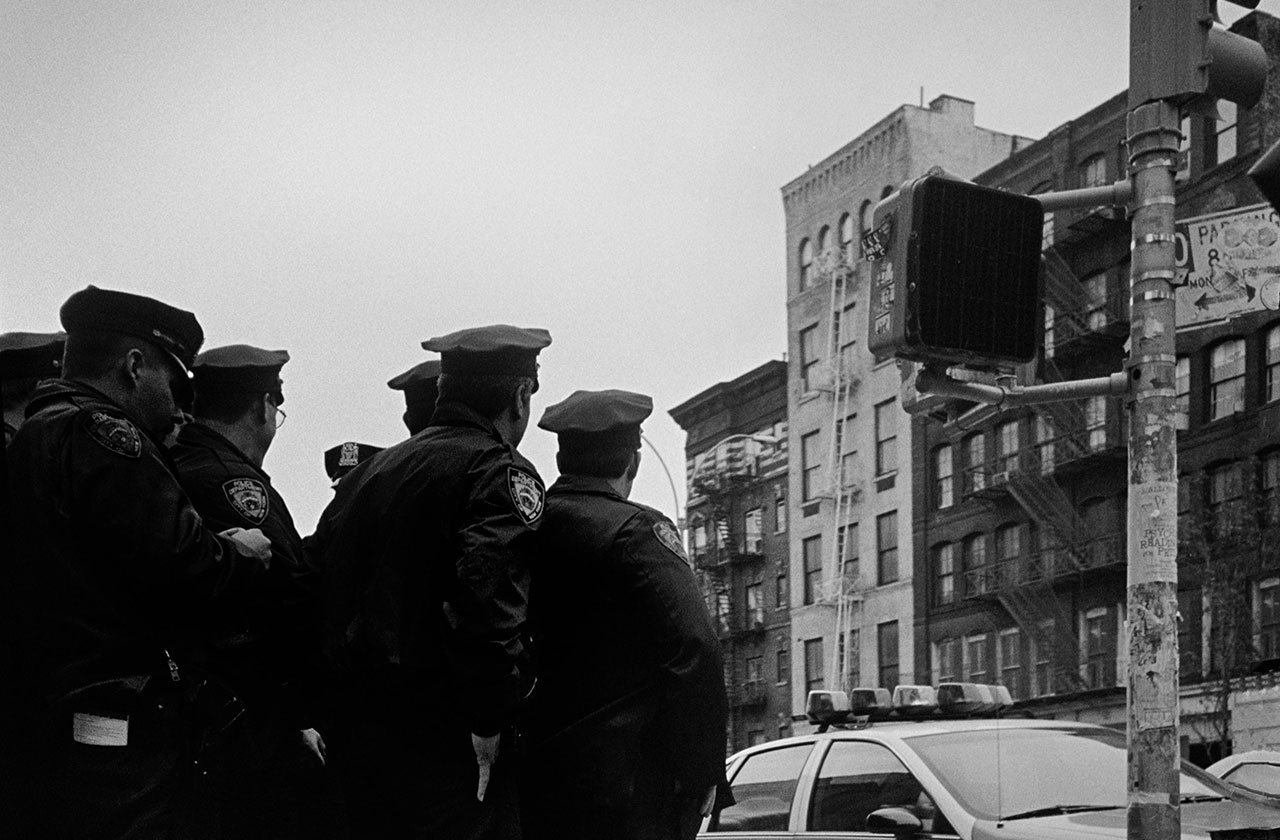
Please Support Our Work By Donating Today!

West’s longtime association with Michael Harrington’s DSA also represents an in-between, anti-communist position between capitalism and socialism that is often indistinguishable from mid-20th century US liberals. From this standpoint, folks like West and Sanders can safely deliver vague socialist talking points while serving as social democrats, but are ultimately limited by their peculiar faith in US democracy and reformism, which becomes even more problematic by their anti-communism.

West’s constant yearning for unity among the people, while certainly commendable and needed, can and has led to extending an open hand to elements of the working class who are likely irredeemable, if not simply dangerous, due to their fierce bigotry, intense xenophobia, and blatant misogyny. And his unwillingness to commit to forceful politics over vague intellectualism has led him to make problematic assessments, one of which included a tweet from 2011, in which he oddly proclaimed Ronald Reagan as “a freedom fighter in terms of supporting our Jewish bros & sis in the Soviet Union & opposing vicious forms of communism.”

Granted, this tweet was made as part of a series of tweets that addressed Barack Obama’s public adoration of Reagan – ironically stating “this glorification of Ronald Reagan is really a sad commentary on our lack of historical consciousness” and concluding that Obama was “chasing the cheap fantasy of bipartisanship.” But, nonetheless, it provides a good example on how the weight of anti-communism, which seems to be holding West hostage, can be a potentially blinding force during a time when it, as a direct product of Nazism and fascism, needs to be snuffed out once and for all. In the end, such a blind spot is not only a massive liability, but also seemingly suggests the potential to drift back into the hands of the Democratic Party.


Can any significant change come from participating in bourgeois elections?

Oddly enough, if any significant change comes from this campaign, it will exist outside the realm of electoral politics. We would be foolish to believe that A) West can win, and B) even if he did win, he would have the power to single-handedly enact policies that would benefit the working-class masses. While this may sound defeatist, it is not. Because the reality is the US government and its entire political system are not only completely controlled by the will of capital, but were deliberately set up by the founders for this very reason: “to protect the opulent minority from the toiling majority,” to paraphrase James Madison.

Does this mean the working class has never won meaningful concessions from the government, via electoral politics? Of course not. Bourgeois democracy, despite its deliberate orientation as a force of capital, has represented a battleground between the class interests of the capitalist minority and the working-class majority in the past. In fact, during times of capitalist crises, the system has responded in ways that have resulted in very real concessions for the working class. In the US, the most notable period that included such concessions came during the 1930s, when “New Deal” policies were implemented in response to the Great Depression. Throughout the 20th century, Keynesianism represented the primary macroeconomic policy direction deployed by the government in its management of capital, using high tax rates on corporations and the wealthy to fund governmental programs designed to both supplement capitalist growth and soften the systemic parasitism of that growth. And, in the 1960s, coming on the heels of radical uprisings throughout the country — most notably, the antiwar and Civil Rights movements — “Great Society” policies were created to provide more assistance and opportunities to working people.

It should be noted, though, that the underlying reasons for many of these concessions were tactical, as they have been made to prevent a radical or revolutionary break from the dominant capitalist/imperialist system. In other words, they were just as much forms of appeasement issued by the capitalist class, for the sake of their own survival, as they were hard-fought gains won by the working class, for our betterment. Many gains were the direct result of organized labor struggles, but were also made possible by the US military’s brutalization and looting campaigns of the Global South via colonialism and imperialism. They were also products of the US’s advantageous post-world-war-two positioning, the Marshall Plan, and the fact that US infrastructure was virtually untouched by the ravages of the war. And much of these gains excluded black and brown members of the US working class, as well as women, all of whom continued to be relegated to hyper-exploited positions within the working class, often confined to internal colonies and subjected to compounded social and material forms of oppression. These inconsistencies, as well as the inability of these reforms to affect the modes of production, left such legislation vulnerable to both circumvention and rollbacks.

It is important to include context behind these concessions because we must understand, first and foremost, that all of capitalist society rests upon a fundamental class struggle between those who own and control the means of production (capitalists) and those of us whose only chance for survival is to sell our labor to those owners (workers). With this understanding, we can see that societal progression, or regression, is the result of this dialectical battle. The sobering reality for the working class is that capitalists always have the upper hand because they have claimed ownership of the means we use to function and survive. And, while capitalist governments like that of the United States have awarded us some rights, and have occasionally given us some concessions, they are ultimately tools that are wielded by the capitalist class to maintain their dominance over us.

Thus, bourgeois (capitalist) democracy is a brilliant scheme for the (capitalist) ruling class because it gives off the appearance of freedom via constitutional documents, legal systems, voting, and a variety of supposed civil/human rights. Beneath the facade are extremely strict power dynamics represented primarily by these class distinctions (again, the minority class who own/control property and the means of production overseeing the majority class whose only basis of survival is our labor). The working-class masses are repressed and controlled in nearly every way possible within this arrangement. Injustice is a daily part of our lives that we learn to accept to survive the drudgery. 

In some instances, where gross injustices occur, we are awarded the "right" to appeal to the systems that exist on the surface, but this "right" always places the burden of proof on us. Therefore, since we have no time, money, energy, and resources to dedicate to these processes (because we're all working our lives away while living paychecks to paychecks), it is incredibly rare for any sort of justice to materialize against a powerful state/class that has seemingly unlimited amounts of time, money, energy, and resources to oppose us. In this never-ending, losing scenario, the ruling class and all of their institutions (including schools and media) can simply say: "we gave you inalienable rights and encourage you to use them if you feel wronged," knowing very well these rights, and the systems put in place to exercise them, are nothing but manufactured dead ends hidden behind virtual freeways.

This systemic understanding brings us back to the question at hand: can significant change come from bourgeois elections? If we were to look at the history of the US, we would surely conclude that it can, as noted above. However, when looking at capitalism as the regressive system that it now is — due to its fascistic foundation of claiming “private property” as a social relationship for capital to employ (exploit) labor; its birth from trillions of dollars of “free capital” generated by chattel slavery; its tendency to centralize wealth and, thus, political/social/governmental power; its cancer-like need for never-ending growth; its bloodlust for expansion and theft via war; and its array of elements that are riddled with internal contradictions which only worsen over time due to perpetually falling rates of profit — we should understand that it has reached a very late stage. In other words, the concessions that were made in the past are, quite frankly, no longer possible. The formation of an industrialized — albeit, mostly white — “middle class” was an anomaly only made possible by the unique stages of historical development that existed in the 20th century.

The capitalist coup called “neoliberalism” put an end to all of that. And it did so during a period of time (1970s/80s) when falling rates of profit were decimating the Keynesian model, the gold standard was removed, monopoly capitalism became entrenched, corporate governance (what Mussolini himself referred to as “fascism”) was cemented, and globalization and financialization became prominent factors in wealth extraction. Pro-capitalists will claim all of these things are “artificial mutations” of “true, free-market” capitalism, caused by “too much government involvement,” but the truth is they are mature stages of capitalism that were inevitable, absent a socialist revolution. Clever terms like “cronyism” and “corporatism” merely refer to natural developments caused by capital accumulation (and, conversely, widespread dispossession) and the concentration of wealth and power that has allowed capitalists to gain control of all aspects of society, including the entirety of government.

The sobering lesson from all of this is that any meaningful concessions from the capitalist class (via the electoral arena) will likely never materialize during capitalism’s late stages. The system has become so cannibalistic and riddled with crises that it has been feeding on itself for at least the past forty years. The industrialized “middle class,” or aristocracy of labor, has been all but destroyed, small capitalists are being devoured by big capitalists, and the economic system has become fully intertwined with the government. Thus, we are already decades deep into a very real transition from covert fascism to overt fascism, as the system scrambles to shield itself from crises after crises.

During this process, capitalism has been propped up by so many tricks and tactics coming from the capitalist state — corporate subsidies, quantitative easing (“printing money”), constant meddling by the federal reserve, etc. — that it is too far gone to respond to the needs of the people. These tricks and tactics are necessary for the system’s survival; or, in more precise terms, necessary to protect and maintain the wealth of the capitalist minority, by further degrading the working-class majority and perpetually “kicking the can down the road.” But, this road comes to an end. And we are fast approaching that end.

The only thing that capitalists and their state are concerned with now is protecting themselves from the imminent collapse, which means we’re already well into a significant fascist transition. The fact that unfathomable amounts of money are being thrown at military and police during a time when tent cities, homelessness, and drug overdoses are taking over every major city, and working people everywhere cannot afford rent or food, tells us that the US government, which is a direct manifestation of the capitalist class, is unable to see past its own interests to avert this collapse. So, it has chosen to dig in and protect the increasingly wealthy minority from the increasingly desperate majority.

West will not have a chance to win the election, and will likely not even capture a miniscule percentage of the vote. He may not even make the ballots in most states. And, even worse yet, if he were to win the election in some dream scenario and assume “the highest office in the land,” nothing substantial would come from it. Because the system was set up to represent wealth (or capital), not people. And the days of meaningful capitalist concessions are long gone.

Despite this, West and his campaign should approach the election with the intent to win, because that is the way to build genuine momentum. But, in this process, the focus must be on building a new world from the ravages of the inevitable collapse. This is where our time, energy, and resources should be, and should have been for decades now, but we’ve been too enamored with bourgeois politics to begin that transition. However, it’s not too late to regroup and refocus. And West’s campaign, like Bernie’s campaigns, can be a catalyst for this shift. Bernie sold out, chose his career, and failed. West can succeed in serving as a launching pad, for us, if he chooses the correct path.


Should working-class people support West’s campaign?

Working-class people should support West’s campaign, if he chooses the right path. We need to divest from bourgeois politics and the capitalist system. A campaign like West’s, which will ironically occur in the bourgeois electoral arena, can be a major catalyst in this divestment. So, what do we need to understand, and what will he need to do, to stay on the right path?

  1. We need to understand that electoral politics are both a time suck and a dead end if the goal is to win elections, assume office, and enact legislation. Therefore, campaigns should only be used to educate, agitate, and form counter-hegemonic and liberatory institutions and organizations.

  2. We need to understand that building working-class consciousness is the primary need at this moment in time. Challenging capitalist propaganda from mainstream media, providing knowledge and historical context, and offering reality-based narratives as a counter to the extreme paranoia and delusion pushed by capitalist media is the way to do this.

  3. We need to understand that authentic working-class politics (aka a left-wing) must be built from the ground-up in the United States. It must initially be anti-capitalist, anti-imperialist, and rooted in the working-class struggle against the capitalist ruling class. In this process, any remnants of anti-communism, which are almost always products of fear and/or ignorance, must be ironed out.

  4. We need to understand that liberal identity politics and culture wars are being disseminated by the ruling class to whip up hysteria among the masses, cause widespread confusion and misdirected rage, and keep the working class not only further divided, but constantly at each other’s throats. We must challenge this head-on by keeping the focus on class struggle while, at the same time, not allowing for bigoted elements to fester, as they are mere remnants of capitalist culture and naturally anti-working-class.

  5. We need to understand that fascism is already here in the US, and it has always been here for many of the hyper-marginalized members of the working class. This understanding includes the knowledge that the capitalist system has become fully intertwined with the capitalist government and is being protected by both capitalist political parties. In other words, Democrats are not anti-fascist; they are just as much a part of the transition to overt fascism as Republicans are.

  6. We need to understand that formidable working-class institutions and organizations need to be built NOW, because time is running out. These organization and institutions must exist completely outside the realm of electoral politics, which means they must be organized, funded, and maintained by us, with no ties to, or relationships with, bourgeois politicians, the capitalist parties, or the US government.

What will West and his campaign need to do to make this happen?

  1. West and his campaign must understand that the purpose of this run is not to win, assume office, and enact legislation. It is also not to build a political party to do these things moving forward. If those things happen to occur as a corollary development, then fine, but the primary goal should be to use this platform to radicalize (aka educate) and organize the US working class.

  2. West and his campaign must use this platform to promote working-class consciousness. This can be done by attacking mainstream (capitalist) narratives head-on, offering counter narratives based in reality, and deconstructing the hysteria and paranoia being disseminated by media.

  3. West and his campaign must show what a true left looks like. This means that he must be unapologetically radical by exposing the roots of our problems, which are not things like immigration, inflation, and “corruption,” but rather are capitalist modes and arrangements of production, imperialism, and the bourgeois state, which has been intentionally constructed to shield these roots. He should expect red baiting and take ownership of it without fear of being “unelectable,” which is easy to do if you are not ultimately concerned with winning an election. He should be openly socialist. He should be clear about what socialism actually is — the people owning and controlling the means that are used to sustain society. He should be clear that the welfare state is not socialism, but rather a necessity of capitalism. He should be clear that social democracy is merely a softer version of capitalism that simply cannot be maintained because of the predatory nature of the capitalist class in this late stage. Using very clear wording, even technical wording, goes against West’s oratory style, but he must make an effort to include such deliberate terminology along with his traditionally soulful approach.

  4. West and his campaign need to keep the focus on class struggle by avoiding the inevitable pitfalls of liberal identity politics and culture wars. This does not mean ignoring the social realities of marginalized identities, which of course are naturally intertwined with class oppression, but rather by constantly keeping the focus on the basis of class. This is something West has done exceptionally well in the past and there is no reason why this should not continue moving forward on this particular stage.

  5. West and his campaign need to express the reality that fascism is already here in the United States and is in a transitional period from being covert (in that it has always existed in the margins as well as in the foundation of both capitalism and the United States) to overt. He must explain that fascism is capitalism in decay. He must explain that the exponential funding of military and police by the capitalist class and its government will naturally come home to roost on the entirety of the US working class. And he must publicly rid himself of the belief that Democrats are allies in the fight against fascism.

  6. West and his campaign must use this platform to build actual organizations and institutions, on the ground, throughout the country, funded and maintained by the people. These organizations and institutions must be constucted to last far beyond this campaign, and must be built with the understanding that they will never work with bourgeois institutions, including the government and political parties owned by the capitalist class. These organizations should exist to meet the most basic needs of the people: food programs, clinics, self-defense, political education, ideological development, etc. all rooted in a working-class culture formed in direct contrast to bourgeois culture.


A means to an end?

From a dialectical perspective, Dr. Cornel West’s announcement to run for president of the US is a seemingly positive development for the working-class masses, in our struggle against the forces of capital. This is not necessarily saying much, as we have had very little reason to pay attention to, let alone participate in, bourgeois elections for quite some time. Thus, this is not positive because West has any chance of winning or assuming office — he does not — but because it provides us the opportunity to finally break away from the stranglehold of bourgeois politics and the two capitalist/imperialist political parties. We should seek to use this campaign as a way to build our own proletariat infrastructure throughout the country — community centers, clinics, food programs, networks, schools, etc. — something that will be needed as both the capitalist system and US government continue their rapid descent into overt fascism.

As West throws down the gauntlet against what he, and many others, see(s) as systemic ills, he will find himself stuck between two vastly different worlds: one where the masses of people desperately need, and I believe are ready for, an unapologetically radical candidate from the left; and another where dominant society and its very real mechanisms of capitalist violence and oppression will simply not allow this need to be delivered. The best thing West can do in this moment is dedicate himself to serving this need. Whether or not he and his campaign choose to use this opportunity as such a catalyst remains to be seen.

By all signs, Cornel West is a social democrat. And, history tells us we should be very wary of the compromising nature of social democrats. So, we should be skeptical. We should continue working on our own efforts and projects to construct authentic, working-class organizations and institutions. We should pace ourselves and not throw too much energy, physical or emotional, behind West and his campaign. But we should also give this a chance to serve our needs — use it as a potential tool whose frequency can increase if we find it on the right path, or decrease and even discarded if it becomes clear that it will not be fruitful. We should attempt to steer it in the right direction because it is the best option we have been given on this type of platform, if only for the fact that it exists outside the Democratic Party.

Our present reality is dismal. Our immediate future is dystopian. Capitalism is rotting away and taking us with it. Fascism is here. The capitalist government and all of its institutions are clearly responding by choosing an increasingly-predatory and barbaric direction. We must forge our own way, dig ourselves in, and prepare for the absolute worst, while building our own institutions that show the promise of a better world. West and his campaign are a potential tool in starting to build this future.